
Moving to another state without a job is a bold decision—one that requires careful planning, emotional resilience, and strategic execution. Whether you're chasing a better quality of life, reuniting with family, or seeking new opportunities, the absence of guaranteed employment adds complexity. But it’s far from impossible. With the right approach, you can transition smoothly, minimize financial strain, and position yourself to find meaningful work quickly. This guide outlines practical, real-world steps to make your relocation successful—even before you have an offer in hand.
1. Assess Your Financial Readiness
The foundation of any cross-state move without employment is financial stability. You need enough resources to cover living expenses while you search for work. Start by calculating your monthly burn rate—rent, utilities, groceries, transportation, insurance, and other essentials. Multiply this by the number of months you expect to be job hunting (typically 3–6 months).
Include one-time costs like movers, deposits, car registration, and emergency buffers. A realistic budget prevents panic and gives you breathing room to focus on finding the right role rather than accepting the first offer out of desperation.
2. Choose the Right Destination Strategically
Not all states are equal when job hunting. Research locations with strong job markets in your field, lower cost of living, and favorable tax policies. For example, tech professionals might consider Austin or Denver, while healthcare workers may find opportunities in growing cities like Raleigh or Nashville.
Use tools like the U.S. Bureau of Labor Statistics, LinkedIn Job Insights, and local chamber of commerce reports to evaluate demand. Also, consider proximity to professional networks, public transit availability, and long-term livability factors such as schools, safety, and climate.
“Relocating without a job isn’t reckless if you treat it like a calculated career investment.” — Maria Thompson, Career Transition Coach
3. Build a Relocation Timeline and Action Plan
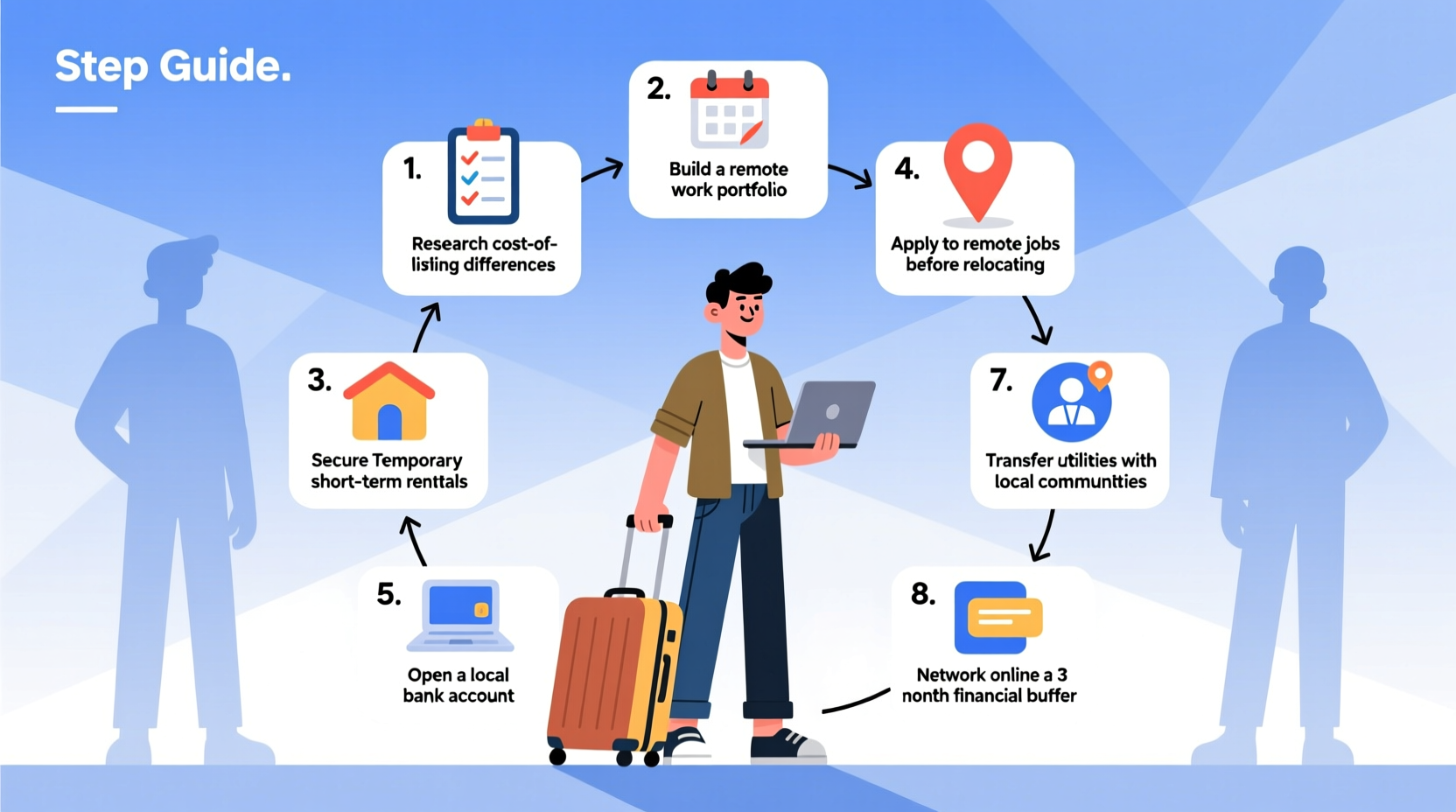
A structured timeline reduces stress and keeps you accountable. Begin preparations 4–6 months in advance. Here's a recommended sequence:
- Months 5–6: Finalize destination, research neighborhoods, start remote networking.
- Month 4: Create a detailed budget, open a local bank account (if possible), begin virtual house hunting.
- Month 3: Notify current employer (if applicable), schedule move date, transfer medical records.
- Month 2: Secure temporary housing, update resume and LinkedIn, apply for jobs remotely.
- Month 1: Pack, cancel services, arrange movers, confirm IDs and licenses.
- Move Week: Execute relocation, settle into temporary lodging, activate utilities.
- Weeks 1–4 Post-Move: Attend networking events, follow up on applications, explore community resources.
4. Secure Temporary Housing and Reduce Upfront Costs
Committing to a long-term lease immediately is risky. Instead, opt for short-term solutions: furnished rentals, sublets, Airbnb stays, or even staying with friends or relatives temporarily. Many corporate housing providers offer month-to-month leases ideal for job seekers.
This flexibility allows you to explore different neighborhoods, avoid costly deposits, and pivot based on where job opportunities emerge. Once employed, you can confidently sign a longer lease in the best area for your lifestyle and commute.
| Housing Option | Pros | Cons |
|---|---|---|
| Furnished Short-Term Rental | No furniture needed, flexible terms | Higher per-night cost |
| Airbnb / VRBO | Home-like environment, full kitchen | Limited space, variable quality |
| Sublet | Affordable, often includes utilities | Less legal protection, uncertain duration |
| Extended Stay Hotel | Utilities included, laundry access | Can feel isolating, less privacy |
5. Launch a Local Job Search Before You Arrive
Start applying to jobs in your target city well before the move. Tailor your resume to highlight regionally relevant skills and experience. Set your LinkedIn location to the new city and adjust your headline to reflect your imminent availability—for example, “Marketing Professional Relocating to Atlanta – Available Immediately.”
Reach out to alumni networks, industry associations, and LinkedIn connections in the area. Request informational interviews. These aren’t job requests—they’re relationship-building conversations that increase visibility and uncover hidden opportunities.
Mini Case Study: From Chicago to Phoenix
James, a project manager in construction, decided to leave Chicago for Phoenix due to health reasons related to cold winters. He didn’t have a job lined up but followed a disciplined strategy. Three months before moving, he updated his LinkedIn, joined Arizona-based construction groups on Facebook, and messaged five local professionals for advice. One contact introduced him to a staffing agency. By the time James arrived, he had three interviews scheduled. He landed a position within four weeks—partly because employers appreciated his proactive outreach and clear commitment to staying in the region.
Essential Pre-Move Checklist
- ✅ Save 6+ months of living expenses
- ✅ Research top job markets in your industry
- ✅ Update resume and LinkedIn profile with new location
- ✅ Network with professionals in the target city
- ✅ Arrange temporary housing for first 4–8 weeks
- ✅ Transfer or obtain driver’s license and vehicle registration
- ✅ Notify banks, insurers, and subscription services of address change
- ✅ Schedule movers or rental truck
- ✅ Digitize important documents (medical, tax, employment)
- ✅ Enroll in local job boards and company talent pools
Common Pitfalls to Avoid
Even well-planned moves can go off track. Be aware of these common mistakes:
- Underestimating cost of living differences: A higher salary in a new city may not stretch as far due to taxes or housing prices.
- Burning bridges with current employer: Resign professionally; you never know when paths might cross again.
- Isolating yourself post-move: Loneliness hampers motivation. Join meetups, volunteer, or take a class to build community.
- Accepting the first job offer: While urgency is real, ensure the role aligns with your career goals and pay needs.
FAQ
How long does it typically take to find a job after moving?
The average job search lasts 3 to 6 months, though this varies by industry, location, and economic conditions. Proactive networking and targeted applications can shorten the timeline significantly.
Should I tell employers I don’t live there yet?
Yes—but frame it positively. Say: “I’m relocating to [City] on [Date] and will be available for in-person interviews immediately.” Transparency builds trust, and many employers respect candidates who show initiative.
Can I collect unemployment if I move without a job?
No. Unemployment benefits require you to be able and available to work in your current state. Moving voluntarily disqualifies you from ongoing claims. Plan accordingly and rely on savings instead.
Final Steps: Settle In and Stay Focused
Once you’ve moved, establish a routine. Treat job hunting like a full-time job: set daily goals (e.g., apply to 3 roles, connect with 2 professionals), maintain a calendar, and track applications. Explore your new city, attend industry events, and stay physically active—your mental health impacts your performance in interviews.
Remember: moving without a job isn’t a last resort—it’s a strategic career move when done with preparation. You’re not starting from scratch; you’re leveraging mobility as an advantage.




 浙公网安备
33010002000092号
浙公网安备
33010002000092号 浙B2-20120091-4
Comments
No comments yet. Why don't you start the discussion?