
Traveling light isn’t just a trend—it’s a mindset shift that transforms how you experience the world. A small travel bag forces intentionality, reduces decision fatigue, and eliminates the burden of excess. But packing everything you need into limited space requires more than just willpower; it demands strategy. From garment selection to spatial engineering, the key lies in intelligent preparation and disciplined choices. Whether you're embarking on a weekend getaway or a month-long journey across continents, these time-tested methods ensure you carry only what matters—without sacrificing comfort or readiness.
1. Choose the Right Bag and Know Its Limits
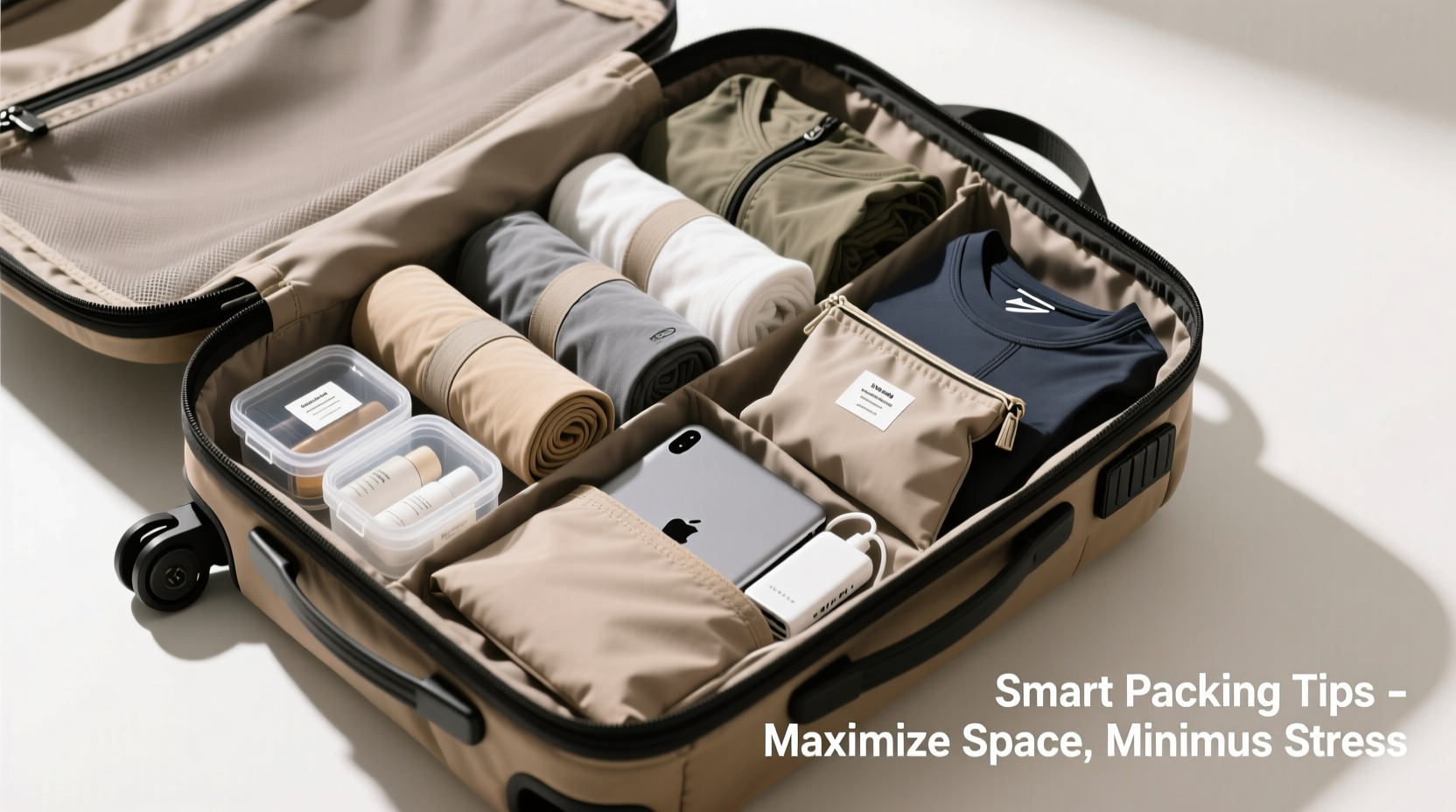
The foundation of efficient packing begins before you add a single item: selecting the right bag. A well-designed compact travel bag—typically 35–45 liters—should have structured compartments, durable zippers, and comfortable straps. More importantly, it should fit airline carry-on dimensions to avoid checked baggage fees and delays.
Understanding your bag’s capacity prevents overpacking from day one. Visualize its volume: a standard backpacker’s 40L pack holds roughly what you’d need for two weeks if packed wisely. Once chosen, commit to never exceeding its physical limits. This constraint drives smarter decisions.
2. Apply the Capsule Wardrobe Principle
Clothing typically takes up the most space and weight. The solution? Build a capsule wardrobe where every piece coordinates with multiple others. Stick to a cohesive color palette—neutrals like black, gray, navy, or olive green—so shirts, pants, and layers mix seamlessly.
Aim for versatility. One pair of quick-dry trousers can serve for hiking, dining, and city walking. A lightweight merino wool sweater resists odor, layers well, and transitions from cold evenings to mild days. Limit footwear to two pairs: one sturdy walking shoe and one packable sandal or slip-on.
“Minimalism in packing isn’t about deprivation—it’s about liberation through simplicity.” — Sarah Li, Sustainable Travel Advocate
Sample 7-Day Capsule Packing List (Clothing)
| Item | Quantity | Rationale |
|---|---|---|
| T-shirts / Tops | 4 | Odor-resistant fabric; mix-and-match colors |
| Bottoms | 2 | One casual, one outdoor-ready |
| Layering Piece | 1 | Lightweight fleece or packable jacket |
| Underwear | 7 | One per day; quick-dry material |
| Socks | 5 | Include 2 pairs for activity; rest for daily wear |
| Shoes | 2 | Walking shoes + compact alternative |
3. Master the Art of Rolling, Folding, and Compression
How you place items inside your bag determines how much you can fit—and how easily you can access them. Different garments respond better to different techniques:
- Roll soft fabrics: T-shirts, underwear, and socks save space when rolled tightly.
- Fold structured items: Button-downs or wrinkle-resistant shirts benefit from flat folding.
- Bundle bulky layers: Use the bundle-packing method—wrapping clothes around each other—to minimize creases and optimize space.
For maximum compression, use reusable silicone bags or zip-top cubes. These remove excess air and keep categories separated—e.g., toiletries, electronics, sleepwear. Place heavier items close to your back when wearing a backpack to maintain balance and reduce strain.
4. Streamline Toiletries and Electronics
Toiletries are notorious space-hogs. Eliminate full-sized bottles. Instead, decant liquids into travel-sized containers or switch to solid alternatives: shampoo bars, toothpaste tablets, and solid deodorant. These not only save space but also comply with liquid restrictions.
Electronics should be pared down to essentials: phone, charger, earbuds, and one multi-port USB adapter. Avoid bringing duplicates. If possible, choose devices with dual functions—a tablet instead of both laptop and e-reader, for example.
Do’s and Don’ts: Toiletries & Tech
| Action | Do | Don’t |
|---|---|---|
| Containers | Use leak-proof silicone bottles | Bring full-size retail packaging |
| Medication | Pack in original container with label | Loose pills in envelopes |
| Charging | Carry one universal adapter | Multiple country-specific plugs |
| Hygiene | Use microfiber towel (dries fast) | Pack cotton bath towel |
“Every ounce counts when you’re moving constantly. I once cut 1.2 pounds just by switching to a digital notebook.” — Mark Tran, Digital Nomad & Author of *Light Steps*
5. Follow a Step-by-Step Packing Timeline
Efficiency thrives on routine. Begin packing early and follow this five-stage timeline to avoid last-minute clutter:
- One Week Before: Lay out all intended items on your bed. Ask: “Have I used this in the past month?” If not, reconsider. Label packing cubes by category.
- Three Days Before: Wash and dry all clothing. Charge electronics. Print necessary documents or store digitally.
- One Day Before: Pack non-perishables and bulk items. Test zipper function and bag durability. Confirm weather forecast and adjust layers accordingly.
- Morning of Departure: Add toiletries, medications, and snacks. Double-check passport, tickets, and wallet.
- Last Check: Close the bag and try to zip it without force. If strained, remove one item. Then, place frequently needed things—phone, headphones, water bottle—in accessible pockets.
Mini Case Study: Emma’s European Summer Trip
Emma, a freelance designer, planned a 10-day solo trip across Portugal, Spain, and France. Her goal: carry only a 38L backpack. She started by choosing wrinkle-resistant, quick-dry clothing in navy and beige. She rolled her tops, used a compression cube for jeans, and brought a single pair of versatile ankle boots. For hygiene, she used a shampoo bar and toothpaste tablets stored in a tiny tin. By pre-planning outfits and refusing to pack “just in case” items, she avoided checking a bag—and walked through train stations effortlessly. At the end of her trip, she realized she hadn’t worn one of her two scarves. That became her rule: next time, bring only what you’ll actually use.
Essential Checklist: Pack Smart, Not Hard
- ✔️ Verify airline size restrictions
- ✔️ Choose 4–5 mix-and-match clothing colors
- ✔️ Limit shoes to 2 pairs (one primary, one backup)
- ✔️ Decant toiletries into 3-oz or solid forms
- ✔️ Use packing cubes for categorization
- ✔️ Roll soft garments; fold delicate ones
- ✔️ Charge all devices night before
- ✔️ Perform final weight check before leaving
Frequently Asked Questions
Can I really fit everything in a small bag for a two-week trip?
Yes—provided you prioritize versatility and laundry access. Most people overestimate how many clothes they need. With quick-dry fabrics and a sink-friendly detergent, you can wash and reuse items mid-trip. Focus on quality over quantity, and you’ll find that four shirts go further than six.
What should I do if my bag gets too heavy?
Reassess immediately. Remove non-essentials: duplicate adapters, excessive accessories, books you haven’t opened. Consider shipping non-critical items ahead or purchasing basics locally. Remember, every extra pound impacts your energy and mobility throughout the journey.
How do I prevent wrinkles without an iron?
Wrinkles are less about folding and more about fabric choice. Opt for travel-specific materials like polyester blends, jersey knits, or merino wool. Hang clothes in the bathroom during a hot shower—the steam relaxes creases naturally. Rolling also minimizes sharp folds.
Final Thoughts: Travel Light, Live Fully
Packing efficiently in a small travel bag is not about sacrifice—it’s about reclaiming freedom. When you’re not wrestling with oversized luggage or digging through chaos for a single charger, you gain time, clarity, and presence. Each strategic choice compounds: lighter load, fewer fees, faster transit, and greater agility. Start small. Try a weekend challenge with just a daypack. Refine your list. Learn what you truly need versus what you merely assume you do. The goal isn’t perfection—it’s progress toward intentional travel.




 浙公网安备
33010002000092号
浙公网安备
33010002000092号 浙B2-20120091-4
Comments
No comments yet. Why don't you start the discussion?