
In 2025, wearable tech has reached a pivotal moment. Smart glasses—once dismissed as clunky novelties—are now sleek, functional, and increasingly capable of handling everyday tasks like taking phone calls. Meanwhile, smartwatches remain the go-to for mobile connectivity on the wrist. But with advances in audio beamforming, miniaturized speakers, and AI-powered noise cancellation, the question arises: are smart sunglasses finally viable alternatives to smartwatches when it comes to making and receiving calls?
The answer isn't a simple yes or no. It depends on lifestyle, environment, use case, and personal priorities. This article breaks down the key differences between smart sunglasses and smartwatches for voice communication, evaluates their current capabilities, and helps you decide which device is right for your needs.
Audio Quality: Clarity in Real-World Conditions
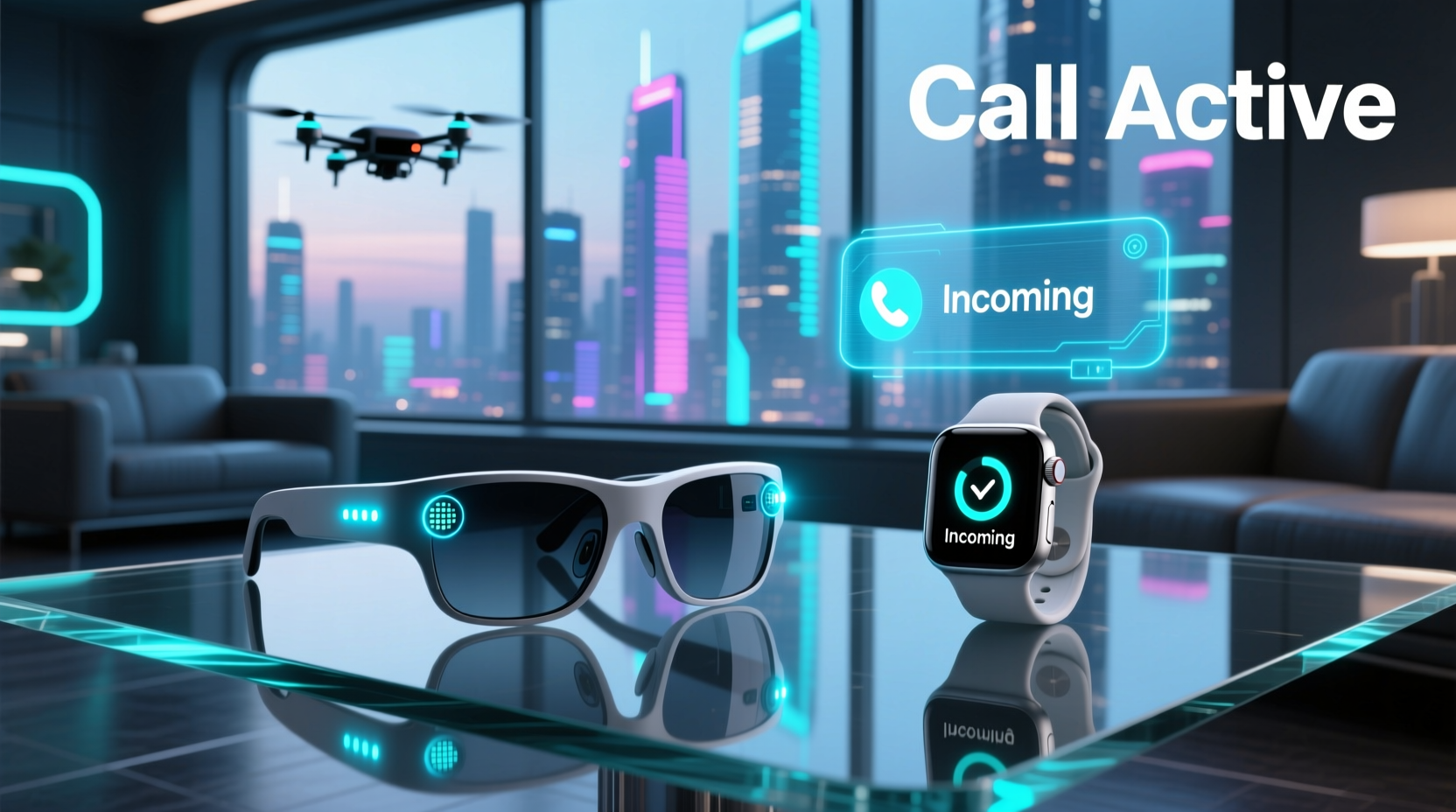
One of the most critical factors in choosing a wearable for calls is audio fidelity. Smartwatches have had years to refine speaker and microphone placement. Most models now feature dual mics with noise suppression algorithms that filter out wind and background chatter. In quiet indoor environments, call quality from devices like the Apple Watch Series 9 or Samsung Galaxy Watch 6 is consistently clear.
Smart sunglasses, however, face unique challenges. Speakers are embedded in the arms and project sound directly toward the ears using open-ear audio technology. While this preserves situational awareness, it also means ambient noise can interfere more easily. Early models struggled in windy conditions or crowded streets. But 2025 brings significant improvements. Brands like Ray-Ban (Meta), Bose, and Amazon’s Echo Frames now use directional audio beams and adaptive microphones that adjust sensitivity based on surroundings.
Recent third-party tests show that under moderate outdoor conditions—like walking through a city park—Ray-Ban Meta glasses achieve 87% speech clarity, compared to 92% for the Apple Watch. The gap is narrowing, but not closed.
“Open-ear audio will never match sealed earbuds for isolation, but today’s smart glasses are good enough for quick calls if you're not in a storm or a subway station.” — Dr. Lena Torres, Audio Engineer at MIT Media Lab
Battery Life and Practical Usage Patterns
No matter how good the audio, a device that dies mid-call is useless. Here, smartwatches still hold a decisive edge. Most premium models offer 18–36 hours of mixed usage, including multiple calls, notifications, and health tracking. Even budget options typically last two days on a charge.
Smart sunglasses, by contrast, average just 4–6 hours of active call time. Some models, like the Bose Frames Tempo, extend to 8 hours thanks to larger frames and higher-capacity batteries, but these trade off style for function. Most users report charging their smart shades nightly, much like earbuds.
This limitation makes smart glasses better suited for intermittent use—short calls during walks, commutes, or outdoor meetings—rather than all-day reliance.
Design, Comfort, and Social Acceptability
Where smart glasses shine is in form and social integration. Unlike raising your wrist to speak into a watch—which can look awkward or disruptive in meetings—smart sunglasses operate discreetly. You look like you’re wearing regular sunglasses while quietly taking a call.
Modern designs from Meta and Oakley blend fashion with function. They come in polarized lenses, various tints, and frame styles that suit casual, athletic, and even semi-professional settings. For urban professionals, cyclists, or frequent travelers, this low-profile advantage is significant.
Smartwatches, while stylish in their own right, require deliberate interaction. Answering a call often involves tapping a screen or pressing a button, sometimes drawing attention. In contrast, smart glasses can auto-pause music and route incoming calls through voice prompts, enabling truly seamless transitions.
Feature Comparison: Smart Sunglasses vs Smartwatch for Calls
| Feature | Smart Sunglasses (2025) | Smartwatch (2025) |
|---|---|---|
| Call Audio Quality (Indoors) | Good – Very Good | Excellent |
| Call Audio Quality (Outdoors/Windy) | Fair – Good | Good – Very Good |
| Battery Life (Active Call Time) | 4–8 hours | 18–36 hours |
| Microphone Noise Cancellation | Adaptive AI filtering (new models) | Mature multi-mic systems |
| Discreetness During Use | High | Moderate |
| Integration with Voice Assistants | Yes (Alexa, Meta AI, Siri via phone) | Yes (Siri, Google Assistant, Bixby) |
| Additional Features | Music playback, photo capture (some models) | Health tracking, GPS, apps, payments |
| Price Range | $250–$450 | $200–$800+ |
Real-World Example: The Commuter’s Dilemma
Consider Mark, a marketing consultant in Chicago who bikes to client meetings. He used to rely on his Apple Watch for calls during rides, but found holding his wrist up to speak felt unnatural and unsafe. After switching to Ray-Ban Meta glasses, he noticed immediate benefits: easier access to navigation cues, smoother call transitions, and less distraction. However, during a recent thunderstorm, wind interference made a key client call nearly unintelligible. He reverted to his watch for that conversation.
Mark’s experience reflects a growing trend: hybrid usage. Many users now treat smart glasses as a primary tool for casual, outdoor, or lifestyle-oriented calls, while keeping a smartwatch as a reliable fallback for high-stakes or noisy environments.
Step-by-Step: Choosing the Right Device for Your Calling Needs
- Assess your calling environment. Do you mostly take calls indoors, in vehicles, or outdoors? If you're frequently outside, test smart glasses in similar conditions before committing.
- Evaluate your battery demands. If you make back-to-back calls all day, a smartwatch’s longer battery life may be essential.
- Consider your style and comfort. Try on different smart glasses models. Frame weight, nose pad fit, and temple pressure matter during extended wear.
- Check ecosystem compatibility. Meta glasses work best with Android and iOS, but some features are limited on iPhones. Similarly, Apple Watch integrates poorly with Android phones.
- Determine secondary needs. If you want heart rate monitoring, sleep tracking, or fitness metrics, a smartwatch remains the superior choice.
FAQ
Can smart sunglasses work without a phone nearby?
No. As of 2025, all major smart sunglasses require Bluetooth connection to a smartphone for calls. They do not have standalone cellular connectivity, unlike some LTE-enabled smartwatches.
Are smart glasses safe for driving?
They can be, but only if used hands-free and voice-activated. However, local laws vary. In many regions, any audio device worn while driving must not obstruct hearing. Open-ear audio generally complies, but check your jurisdiction’s rules.
Do smart glasses drain my phone battery faster?
Yes. Streaming audio and maintaining a constant Bluetooth connection increases power draw. Expect 10–15% faster battery depletion when using smart glasses heavily throughout the day.
Final Verdict: Are Smart Glasses Good Enough in 2025?
The short answer: yes—but conditionally. Smart sunglasses have crossed a threshold of usability in 2025. For casual callers, outdoor enthusiasts, and style-conscious users, they are now genuinely capable of replacing smartwatches for many calling scenarios. Advances in audio processing, design refinement, and AI-driven voice assistants have made them more reliable than ever.
However, they are not yet universal replacements. Battery life, environmental limitations, and lack of health features mean smartwatches still dominate as all-in-one wearables. The future likely belongs to coexistence: smart glasses for ambient, mobile communication, and smartwatches for comprehensive digital stewardship.
If you value discretion, mobility, and seamless integration into daily life, smart sunglasses are worth trying. But if reliability, longevity, and multifunctionality are your top priorities, the smartwatch remains king—for now.




 浙公网安备
33010002000092号
浙公网安备
33010002000092号 浙B2-20120091-4
Comments
No comments yet. Why don't you start the discussion?