
In an increasingly interconnected world, language barriers remain one of the most persistent obstacles to meaningful cross-cultural interactions. Whether you're a frequent traveler, international business professional, or simply someone who enjoys meeting people from different backgrounds, real-time language translation can be transformative. Enter smart sunglasses with built-in translation—a cutting-edge fusion of wearable tech and AI that promises seamless multilingual conversations without pulling out your phone or relying on clunky earpieces.
These devices go beyond sun protection. They integrate microphones, speakers, artificial intelligence, and augmented reality displays to deliver spoken translations directly through audio or visual cues. But not all models are created equal. Choosing the right pair requires understanding their capabilities, limitations, and compatibility with your lifestyle.
How Smart Sunglasses with Translation Work
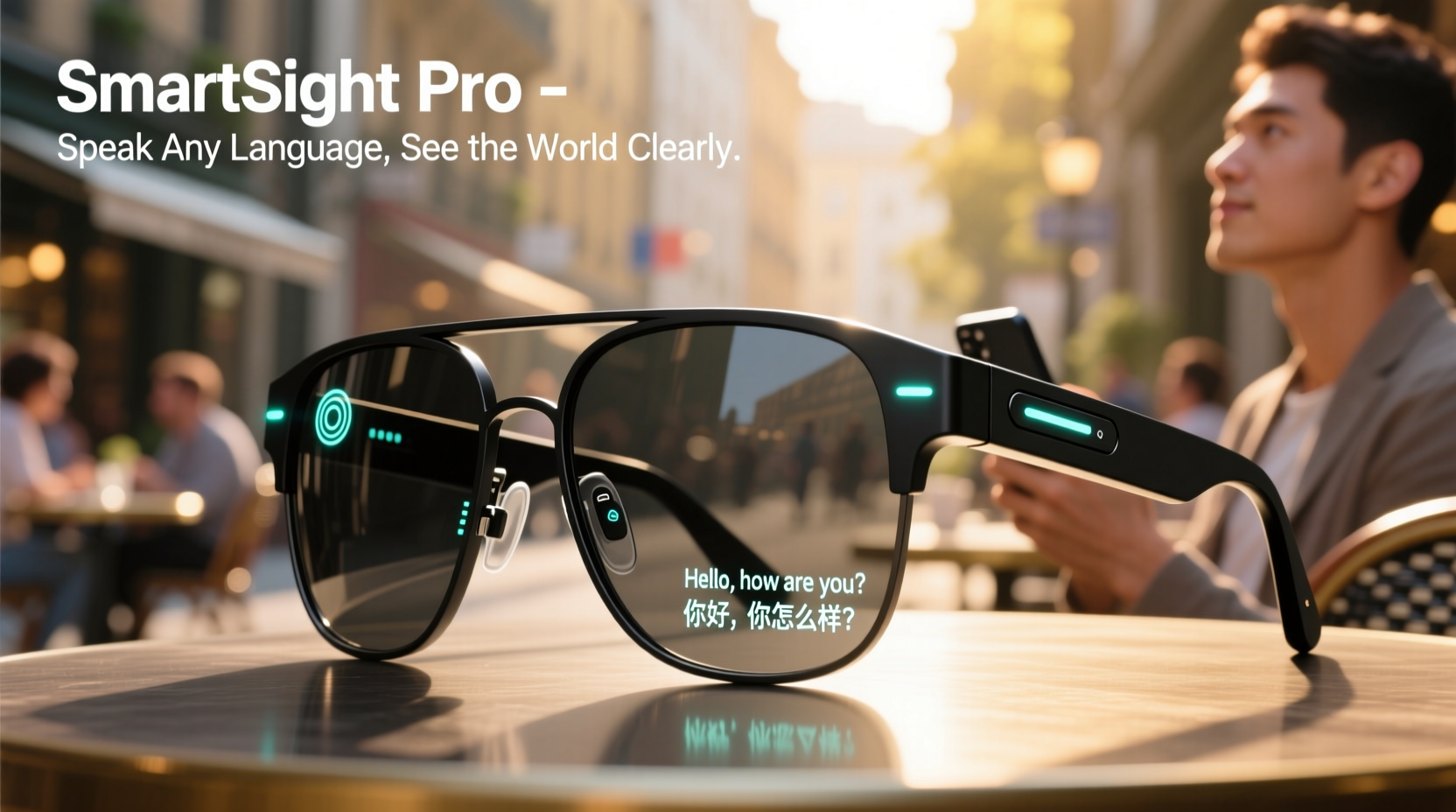
At the core of these devices is a combination of speech recognition, natural language processing (NLP), and cloud-based AI. When two people speak in different languages, the glasses capture the audio via embedded microphones, process it locally or in the cloud, translate it into the listener’s preferred language, and deliver the output through discreet bone-conduction speakers or wireless earbuds.
Some advanced models also include heads-up displays (HUDs) that project subtitles onto the lens, allowing users to read translated text while maintaining eye contact. This dual-audio-visual approach enhances clarity, especially in noisy environments like airports, markets, or crowded cafes.
The entire process happens in near real time—typically within 1–3 seconds—making conversations feel natural rather than robotic or delayed.
Key Features to Evaluate Before Buying
Not every smart sunglass model offers the same level of performance. To ensure you’re investing in a device that meets your communication needs, consider the following features:
- Translation Accuracy: Powered by AI engines like Google Translate, DeepL, or proprietary systems. Higher accuracy reduces misunderstandings.
- Supported Languages: Top-tier models support 20+ languages, including less common ones like Thai, Arabic, or Swahili.
- Latency: Delay under 1.5 seconds ensures fluid conversation flow.
- Battery Life: Aim for at least 4 hours of continuous translation use; 8+ hours is ideal for full-day travel.
- Noise Cancellation: Essential for clear voice pickup in loud environments.
- Comfort & Fit: Lightweight frames with adjustable temples and nose pads prevent fatigue during extended wear.
- Connectivity: Bluetooth 5.0+ for stable pairing with smartphones or companion apps.
“Wearable translation tech is shifting from novelty to necessity. Devices that blend invisibility with high fidelity will dominate the next wave.” — Dr. Lena Torres, Human-Computer Interaction Researcher at MIT Media Lab
Top Models Compared: A Buyer’s Table
| Model | Languages Supported | Translation Latency | Battery Life | Price Range |
|---|---|---|---|---|
| Ray-Ban Meta Smart Glasses (Gen 2) | 15 (via app integration) | ~2.5 sec | 4 hours (talk time) | $299 |
| Alango ClearGlass Pro | 30+ | 1.2 sec | 6 hours | $349 |
| Vuzix Shield Sunglasses | 25 (with HUD display) | 1.4 sec | 5 hours | $699 |
| Everysight Raptor Lens | 12 (customizable AR overlays) | 1.8 sec | 7 hours | $749 |
| OrCam MyEye (Clip-on) | 18 | 2.0 sec | 2 hours | $3,500 |
Note: While OrCam leads in assistive technology, its high cost and short battery make it less practical for everyday conversational use. For most consumers, Alango ClearGlass Pro offers the best balance of speed, language coverage, and value.
Step-by-Step Guide to Choosing the Right Pair
Selecting the ideal smart sunglasses isn’t just about brand names—it’s about aligning the device with your daily communication patterns. Follow this five-step process:
- Assess Your Language Needs: List the languages you interact with most. If you frequently engage with Mandarin, Spanish, or French speakers, prioritize broad language support.
- Determine Usage Context: Will you use them primarily for business meetings, travel, or casual socializing? Business users may benefit more from HUDs, while travelers need long battery life.
- Test Audio Delivery Method: Bone conduction preserves ambient awareness but may lack clarity in wind. In-ear audio via magnetic earbuds offers better sound but reduces situational awareness.
- Evaluate Integration: Check compatibility with your smartphone OS (iOS/Android) and whether the companion app allows customization of translation preferences.
- Try Before You Buy: Visit retail partners or request demos. Comfort, fit, and intuitive controls matter as much as technical specs.
Real-World Example: A Traveler’s Experience in Tokyo
Sophie, a freelance photographer from Canada, traveled to Japan for a month-long assignment. Despite learning basic Japanese phrases, she struggled with complex exchanges at local markets and train stations. She purchased a pair of Alango ClearGlass Pro sunglasses before her trip.
During a visit to a rural shrine, she struck up a conversation with an elderly caretaker who didn’t speak English. Using the glasses’ two-way translation mode, Sophie asked about the history of the site. The device captured his Japanese narration, translated it into English audio delivered through bone conduction, and then spoke her responses back in fluent Japanese.
The interaction lasted over 20 minutes and left both parties smiling. “It wasn’t just functional—it felt human,” Sophie later wrote in her blog. “I could maintain eye contact, gesture naturally, and still understand everything. That’s when I realized this tech isn’t replacing conversation—it’s enabling it.”
Common Pitfalls and How to Avoid Them
Despite their promise, smart translation sunglasses come with challenges. Awareness helps mitigate frustration:
- Overreliance on Translation: These devices assist, not replace, language learning. Use them to bridge gaps, not avoid effort.
- Privacy Concerns: Always inform others that recording and translation are active. Some countries have strict laws about audio capture.
- Poor Internet Dependency: Cloud-based models fail without signal. Opt for hybrid systems that cache key phrases offline.
- Accent Misinterpretation: Heavy regional accents or fast speech can reduce accuracy. Speak clearly and pause between sentences.
Frequently Asked Questions
Can smart sunglasses translate written text too?
Yes, some models like Vuzix Shield and Everysight Raptor include optical character recognition (OCR). They can scan signs, menus, or documents and overlay translated text on the lens display.
Are these sunglasses suitable for people with prescription lenses?
Many brands offer prescription inserts or frames compatible with clip-on RX adapters. Ray-Ban Meta and Alango both provide this option, though third-party modifications may void warranties.
Do they work for group conversations?
Most current models are optimized for one-on-one dialogue. In group settings, directional microphones may struggle to isolate voices. Future iterations are expected to include multi-speaker tracking using beamforming technology.
Final Checklist Before Purchase
- ✅ Supports your primary target languages
- ✅ Offers sub-2-second translation latency
- ✅ Includes offline mode or cached phrasebook
- ✅ Has at least 5 hours of battery life
- ✅ Provides comfortable, all-day wear
- ✅ Integrates with your mobile ecosystem
- ✅ Comes with privacy controls and mute button
Conclusion: Step Into a More Connected World
Smart sunglasses with language translation are no longer science fiction—they’re practical tools reshaping how we connect across linguistic divides. From enhancing travel experiences to improving international collaboration, these devices empower users to communicate with confidence and empathy.
The right pair won’t just translate words; it will preserve tone, context, and connection. As AI continues to evolve, so too will the subtlety and reliability of these wearables. By choosing thoughtfully today, you invest not only in convenience but in deeper human understanding.




 浙公网安备
33010002000092号
浙公网安备
33010002000092号 浙B2-20120091-4
Comments
No comments yet. Why don't you start the discussion?