
Heating accounts for nearly half of the average household’s energy bill, especially in colder climates. With rising utility costs and growing environmental concerns, homeowners are reevaluating how they manage indoor temperatures. One key decision lies in choosing between a traditional manual dial thermostat and a modern smart thermostat. While both regulate your HVAC system, their impact on energy consumption—and ultimately your wallet—can differ significantly. This article examines real-world performance, cost-saving potential, user behavior, and long-term benefits to help you determine which option delivers greater savings on heating bills.
How Thermostats Influence Heating Efficiency
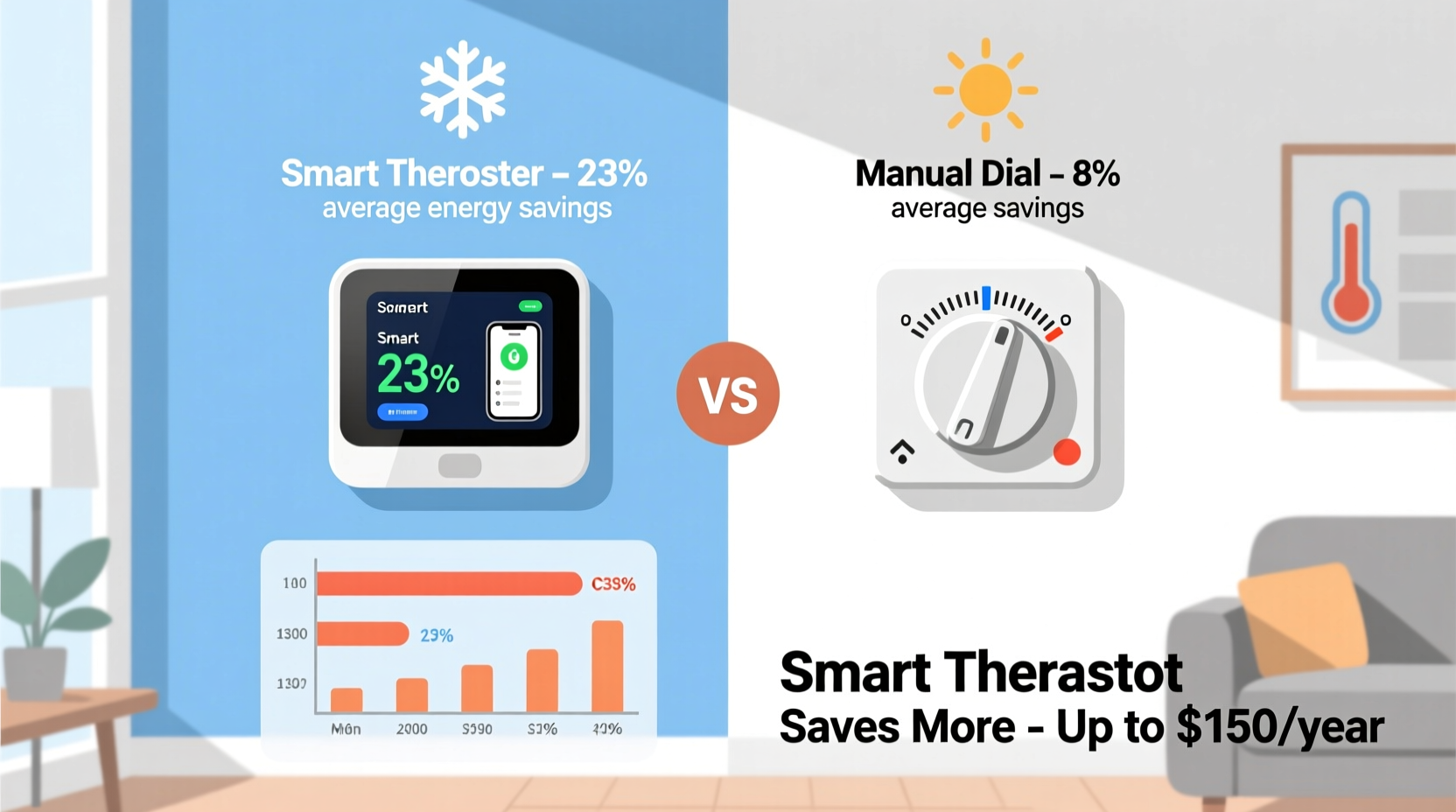
A thermostat is more than just a temperature display—it's the command center for your heating system. The way it interprets your preferences and schedules directly affects how often your furnace runs, how long it operates, and whether energy is wasted when no one is home or asleep.
Manual dial thermostats rely on physical mercury switches or bimetallic coils to sense room temperature. They require users to manually adjust settings, often with imprecise markings. In contrast, digital smart thermostats use sensors, algorithms, and connectivity (Wi-Fi, apps, voice assistants) to automate climate control based on occupancy patterns, weather forecasts, and user-defined preferences.
The core difference isn’t just technology—it’s consistency. Studies from the U.S. Department of Energy show that properly programmed setbacks of 7–10°F for eight hours daily can reduce heating bills by up to 10% annually. However, most people with manual thermostats don’t maintain consistent schedules due to forgetfulness or inconvenience.
Energy Savings: Smart vs Manual – A Real Comparison
To understand which thermostat type saves more, we must consider both technical capability and human behavior. A smart thermostat may have advanced features, but only if used effectively will it deliver results.
| Feature | Manual Dial Thermostat | Smart Thermostat |
|---|---|---|
| Temperature Precision | Limited (±3–5°F) | High (±0.5°F) |
| Scheduling Capability | None or basic mechanical timer | Customizable weekly schedules via app |
| Remote Access | No | Yes (via smartphone or tablet) |
| Learning Behavior | No | Yes (e.g., Nest learns habits in ~1 week) |
| Geofencing (Auto-Away) | No | Yes (uses phone GPS to detect occupancy) |
| Average Annual Savings* on Heating | 0–5% (if inconsistently adjusted) | 10–15% (per EPA ENERGY STAR estimates) |
*Savings depend on climate, insulation quality, system age, and usage patterns.
The data shows a clear advantage for smart thermostats in controlled environments. For example, a 2020 study by the National Renewable Energy Laboratory (NREL) found that households using programmable or smart thermostats saved an average of 12% on heating energy compared to those relying solely on manual adjustments.
Behavioral Challenges with Manual Thermostats
One of the biggest limitations of manual dial thermostats isn't technical—it's behavioral. These devices place full responsibility on the homeowner to remember to turn down the heat when leaving or going to sleep. In reality, few do so consistently.
A survey conducted by the Consumer Reports National Research Center revealed that only 28% of manual thermostat users actually change settings more than once per day. Most leave them at a constant “comfort” temperature year-round, leading to unnecessary runtime during unoccupied hours.
This inconsistency negates any theoretical savings. You might set intentions to lower the heat at night, but fatigue, distraction, or seasonal changes often result in forgotten adjustments. Over weeks and months, this adds up to hundreds of wasted heating hours.
“Thermostats are only as efficient as the people who use them. Automation removes human error—the single largest factor in residential energy waste.” — Dr. Linda Chen, Building Science Researcher, Princeton University
How Smart Thermostats Maximize Savings Automatically
Smart thermostats eliminate reliance on memory and discipline by automating optimal heating strategies. Here’s how they achieve measurable reductions in energy use:
- Adaptive Scheduling: Devices like Ecobee and Google Nest learn your routine within days and automatically adjust temperatures before you wake or return home.
- Occupancy Detection: Using motion sensors or geofencing, smart thermostats switch to “Away” mode when no one is present, reducing heating output without manual input.
- Weather Intelligence: Connected models access local forecasts and adjust pre-heating times based on outdoor temperature trends, avoiding overuse on milder days.
- Vacation Mode: Easily activated remotely, this feature maintains a minimal safe temperature while you’re away, preventing pipe freezing without wasting energy.
- Usage Reports: Monthly energy reports show heating runtime, estimated costs, and improvement tips—increasing awareness and encouraging better habits.
In a real-world test across 1,200 homes by ecobee, users reported average heating savings of 14.7% in winter months after switching from manual or basic programmable thermostats. Notably, renters and older adults—who previously avoided complex programming—saw some of the highest gains due to automated functionality.
Mini Case Study: The Johnson Family’s Winter Bill Drop
The Johnsons, a family of four in Minneapolis, replaced their 20-year-old manual dial thermostat with a Nest Learning Thermostat in October. Their previous heating strategy involved turning the dial up in the morning and forgetting it until bedtime, resulting in high overnight usage even when everyone was asleep.
After installation, the Nest learned their schedule within five days. It began lowering the temperature by 8°F at 10:30 PM and raising it again at 6:15 AM. When motion sensors detected no activity for two hours during school/work hours, it entered Eco Mode (62°F). Geofencing ensured the house warmed up 30 minutes before the first family member arrived home.
Over the next three months, their natural gas bill averaged $138/month—down from $167 the previous winter. That’s a 17% reduction, equating to $87 saved over the season. After accounting for the $199 device cost (partially offset by a $50 utility rebate), the thermostat paid for itself in under two years.
When a Manual Thermostat Might Be Enough
Despite the advantages of smart thermostats, there are scenarios where a manual dial remains practical—or even preferable:
- Rental Properties: Tenants may not stay long enough to recoup the investment in a smart thermostat.
- Simple Lifestyles: Retirees or single occupants with predictable routines may successfully manage manual setbacks.
- Older HVAC Systems: Some legacy furnaces aren’t compatible with low-voltage smart thermostats without additional wiring (C-wire).
- Budget Constraints: Upfront cost ($100–$250) may be prohibitive for low-income households, though rebates are increasingly available.
Even in these cases, upgrading to a basic programmable digital thermostat (non-smart) can offer significant improvements over manual dials—with prices starting under $50 and potential savings of 8–10%.
Step-by-Step Guide to Maximizing Heating Savings
Whether you choose a smart or manual thermostat, follow this timeline to optimize efficiency:
- Week 1: Audit Your Current Usage
Note how often you adjust the thermostat and at what times. Track your baseline heating bill for comparison. - Week 2: Set a Base Schedule
Lower the temperature by 7–10°F for 8 hours nightly. Adjust daytime settings when the house is empty. - Week 3: Install & Configure (If Going Smart)
Choose a Wi-Fi model compatible with your system. Connect to your app, enable geofencing, and allow learning mode to begin. - Month 2: Refine Settings
Review energy reports (smart models) or observe comfort levels. Fine-tune setback times and temperatures. - Ongoing: Maintain & Monitor
Clean filters monthly, ensure sensors aren’t blocked, and check firmware updates quarterly.
Frequently Asked Questions
Do smart thermostats work with all heating systems?
Most modern smart thermostats support gas, electric, forced air, heat pumps, and radiant systems. However, compatibility depends on voltage and wiring. Check manufacturer tools (like Nest’s Compatibility Checker) before purchasing. Systems lacking a C-wire may need an adapter.
Can I save money with a manual thermostat if I’m disciplined?
Yes, but consistency is key. Manually adjusting the temperature twice daily—lowering it at night and when away—can save up to 10%. However, studies show fewer than one-third of users maintain such routines long-term.
How long does it take for a smart thermostat to pay for itself?
With average heating savings of 10–15%, most smart thermostats break even in 1.5 to 3 years. Rebates from utilities (often $25–$100) can shorten this to under two years. Longer ownership increases net savings.
Final Checklist Before Deciding
Use this checklist to evaluate your best option:
- ☐ Do I frequently forget to adjust the temperature when leaving or sleeping? → Smart thermostat recommended
- ☐ Is my HVAC system newer than 15 years? → Likely compatible with smart models
- ☐ Do I own my home and plan to stay 3+ years? → Strong case for smart thermostat ROI
- ☐ Am I comfortable using smartphone apps and Wi-Fi devices? → Necessary for full smart features
- ☐ Does my utility offer rebates for smart thermostats? → Check online; many do
Conclusion: Choosing the Right Tool for Long-Term Savings
The choice between a smart thermostat and a manual dial isn’t just about technology—it’s about sustainability, convenience, and financial prudence. While a well-managed manual thermostat can deliver modest savings, real-world behavior suggests most households underutilize its potential. Smart thermostats, by automating optimal heating cycles, remove guesswork and deliver consistent reductions in energy use.
For homeowners seeking to cut heating bills without sacrificing comfort, a smart thermostat represents a sound investment. The initial cost pays back through lower monthly expenses, enhanced control, and improved home intelligence. Even renters or budget-conscious users can benefit from basic programmable models as a middle ground.




 浙公网安备
33010002000092号
浙公网安备
33010002000092号 浙B2-20120091-4
Comments
No comments yet. Why don't you start the discussion?