
Heating and cooling account for nearly half of the average home’s energy use. For homeowners looking to reduce utility bills and improve comfort, thermostats are a critical point of control. But with choices ranging from basic programmable models to advanced smart thermostats, it’s essential to understand which option delivers real value. While programmable thermostats have long been the go-to solution for energy-conscious households, smart thermostats now promise greater convenience, learning capabilities, and deeper integration with modern home systems. The key question remains: does the added cost of a smart thermostat justify its automation features?
Understanding the Core Differences
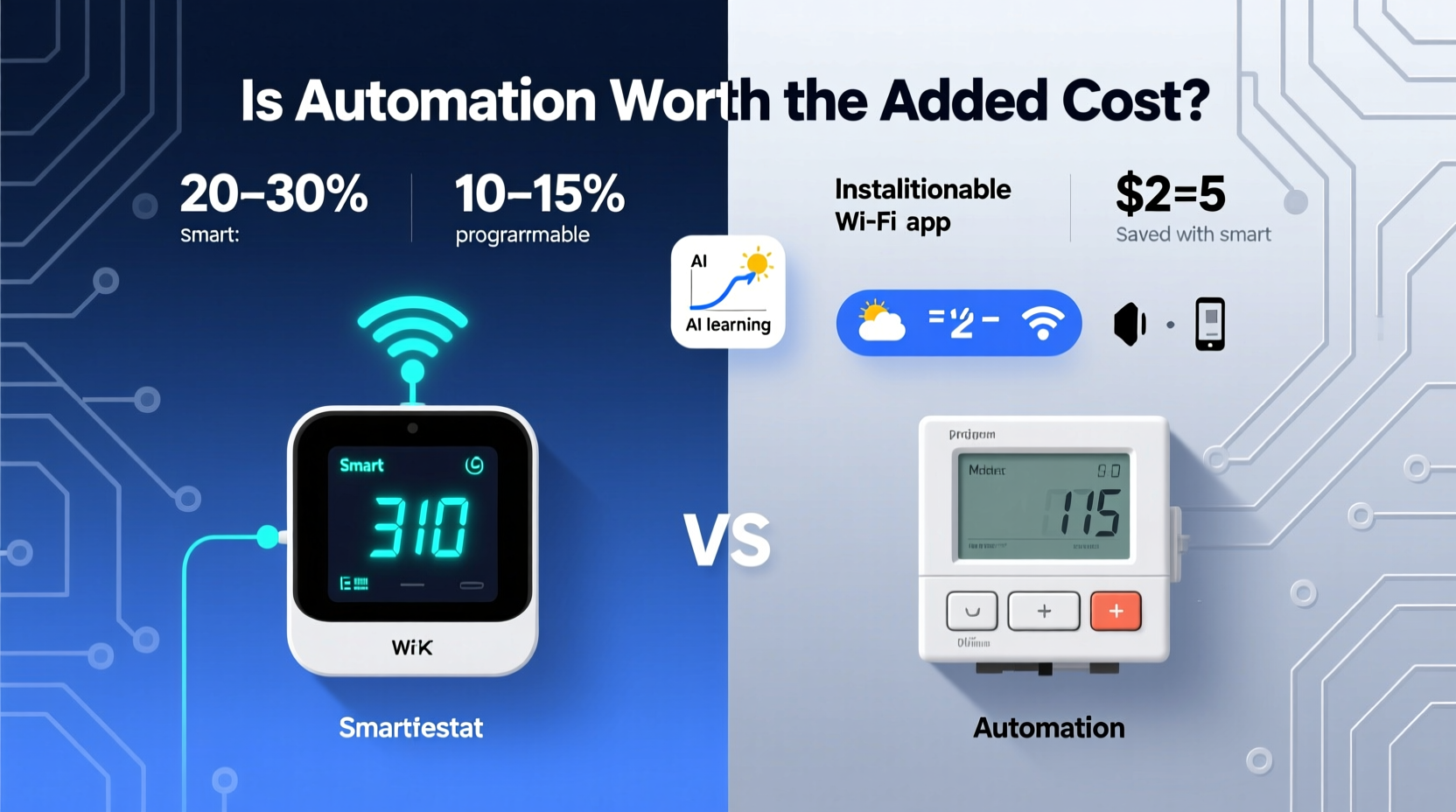
A programmable thermostat allows users to set temperature schedules in advance—cooling down at night or warming up before you wake. These devices eliminate the need to manually adjust settings throughout the day. However, they rely entirely on user input. If the schedule isn’t optimized or life changes unexpectedly, efficiency gains can vanish.
In contrast, a smart thermostat learns your habits over time and adjusts automatically. It connects to Wi-Fi, enabling remote access via smartphone apps, voice assistants, and integration with other smart home devices. Many models detect when you’re away using geofencing and adjust temperatures accordingly. Some even provide energy usage reports and suggest improvements.
The fundamental distinction lies in responsiveness. Programmable thermostats follow static routines; smart thermostats adapt dynamically based on behavior, occupancy, and external conditions.
How Smart Thermostats Work: Beyond Scheduling
Smart thermostats use sensors, algorithms, and cloud-based analytics to optimize heating and cooling. Key features include:
- Learning algorithms: After a few days of manual adjustments, many smart thermostats begin predicting preferred temperatures.
- Geofencing: Uses your phone’s GPS to detect when you leave or return home, adjusting HVAC operation automatically.
- Voice and app control: Adjust settings from anywhere using Alexa, Google Assistant, or a mobile app.
- Energy reports: Monthly summaries show usage patterns and compare performance against similar homes.
- HVAC monitoring: Alerts you to system issues like short cycling or filter replacement needs.
These capabilities transform the thermostat from a simple controller into an intelligent climate manager.
Cost Comparison: Upfront and Long-Term
Programmable thermostats typically range from $30 to $80, depending on brand and interface complexity. Installation is often DIY-friendly, especially if replacing an existing thermostat with compatible wiring.
Smart thermostats start around $100 and can exceed $250 for premium models like the Nest Learning Thermostat or Ecobee Premium. Professional installation may be required in some cases, adding $50–$150 depending on HVAC compatibility and electrical setup.
However, upfront cost is only part of the equation. Energy savings and rebates significantly influence long-term value.
| Feature | Programmable Thermostat | Smart Thermostat |
|---|---|---|
| Average Price | $30–$80 | $100–$250+ |
| Installation | Mostly DIY | DIY or professional |
| Wi-Fi Connectivity | No | Yes |
| Remote Access | No | Yes (via app) |
| Learning Capability | No | Yes |
| Energy Reports | No | Yes |
| Utility Rebates | Rare | Common (e.g., $50–$100) |
| Estimated Annual Savings | $50–$100 | $100–$180 |
The U.S. Department of Energy estimates that proper thermostat programming can save about 10% annually on heating and cooling costs. Smart thermostats, due to adaptive behavior and fewer user errors, often exceed this threshold. Third-party studies, including one by the National Renewable Energy Laboratory (NREL), found that smart thermostats delivered average savings of 10–12% on heating and 15% on cooling—higher than typical programmable models, largely because users rarely program them correctly.
“Many homeowners buy programmable thermostats with good intentions but fail to maintain the schedule. Smart thermostats solve this behavioral gap.” — Dr. Laura Michalek, Building Efficiency Researcher, NREL
Real-World Performance: When Automation Delivers Value
Automation shines most in unpredictable lifestyles. Consider a family where work hours vary, children have after-school activities, or travel is frequent. A programmable thermostat struggles with such variability. If no one remembers to override the schedule, the house heats or cools unnecessarily.
Enter the smart thermostat. By detecting occupancy through connected devices, it avoids conditioning an empty home. One study by Ecobee showed that their motion-sensing room sensors increased efficiency by up to 23% in multi-level homes by focusing heat only where people are present.
Mini Case Study: The Johnson Family
The Johnsons lived in a two-story suburban home in Ohio. They installed a programmable thermostat in 2018 but rarely updated the schedule. Their teenage son stayed late at school, and both parents had rotating shifts. As a result, the house heated to 72°F every morning at 6 a.m.—even on weekends when everyone slept in.
In 2022, they upgraded to a smart thermostat with geofencing and room sensors. Within three weeks, the system learned their movements. Heating began only when someone was detected moving downstairs in the morning. On days when both parents worked remotely, the system maintained comfort without overheating unused rooms.
Their first winter saw a 14% drop in gas usage compared to the previous year, saving $167. With a $75 utility rebate and reduced AC runtime in summer, the thermostat paid for itself in under 18 months.
When a Programmable Thermostat Still Makes Sense
Despite the advantages of smart models, programmable thermostats remain viable for certain users. They are ideal for:
- Renters: Lower cost and no long-term commitment make them practical for temporary setups.
- Simple routines: Households with consistent daily schedules benefit fully from pre-set programs.
- Privacy-conscious users: No Wi-Fi means no data collection or risk of hacking.
- Budget-limited upgrades: When HVAC systems are older or not compatible with smart controls.
Additionally, some homeowners prefer full manual control. They may distrust automated systems or find app interfaces confusing. For these individuals, a well-programmed schedule offers predictable results without reliance on internet connectivity or software updates.
Checklist: Choosing the Right Thermostat for Your Home
- Assess your daily routine: Is it consistent or variable?
- Determine HVAC compatibility: Check voltage, wiring (C-wire availability), and system type (heat pump, furnace, etc.).
- Evaluate internet reliability: Smart thermostats require stable Wi-Fi.
- Research local utility rebates: Many providers offer discounts for ENERGY STAR-certified smart thermostats.
- Consider future smart home plans: Will you integrate with lights, locks, or voice assistants?
- Test usability: Review app interfaces and control layouts before purchasing.
- Estimate payback period: Divide total cost by annual savings to determine break-even time.
Step-by-Step Guide to Maximizing Thermostat Efficiency
Regardless of model type, proper setup is crucial. Follow this timeline to ensure optimal performance:
- Week 1: Install and Connect
Mount the thermostat, connect to power, and link to Wi-Fi (if applicable). For smart models, download the companion app and create an account. - Days 2–7: Set Baseline Preferences
Manually adjust temperatures as needed. Avoid overriding too frequently—let learning models observe natural behavior. - Week 2: Program or Confirm Schedule
For programmable units, lock in weekday/weekend schedules. For smart thermostats, review auto-generated recommendations and approve or tweak them. - Month 1: Monitor Usage
Check energy reports (if available) and compare utility bills from the same period last year. Look for trends in runtime and peak demand. - Ongoing: Maintain and Update
Replace filters every 1–3 months. Recalibrate if readings seem off. Update firmware for smart models to ensure security and feature improvements.
This structured approach ensures both types of thermostats operate efficiently from day one.
Frequently Asked Questions
Can I install a smart thermostat myself?
Most smart thermostats are designed for DIY installation, especially if replacing a similar model. However, lack of a common wire (C-wire) may require an adapter or professional help. Always turn off power at the breaker before starting.
Do smart thermostats really save money?
Yes, but savings depend on usage patterns. Studies show average reductions of 10–15% on HVAC bills. Homes with irregular schedules or frequent absences see the highest returns. Rebates and lower maintenance alerts also contribute to cost savings over time.
Are programmable thermostats obsolete?
Not entirely. They remain effective for users with strict routines and limited budgets. However, their real-world savings often fall short due to improper programming. ENERGY STAR discontinued certification for standalone programmable thermostats in 2019, citing low actual energy savings, signaling a shift toward smarter solutions.
Conclusion: Is Automation Worth the Investment?
The answer depends on lifestyle, technical comfort, and long-term goals. For those with predictable routines and tight budgets, a programmable thermostat still offers meaningful savings over manual control. However, for most modern households—especially those with fluctuating schedules, multiple occupants, or smart home aspirations—a smart thermostat delivers tangible benefits that justify its higher price.
Automation reduces the burden of constant adjustment, prevents energy waste during unexpected absences, and provides insights that empower better decisions. When combined with utility rebates and rising energy costs, the payback period often falls within two years. After that, every dollar saved is pure gain.
Technology should serve people, not complicate them. A smart thermostat doesn’t just automate temperature—it adapts to life as it happens. In a world where convenience and sustainability increasingly go hand in hand, that kind of intelligence isn’t just nice to have. It’s becoming essential.




 浙公网安备
33010002000092号
浙公网安备
33010002000092号 浙B2-20120091-4
Comments
No comments yet. Why don't you start the discussion?