
Heating and cooling account for nearly half of the average home’s energy use. For decades, programmable thermostats offered a way to reduce waste by scheduling temperature changes when no one was home. But with the rise of smart thermostats—devices that learn habits, adapt in real time, and connect to your phone—the question has shifted: Is the extra complexity of a smart thermostat worth it?
The answer isn’t just about technology. It’s about lifestyle, long-term savings, and how much control you want over your comfort. While programmable models are simpler and cheaper, smart thermostats promise greater efficiency through automation. But does that automation deliver enough value to justify the steeper price and learning curve?
Understanding the Core Differences
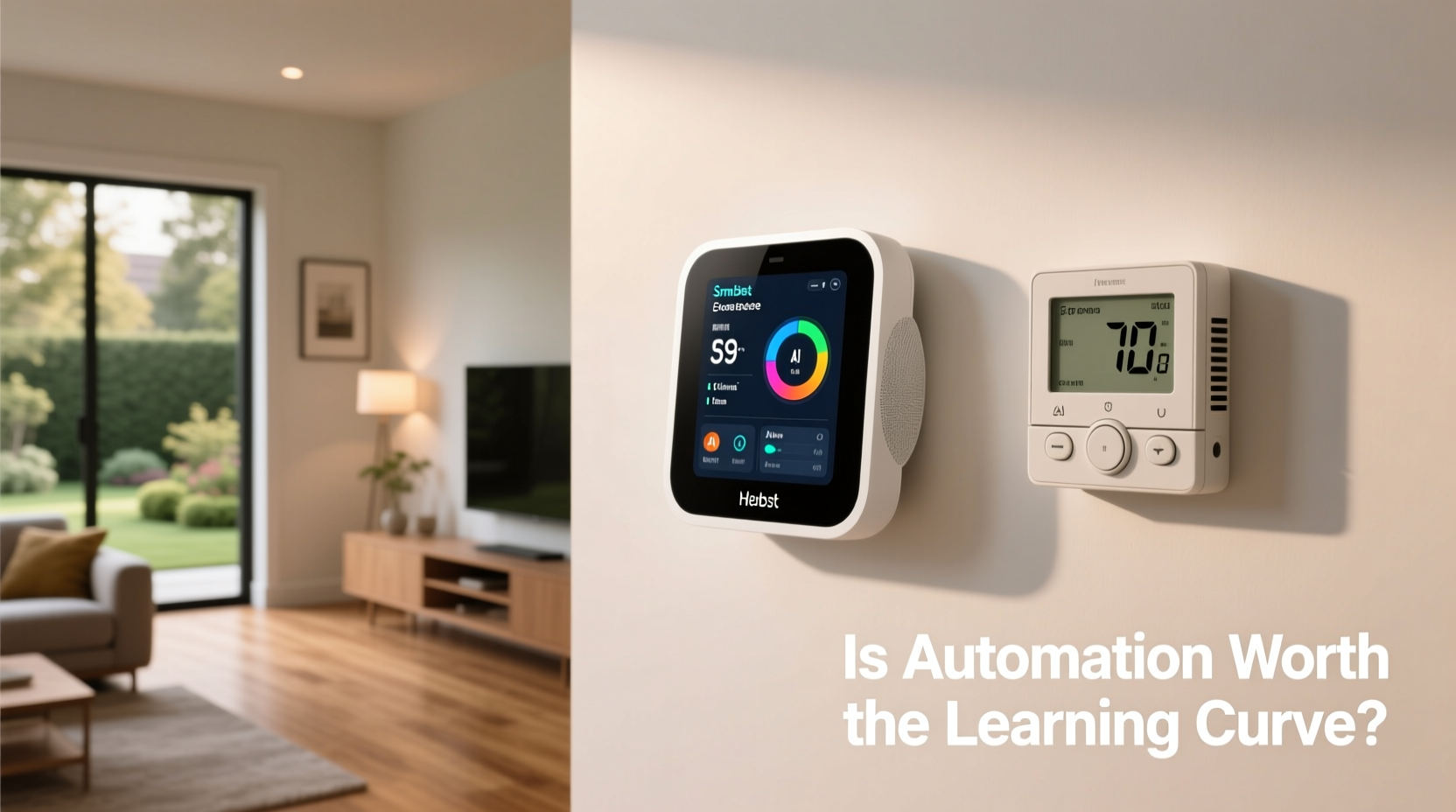
At first glance, both types aim to reduce energy consumption by adjusting temperatures automatically. However, their methods diverge significantly.
Programmable thermostats require manual input. You set a schedule—say, 68°F during waking hours, 62°F at night, and 60°F during work hours—and the system follows it rigidly. If your routine shifts unexpectedly, the thermostat won’t adapt unless you change the settings.
Smart thermostats, on the other hand, use sensors, Wi-Fi connectivity, machine learning, and occupancy detection to make decisions. They learn when you’re typically home, respond to weather forecasts, detect when rooms are unoccupied, and allow remote adjustments via smartphone apps. Some even integrate with voice assistants like Alexa or Google Assistant.
The key distinction is autonomy. A programmable thermostat executes commands; a smart thermostat anticipates needs.
Cost Comparison and Long-Term Value
Upfront cost is often the deciding factor. Programmable thermostats range from $30 to $80, while smart models typically start at $120 and can exceed $250 for premium versions like the Nest Learning Thermostat or Ecobee Premium.
However, evaluating value requires looking beyond purchase price. Energy savings, rebates, and lifespan matter too.
| Feature | Programmable Thermostat | Smart Thermostat |
|---|---|---|
| Average Price | $30–$80 | $120–$250+ |
| Energy Savings (Annual) | 10–15% | 12–23% |
| Rebates Available | Rare | Common (utility companies) |
| Lifespan | 7–10 years | 8–12 years |
| Installation Difficulty | Easy (DIY) | Moderate (C-wire may be needed) |
According to the U.S. Department of Energy, properly used programmable thermostats can save about 10% annually on heating and cooling bills. Smart thermostats, due to adaptive behavior and geofencing (using phone location to detect when you're returning home), often achieve higher savings—up to 23%, as reported in a 2022 study by the American Council for an Energy-Efficient Economy (ACEEE).
Real-World Performance: Does Automation Deliver?
Automation sounds ideal, but its real-world effectiveness depends on user behavior and household dynamics.
In homes with consistent routines, programmable thermostats perform well. A family that leaves for work and school at 8 a.m. and returns at 6 p.m. can set a reliable schedule and enjoy predictable savings. But life isn't always predictable. Late nights, early returns, vacations, or working from home disrupt pre-set schedules, leading to wasted energy or discomfort.
This is where smart thermostats shine. Their ability to detect occupancy and adjust based on actual usage prevents unnecessary heating or cooling. For example, if everyone stays home sick on a Tuesday, the thermostat senses prolonged activity and maintains a comfortable temperature instead of dropping to “away” mode.
“Smart thermostats don’t just react to schedules—they respond to people. That human-centered design is what drives deeper energy savings.” — Dr. Laura Chen, Building Efficiency Researcher at Rocky Mountain Institute
Mini Case Study: The Miller Family
The Millers, a family of four in suburban Chicago, replaced their aging programmable thermostat with a smart model after two winters of inconsistent comfort and high bills. They had previously set a strict schedule, but frequent weekend trips and remote work days made it ineffective.
After installing an Ecobee SmartThermostat, they noticed immediate differences. The device used room sensors to detect which areas were occupied and adjusted airflow accordingly. When the kids stayed late at soccer practice, the system delayed warming the bedrooms until they returned. Over six months, their HVAC energy use dropped by 18%, saving $135 per month during peak winter.
The initial setup took about 45 minutes, including app configuration and sensor placement. Within two weeks, the thermostat learned their patterns. While the wife admitted the app interface felt overwhelming at first, she now uses voice commands daily and checks energy reports weekly.
The Learning Curve: Is It Manageable?
Critics argue that smart thermostats introduce unnecessary complexity. Unlike turning a dial or pressing preset buttons, smart models require engagement with mobile apps, firmware updates, and Wi-Fi networks. For older adults or tech-averse users, this can be a barrier.
However, most manufacturers have simplified onboarding. Guided setup wizards, video tutorials, and customer support reduce friction. Once configured, daily interaction is minimal—often limited to occasional adjustments or checking energy reports.
Still, challenges exist. Homes without a C-wire (common in older HVAC systems) may need professional installation. App reliability can vary, and privacy concerns around data collection persist.
That said, the learning curve tends to flatten quickly. Users who invest time in understanding features like geofencing, energy history, and maintenance alerts report higher satisfaction and better results.
Step-by-Step Guide to Transitioning Smoothly
Switching from a programmable to a smart thermostat doesn’t have to be daunting. Follow these steps to ensure success:
- Assess compatibility: Use online tools (like Nest’s Compatibility Checker) to confirm your HVAC system supports a smart thermostat.
- Check for a C-wire: This provides continuous power. If missing, consider a power extender kit or professional help.
- Choose the right model: Prioritize features you’ll actually use—remote access, room sensors, voice control, etc.
- Install during mild weather: Avoid extreme temperatures so HVAC downtime doesn’t impact comfort.
- Dedicate 30–60 minutes for setup: Download the app, connect to Wi-Fi, and follow in-app instructions.
- Use the first week to train the system: Manually adjust temps when needed—the AI learns from corrections.
- Review energy reports monthly: Track savings and refine settings as seasons change.
When a Programmable Thermostat Still Makes Sense
Despite the advantages of smart models, programmable thermostats remain a sensible choice in certain situations.
- Budget constraints: If upfront cost is critical, a $50 programmable unit delivers solid savings with minimal investment.
- Simple, predictable routines: Households with fixed schedules benefit fully from programmed setbacks.
- Low-tech preferences: Seniors or those avoiding digital ecosystems may prefer tactile controls and simplicity.
- Rental properties: Landlords may opt for basic models to avoid support issues or device theft.
In these cases, the added intelligence of a smart thermostat offers diminishing returns. A well-used programmable model still outperforms manual adjustment and can pay for itself within a year.
Expert Checklist: Choosing the Right Option
Use this checklist to determine which thermostat suits your needs:
- ☐ Do you frequently change your daily routine? → Favors smart thermostat
- ☐ Is your HVAC system newer and C-wire equipped? → Favors smart thermostat
- ☐ Are you comfortable using smartphone apps regularly? → Favors smart thermostat
- ☐ Do you leave the house at consistent times every day? → Favors programmable
- ☐ Is your budget under $100? → Favors programmable
- ☐ Do you want remote access or voice control? → Favors smart thermostat
- ☐ Are you eligible for utility rebates? → Favors smart thermostat
FAQ: Common Questions Answered
Can I install a smart thermostat myself?
Yes, most models are designed for DIY installation, especially if your system has a C-wire. Manufacturers provide detailed step-by-step guides. However, if you’re uncomfortable with electrical wiring or lack a C-wire, hiring an HVAC technician ($75–$150) ensures safe setup.
Do smart thermostats really save more than programmable ones?
On average, yes—but only if used correctly. Studies show smart thermostats deliver 5–8% additional savings due to adaptive learning and occupancy sensing. However, if you never engage with the app or disable key features, the gap narrows significantly.
Are there privacy risks with smart thermostats?
All connected devices collect data. Reputable brands like Nest, Ecobee, and Honeywell encrypt user information and allow granular privacy controls. To minimize risk, use strong passwords, enable two-factor authentication, and review data-sharing settings during setup.
Conclusion: Weighing Simplicity Against Smarter Living
The decision between a smart and programmable thermostat ultimately hinges on how you live. If your days follow a clockwork rhythm and you prefer hands-off simplicity, a programmable model remains a practical, cost-effective solution. But if your schedule fluctuates, you value convenience, or you’re committed to reducing energy waste, the automation of a smart thermostat is likely worth the initial effort.
The learning curve exists, but it’s short and increasingly well-supported. Modern interfaces are intuitive, and the long-term payoff—measured in comfort, control, and lower bills—often outweighs the minor complexity. As homes grow smarter, thermostats are no longer just climate controllers; they’re intelligent partners in efficient living.




 浙公网安备
33010002000092号
浙公网安备
33010002000092号 浙B2-20120091-4
Comments
No comments yet. Why don't you start the discussion?