
Heating and cooling account for nearly half of the average American household’s energy use. With utility costs rising, homeowners are turning to thermostats as a frontline tool for reducing electric bills. Two dominant options exist: programmable thermostats and smart thermostats. While both promise savings, they differ significantly in functionality, user behavior impact, and actual energy reduction. This article examines real-world data, studies, and consumer reports to determine which thermostat delivers measurable cost savings — and under what conditions.
How Programmable Thermostats Work
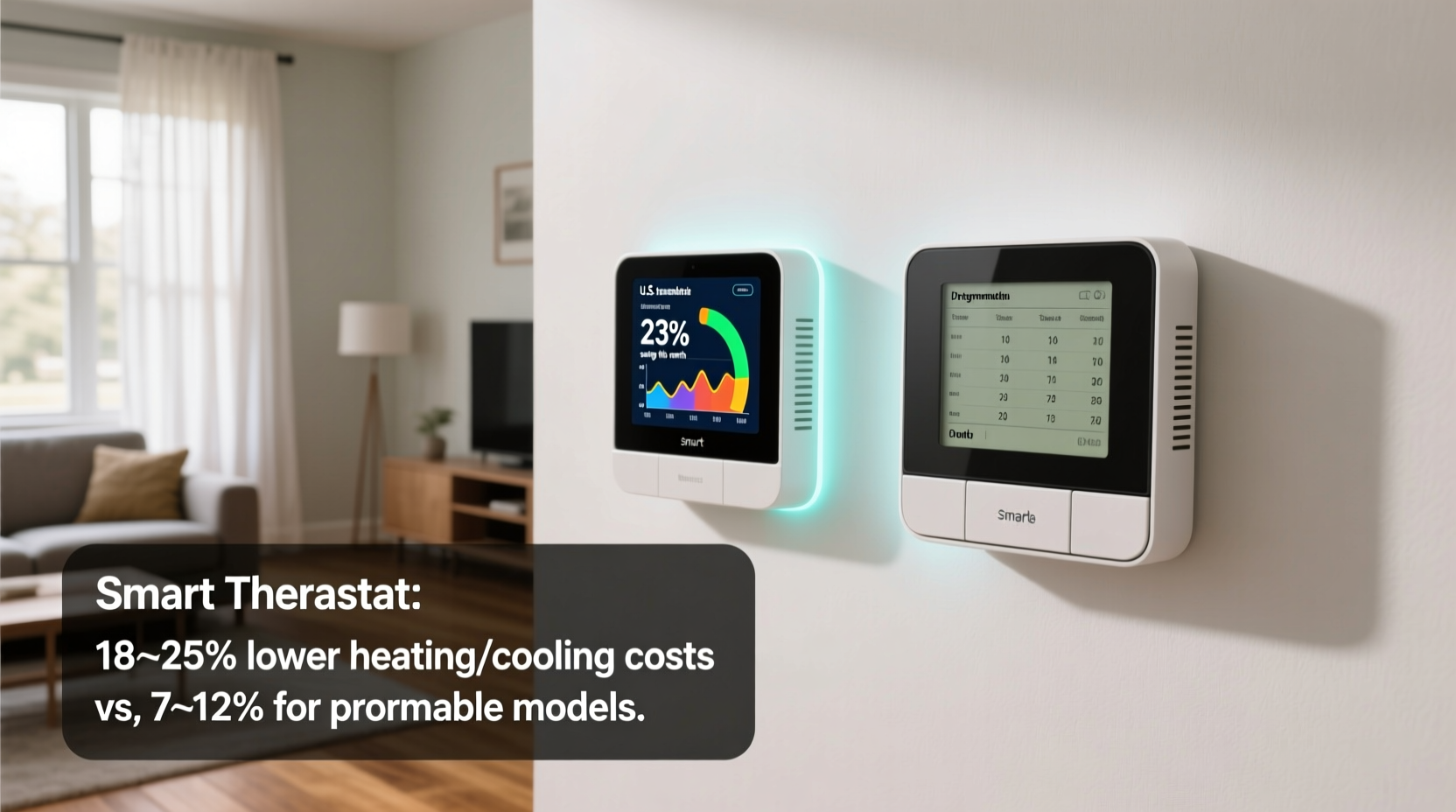
Programmable thermostats allow users to set temperature schedules based on time of day or day of the week. For example, you can program the system to lower the heat at night or when no one is home during work hours. The U.S. Department of Energy estimates that properly adjusting your thermostat by 7–10°F for eight hours a day can save up to 10% annually on heating and cooling.
These devices rely heavily on user input. If not programmed correctly — or if occupants override settings frequently — energy savings diminish or disappear entirely. Studies from the Lawrence Berkeley National Laboratory (LBNL) show that only about 40% of programmable thermostat owners actually use them as intended.
The Rise of Smart Thermostats
Smart thermostats go beyond pre-set programming. Devices like the Nest Learning Thermostat, Ecobee, and Honeywell Home T9 learn your habits over time, adjust automatically, and integrate with Wi-Fi for remote control via smartphone apps. They detect occupancy using motion sensors or geofencing (using phone location), turning down the heat or AC when the house is empty.
Unlike programmable models, smart thermostats adapt. If you consistently arrive home at 6:15 PM, it will begin warming the house before then — but only if you're heading home. This dynamic adjustment reduces unnecessary heating or cooling.
A 2020 field study by the National Renewable Energy Laboratory (NREL) analyzed over 1,300 homes using Nest thermostats across the U.S. The study found an average HVAC energy savings of 10–12% in heating and 15% in cooling. These results were consistent across climate zones, though savings were higher in regions with extreme temperatures.
Direct Comparison: Real Data from Field Studies
To understand which thermostat truly saves more money, we must look beyond marketing claims and examine independent, peer-reviewed research. Below is a summary of findings from multiple studies comparing smart and programmable thermostats.
| Study / Source | Thermostat Type | Avg. Heating Savings | Avg. Cooling Savings | User Compliance Rate |
|---|---|---|---|---|
| NREL (2020) | Smart (Nest) | 11% | 15% | 89% |
| LBNL (2016) | Programmable | 0–5% | 0–3% | 38% |
| Pacific Gas & Electric (2018) | Smart (Ecobee) | 12% | 18% | 82% |
| Consumer Reports (2021) | Programmable (Basic Models) | 2–7% | 3–6% | 45% |
The data reveals a clear trend: while programmable thermostats have theoretical savings potential, real-world performance lags due to low user engagement. In contrast, smart thermostats deliver consistent energy reductions because they automate optimal behavior rather than relying on manual input.
“Smart thermostats close the ‘intention-action gap’ — people want to save energy, but they don’t always act on it. Automation ensures efficiency without burdening the user.” — Dr. Richard Brown, Senior Scientist, Lawrence Berkeley National Laboratory
Cost Analysis: Upfront Price vs Long-Term Savings
Smart thermostats typically cost between $100 and $250, while basic programmable models range from $30 to $80. However, long-term savings often justify the higher initial investment.
Assume an average annual HVAC electricity cost of $1,200. A 12% savings from a smart thermostat equals $144 per year. At this rate, a $150 smart thermostat pays for itself in just over one year. After five years, net savings exceed $500.
In contrast, a programmable thermostat may save only 5% ($60/year) in real-world conditions. Even at $40, it takes nearly a year to break even — and total savings over five years amount to about $260, less than half that of a smart model.
Additionally, many utility companies offer rebates for smart thermostat installation. For example, Xcel Energy provides up to $100 off a qualifying device, effectively making some models free. These incentives further reduce payback periods.
Mini Case Study: The Martinez Family in Denver
The Martinez family replaced their decade-old programmable thermostat with a Nest Learning Thermostat in January 2022. Their previous setup was rarely used; despite good intentions, changing schedules for workdays, school holidays, and weekends proved too cumbersome.
Within two weeks, the Nest learned their routine: leaving at 7:30 AM and returning around 6:00 PM. It began lowering the heat to 62°F during work hours and warming the house 30 minutes before arrival. Geofencing ensured adjustments only occurred when everyone left, avoiding false triggers.
Their winter heating bill dropped from an average of $187/month to $153/month — a 18% reduction. Over the entire year, including summer cooling, they saved $412. The $169 thermostat paid for itself in five months. “We didn’t change our lifestyle,” said Maria Martinez. “The thermostat changed for us.”
Step-by-Step Guide to Maximizing Thermostat Savings
Whether you choose a programmable or smart thermostat, follow these steps to ensure optimal savings:
- Set realistic temperature setbacks: Lower the heat by 7–10°F when asleep or away. Each degree adjusted for eight hours can save about 1% on heating costs.
- Use occupancy features: Enable geofencing or motion detection if available. Disable “hold” or “vacation” modes unless truly needed.
- Seal air leaks first: No thermostat can compensate for drafts. Check windows, doors, and ductwork before expecting major savings.
- Pair with ceiling fans: In summer, fans allow you to raise the thermostat by 4°F without comfort loss.
- Review usage reports: Smart thermostats provide monthly energy history. Use this data to refine settings.
- Maintain your HVAC system: Replace filters monthly during peak seasons. A clean system runs more efficiently.
Checklist: Choosing the Right Thermostat for Your Home
- ✅ Do you forget to adjust temperatures daily? → Choose a smart thermostat.
- ✅ Are you tech-savvy and own a smartphone? → Smart models offer full app integration.
- ✅ Is your HVAC system older than 10 years? → Consider compatibility; some smart thermostats require a C-wire.
- ✅ Do you live alone with a predictable schedule? → A programmable thermostat may suffice.
- ✅ Are you eligible for utility rebates? → Check local programs; smart thermostats often qualify.
- ✅ Do you frequently override settings? → Automation will help eliminate inefficient habits.
Common Misconceptions About Thermostat Savings
Several myths persist about how thermostats affect energy bills:
- Myth: Turning the heat way down at night wastes more energy reheating the house.
Truth: Modern systems heat efficiently. The energy saved during setback far outweighs reheating costs. - Myth: Smart thermostats work perfectly out of the box.
Truth: They require a learning period (usually 1–2 weeks). Manual adjustments during this phase improve accuracy. - Myth: All programmable thermostats save energy.
Truth: Only 38% of users achieve savings due to improper setup or disuse, according to LBNL.
Frequently Asked Questions
Do smart thermostats really save money compared to programmable ones?
Yes, based on real-world data. Smart thermostats save an average of 10–15% on heating and cooling due to automation and occupancy sensing. Programmable thermostats often fail to deliver savings because users don’t program or maintain them properly.
Can I install a smart thermostat myself?
Most models are designed for DIY installation and take under an hour. However, if your system lacks a common wire (C-wire), you may need an adapter or professional help. Always check compatibility before purchasing.
Are there privacy concerns with smart thermostats?
Some users worry about location tracking via geofencing. You can disable this feature, though it reduces efficiency. Reputable brands encrypt data and allow granular privacy controls in their apps.
Conclusion: Making the Right Choice for Your Budget and Lifestyle
The evidence is clear: smart thermostats outperform programmable models in real-world energy savings. While both types can reduce electric bills, smart thermostats deliver consistent, hands-free efficiency by adapting to your life instead of requiring you to adapt to them.
For households with irregular schedules, frequent travel, or a history of forgetting to adjust settings, a smart thermostat isn’t just a convenience — it’s a financially sound investment. Even in homes with disciplined routines, automation eliminates human error and optimizes performance over time.
If you’re still using a basic or non-programmable thermostat, upgrading to any programmable model offers immediate benefits. But for maximum return on investment, long-term savings, and effortless control, smart thermostats represent the future of home energy management.




 浙公网安备
33010002000092号
浙公网安备
33010002000092号 浙B2-20120091-4
Comments
No comments yet. Why don't you start the discussion?