
Heating and cooling account for nearly half of the average home’s energy use. That makes your thermostat one of the most influential devices in your household when it comes to comfort and utility bills. For years, programmable thermostats were the gold standard for efficiency—offering homeowners a way to automate temperature settings based on daily routines. But with the rise of smart technology, smart thermostats now promise even greater control, convenience, and energy savings through learning algorithms and remote access. The question remains: is the added intelligence—and higher price tag—worth it?
This article breaks down the key differences between smart and programmable thermostats, evaluates real-world performance, and helps you determine whether investing in a learning thermostat delivers measurable returns.
How Programmable Thermostats Work
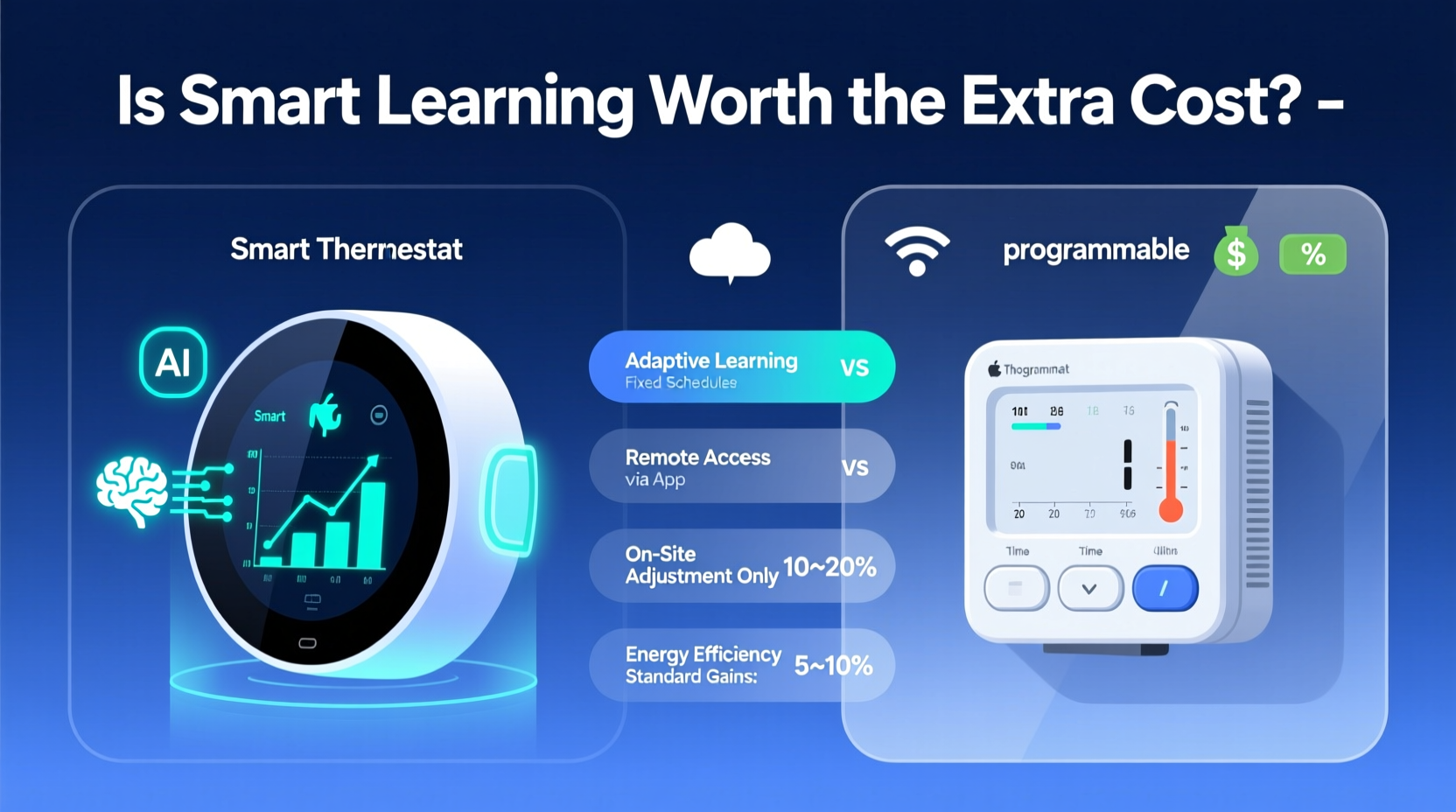
Programmable thermostats allow users to set temperature schedules in advance. For example, you can program the system to lower the heat at night or when no one is home, then warm the house before waking or returning from work. Most models offer multiple scheduling options: weekday vs. weekend settings, vacation modes, and adjustable time intervals.
The primary benefit lies in automation. Instead of manually adjusting the temperature throughout the day, the system follows a pre-set routine. When used correctly, this can reduce energy waste and lower HVAC operating costs by 5% to 15%, according to the U.S. Department of Energy.
However, programmable thermostats have limitations. Their effectiveness depends entirely on user input. If the schedule isn’t set up properly—or if life disrupts the routine—the thermostat continues blindly following the plan, potentially heating or cooling an empty house.
What Makes a Thermostat “Smart”?
Smart thermostats go beyond preset schedules. They connect to Wi-Fi, enabling remote control via smartphone apps, voice assistants (like Alexa or Google Assistant), and integration with other smart home systems. More importantly, many models feature adaptive learning capabilities.
Learning thermostats, such as the Nest Learning Thermostat or Ecobee SmartThermostat, observe your behavior over time. By tracking when you adjust the temperature, arrive home, or leave, they begin to predict your preferences and automatically create a personalized heating and cooling schedule. Some even use occupancy sensors or geofencing (using your phone’s location) to detect when you’re approaching home and start adjusting the temperature accordingly.
Additional features often include:
- Energy usage reports and efficiency tips
- Weather adaptation (adjusting for outdoor conditions)
- Voice control compatibility
- Integration with smart vents or humidifiers
- Alerts for HVAC maintenance or filter changes
These features aim not just to automate, but to optimize—making decisions based on real-time data rather than static programming.
Cost Comparison: Upfront and Long-Term Value
Price is one of the most immediate differentiators. Programmable thermostats typically range from $30 to $80, while smart thermostats start around $100 and can exceed $250 for premium models with advanced sensors and AI features.
But cost shouldn’t be evaluated in isolation. The real metric is return on investment (ROI): how long it takes for energy savings to offset the initial purchase price.
The U.S. Environmental Protection Agency (EPA) estimates that homeowners can save about $131 to $145 per year by using a smart thermostat effectively. At that rate, a $150 smart thermostat could pay for itself in just over a year. However, these figures assume consistent usage and optimal setup—something not all users achieve.
“Smart thermostats are more than gadgets—they’re energy managers. When paired with mindful usage, they deliver measurable reductions in consumption.” — Dr. Lena Patel, Energy Efficiency Researcher at the National Institute of Building Sciences
Breakdown of Features and Costs
| Feature | Programmable Thermostat | Smart Thermostat |
|---|---|---|
| Price Range | $30 – $80 | $100 – $250+ |
| Wi-Fi Connectivity | No | Yes |
| Remote Access (App Control) | No | Yes |
| Voice Assistant Support | No | Yes (Alexa, Google, Siri) |
| Learning Capabilities | No | Yes (adaptive scheduling) |
| Occupancy/Geofencing Detection | No | Yes |
| Energy Usage Reports | Limited or None | Detailed Monthly Insights |
| HVAC Maintenance Alerts | No | Yes |
| Average Annual Savings | $50 – $80 (with proper use) | $130 – $180 (with optimal use) |
Real-World Performance: Do Smart Thermostats Deliver?
While manufacturers tout double-digit energy savings, actual results vary widely depending on climate, home insulation, HVAC system age, and user behavior.
A 2020 study by the American Council for an Energy-Efficient Economy (ACEEE) analyzed real-world data from over 10,000 homes. It found that smart thermostats achieved average heating and cooling savings of 10%–12%. However, only about 60% of users fully engaged with the device’s features. Many failed to complete setup, disabled learning functions, or reverted to manual overrides.
In contrast, programmable thermostats showed lower average savings—around 5%—but only because fewer than 30% of owners actually programmed them correctly. As one utility engineer put it: “The most efficient thermostat is the one you actually use.”
Mini Case Study: The Johnson Family
The Johnsons, a family of four in suburban Chicago, replaced their aging programmable thermostat with a Nest Learning Thermostat. Initially skeptical, they followed the setup guide and allowed the device two weeks to learn their patterns.
Within a month, the thermostat adjusted morning warm-ups based on school drop-offs and delayed evening heating when they dined out. Using geofencing, it detected when the last family member left the house and switched to Eco mode automatically.
After six months, their gas and electric bills averaged 14% lower than the same period the previous year—saving approximately $170. They also appreciated being able to adjust the temperature remotely during unexpected snowstorms or early returns from vacation.
“It’s not magic,” said Mark Johnson, “but it’s like having a helpful assistant who knows our habits better than we do.”
Is Learning Worth the Extra Cost?
The answer depends on your lifestyle, technical comfort, and commitment to energy efficiency.
If you have a consistent daily routine and are diligent about setting up and maintaining schedules, a programmable thermostat may suffice—and save you money upfront. But if your schedule fluctuates, you travel frequently, or you forget to adjust settings, a smart thermostat’s ability to adapt autonomously becomes invaluable.
Moreover, the convenience factor should not be dismissed. Being able to turn up the heat from bed or check if you left the AC running while at work adds tangible quality-of-life improvements. For tech-savvy households or those building a smart home ecosystem, the integration benefits alone justify the upgrade.
Step-by-Step Guide: Choosing the Right Thermostat
- Assess Your Routine: Is your daily schedule predictable? If yes, a programmable model might work. If variable, lean toward smart.
- Evaluate Technical Comfort: Are you comfortable downloading apps and connecting devices to Wi-Fi? If not, a simpler interface may be preferable.
- Check Compatibility: Verify that the thermostat works with your HVAC system (e.g., multi-stage, heat pump, millivolt).
- Research Rebates: Visit programs like ENERGY STAR Rebate Finder to see if incentives are available in your area.
- Compare Models: Read reviews focusing on reliability, customer support, and ease of installation.
- Calculate Payback Period: Divide the upfront cost by estimated annual savings to see how quickly it pays for itself.
Checklist: Before Buying a Smart Thermostat
- ✅ Confirm HVAC system compatibility
- ✅ Ensure stable Wi-Fi signal near the thermostat location
- ✅ Check for C-wire (common wire) or verify battery-powered operation
- ✅ Review privacy policy (some devices collect usage data)
- ✅ Confirm availability of local customer support
- ✅ Verify if professional installation is recommended
Frequently Asked Questions
Can I install a smart thermostat myself?
Many models are designed for DIY installation, especially if replacing a compatible thermostat. However, if your system lacks a C-wire or involves complex wiring (e.g., dual-fuel systems), professional help is recommended. Incorrect installation can damage your HVAC system.
Do smart thermostats really learn, or is it just marketing?
True learning thermostats do analyze behavior over time. For example, Nest uses machine learning to identify patterns in manual adjustments and occupancy. While not infallible, studies show they improve accuracy within 1–2 weeks of use. Non-learning smart thermostats rely on app-based scheduling and lack adaptive intelligence.
Are there privacy concerns with smart thermostats?
Yes. These devices collect data on your presence, temperature preferences, and usage patterns. Most companies anonymize and encrypt data, but it’s wise to review privacy settings and disable data-sharing options if desired. You can usually opt out of non-essential data collection during setup.
Conclusion: Making the Smart Choice
The choice between a smart and programmable thermostat isn’t just about technology—it’s about alignment with your lifestyle and goals. Programmable models remain a budget-friendly option for disciplined users with regular routines. But for most modern households, the flexibility, automation, and long-term savings of a smart thermostat justify the higher initial cost.
The learning capability isn’t a gimmick; it’s a tool that compensates for human inconsistency. In a world where schedules change, vacations happen, and remote work blurs the lines between home and office, a thermostat that adapts is more than convenient—it’s efficient.
If you're ready to reduce energy waste, gain remote control, and let technology handle the details, investing in a smart thermostat is a decision that pays back in both comfort and cost savings.




 浙公网安备
33010002000092号
浙公网安备
33010002000092号 浙B2-20120091-4
Comments
No comments yet. Why don't you start the discussion?