
Heating and cooling account for nearly half of the average home’s energy use, making thermostat management one of the most impactful ways to reduce utility bills. As technology advances, smart thermostats have emerged as a modern alternative to traditional manual or programmable models. But with price tags often exceeding $100, many homeowners ask: do smart thermostats actually deliver meaningful savings? Or are they just another tech trend with limited return on investment?
The answer isn’t simple. While smart thermostats offer advanced features like learning behavior, remote access, and integration with smart home systems, their ability to save money depends on usage patterns, climate, insulation quality, and household dynamics. This article compares smart and traditional thermostats in depth, evaluates real-world data, and provides actionable insights to help you decide whether upgrading is worth it.
How Traditional Thermostats Work (And Where They Fall Short)
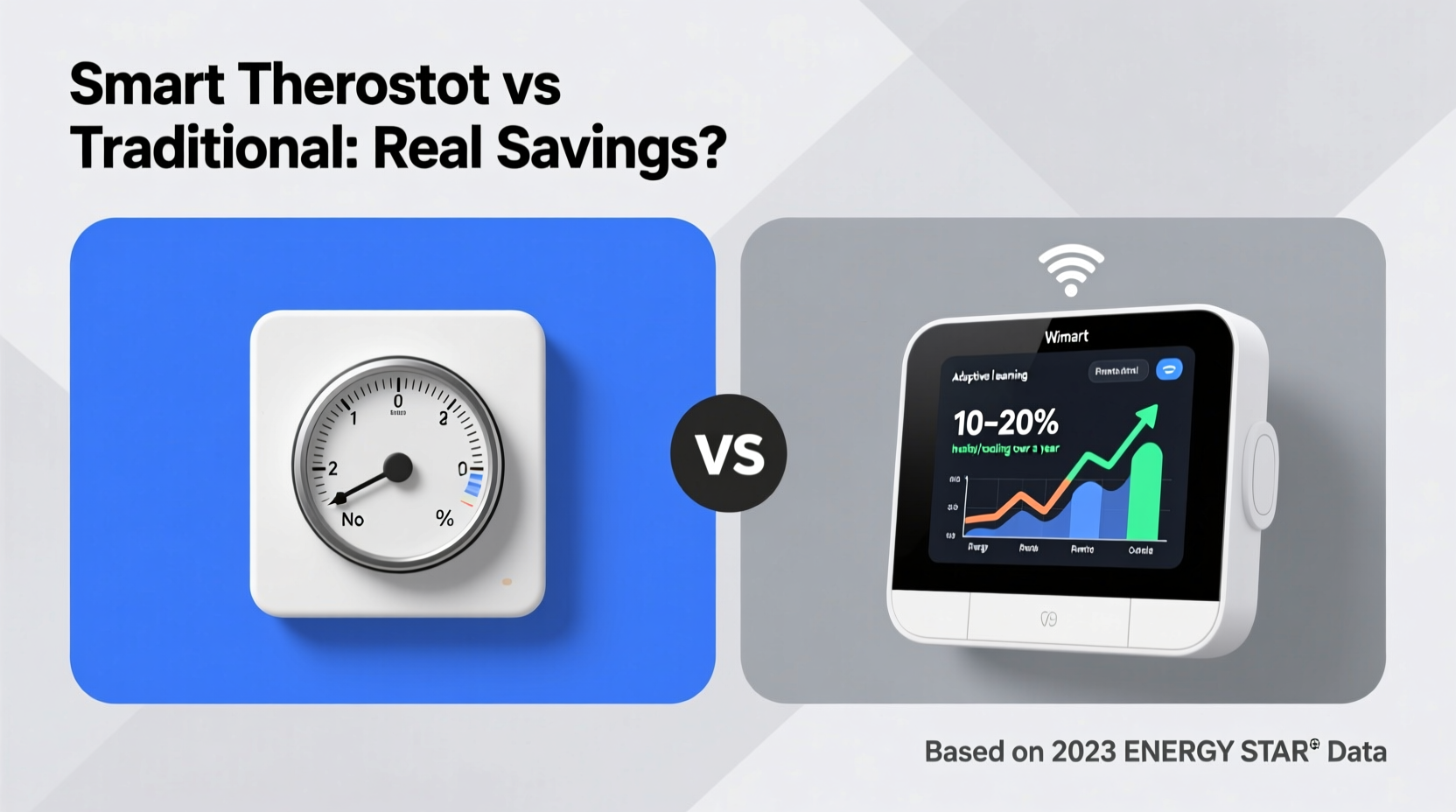
Traditional thermostats come in two main types: manual and programmable. Manual thermostats require users to adjust temperature settings physically each time a change is needed. Programmable models allow scheduling—setting different temperatures for different times of day—but rely heavily on user input and consistency.
Despite their simplicity, traditional thermostats have notable limitations:
- Lack of automation: Even programmable units don't adapt to unexpected changes in routine.
- User error: Studies show that up to 40% of homeowners with programmable thermostats never set them correctly, negating potential savings.
- No remote control: If you forget to turn down the heat before leaving for vacation, you’re stuck paying for wasted energy.
- No data feedback: They don’t provide insights into energy usage or HVAC system performance.
In theory, a perfectly programmed thermostat could match the efficiency of a smart model. In practice, human inconsistency undermines this potential.
What Makes Smart Thermostats Different?
Smart thermostats go beyond scheduling by incorporating sensors, Wi-Fi connectivity, machine learning, and cloud-based analytics. Key features include:
- Learning algorithms: Devices like the Nest Learning Thermostat observe your preferences over a week and automatically create a heating and cooling schedule.
- Geofencing: Uses smartphone location to detect when you’re leaving or approaching home, adjusting temperatures accordingly.
- Remote access: Adjust settings from anywhere via smartphone apps.
- Energy reports: Monthly summaries show usage trends and suggest improvements.
- HVAC monitoring: Alerts you to system issues like short cycling or filter replacement needs.
- Integration: Works with voice assistants (Alexa, Google Assistant) and other smart home devices.
These capabilities aim to optimize comfort while minimizing energy waste—without requiring constant user intervention.
Real Energy Savings: What the Data Says
Independent studies and manufacturer claims vary, but several credible sources provide insight into actual savings:
- A Nest-commissioned study by Ecofys found average heating and cooling savings of 10–12% on heating and 15% on cooling—equivalent to about $131–$145 per year for the typical U.S. household.
- The U.S. Department of Energy estimates that properly setting back your thermostat by 7–10°F for 8 hours a day can save up to 10% annually on heating and cooling.
- A Pacific Northwest National Laboratory (PNNL) field study showed that smart thermostats reduced HVAC runtime by 9.5% on average, though results varied widely based on installation quality and user engagement.
“Smart thermostats can deliver savings, but only if they’re installed correctly and used consistently. The biggest gains come from behavioral automation—not just convenience.” — Dr. Richard Brown, Senior Scientist, Lawrence Berkeley National Laboratory
Comparing Costs: Upfront vs Long-Term Value
Smart thermostats typically cost between $100 and $250, compared to $20–$60 for basic programmable models. Installation is usually DIY-friendly, but professional help may be needed for systems lacking a common “C-wire” for continuous power.
To evaluate true value, consider total cost of ownership over five years:
| Thermostat Type | Upfront Cost | Avg. Annual Savings | 5-Year Net Cost | Key Limitations |
|---|---|---|---|---|
| Manual Thermostat | $20 | $0 | $20 | High risk of energy waste; no automation |
| Programmable Thermostat | $50 | $40 (if used correctly) | $-150 | Dependent on user programming; often misused |
| Smart Thermostat | $150 | $135 | $-525 | Higher initial cost; requires Wi-Fi and app use |
While smart thermostats have the highest upfront cost, their automation and adaptive features lead to greater long-term savings—especially in homes where routines fluctuate. Over five years, a smart thermostat can generate a net financial benefit of over $500 when factoring in energy reduction.
Case Study: The Johnson Family’s Experience
The Johnsons, a family of four in suburban Chicago, replaced their outdated manual thermostat with a Nest Learning Thermostat in January. Their old routine involved leaving the heat at 70°F all day, even during work and school hours.
Within two weeks, the Nest learned their schedule and began lowering the temperature to 62°F when everyone was away. Geofencing ensured the house warmed up 30 minutes before arrival. They also received monthly energy reports highlighting peak usage times.
After one year, their gas bill dropped by 14%, saving $187. Combined with a $75 utility rebate, the device paid for itself in under 11 months. Bonus benefits included remote adjustments during vacations and alerts about an aging furnace that needed servicing—preventing a costly breakdown.
Their experience reflects what many see: modest but consistent savings, enhanced comfort, and added peace of mind.
When Smart Thermostats Don’t Save Money
Despite their advantages, smart thermostats aren’t universally beneficial. In certain situations, they may not deliver significant savings—or could even increase costs:
- Simple, predictable routines: If you already manually adjust temperatures efficiently, automation adds little value.
- Well-insulated homes: Tight envelopes with minimal air leakage lose heat slowly, reducing the impact of setback strategies.
- Electric resistance heating: Unlike heat pumps or gas furnaces, electric baseboards are inefficient regardless of thermostat type.
- Rarely home: If the house is unoccupied most of the time, both smart and traditional thermostats will keep temps low—limiting differential savings.
- Poor setup: Incorrect wiring, bad placement (e.g., near windows or vents), or disabling key features reduces effectiveness.
Step-by-Step Guide to Maximizing Savings
To get the most out of a smart thermostat—whether you own one now or plan to buy one—follow this practical timeline:
- Week 1: Observe and Learn
Let the thermostat learn your habits. Manually adjust temperatures as needed so it builds an accurate profile. - Week 2: Set Preferences
Use the app to define ideal comfort ranges and enable geofencing. Confirm your phone’s location services are active. - Month 1: Review Initial Report
Check the first energy summary. Note high-usage periods and adjust schedules accordingly. - Quarterly: Maintain System Health
Replace HVAC filters, clean vents, and ensure ducts are sealed. A smart thermostat can’t compensate for poor airflow. - Annually: Reassess Lifestyle Changes
Updated work schedules, new family members, or seasonal travel patterns should be reflected in settings.
Consistent engagement ensures the device adapts to real-life conditions rather than operating on outdated assumptions.
Frequently Asked Questions
Do smart thermostats work with all HVAC systems?
Most modern smart thermostats support standard gas, electric, and heat pump systems. However, older or complex setups (like multi-stage heating or millivolt controls) may not be compatible. Always check compatibility tools on manufacturer websites before purchasing.
Can I install a smart thermostat myself?
Yes, many models—including Ecobee and Nest—are designed for DIY installation with step-by-step app guidance. However, if your system lacks a C-wire or involves intricate wiring, hiring an HVAC technician ($75–$150) is recommended to avoid damage.
Are there rebates available for smart thermostats?
Yes. Many utility companies offer rebates ranging from $25 to $100 for installing ENERGY STAR-certified smart thermostats. Visit programs like ENERGY STAR’s Rebate Finder to check local incentives.
Final Verdict: Are Smart Thermostats Worth It?
For most households, the answer is yes—smart thermostats can genuinely save money, especially when replacing manual models or poorly used programmable ones. The combination of automated setbacks, remote control, and system monitoring leads to measurable reductions in energy consumption.
Savings may not be dramatic—typically $100–$150 per year—but they accumulate. When paired with utility rebates, payback periods often fall below 12 months. Beyond economics, users report improved comfort, better awareness of energy use, and increased control over indoor climate.
However, the technology shines brightest in dynamic households where routines shift frequently. For those already disciplined with temperature management, the upgrade offers more convenience than cost savings.




 浙公网安备
33010002000092号
浙公网安备
33010002000092号 浙B2-20120091-4
Comments
No comments yet. Why don't you start the discussion?