
Most people don’t think twice about where they place a trash can—until it clashes with their décor or becomes an eyesore in a well-designed living room. The truth is, the right trash can does more than collect waste; it complements your space, supports daily routines, and reflects attention to detail. Unlike kitchens or bathrooms, living rooms demand discretion and design harmony. Choosing the ideal trash can means balancing aesthetics with practicality. From material durability to footprint efficiency, every choice impacts both function and form.
Assess Your Living Room’s Design Language
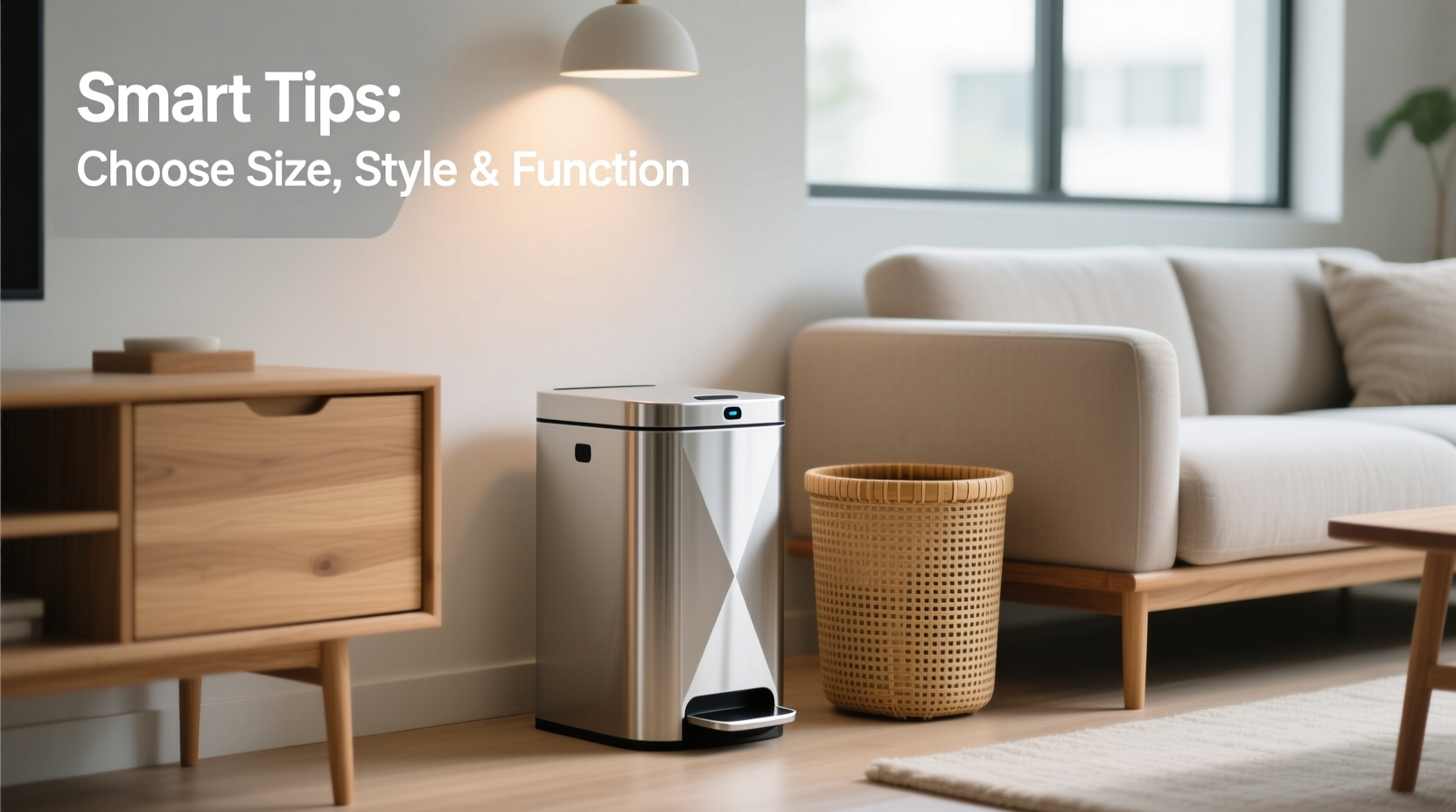
The first step in selecting the right trash can is understanding your living room’s aesthetic. A modern minimalist space calls for clean lines and neutral tones, while a rustic or bohemian interior might welcome textured finishes like woven rattan or hammered metal. Ignoring design cohesion turns even the most functional bin into a visual disruption.
Consider these common living room styles and their compatible trash can profiles:
- Modern/Contemporary: Sleek stainless steel, matte black, or white cylindrical bins with touch-lid mechanisms.
- Scandinavian: Wooden accents, muted colors, and compact shapes—think oak-finished lids or soft-close features.
- Industrial: Galvanized metal, exposed rivets, or wire mesh designs that echo factory-inspired elements.
- Traditional: Ornate details, brass trims, or ceramic models resembling small decorative urns.
- Eclectic: Bold colors or uniquely shaped cans that double as conversation pieces.
Size and Placement: Functionality Without Sacrificing Flow
A trash can should be accessible but not obstructive. In a living room, traffic patterns matter. Placing a large bin in the middle of a walkway disrupts movement, while hiding it too far away discourages use, leading to litter accumulation.
Measure the available space before purchasing. Standard living room-compatible trash cans range from 3 to 7 gallons. Anything larger risks dominating the space; anything smaller may require emptying multiple times a day.
Common strategic placements include:
- Near side tables or coffee tables (ideal for snack wrappers and drink containers).
- Inside console cabinets or entertainment centers (for hidden yet accessible storage).
- Next to reading nooks or home bars (high-waste zones during leisure time).
“Furniture integration is key in living spaces. If you can hide the bin behind a door or within a media unit, do it. Discretion elevates design.” — Lena Torres, Interior Stylist & Sustainable Home Advocate
Material Matters: Durability Meets Aesthetic Appeal
The material of your trash can affects longevity, maintenance, and how well it fits into your décor. Each option has trade-offs in terms of cost, resilience, and appearance.
| Material | Pros | Cons | Best For |
|---|---|---|---|
| Stainless Steel | Durable, modern look, resists odors, easy to wipe down | Shows fingerprints, can dent, often louder when closing | Contemporary homes, high-traffic areas |
| Plastic (BPA-free) | Lightweight, affordable, wide color variety | Scratches easily, may yellow over time, less premium feel | Families, rental units, temporary setups |
| Wood or Bamboo | Warm, natural aesthetic, eco-friendly | Porous surface, requires lining, sensitive to moisture | Organic modern, Scandinavian interiors |
| Ceramic | Elegant, customizable designs, excellent for décor blending | Heavy, fragile, difficult to clean if cracked | Formal living rooms, low-use environments |
| Wicker/Rattan | Textured, boho-chic appeal, breathable | Hard to sanitize, traps odors, not ideal for wet waste | Coastal, tropical, or eclectic themes |
For households with pets or children, prioritize non-porous, easy-to-sanitize materials like stainless steel or sealed plastic. In quieter homes where aesthetics dominate, ceramic or wood options offer unmatched elegance—if maintained properly.
Features That Enhance Usability
Functionality extends beyond capacity. Smart features make a trash can more user-friendly and hygienic, especially in shared or frequently used spaces.
Key features to consider:
- Step-lid mechanism: Hands-free operation prevents germ transfer and keeps the lid open while disposing of items.
- Odor control: Look for charcoal filters or airtight seals, particularly important if storing food waste or pet-related items.
- Removable inner bucket: Simplifies cleaning and liner changes without touching the exterior.
- Quiet close: Dampened hinges prevent loud slams—ideal in quiet lounging areas.
- Liner compatibility: Ensure replacement bags are readily available and fit snugly to avoid unsightly bunching.
Real Example: The Hidden Bin Solution
Sarah Kim, a graphic designer in Portland, struggled with keeping her open-concept living area tidy. Her previous trash can—a bright blue kitchen model—stood out awkwardly next to her linen sofa. After researching discreet options, she installed a 5-gallon stainless steel step can inside a narrow cabinet beneath her TV stand. She cut a small access panel in the cabinet door, allowing the pedal to remain functional while concealing the bin completely. The result? A clutter-free look with full functionality. “It’s invisible until I need it,” she says. “Now guests never even know there’s a trash can nearby.”
Choosing the Right Trash Can: Step-by-Step Guide
Follow this sequence to ensure you select the optimal trash can for your living room:
- Evaluate your space: Measure potential locations and note traffic flow.
- Identify primary use: Will it hold napkins, bottles, pet waste, or mixed refuse?
- Determine preferred style: Match the can to existing furniture and finishes.
- Select material: Prioritize durability and ease of cleaning based on household needs.
- Choose capacity: Opt for 3–7 gallons unless usage demands otherwise.
- Test features: Check pedal smoothness, lid closure sound, and inner bucket removal.
- Confirm liner availability: Buy a pack of compatible bags to test fit before finalizing.
Checklist: Before You Buy
Use this quick checklist to avoid common pitfalls:
- ✅ Measures under 18 inches in width for tight spaces
- ✅ Matches at least one metal or wood tone in the room
- ✅ Has a removable inner bucket for easy cleaning
- ✅ Includes odor-resistant properties or ventilation control
- ✅ Operates quietly (especially important in quiet homes)
- ✅ Fits standard replacement bags (check brand/model)
- ✅ Allows for discreet placement (under furniture, inside cabinetry)
Frequently Asked Questions
Can I use a kitchen trash can in the living room?
You can, but it’s usually not recommended. Kitchen cans are designed for higher volume and wet waste, often featuring larger sizes and utilitarian looks. Living rooms benefit from smaller, more stylish options that blend in rather than stand out.
How do I keep my living room trash can from smelling?
Line it with a quality bag, empty it regularly (at least every 2–3 days), and wipe down the interior weekly. Use bins with charcoal filters or add a sprinkle of baking soda at the bottom to neutralize odors.
Are touchless sensor cans worth it in the living room?
In high-traffic or multi-user households, yes. Touchless models reduce contact and improve hygiene. However, they require batteries and may malfunction over time. For low-use settings, a reliable step can is often sufficient and more durable.
Final Thoughts: Elevate the Everyday
A trash can doesn’t have to be an afterthought. In the living room—a space meant for relaxation, socializing, and personal expression—even the smallest object contributes to the overall atmosphere. By choosing a bin that aligns with your décor, fits your spatial constraints, and simplifies daily upkeep, you enhance both comfort and cleanliness. Thoughtful selection turns a mundane necessity into a seamless part of your lifestyle.




 浙公网安备
33010002000092号
浙公网安备
33010002000092号 浙B2-20120091-4
Comments
No comments yet. Why don't you start the discussion?