
Choosing the right schoolbag for your child is more than just picking a stylish design or a roomy compartment. With academic demands growing and daily essentials piling up—from textbooks and laptops to water bottles and art supplies—a large capacity schoolbag must balance space, comfort, and long-term usability. The wrong choice can lead to back strain, poor posture, or frequent replacements due to wear and tear. Understanding what truly matters in a high-capacity backpack ensures your child stays comfortable, organized, and confident throughout the school year.
Assess Your Child’s Daily Load and Usage Pattern
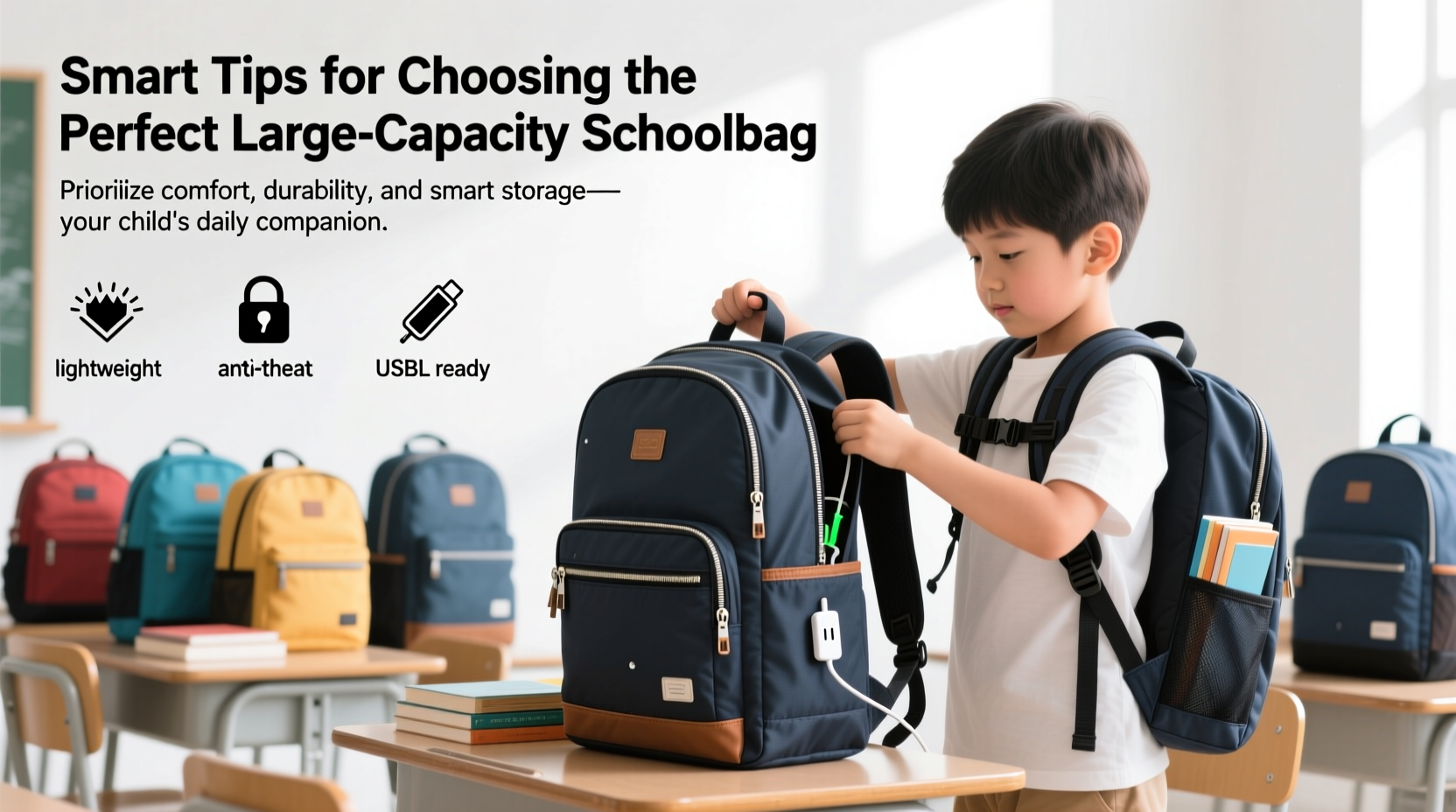
The first step in selecting a large capacity schoolbag is understanding what your child actually carries. Not all students need the same volume or features. A middle schooler lugging four heavy textbooks will have different needs than a high school student carrying a laptop, tablet, and science kit.
Observe a typical week: note which items are carried daily versus occasionally. Weigh the loaded bag at home to ensure it doesn’t exceed 10–15% of your child’s body weight—the recommended maximum by pediatric orthopedists. If the total exceeds this limit regularly, consider whether the bag’s design can help redistribute weight more efficiently.
Key Items Commonly Carried by School-Aged Children
| Item | Average Weight (g) | Frequency |
|---|---|---|
| Textbook (hardcover) | 800–1200 | Daily |
| Laptop (13\") | 1200–1500 | Daily (grades 7+) |
| Notebooks (x3) | 600 | Daily |
| Lunchbox + Water Bottle | 700–900 | Daily |
| Jacket or Sweater | 400–600 | As needed |
Prioritize Ergonomic Design for Long-Term Comfort
A large capacity bag isn’t useful if it causes discomfort. Poorly designed backpacks force children to compensate with posture, leading to chronic shoulder and back pain. Look for features that support proper weight distribution and reduce strain.
- Wide, padded shoulder straps: Prevent digging into shoulders and improve comfort under heavy loads.
- Chest and waist straps: Help stabilize the bag and transfer some weight from the spine to the hips.
- Contoured back panel: Allows airflow and follows the natural curve of the spine, reducing pressure points.
- Top-to-bottom compression: Keeps contents compact and prevents shifting, which can throw off balance.
“Backpacks should sit no higher than two inches above the shoulders and extend no lower than the waist. Anything longer disrupts posture.” — Dr. Lena Patel, Pediatric Orthopedic Specialist
Real Example: The Fifth-Grader’s Backpack Struggle
Sophie, a fifth grader in Portland, began complaining of shoulder pain after returning to in-person learning. Her 28-liter backpack was overstuffed with binders, a tablet, and extra clothes. After a visit to a physical therapist, her parents discovered the bag was too tall for her frame and lacked lumbar support. They switched to a 30-liter ergonomic model with adjustable straps and a breathable back panel. Within two weeks, Sophie reported less fatigue and improved focus during afternoon classes.
Material and Durability: Built to Last the School Year
Kids are hard on gear. Spills, drops, rough handling, and outdoor exposure mean materials matter as much as design. A large bag that rips after three months defeats the purpose of investing in high capacity.
Look for:
- Water-resistant fabrics: Polyester or nylon with a PU coating protect against rain and accidental spills.
- Reinforced stitching: Especially at stress points like straps, zippers, and corners.
- YKK or equivalent zippers: Known for durability and smooth operation even when the bag is full.
- Scratch-resistant base: Many quality bags include a rubberized or thicker fabric bottom to withstand pavement contact.
Organization Features That Make a Difference
Capacity without organization leads to chaos. A well-designed large schoolbag includes smart compartments that make finding items easier and balance weight effectively.
Essential organizational elements include:
- Dedicated laptop/tablet sleeve: Padded and accessible from the outside or main compartment.
- Front organizer panel: For pens, calculators, earbuds, and small notebooks.
- Side mesh pockets: Fit water bottles or umbrellas without adding bulk inside.
- Separate bottom compartment: Ideal for shoes, gym clothes, or wet items.
- Interior zip pocket: Secure spot for money, ID, or keys.
Bags with color-coded labels or transparent pockets help younger children identify sections quickly. Avoid models with too many tiny pockets—while they seem helpful, they often become clutter traps.
Do’s and Don’ts of Schoolbag Organization
| Do’s | Don’ts |
|---|---|
| Place heaviest items close to the back | Put bulky items at the top, raising the center of gravity |
| Use compression straps to minimize shifting | Overstuff beyond the bag’s intended capacity |
| Store snacks in sealed containers in side pockets | Carry open food or drinks in main compartments |
Step-by-Step Guide to Choosing the Right Large Capacity Bag
Follow this practical sequence to ensure you make the best decision:
- Evaluate current load: List all items your child carries daily and estimate total weight.
- Determine ideal capacity: Aim for 25–35 liters depending on grade level and device use.
- Check school guidelines: Some schools restrict bag size, colors, or branding.
- Involve your child: Let them try on 3–5 shortlisted models with weight simulators (e.g., books).
- Test fit and function: Ensure straps adjust properly, zippers work smoothly, and access points are convenient.
- Review warranty and return policy: Reputable brands offer at least a 1-year guarantee against manufacturing defects.
Frequently Asked Questions
How big should a schoolbag be for a middle school student?
A middle school student typically needs a 25–30 liter backpack. This provides enough space for textbooks, binders, a lunchbox, and a water bottle, while remaining proportionate to their body size.
Are rolling backpacks a good alternative for heavy loads?
Rolling backpacks can reduce back strain but come with drawbacks—they’re harder to navigate stairs, crowded hallways, and public transit. They also tend to wear out wheels quickly. Best suited for older students with predictable routes and minimal elevation changes.
Can a large schoolbag affect my child’s posture?
Yes. An oversized or poorly fitted bag shifts the center of gravity backward, causing the child to lean forward or arch their back unnaturally. Over time, this can contribute to musculoskeletal issues. Always match bag size to the child’s torso length and expected load.
Final Checklist Before Purchase
- ✅ Capacity between 25–35 liters (adjust based on age and needs)
- ✅ Padded, adjustable shoulder straps with chest/waist stabilizers
- ✅ Breathable back panel with lumbar support
- ✅ Durable, water-resistant material (e.g., 600D polyester or higher)
- ✅ Dedicated padded compartment for electronics
- ✅ Multiple access points and smart internal organization
- ✅ Reflective details for visibility in low light
- ✅ Meets school regulations (size, color, logo restrictions)
Make the Smart Choice Today
Selecting a large capacity schoolbag isn’t about maximizing volume—it’s about optimizing function, safety, and comfort. The right backpack supports your child’s physical health, reduces daily stress, and lasts through demanding semesters. Take the time to assess real needs, test options in person, and prioritize quality over price. A well-chosen bag becomes a reliable companion in your child’s educational journey.




 浙公网安备
33010002000092号
浙公网安备
33010002000092号 浙B2-20120091-4
Comments
No comments yet. Why don't you start the discussion?