
Choosing a shoulder bag for work isn’t just about aesthetics—it’s about creating a seamless blend of practicality, physical comfort, and personal expression. A poorly sized bag can strain your shoulders, limit productivity, or clash with your professional image. Yet, the right one supports your daily routine, enhances posture, and complements your wardrobe. With so many options on the market, selecting the ideal size requires more than guesswork. It demands an understanding of your body proportions, lifestyle needs, and workplace environment.
Understand Your Body Proportions and Ergonomics
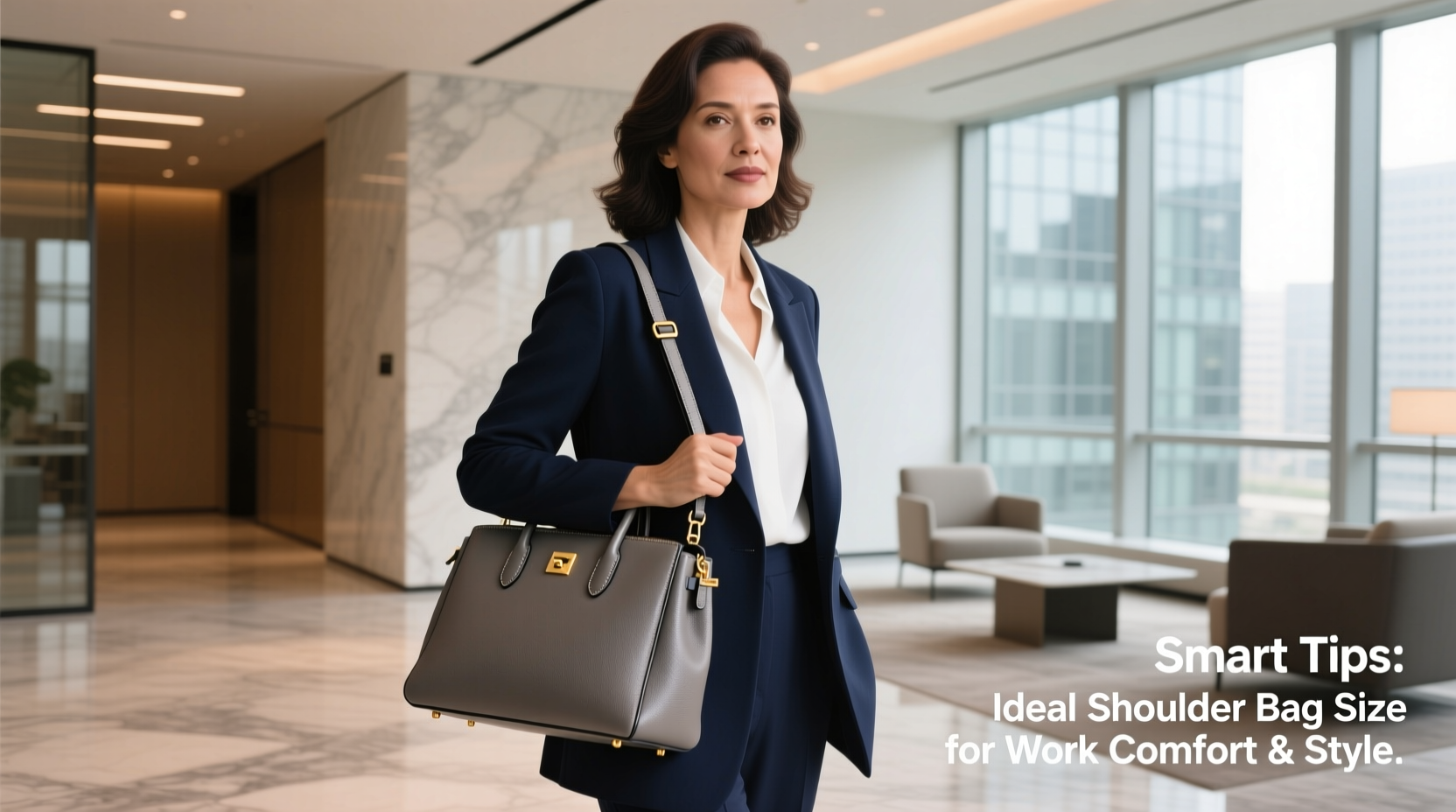
Your height, frame, and even dominant hand usage influence how a shoulder bag sits and feels throughout the day. A bag that drapes too low can pull you off-balance; one that’s too narrow may dig into your shoulder. The key is proportion: the bag should align harmoniously with your torso and not extend beyond your hips. For individuals under 5'4\", compact to mid-sized bags (9–11 inches in height) typically offer better balance. Taller individuals (5'7\" and above) can comfortably carry larger silhouettes (12–14 inches) without compromising posture.
Ergonomic design plays a critical role. Look for adjustable straps that allow the bag to rest at or slightly below hip level. This position distributes weight evenly and reduces neck and shoulder strain. Crossbody styles often provide superior stability by anchoring the load across the chest, minimizing swing and sway during movement.
Assess Your Daily Carry Essentials
The contents you carry define the minimum viable size. Begin by laying out everything you bring to work daily: laptop, notebook, wallet, phone, water bottle, lunch container, charger, etc. Measure the combined footprint. A standard 13-inch laptop requires a compartment of at least 10” x 14”; add 2–3 inches for padding and accessories.
A common mistake is overpacking due to excess space. If your bag has room for items you don’t use, you’ll likely fill it anyway—leading to unnecessary weight. Aim for a snug fit: enough space for essentials plus one spare item, but not so much that things rattle around. Over time, disorganization leads to inefficiency and discomfort.
“Functionality starts with intentionality. Know what you need, then choose a bag that fits only that.” — Lena Torres, Professional Organizational Consultant
Compare Bag Sizes and Use Cases
Not all “medium” bags are created equal. Brand sizing varies significantly. Use objective measurements rather than labels like “small” or “large.” Below is a comparison of typical shoulder bag dimensions and their suitability for different work profiles:
| Bag Height | Laptop Compatibility | Ideal For | Potential Drawbacks |
|---|---|---|---|
| 7–9 inches | No laptop | Minimalists, urban commuters, short commutes | Limited storage; not suitable for documents or tech |
| 10–11 inches | 13-inch laptop | Office professionals, hybrid workers | May feel tight with bulky outerwear or large notebooks |
| 12–14 inches | 15–16-inch laptop | Creative professionals, frequent travelers, field workers | Can be heavy when full; less stylish for formal settings |
| 15+ inches | Multiple devices + gear | Photographers, consultants, remote teams | Often exceeds ergonomic limits; risk of back strain |
Real-World Example: Sarah’s Transition to a Smarter Commute
Sarah, a project manager in Chicago, used to carry a 15-inch leather tote because it “looked professional.” But after months of shoulder pain and arriving late from digging through clutter, she reevaluated. She listed her actual daily items: 13-inch laptop, tablet, planner, wallet, keys, lip balm, and reusable coffee cup. She discovered she didn’t need the oversized bag—most days, half the space was empty or filled with forgotten receipts.
She switched to a structured 11-inch crossbody with padded laptop sleeve and external pockets. The new bag weighed 1.8 lbs empty versus her old 3.2 lbs tote. Within two weeks, her shoulder pain diminished, and she saved time retrieving items. More importantly, the smaller profile aligned better with her tailored blazers, enhancing her polished look. Her experience underscores a vital principle: efficiency often trumps capacity.
Step-by-Step Guide to Choosing Your Ideal Shoulder Bag Size
- Inventory your essentials: List every item you carry daily and measure the largest three (usually laptop, notebook, water bottle).
- Determine your torso length: Measure from shoulder to hip. Your bag should end at or just below the hip bone.
- Select laptop compatibility: Match internal compartment size to your device with 0.5–1 inch clearance on each side.
- Test strap drop length: Ideal range is 18–22 inches from top of shoulder to bag top. Shorter for petite frames, longer for taller builds.
- Try before you buy: Load a similar-sized bag with your items and wear it for 10–15 minutes. Note pressure points or imbalance.
- Evaluate long-term versatility: Will this work in six months? If you change roles or commute methods, will it still serve you?
Style Meets Function: Matching Bag Size to Professional Image
Your bag communicates subtle cues about your professionalism. In conservative industries like law or finance, a streamlined, medium-sized satchel (10–12 inches) conveys precision and control. In creative fields—design, media, tech—a slightly larger or uniquely shaped bag can express individuality without sacrificing credibility.
Color and material matter, but proportion sets the tone. A tiny bag with a bulky laptop peeking out suggests poor planning. Conversely, a massive duffel in a boardroom may appear unrefined. The sweet spot lies in cohesion: your bag should integrate naturally with your outfit and environment.
Frequently Asked Questions
Can a shoulder bag be too small for work?
Yes. If you’re forced to carry items in your hands or constantly remove layers to access essentials, the bag is too small. It defeats the purpose of convenience and can create safety risks during transit.
How do I prevent shoulder strain with a daily bag?
Distribute weight evenly using crossbody straps, limit total bag weight to under 10% of your body weight (e.g., 12 lbs for a 120-lb person), and switch shoulders periodically. Consider rolling luggage-style briefcases if you carry over 15 lbs regularly.
Is a larger bag always better for organization?
No. Excess space often leads to chaos. Smaller, compartmentalized bags encourage intentional packing. Use interior organizers only when necessary—too many pockets can slow retrieval and add bulk.
Final Checklist Before Purchase
- ✅ Measures no more than 2 inches wider than your torso at the hips
- ✅ Fits your laptop with protective padding and closure
- ✅ Has secure closures (zipper, flap, or magnetic snap)
- ✅ Includes easy-access pockets for phone and keys
- ✅ Strap is adjustable and wide enough (at least 1.5 inches) to prevent digging
- ✅ Made from durable, easy-to-clean material (e.g., waxed canvas, treated leather)
- ✅ Feels balanced when loaded with your typical items
Conclusion
Selecting the ideal shoulder bag size is a strategic decision that impacts your physical well-being, daily efficiency, and professional presence. It’s not about following trends, but about aligning form with function in a way that supports your unique rhythm. Whether you're navigating subway platforms or walking between meetings, the right bag becomes an extension of your preparedness—not a burden to endure.




 浙公网安备
33010002000092号
浙公网安备
33010002000092号 浙B2-20120091-4
Comments
No comments yet. Why don't you start the discussion?