
Traveling light doesn’t mean sacrificing convenience or style. A single shoulder bag, when used wisely, can serve as your entire carry-on system—keeping essentials close, accessible, and secure. Whether you're navigating airport terminals, exploring city streets, or hopping between transit lines, mastering the art of efficient shoulder bag use transforms your travel experience. The key lies not in what you carry, but how you organize, distribute, and access it.
Choose the Right Bag for Your Travel Style
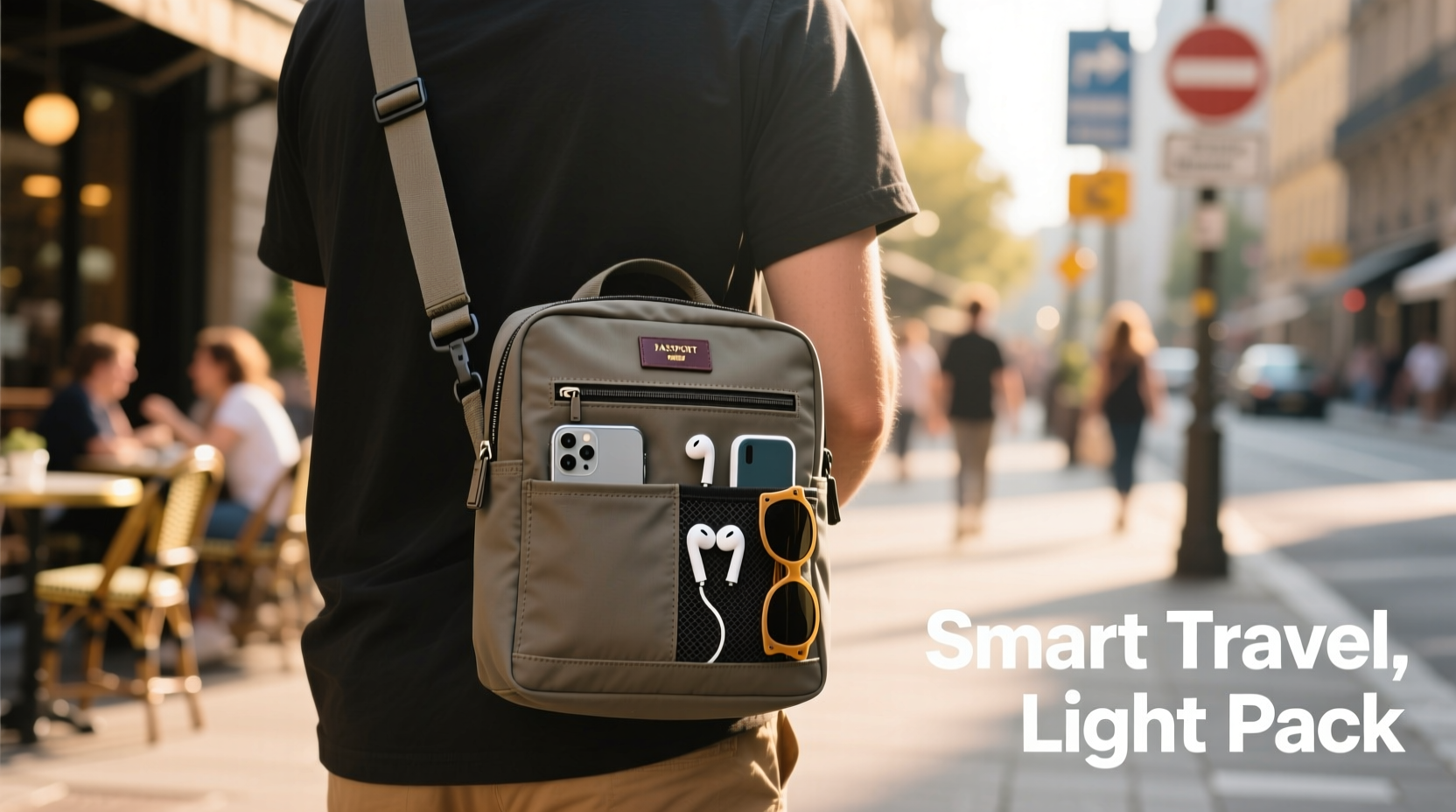
Not all shoulder bags are created equal. Before optimizing usage, ensure your bag aligns with your typical travel needs. Look for structural features that support long-term comfort and functionality: padded straps, multiple compartments, water-resistant materials, and lockable zippers. A well-designed bag should sit comfortably across your body, distribute weight evenly, and allow one-handed access to frequently used items.
Consider your destination and duration. For weekend trips or urban commutes, a 15–20 liter bag is usually sufficient. If you’re planning longer stays or need tech gear, opt for models with laptop sleeves and expandable storage. Avoid oversized bags disguised as shoulder packs—they defeat the purpose of minimalism and strain your posture.
Organize with Intention: The Packing Framework
Efficiency begins with organization. Use a mental framework: divide your bag into zones based on frequency of access. Think of it like a cockpit—your most-used tools should be within immediate reach.
- Top Layer (Quick Access): Passport, boarding pass holder, phone, wallet, lip balm, sunglasses.
- Middle Compartment (Daily Essentials): Notebook, pen, headphones, power bank, medication.
- Main Cavity (Bulk Storage): Clothing, toiletry pouch, snacks, reading material.
- Back Panel (Security Zone): Cash, backup ID, credit cards—keep flat and against your back.
Compression cubes or foldable pouches help maintain this structure. Even without internal dividers, fabric organizers prevent items from shifting and save retrieval time. Rolling clothes instead of folding reduces bulk and makes better use of odd-shaped spaces.
Do’s and Don’ts of Shoulder Bag Organization
| Do | Don’t |
|---|---|
| Use a dedicated pocket for liquids and gels (TSA-compliant) | Overstuff the bag beyond 70% capacity |
| Keep electronics in a padded sleeve near the back | Store sharp objects loosely where they could damage screens |
| Label small pouches (e.g., “Adapters,” “Cables”) | Put heavy items at the top—this unbalances the bag |
| Distribute weight evenly across both sides of the main compartment | Leave loose change or keys rattling at the bottom |
Master Weight Distribution and Posture
Carrying a loaded shoulder bag for hours can lead to neck strain, shoulder pain, or postural imbalances. The solution isn’t just strength—it’s smart load management. Keep total weight under 10% of your body weight. For an average adult, that’s roughly 6–8 pounds (3–4 kg).
When wearing the bag, position the strap so the bottom rests at your hip level. Too high pulls your shoulder up; too low causes dragging and imbalance. Adjust the strap length depending on activity: shorter when walking quickly, slightly looser when seated.
“Uneven weight distribution from daily bag use can mimic scoliosis patterns over time.” — Dr. Lena Torres, Physical Therapist & Ergonomics Consultant
If possible, switch shoulders every 15–20 minutes during extended walks. Better yet, use crossbody positioning—slung diagonally across the torso—to stabilize the load and engage core muscles naturally.
Step-by-Step: Pre-Flight Bag Setup Routine
Before heading out, follow this five-minute routine to ensure your shoulder bag works for you, not against you:
- Empty and assess: Remove everything and wipe down compartments. Check for forgotten receipts or expired items.
- Lay out essentials: Group items by category—travel docs, tech, personal care, food—and verify nothing is missing.
- Pack by priority: Place heavier items (laptop, water bottle) close to your back and centered. Add lighter layers on top.
- Secure valuables: Slide passport and cash into a hidden interior slot. Enable tracking tags if available.
- Test carry: Wear the bag, walk around, reach for your phone, and simulate retrieving your boarding pass. Adjust until movements feel fluid.
Real-World Example: A Solo Traveler in Tokyo
Sophie, a freelance photographer, spent three weeks in Japan using only a 17-liter waxed canvas shoulder bag. She carried her mirrorless camera, extra lens, journal, phone charger, rain jacket, and two days’ worth of clothing. By pre-planning her outfit combinations and using vacuum-sealed pouches for compression, she avoided checked baggage fees and moved swiftly through train stations.
Her secret? A color-coded tagging system: red tape on her passport holder, blue on her power bank. This allowed instant visual identification even in crowded environments. She also kept a collapsible tote inside the main flap—ideal for souvenirs or impromptu grocery runs. Over time, she refined her layout so that removing her camera took less than four seconds, crucial during fleeting photo opportunities.
Essential Checklist for Efficient Shoulder Bag Use
- ✅ Bag fits under airline seat or within overhead bin limits
- ✅ All electronics are charged and cables coiled neatly
- ✅ Toiletries are in a leak-proof, quart-sized bag
- ✅ Emergency contact info is printed and stored offline
- ✅ Strap is adjusted to proper length for your height
- ✅ Valuables are placed against the back panel
- ✅ You’ve done a final weight check (under 8 lbs / 3.6 kg)
Frequently Asked Questions
Can I bring a shoulder bag as my only carry-on?
Yes, as long as it meets the airline’s size restrictions for personal items (typically under 18 x 14 x 8 inches). Many travelers successfully use compact shoulder bags as their sole carry-on, especially on regional or low-cost carriers.
How do I prevent theft while using a shoulder bag abroad?
Stay alert in crowded areas. Wear the bag across your body rather than on one shoulder. Choose models with RFID-blocking pockets and slash-resistant straps. In high-risk zones, keep the bag in front of you while seated or standing in transit hubs.
Is a leather shoulder bag practical for travel?
Leather offers durability and style but requires maintenance. It’s less ideal in rainy climates unless treated with a protective spray. For humid or wet destinations, consider water-resistant synthetics or waxed fabrics instead.
Final Thoughts: Travel Light, Think Deep
Efficiency isn’t about carrying more—it’s about accessing what matters with less effort. A single shoulder bag forces intentionality, streamlining your journey from departure to arrival. When packed with purpose, balanced for comfort, and organized for speed, it becomes more than luggage—it becomes an extension of your movement.
The best travel habit you can develop is regular refinement. After each trip, reflect: What did you reach for constantly? What remained unused? Adjust accordingly. Over time, your bag evolves into a finely tuned toolkit, perfectly aligned with how you move through the world.




 浙公网安备
33010002000092号
浙公网安备
33010002000092号 浙B2-20120091-4
Comments
No comments yet. Why don't you start the discussion?