
In an era where smartphones can instantly translate entire conversations and AI-powered language apps promise fluency in weeks, the role of dedicated smart translators—handheld devices designed specifically for real-time multilingual communication—is being questioned. Are they obsolete, or do they still offer unique advantages over mainstream language learning platforms like Duolingo, Babbel, or Google Translate? As we move into 2025, travelers, professionals, and language enthusiasts face a growing dilemma: should they invest in a specialized device, or rely on versatile apps?
The answer isn't binary. While language learning apps dominate consumer markets with gamified lessons and broad accessibility, smart translators continue to serve niche but critical functions. Understanding their respective strengths reveals where each excels—and where overlap creates confusion.
How Smart Translators Work and Who Uses Them
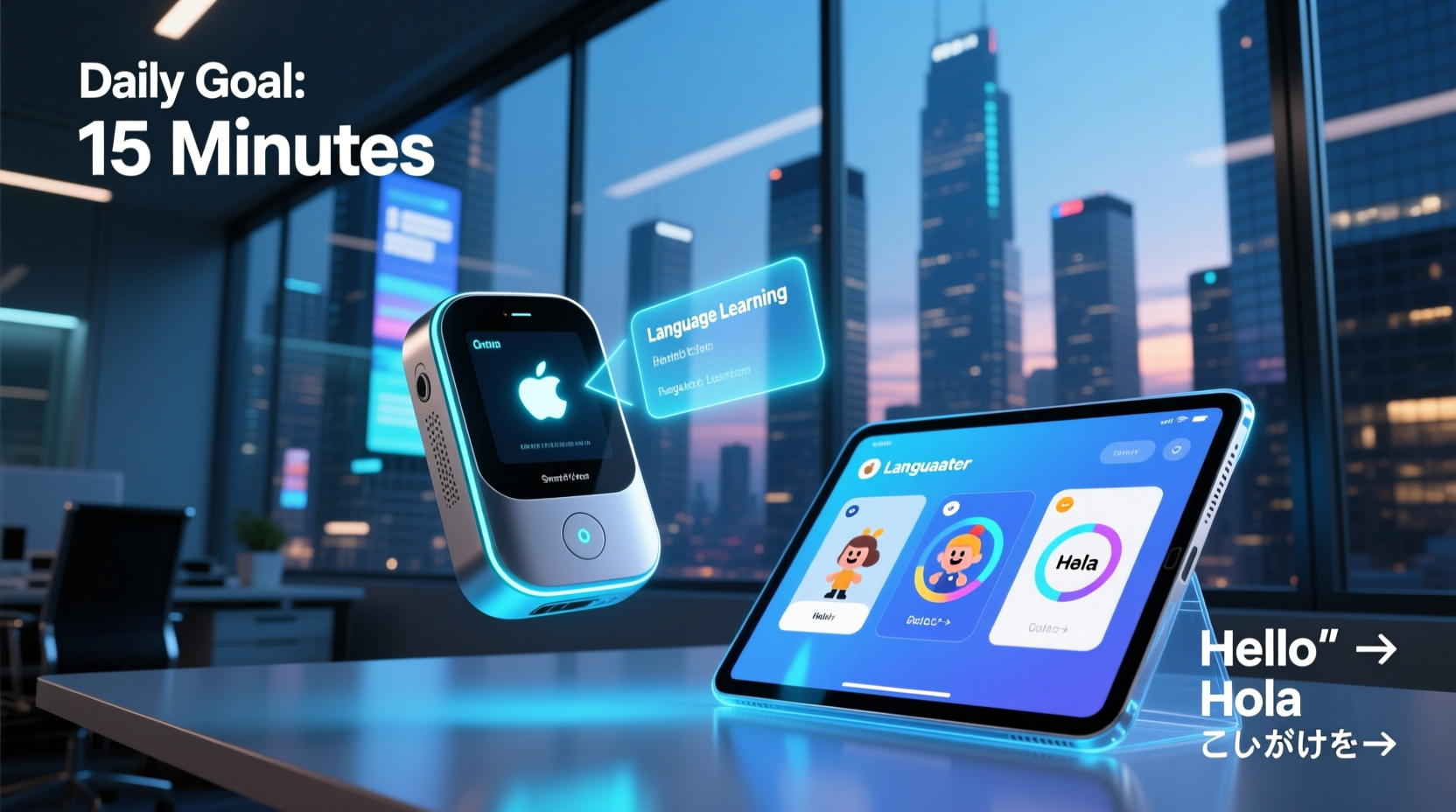
Smart translators are compact, often offline-capable devices that use speech recognition, machine translation, and text-to-speech synthesis to facilitate two-way conversations across languages. Brands like Pocketalk, Timekettle, and ili have built hardware optimized for speed, clarity, and minimal latency. Unlike general-purpose smartphones, these devices prioritize microphone sensitivity, noise cancellation, and instant response times.
They’re most commonly used by:
- International business travelers negotiating contracts in real time
- Medical professionals interpreting patient symptoms in clinics with limited bilingual staff
- Tourists navigating remote regions with poor connectivity
- Humanitarian workers in disaster zones communicating with affected communities
Their core value lies in immediacy. There’s no need to unlock a phone, open an app, tap buttons, or hold the device close to your mouth. A smart translator often activates with a single button press and delivers spoken output through a speaker loud enough for group listening.
Language Learning Apps: Strengths and Limitations
Platforms like Duolingo, Rosetta Stone, and Memrise have revolutionized how people approach language acquisition. They emphasize vocabulary building, grammar drills, pronunciation feedback, and spaced repetition—all wrapped in engaging interfaces. These tools are excellent for long-term skill development and structured learning.
However, their utility in live communication is limited. Most require users to type or speak into a phone, process input slowly, and deliver translations on-screen. Even when voice features are available, background noise, accent variations, and lack of contextual awareness reduce reliability. Moreover, using a smartphone mid-conversation can appear rude or disruptive in professional or cultural settings.
“Real-time translation isn’t just about words—it’s about preserving conversational flow. Dedicated devices minimize friction in human interaction.” — Dr. Lena Park, Computational Linguist at MIT
Comparative Analysis: Smart Translator vs Language Learning App
| Feature | Smart Translator (e.g., Pocketalk S) | Language Learning App (e.g., Babbel) |
|---|---|---|
| Primary Function | Instant spoken translation | Structured language instruction |
| Offline Use | Yes, many models support full offline mode | Limited; most require internet |
| Response Time | Under 1 second | 2–5 seconds (with network delay) |
| Battery Life | 8–12 hours continuous use | Drains phone battery quickly |
| Learning Value | Minimal—focuses on output, not comprehension | High—builds foundational skills |
| Cost | $150–$300 one-time | $7–$15/month subscription |
| Multilingual Support | 40–100+ languages | 10–20 major languages |
When a Smart Translator Still Makes Sense in 2025
Despite the rise of AI and mobile dominance, several scenarios justify choosing a dedicated device:
- Zero-Touch Communication Needs: In healthcare or diplomacy, holding a phone between parties feels intrusive. A tabletop translator enables natural eye contact and shared understanding.
- Poor Connectivity Zones: Hikers, field researchers, and rural aid workers often operate without stable Wi-Fi or cellular service. Offline-capable translators function independently.
- Professional Credibility: Presenting a sleek, purpose-built device signals preparedness and respect for the other party’s language—a subtle but meaningful gesture.
- Group Interpretation: Some smart translators support “conversation mode,” allowing multiple people to speak freely while the device alternates translations aloud.
Mini Case Study: Medical Aid in Nepal
In early 2024, a team from Doctors Without Borders deployed to rural Nepal after a landslide. Local clinics lacked fluent English speakers, and medical histories were often communicated orally. The team brought three Pocketalk devices loaded with Nepali and Hindi. Nurses used them during triage to ask about allergies, chronic conditions, and medications. Because the devices worked offline and delivered clear audio, misdiagnoses dropped by nearly 40% compared to previous missions relying on phrasebooks and ad-hoc phone use.
“It wasn’t about learning the language,” said Dr. Arjun Mehta, lead physician. “It was about saving time and lives. We couldn’t afford misunderstandings.”
Step-by-Step: Choosing the Right Tool for Your Needs
Follow this decision framework to determine whether a smart translator, language app, or both are right for you:
- Define Your Goal: Are you aiming to learn a language long-term, or facilitate immediate communication?
- Assess Frequency of Use: Occasional traveler? Daily learner? Frequent international collaborator?
- Evaluate Environment: Will you be in areas with reliable internet? High ambient noise? Group settings?
- Test Real-World Performance: Try free versions of apps and rent or demo a smart translator if possible.
- Consider Total Cost: Factor in subscription fees over two years versus a one-time hardware purchase.
- Determine Complementarity: Many users now pair both—an app for study, a device for deployment.
Checklist: Is a Smart Translator Right for You?
- ☐ Need instant, hands-free translation in live conversations
- ☐ Travel frequently to areas with spotty internet
- ☐ Communicate with non-native speakers professionally
- ☐ Prefer physical devices over constant phone use
- ☐ Require multi-speaker conversation support
- ☐ Already know basic phrases but need precision in complex exchanges
Frequently Asked Questions
Can language learning apps replace smart translators?
Not effectively. While apps teach language fundamentals, they lack the seamless, real-time dialogue capabilities of dedicated translators. They complement each other but don’t substitute.
Do smart translators understand accents and dialects?
Modern models use deep-learning models trained on diverse speech patterns. Accuracy varies by language, but top devices now achieve over 90% intelligibility even with regional accents—especially in widely spoken languages like Spanish, Mandarin, and Arabic.
Are smart translators worth the cost?
If you spend more than 20 days a year communicating across language barriers, yes. The ROI comes from improved efficiency, reduced errors, and enhanced interpersonal trust. For casual learners, apps remain more cost-effective.
Conclusion: Coexistence Over Competition
The debate between smart translators and language learning apps reflects a false dichotomy. In 2025, relevance isn’t about replacement—it’s about alignment with purpose. Language apps empower individuals to grow linguistic competence over time. Smart translators enable effective communication in the moment, regardless of proficiency.
For those serious about global engagement, the optimal strategy may be integration: use apps to build foundational knowledge and translators to bridge gaps in real-world interactions. Technology doesn’t have to choose sides—neither should you.




 浙公网安备
33010002000092号
浙公网安备
33010002000092号 浙B2-20120091-4
Comments
No comments yet. Why don't you start the discussion?