
A well-organized wallet is more than a convenience—it’s a reflection of intentionality. In an age where every second counts and clutter breeds stress, the way you manage your everyday carry items can impact your productivity, security, and even mental clarity. Whether you use a minimalist bifold, a traditional trifold, or a tech-enabled smart wallet, how you organize your coins, cards, and cash matters. This guide offers actionable strategies to streamline your wallet, reduce bulk, and make essential items instantly accessible.
Why Wallet Organization Matters
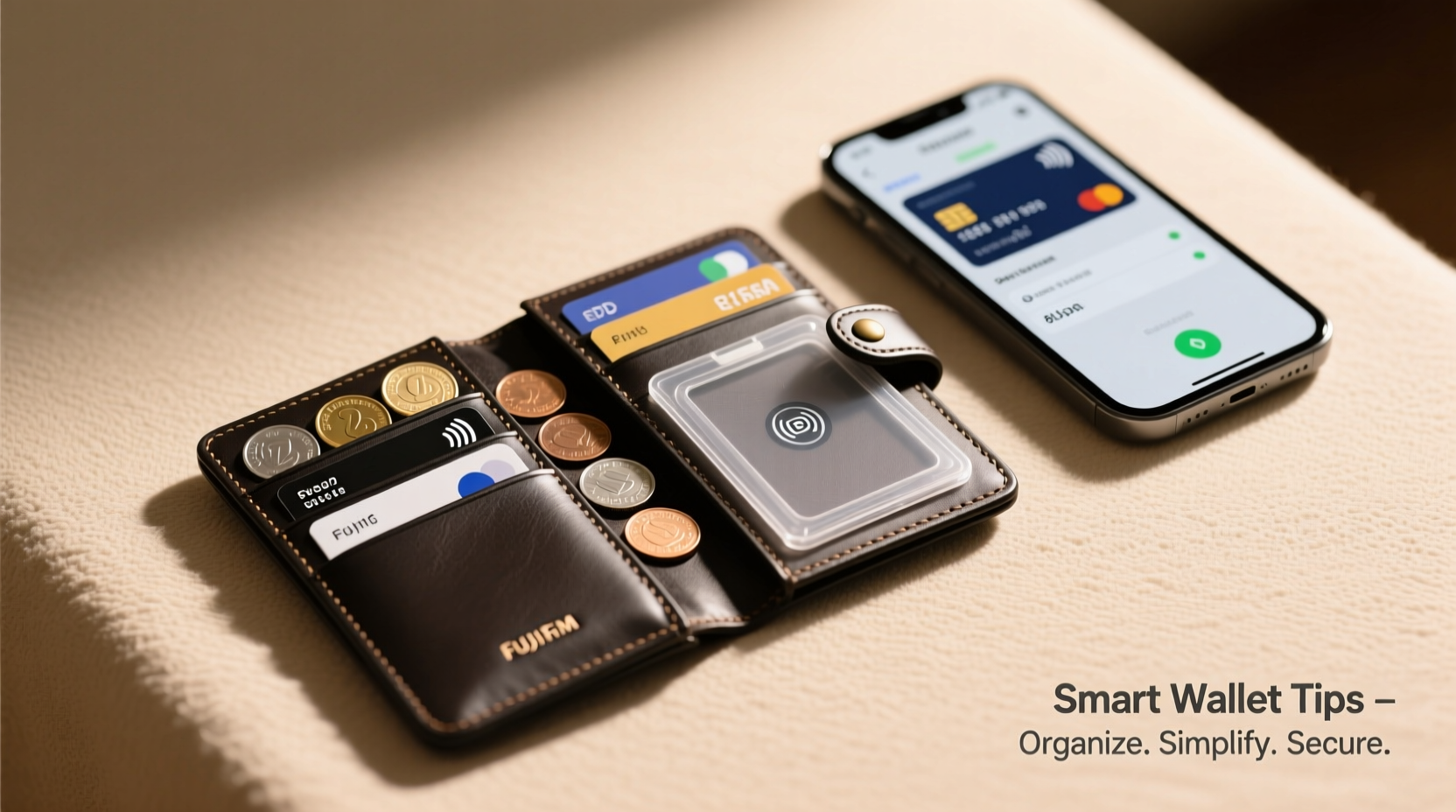
Most people treat their wallets as catch-all containers—stashing expired gift cards, redundant loyalty passes, and loose change without thought. Over time, this leads to overstuffing, physical wear, and difficulty locating critical items when needed. A bloated wallet doesn’t just strain your back pocket; it slows you down at checkout counters, increases loss risk, and complicates emergency access to ID or medical information.
Efficient wallet organization improves daily flow. It reduces friction during transactions, enhances security by limiting exposure of unnecessary cards, and supports financial mindfulness. According to organizational psychologist Dr. Lena Torres, “The state of personal tools like wallets often mirrors broader habits around decision-making and control.” A streamlined wallet fosters confidence and readiness.
Step-by-Step Guide to Smart Wallet Organization
Follow this five-step process to build a lean, functional wallet system tailored to your lifestyle.
- Empty Everything: Remove all contents from your wallet. Lay them out on a clean surface. This visual audit reveals how much you’re actually carrying.
- Categorize Items: Group items into categories: ID, payment cards (credit/debit), transit passes, loyalty/rewards cards, cash, coins, and miscellaneous (receipts, notes).
- Prioritize by Frequency: Rank cards based on usage frequency. Daily-use cards should be most accessible. Rarely used items belong in secure off-wallet storage.
- Eliminate Redundancies: Do you really need three coffee shop loyalty cards? Two backup credit cards? Keep only what serves a clear purpose.
- Reinsert Strategically: Place high-use cards in quick-access slots. Store emergency cash behind your ID. Use designated coin pockets or separate pouches if applicable.
Real Example: From Cluttered to Controlled
Mark, a freelance designer in Portland, carried a swollen leather wallet with 14 cards, $67 in mixed bills, and a handful of foreign coins. After spilling its contents during a client meeting, he committed to a redesign. He digitized his rewards cards using Apple Wallet and Google Pay, kept only two credit cards and one debit card, stored spare cash at home, and moved infrequently used tools (like his library card) to a secondary slim sleeve. His new setup reduced wallet thickness by 60%, improved retrieval speed, and eliminated embarrassment during payments.
Optimal Card Placement Strategies
How you position your cards affects both usability and safety. Avoid stacking similar cards together—this leads to confusion and accidental swipes. Instead, adopt a zoning system.
| Wallet Zone | Recommended Contents | Reasoning |
|---|---|---|
| Front Inner Slot (Right Side) | Main Credit Card | Most accessible for right-handed users; ideal for contactless taps |
| Front Inner Slot (Left Side) | Debit Card / Primary Payment | Easy switch between payment methods |
| Middle ID Window | Driver’s License or Government ID | Visible without removal; protects against full exposure |
| Back Panel Slots | Secondary Cards (Transit, Backup Debit) | Secure but reachable when needed |
| Cash Compartment | Folded bills, emergency cash ($20–$40) | Keeps paper flat and prevents overfilling |
| Coin Pocket (if available) | Only local currency coins; max 5–6 pieces | Prevents jingling and excess weight |
“Efficiency isn’t about carrying less—it’s about making what you carry work smarter.” — Jordan Lee, Productivity Consultant
Digital Integration: The Modern Wallet Upgrade
True smart organization extends beyond physical space. Leverage digital wallets to minimize physical load. Services like Apple Pay, Google Wallet, and Samsung Pay allow secure storage of credit, debit, transit, and even vaccination cards. By loading frequently used cards digitally, you reduce physical dependency and enhance transaction speed.
Additionally, consider password managers like Bitwarden or 1Password to store digital versions of membership numbers and PINs. Pair this with encrypted cloud backups so you can recover critical data if your wallet is lost.
Checklist: Optimize Your Wallet in One Sitting
- Remove every item from your wallet
- Toss expired cards, receipts, and useless slips
- Digitize at least three loyalty or payment cards
- Select one primary credit, one debit, and one backup card
- Limit cash to under $50 in small denominations
- Store coins only if necessary—and cap at six
- Assign zones for ID, payment, and emergency items
- Wipe down wallet interior with alcohol-free cloth
- Test access speed for each essential card
Avoid These Common Wallet Mistakes
Even organized individuals fall into traps that undermine efficiency. Steer clear of these pitfalls:
- Over-relying on RFID blocking: While useful, many users compensate by carrying more cards “because they’re safe.” Security shouldn’t justify clutter.
- Ignoring wear and tear: Frayed edges, broken zippers, or stretched slots compromise function. Replace worn wallets before they fail.
- Carrying sentimental items: Old boarding passes or photos may feel meaningful but add bulk. Digitize keepsakes instead.
- Storing cash loosely: Unfolded bills stretch pockets. Fold all bills uniformly (e.g., in thirds) for neat stacking.
FAQ: Smart Wallet Organization
How many cards should I realistically carry?
For most people, four to six cards are sufficient: one ID, two payment cards (credit + debit), one backup, and one specialty card (transit, gym, etc.). Any more likely indicates redundancy.
Should I carry coins at all?
Only if you regularly make cash transactions where exact change speeds up service (e.g., parking meters, small vendors). Otherwise, leave coins at home or in your car. Consider a detachable coin pouch for flexibility.
Is a minimalist wallet right for everyone?
Not necessarily. Minimalist designs excel for those who rely heavily on digital payments and carry little cash. If you frequently handle cash, receipts, or multiple IDs, a slightly larger structured wallet may serve you better. Match form to function.
Conclusion: Build a Wallet That Works With You
Your wallet shouldn’t be a dumping ground—it should be a precision tool designed for real-life efficiency. By applying consistent organization principles, leveraging digital alternatives, and periodically auditing contents, you create a system that saves time, reduces stress, and reflects disciplined personal management. The goal isn’t emptiness, but purposefulness. Every card, coin, and bill earns its place.




 浙公网安备
33010002000092号
浙公网安备
33010002000092号 浙B2-20120091-4
Comments
No comments yet. Why don't you start the discussion?