
Deer may look graceful in the wild, but when they wander into your garden, they can quickly turn a flourishing landscape into a feeding ground. These animals are drawn to tender shoots, flowers, vegetables, and fruit trees—often leaving behind ragged stems and stripped foliage. While fencing and repellents come to mind, many traditional methods require constant upkeep or fail under persistent browsing pressure. The key isn’t just deterrence—it’s strategy. With smart planning and sustainable techniques, you can protect your garden from deer without turning yard work into a chore.
Choose Deer-Resistant Plants Strategically
One of the most effective long-term strategies is selecting plants that deer naturally avoid. While no plant is 100% deer-proof, certain species are far less appealing due to their texture, scent, or toxicity. Incorporating these into your garden design reduces temptation and minimizes damage even during peak foraging seasons like spring and fall.
Examples of deer-resistant perennials include:
- Lavender – fragrant oils repel browsing
- Salvia – fuzzy leaves and strong aroma
- Black-eyed Susan – coarse texture deters deer
- Coneflower (Echinacea) – bitter taste
- Yarrow – aromatic foliage
For shrubs and ornamentals, consider boxwood, barberry, and butterfly bush. Daffodils, alliums, and foxglove are excellent bulb and flowering options, as they contain compounds that deer find unpalatable.
Install Smart Physical Barriers
While tall fences are the gold standard for deer exclusion, not every homeowner wants an 8-foot barrier around their property. However, there are smarter, less obtrusive alternatives that still provide protection.
A two-tiered wire fence, for instance, uses two parallel lines of fencing spaced 3–4 feet apart, each about 5 feet high. This configuration confuses deer, making them reluctant to jump through what appears to be a confined space. Another option is polytape or electric netting—lightweight, portable, and highly visible, which discourages deer from approaching.
If aesthetics matter, consider integrating trellises with thorny vines like roses or bougainvillea along fence lines. These add visual appeal while acting as secondary deterrents.
“Physical barriers are the only method proven to offer near-total protection. Even the best repellents fail under hunger pressure.” — Dr. Laura Thompson, Wildlife Management Specialist, Cornell Cooperative Extension
Use Odor and Motion-Based Repellents Wisely
Repellents can be effective when used correctly—but their success depends on rotation and application timing. There are two main types: odor-based and taste-based.
Odor-based repellents, such as those made from putrified eggs or predator urine, signal danger to deer. They’re most effective when applied early in the season before deer establish feeding patterns. Taste-based sprays make plants unpleasant to eat but must be reapplied after rain or new growth.
To prevent habituation, rotate between different repellent formulas every few weeks. For example, alternate between a garlic-pepper blend one month and a commercial egg-based product the next.
| Type | Best For | Reapplication Needed |
|---|---|---|
| Odor-based (e.g., predator urine) | Perimeter protection | Every 3–4 weeks or after heavy rain |
| Taste-based (e.g., capsaicin sprays) | Individual high-value plants | After rain or new growth |
| Homemade (garlic/soap mix) | Short-term use, small gardens | Weekly |
Step-by-Step: Create a Deer-Deterrent Garden Layout
Designing your garden with deer in mind can reduce conflict before it starts. Follow this sequence to build a layout that naturally discourages browsing:
- Map deer entry points: Observe where deer typically enter your yard—often near wooded edges or quiet corners.
- Zoning: Place high-value, deer-favorite plants (like hostas, tomatoes, or beans) in central, protected areas.
- Buffer with deterrents: Surround vulnerable zones with deer-resistant plants or textured ground covers like lamb’s ear.
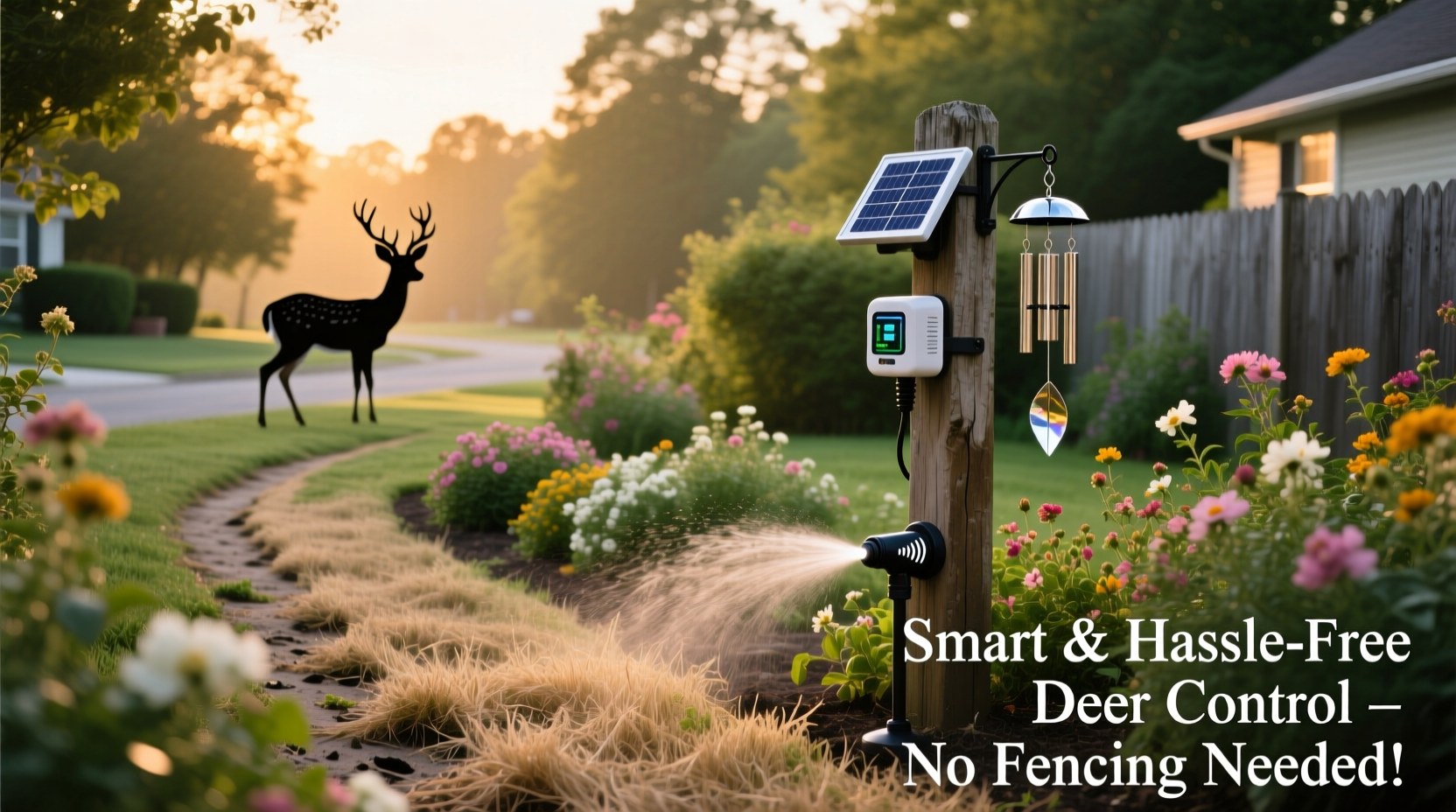
- Add motion: Install motion-activated sprinklers or lights at common access points.
- Elevate when possible: Use raised beds or containers placed near patios—areas deer tend to avoid due to human activity.
This layered approach, known as “decoy zoning,” leverages both psychology and biology to redirect deer away from prized plants.
Real Example: A Suburban Garden Transformed
In Ann Arbor, Michigan, homeowner Maria Lin struggled for years with nightly deer visits that destroyed her vegetable patch. After losing three tomato harvests in a row, she redesigned her backyard using integrated tactics. She installed a 6-foot woven-wire fence with a 2-foot outward-facing extension at the top—a design proven to thwart jumping attempts. Inside, she planted lavender and Russian sage along the perimeter and moved her lettuce and peppers into elevated planters near her back door.
She also added a motion-activated sprinkler set to trigger at dusk. Within two weeks, deer stopped entering. Two years later, her garden thrives with minimal maintenance. “I don’t chase them off anymore,” she says. “They don’t even come close.”
Common Mistakes That Invite Deer In
Even well-meaning gardeners can accidentally attract deer. Avoid these pitfalls:
- Overplanting favorites: Hostas, daylilies, and young fruit trees are deer magnets. Limit their use or protect them aggressively.
- Irregular repellent use: Sporadic spraying teaches deer that some plants are safe to eat.
- Ignoring seasonal patterns: Fawns are born in spring, and bucks shed antlers in winter—both times increase feeding pressure.
- Using ineffective scents: Human hair or soap bars have inconsistent results and lose potency quickly.
Checklist: Your Hassle-Free Deer Defense Plan
Stay ahead of deer damage with this actionable checklist:
- ✅ Survey your garden for signs of deer activity (tracks, droppings, torn stems)
- ✅ Replace high-risk plants with deer-resistant varieties
- ✅ Install motion-activated sprinklers at likely entry points
- ✅ Begin repellent applications early in the growing season
- ✅ Rotate repellents every 3–4 weeks
- ✅ Use raised beds or containers for vegetables and herbs
- ✅ Trim tree limbs within reach to prevent bark stripping
Frequently Asked Questions
Do ultrasonic deer repellents work?
Most research shows limited effectiveness. Deer often habituate quickly to ultrasonic sounds, especially if there’s no associated negative experience. Devices combining sound with motion-activated water spray tend to perform better.
Can I use coffee grounds to keep deer away?
Coffee grounds may have a mild deterrent effect due to their strong smell, but they decompose quickly and aren’t reliable as a standalone solution. They work best when mixed into compost used around resistant plants.
How high does a fence need to be to stop deer?
A minimum of 7.5 to 8 feet is recommended for a straight fence. However, a 5-foot fence angled outward at 45 degrees can be equally effective and less obtrusive, as it disrupts the deer’s ability to clear the barrier comfortably.
Final Thoughts: Work Smarter, Not Harder
Keeping deer out of your garden doesn’t require war-like measures or endless maintenance. By understanding deer behavior and applying intelligent, layered defenses, you can enjoy a thriving garden with minimal intervention. The goal isn’t to eliminate deer from the landscape—it’s to coexist while protecting your hard work.
Start small: swap a few vulnerable plants, install one motion-activated device, or sketch a new garden layout. Consistency and observation will guide the rest. Over time, your garden can become a place where beauty flourishes—and deer simply pass by.




 浙公网安备
33010002000092号
浙公网安备
33010002000092号 浙B2-20120091-4
Comments
No comments yet. Why don't you start the discussion?