
For someone stepping into the world of wearable tech, the decision between a smartwatch and a fitness tracker can feel overwhelming. Both promise health monitoring, activity tracking, and convenience—but they serve different needs and budgets. While smartwatches offer advanced functionality and smartphone-like features, fitness trackers focus on core wellness metrics with longer battery life and lower prices. Understanding what each device delivers—and how it aligns with your lifestyle—is key to getting the best value as a beginner.
Understanding the Core Differences
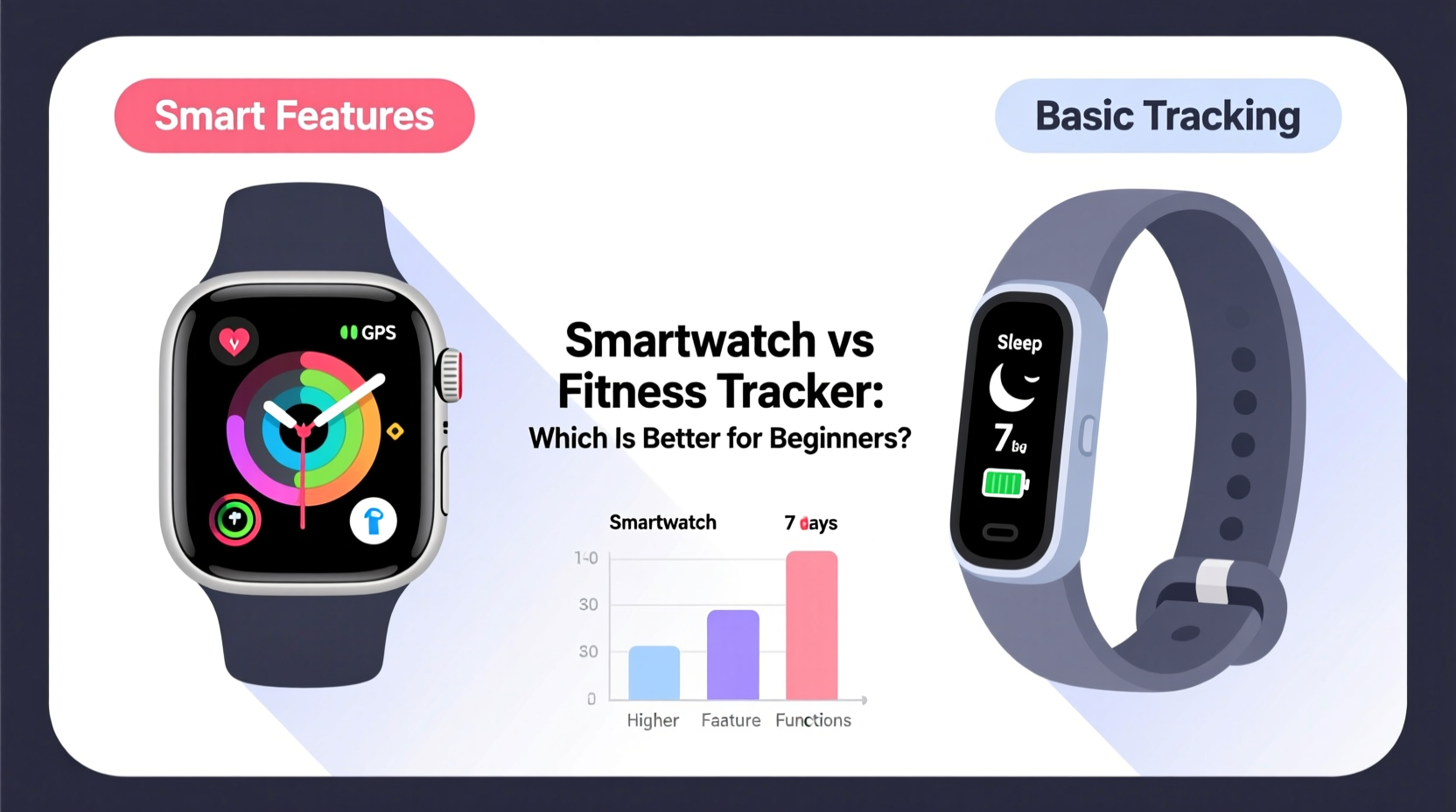
The fundamental distinction lies in purpose and complexity. A fitness tracker is designed primarily for monitoring physical activity and health vitals. It tracks steps, heart rate, sleep quality, and calories burned, often with water resistance and continuous wear comfort in mind. These devices are lightweight, discreet, and built around simplicity.
In contrast, a smartwatch functions more like a mini-computer on your wrist. Beyond fitness tracking, it supports notifications, apps, voice assistants, music control, GPS navigation, and even standalone calling on select models. The interface is typically larger, featuring a touchscreen and customizable watch faces.
This divergence affects everything from price to usability. Beginners must ask: Do I need constant access to messages and apps, or am I focused on improving my daily movement and sleep habits?
Cost Comparison and Long-Term Value
Price is one of the most immediate factors influencing value. Fitness trackers generally range from $50 to $150, making them accessible entry points. Brands like Fitbit, Garmin, and Xiaomi offer reliable models within this bracket that cover essential tracking needs without compromise.
Smartwatches start higher—typically $150 to $400+—with premium options like Apple Watch or Samsung Galaxy Watch exceeding $500. Even mid-tier models come with steeper learning curves and shorter battery life (often requiring daily charging).
For beginners, overspending on underused features diminishes value. A novice runner doesn’t need Spotify streaming from their wrist but might benefit greatly from accurate step counting and heart rate trends over time.
“Many users buy smartwatches expecting transformation, only to use 20% of their capabilities. Simplicity often wins long-term engagement.” — Dr. Lena Torres, Digital Health Researcher at Stanford Medicine
Feature Breakdown: What Each Device Offers
| Feature | Fitness Tracker | Smartwatch |
|---|---|---|
| Step & Distance Tracking | ✅ Standard | ✅ Standard |
| Heart Rate Monitoring | ✅ Continuous | ✅ Continuous |
| Sleep Analysis | ✅ Detailed stages | ✅ Varies by brand |
| Battery Life | 🔋 5–14 days | 🔋 1–3 days |
| Notifications (calls, texts, apps) | ⚠️ Limited alerts | ✅ Full integration |
| GPS Built-in | ❌ Often requires phone | ✅ Most models include |
| App Ecosystem | ❌ Minimal | ✅ Extensive (Android/iOS) |
| Water Resistance | ✅ Swim-safe (up to 5ATM) | ✅ Many swim-safe |
| Price Range | $50–$150 | $150–$600+ |
The table highlights a crucial insight: both devices overlap significantly in health tracking performance. However, smartwatches extend far beyond wellness into communication and productivity. For beginners whose goals center on accountability and habit-building, the extra cost of a smartwatch may not translate to added benefit.
Real-World Example: Sarah’s First Wearable Journey
Sarah, a 32-year-old office worker, wanted to become more active after months of sedentary routines. She researched wearables and initially leaned toward an Apple Watch due to its popularity. After reading reviews and testing displays in-store, she opted instead for a Fitbit Charge 6 ($129).
Her reasoning was practical: she didn’t want to charge a device every night, wasn’t interested in downloading apps, and mainly needed reminders to move, sleep insights, and workout summaries. Over six months, Sarah walked over 800 miles, improved her sleep efficiency by 27%, and lost 15 pounds—all while using just the basic dashboard and weekly reports.
She later admitted, “I would’ve been frustrated if I paid $400 for something I barely used. My Fitbit does exactly what I need, lasts a week on one charge, and stays out of my way.”
Sarah’s experience reflects a common pattern: beginners achieve better adherence with tools that match their actual behavior, not aspirational ones.
Choosing Based on Your Goals: A Step-by-Step Guide
Selecting the right device shouldn't be guesswork. Follow this five-step process to ensure you're investing wisely:
- Define Your Primary Goal
Are you aiming to walk more, lose weight, improve sleep, or stay connected during workouts? Write down your top three objectives. - Assess Your Tech Habits
How often do you interact with your phone? Do you respond to emails immediately? Are you likely to explore apps and settings regularly? - Determine Charging Tolerance
If forgetting to charge small electronics is common for you, prioritize battery longevity—a major advantage of fitness trackers. - Set a Realistic Budget
Decide how much you’re willing to spend knowing that software updates and new models arrive frequently. Avoid maxing out your budget on the first try. - Test Before You Buy (If Possible)
Visit a retailer to try on both types. Notice size, weight, screen brightness, and ease of navigation. Comfort matters for all-day wear.
When a Smartwatch Makes Sense for Beginners
Despite the advantages of fitness trackers, certain scenarios justify starting with a smartwatch:
- You already own an iPhone or high-end Android phone and want seamless ecosystem integration.
- You plan to use voice commands, mobile payments, or music playback directly from your wrist.
- You train outdoors frequently and want built-in GPS without carrying your phone.
- You have specific health concerns (e.g., irregular heartbeat) where ECG or fall detection could provide peace of mind.
Modern smartwatches also offer guided breathing exercises, stress tracking, and menstrual cycle logging—features increasingly relevant to holistic wellness. But again, utility depends on personal usage. A beginner who ignores these tools gains little from their presence.
Fitness Tracker Advantages That Matter Most
Fitness trackers excel in areas critical to long-term user success:
- Discreet Design: Slimmer profiles fit under shirts and look professional in work environments.
- Better Battery Life: Less frequent charging means fewer interruptions and higher consistency in data collection.
- Simpler Interface: Fewer distractions help maintain focus on health goals rather than digital noise.
- Lower Cost = Lower Risk: If you abandon the device after a few weeks, financial loss is minimized.
Additionally, many fitness trackers sync effortlessly with free companion apps that visualize trends over time. Seeing progress in sleep duration or resting heart rate can be powerful motivators—without needing push notifications from social media.
Common Mistakes Beginners Make
New users often fall into predictable traps that reduce the effectiveness of their wearables:
- Buying based on brand hype – Just because a celebrity uses a device doesn’t mean it suits your needs.
- Overlooking compatibility – Some trackers don’t fully support all smartphones (e.g., Fitbit with older Android versions).
- Expecting instant results – Data is only useful when reviewed consistently over time.
- Ignoring comfort – An uncomfortable band leads to non-use, no matter how advanced the tech.
“Wearables work best when they disappear into your routine. The moment you forget you’re wearing it, that’s when behavior change begins.” — Mark Lin, UX Designer at Wearable Insights Lab
FAQ: Common Questions Answered
Can a fitness tracker notify me about calls and messages?
Basic notifications like vibration alerts for incoming calls or text previews are available on most modern fitness trackers. However, interaction is limited—you can’t reply or view full messages. For deeper engagement, a smartwatch is required.
Do I need GPS for walking or running?
If you enjoy mapping routes or measuring distance accurately without your phone, built-in GPS is helpful. Many fitness trackers rely on connected GPS (using your phone’s signal), which works well but requires carrying your device. Entry-level smartwatches often include standalone GPS, adding value for outdoor exercisers.
Will either device help me lose weight?
Both can contribute by increasing awareness of daily activity and calorie expenditure. However, studies show that consistent logging, goal setting, and feedback loops matter more than hardware sophistication. A $100 tracker used daily is more effective than a $500 watch left unused.
Final Recommendation: Start Simple, Scale Later
For most beginners, a fitness tracker offers superior value. It covers essential health metrics, lasts longer between charges, costs less, and encourages consistent use through simplicity. The absence of app overload and constant alerts reduces cognitive burden—an unexpected but meaningful benefit.
That said, technology preferences are deeply personal. If connectivity, customization, and multifunctionality rank higher than minimalism, a mid-range smartwatch like the Samsung Galaxy Watch 6 or Apple Watch SE might be worth the investment.
The smartest approach isn’t choosing the most advanced gadget—it’s selecting the one you’ll actually wear and engage with every day. Progress comes not from specs, but from sustained attention to your habits.




 浙公网安备
33010002000092号
浙公网安备
33010002000092号 浙B2-20120091-4
Comments
No comments yet. Why don't you start the discussion?