
Choosing between smoked and regular paprika can significantly alter the character of a dish. While both originate from dried ground peppers, their processing methods create distinct flavor profiles, colors, and applications in the kitchen. For home cooks and culinary professionals alike, understanding these differences is essential for achieving authentic taste and balanced seasoning. Misusing one for the other can result in unintended smokiness or a lack of depth—especially in traditional dishes like Hungarian goulash, Spanish chorizo, or roasted vegetable rubs. This guide breaks down the origins, sensory qualities, and practical uses of each type, empowering you to make informed decisions at the spice rack.
Definition & Overview
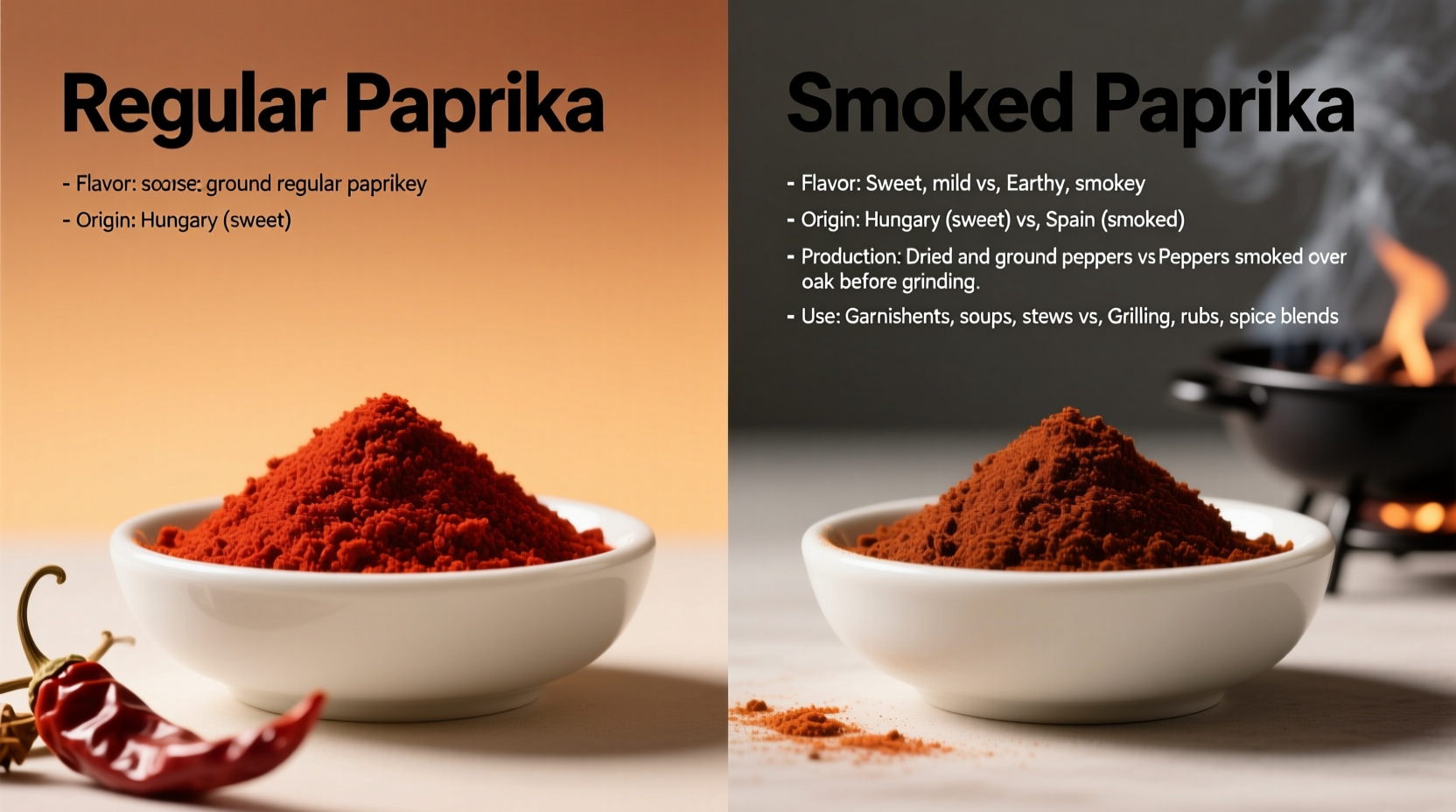
Paprika is a ground spice made from dried sweet, mild, or hot varieties of Capsicum annuum peppers. Native to Central America, it was introduced to Europe through trade routes and became deeply embedded in the cuisines of Hungary, Spain, and the Balkans. Over centuries, regional variations evolved based on local growing conditions and preservation techniques, leading to two dominant forms: regular (also called sweet or classic) paprika and smoked paprika.
Regular paprika is produced by drying ripe red peppers in the sun or using mechanical dehydrators, then grinding them into a fine powder. It ranges from bright red to deep orange and offers a clean, slightly sweet pepper flavor with minimal heat, depending on the variety.
Smoked paprika, known as *pimentón* in Spain, undergoes an additional step: the peppers are slowly smoked over oak or fruitwood fires before being milled. This imparts a rich, campfire-like aroma and deeper complexity, distinguishing it fundamentally from its unsmoked counterpart.
Though visually similar, these spices serve different roles in global cuisine. Recognizing when to use one over the other transforms ordinary meals into layered, intentional dishes.
Key Characteristics
The primary differences between smoked and regular paprika lie in processing, flavor development, color stability, and culinary function. The following table summarizes their core attributes:
| Characteristic | Regular Paprika | Smoked Paprika |
|---|---|---|
| Processing Method | Air-dried or sun-dried, then ground | Peppers smoked over wood fire, then ground |
| Flavor Profile | Sweet, fresh, mildly peppery; some varieties have slight bitterness | Deeply smoky, earthy, with notes of caramelized pepper and wood |
| Aroma | Clean, vegetal, reminiscent of fresh bell pepper | Intense smoke, charred sweetness, warm embers |
| Color | Bright red to orange-red; vibrant but fades with heat exposure | Ruby-red to dark brick; more stable under heat due to smoking process |
| Heat Level | Mild (sweet), medium (semi-sweet), or hot (picante) | Available in mild (dulce), medium (agridulce), and hot (picante) variants |
| Culinary Role | Colorant, background sweetness, aromatic base | Flavor anchor, smoky depth, umami enhancer |
| Shelf Life | 1–2 years if stored properly; loses potency faster than smoked | Up to 3 years; smoking acts as natural preservative |
| Origin Hubs | Hungary, Serbia, California (USA) | La Vera, Extremadura (Spain) |
The distinction in processing alone accounts for most functional differences. Smoking not only alters flavor but also changes chemical composition, increasing phenolic compounds that contribute to longer shelf life and greater resistance to oxidation.
Practical Usage: How to Use Each Type in Cooking
Both types of paprika are versatile, but their best applications differ based on how heat affects their flavor.
Using Regular Paprika
Regular paprika shines in dishes where a clean pepper presence is desired without competing smokiness. It’s commonly used in:
- Stews and braises: Stirred into sauces like Hungarian goulash or chicken paprikash near the end of cooking to preserve color and freshness.
- Dry rubs: Blended with salt, garlic powder, and onion powder for poultry or pork seasoning.
- Dusting and garnishing: Sprinkled over deviled eggs, potato salad, or hummus for visual appeal and subtle flavor lift.
- Soups and rice dishes: Added early in tomato-based soups or rice pilafs to infuse a gentle pepper note.
Avoid adding regular paprika directly to high-heat oil for long periods—it can burn easily, turning bitter. Instead, bloom it briefly in warm fat (15–30 seconds) before incorporating liquids.
Pro Tip: For maximum flavor release, mix regular paprika with a small amount of warm water or broth to form a paste before adding to stews. This prevents clumping and ensures even dispersion.
Using Smoked Paprika
Smoked paprika excels in recipes requiring depth, warmth, and a hint of barbecue-like essence—even without actual grilling. Ideal uses include:
- Charcuterie and cured meats: Essential in Spanish chorizo, sobrassada, and salami blends.
- Bean and legume dishes: A pinch elevates black beans, lentils, or chickpea stews with savory complexity.
- Grilled or roasted vegetables: Tossed with olive oil and smoked paprika before roasting enhances natural sugars and mimics grill marks.
- Marinades and barbecue sauces: Combines well with brown sugar, vinegar, and mustard for smoky-sweet glazes.
- Paella and rice dishes: Used in authentic Spanish paella valenciana to deepen color and flavor profile.
Because of its robust nature, smoked paprika tolerates higher heat better than regular. However, prolonged frying still risks scorching—limit blooming time to 20 seconds in oil.
Chef’s Insight: In professional kitchens, smoked paprika is often layered with cumin and coriander in spice blends for tacos, chili, and mole-inspired sauces to build multidimensional warmth without relying on chiles alone.
Variants & Types
Neither smoked nor regular paprika exists in a single form. Both come in multiple grades defined by heat, ripeness, and region.
Types of Regular Paprika
- Sweet (Noble) Paprika – The most common type; made from sweet red peppers, offering mild flavor and brilliant color. Predominant in Hungarian cuisine.
- Semi-Sweet (Félédes) – Slightly more pungent, blending sweet and mildly spicy peppers. Offers greater depth while remaining family-friendly.
- Hot (Erős) – Contains seeds and membranes from spicier pepper varieties, delivering noticeable heat. Used sparingly in bold stews or sausages.
- Rose Paprika – A premium Hungarian variety noted for floral undertones and balanced sweetness; prized in fine dining.
- California Paprika – Milder and fruit-forward, often used in American commercial blends and snacks.
Types of Smoked Paprika (Pimentón)
- Pimentón Dulce – Mild and sweet; ideal for dishes needing smoke without heat. Common in bean stews and seafood rice.
- Pimentón Agridulce – Medium heat with bittersweet balance; frequently used in chorizo and grilled meats.
- Pimentón Picante – Spicy and assertive; adds both fire and smoke. Reserved for robust dishes like spicy lentil soup or Andalusian marinades.
In Spain, all three types are protected under Denominación de Origen (D.O.) status, meaning only paprika produced in La Vera using traditional oak-smoking methods can carry the label “Pimentón de la Vera.”
Buying Advice: Look for D.O. certification when purchasing smoked paprika for authenticity. Avoid products labeled \"artificially smoked\"—they use liquid smoke additives and lack the nuanced depth of real wood-smoked versions.
Comparison with Similar Ingredients
Paprika is often confused with other red-hued spices. Understanding distinctions ensures accurate substitution and avoids flavor missteps.
| Spice | Difference from Regular Paprika | Difference from Smoked Paprika |
|---|---|---|
| Cayenne Pepper | Significantly hotter; made from finer, spicier chiles. Not interchangeable unless adjusting for heat. | Lacks smokiness entirely; pure heat source rather than flavor builder. |
| Chili Powder (U.S.) | Usually a blend containing cumin, garlic, oregano; less sweet and more complex than pure paprika. | No inherent smoke; may dilute smoky effect if substituted directly. |
| Aleppo Pepper | Coarser texture, oil-cured, with fruity tang and moderate heat. Less sweet and more acidic. | Completely different profile—offers no smokiness, but adds Mediterranean brightness. |
| Kashmiri Red Chili | Mild Indian chili with vivid red color and slight floral note; used similarly for color enhancement. | Can mimic appearance but lacks smokiness; sometimes paired with smoked paprika in fusion curries. |
\"Many chefs assume any red pepper powder will work interchangeably. But replacing smoked paprika with cayenne isn't just about heat—it's losing a foundational layer of aroma that defines entire regional cuisines.\" — Chef Elena Ruiz, Executive Chef at Taberna Solera, Madrid
Practical Tips & FAQs
Q1: Can I substitute smoked paprika for regular paprika?
A1: Only if you want to introduce smokiness. In dishes like creamy potato soup or delicate egg dishes, smoked paprika may overpower. For non-smoked recipes, use regular paprika exclusively. If substituting, reduce quantity by half and assess flavor impact.
Q2: Is smoked paprika always spicy?
A2: No. The term \"smoked\" refers only to processing method. Pimentón dulce is fully smoked but entirely mild. Always check labels for heat indicators: dulce (mild), agridulce (medium), picante (hot).
Q3: How should I store paprika to maintain freshness?
A3: Keep both types in airtight containers away from light, heat, and moisture. A cool, dark pantry is ideal. Avoid storing above the stove. Ground paprika degrades faster than whole spices—label jars with purchase dates and replace every 1–3 years.
Q4: Why does my paprika taste bitter?
A4: Bitterness usually results from overheating. When blooming paprika in oil, do not let it sizzle longer than 20–30 seconds. Also, old or low-quality paprika oxidizes and develops off-flavors. Buy from reputable sources with high turnover.
Q5: Which dishes absolutely require smoked paprika?
A5: Authentic Spanish recipes such as patatas bravas, pulpo a la gallega (Galician octopus), and fabada asturiana rely on smoked paprika for signature flavor. Omitting it changes the dish’s identity.
Q6: Can I make my own smoked paprika at home?
A6: Yes, though labor-intensive. Select large red bell or cubanelle peppers, halve and seed them, then smoke at 200°F (93°C) for 4–6 hours until leathery. Dry further in a dehydrator if needed, then grind finely. Note: Home setups won’t replicate traditional oak-smoked depth but yield a satisfying approximation.
Q7: Does paprika contain capsaicin?
A7: Yes, but levels vary. Sweet paprika has very little, making it safe for most heat-sensitive palates. Hot paprika and picante pimentón contain measurable capsaicin, primarily from included pepper placenta and seeds.
Storage Checklist:
☐ Store in opaque glass or metal tins
☐ Keep away from oven/stove heat
☐ Replace after 24 months (regular) or 36 months (smoked)
☐ Do not refrigerate—condensation causes clumping
☐ Buy whole dried peppers and grind small batches for peak freshness
Summary & Key Takeaways
Smoked and regular paprika are not interchangeable despite their shared botanical origin. Their divergence begins in post-harvest processing and extends into flavor, application, and cultural significance.
- Regular paprika delivers a clean, sweet pepper flavor and vibrant color, ideal for Central European stews, rubs, and garnishes.
- Smoked paprika provides deep, woody aroma and umami-rich depth, essential in Spanish and Southwestern cuisines.
- Both come in mild, medium, and hot varieties—always verify heat level before use.
- Smoked paprika has superior shelf life due to phenolic preservation from smoking.
- Substitutions should be approached with caution: introducing unintended smokiness or removing critical depth alters dish integrity.
- Freshness matters—store properly and rotate stock regularly.
Understanding these differences empowers precision in seasoning. Whether crafting a silky Hungarian paprikash or a rustic Spanish romesco sauce, selecting the right paprika is not just a detail—it’s a defining choice.
Final Thought: Next time you reach for paprika, pause and ask: Do I need color and sweetness, or depth and smoke? That simple question can elevate your cooking from good to authentically great.




 浙公网安备
33010002000092号
浙公网安备
33010002000092号 浙B2-20120091-4
Comments
No comments yet. Why don't you start the discussion?