
When it comes to creating a restful sleep environment, few choices are as personal — or as misunderstood — as bedding. The debate between smooth (sateen, percale) and textured (linen, waffle, brushed cotton) sheets often centers on aesthetics, but the real issue is comfort. And woven into every marketing claim is the persistent question: does thread count really matter? The answer isn’t as straightforward as brands would have you believe. Thread count is just one factor in a complex equation that includes fiber quality, weave type, and personal preference.
The Myth of High Thread Count
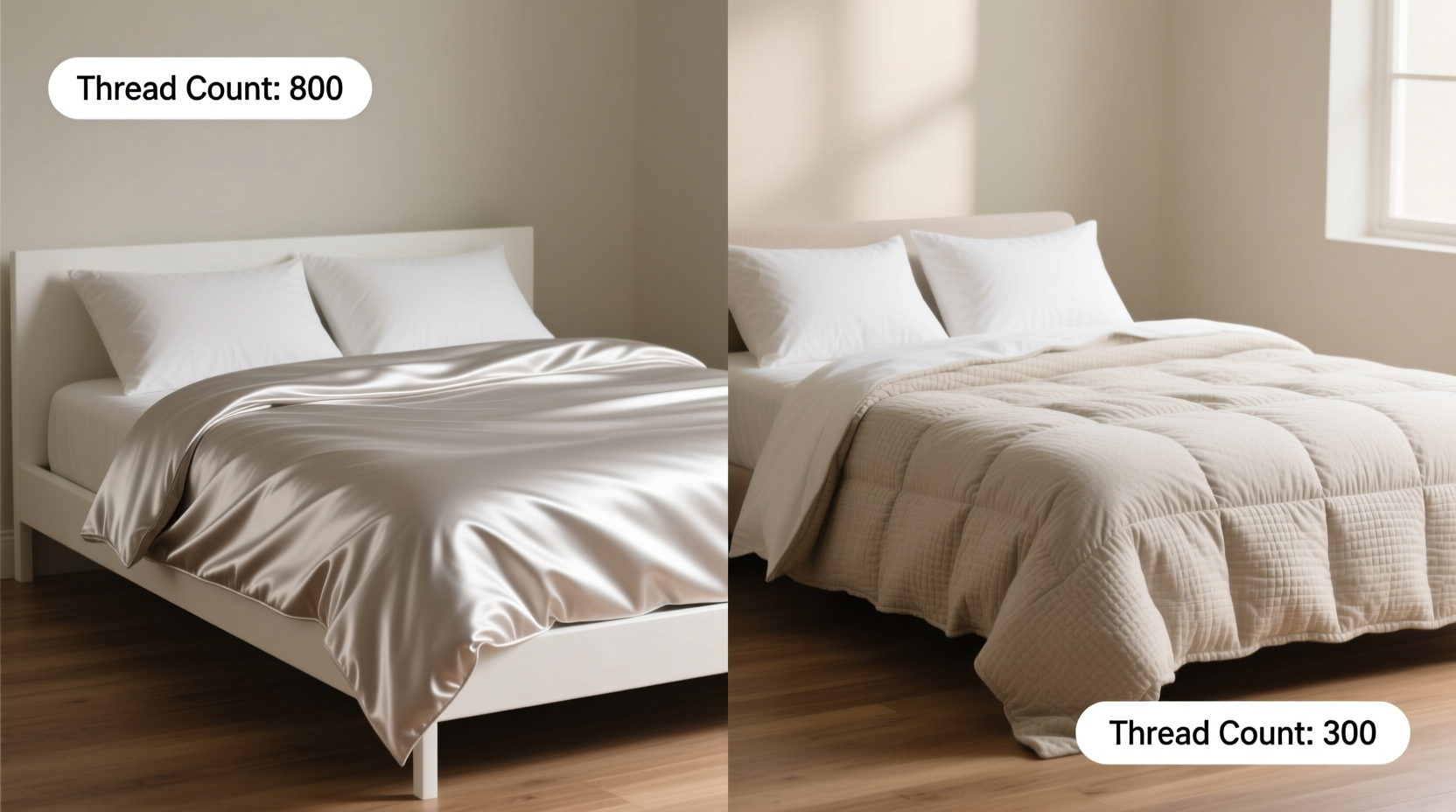
For decades, consumers have equated high thread count with luxury and comfort. Advertisements tout 800- or even 1,000-thread-count sheets as the pinnacle of softness. But industry experts argue that beyond a certain point, higher counts don’t translate to better performance — and may even signal manipulation.
Thread count refers to the number of horizontal and vertical threads per square inch of fabric. While a range of 200–400 is generally sufficient for quality bedding, manufacturers sometimes inflate counts by using multi-ply yarns — twisting several thin strands into one thread and counting each individually. This can result in a dense, heavy fabric that feels stiff and traps heat.
“Once you go above 400 thread count with single-ply cotton, you’re not gaining comfort — you’re paying for marketing.” — Dr. Lena Patel, Textile Scientist at the Home Sleep Institute
True luxury lies in long-staple fibers like Egyptian or Pima cotton, which produce stronger, smoother yarns. A well-woven 300-thread-count percale sheet made from long-staple cotton will outperform a poorly constructed 800-count sheet any night.
Smooth Bedding: Cool, Crisp, and Consistent
Smooth bedding typically includes percale and sateen weaves. Percale uses a one-over, one-under weave, resulting in a matte finish, breathable structure, and crisp feel — often described as “hotel-like.” Sateen, on the other hand, uses a four-over, one-under pattern, producing a silky sheen and softer drape.
Percale is ideal for hot sleepers due to its open weave and moisture-wicking properties. It tends to become softer with each wash without losing integrity. Sateen offers a more indulgent feel but can be less durable and prone to pilling over time, especially if made from lower-quality fibers.
Textured Bedding: Breathable, Organic, and Lived-In
Textured bedding — such as linen, jersey, waffle, or brushed cotton — prioritizes tactile depth and airflow. Linen, for example, has a naturally crinkled surface that increases air circulation, making it exceptionally thermoregulating. It starts rough but softens dramatically after repeated washing.
Waffle weave sheets trap less body heat due to their three-dimensional grid structure, making them excellent for humid environments. Brushed cotton (like flannel) raises the fiber surface for a fuzzy, cozy feel — perfect for winter but potentially too warm in summer.
The advantage of texture is not just aesthetic; it enhances functionality. Raised surfaces reduce skin contact, minimizing clamminess. This makes textured options particularly suitable for people who sweat at night or struggle with temperature regulation.
Comparing Key Features: Smooth vs Textured
| Feature | Smooth (Percale/Sateen) | Textured (Linen/Waffle/Brushed) |
|---|---|---|
| Feel | Crisp, sleek, silky | Rustic, soft, dimensional |
| Breathability | Moderate to high (percale), lower (sateen) | Very high |
| Durability | High (percale), moderate (sateen) | Exceptional (linen), moderate (brushed) |
| Temperature Regulation | Good (percale), poor (sateen) | Excellent |
| Maintenance | Low (ironing may be needed) | Linen wrinkles easily; others machine-washable |
| Best For | Cool sleepers, minimalist decor | Hot sleepers, cozy aesthetics |
Real-World Example: Choosing for a Shared Bed
Sarah and Mark had opposite sleep preferences. Sarah ran hot and preferred crisp sheets, while Mark liked warmth and softness. They initially bought 800-thread-count sateen sheets hoping to satisfy both — but Sarah found them suffocating, and Mark admitted they felt “slippery” and didn’t stay on the bed.
After testing several options, they switched to medium-weight linen. Though Sarah was skeptical about the initial texture, she appreciated how cool the sheets felt at night. Mark enjoyed the snug drape and natural warmth retention. Within weeks, both reported deeper sleep and fewer nighttime adjustments. Their experience underscores that material behavior matters more than numerical specs.
What Actually Matters More Than Thread Count
- Fiber Quality: Long-staple cotton or pure linen trumps high thread count with short fibers.
- Weave Type: Determines breathability, drape, and durability.
- Finishing Processes: Chemical softeners or wrinkle-resistant coatings may degrade over time or irritate sensitive skin.
- Personal Sleep Habits: Do you overheat? Move a lot? Share the bed?
Instead of fixating on thread count, focus on certifications like OEKO-TEX® or GOTS (Global Organic Textile Standard), which verify non-toxic materials and ethical production.
Step-by-Step Guide to Choosing Your Ideal Bedding
- Assess your sleep climate: Are you usually too hot, too cold, or variable?
- Identify your texture preference: Test samples if possible — touch matters.
- Select fiber type: Opt for 100% cotton, linen, or TENCEL™ for breathability and sustainability.
- Choose the weave: Percale for crispness, sateen for silkiness, linen for airflow.
- Check construction details: Look for single-ply yarns and tight, even stitching.
- Read reviews with photos: Real user images often reveal true texture and drape.
- Start with one set: Try a full sheet set before committing to a full bedroom upgrade.
FAQ
Is 100% cotton always better than blends?
Generally, yes — especially for breathability and durability. However, some high-quality blends with TENCEL™ or modal can enhance softness and drape without sacrificing performance. Avoid polyester-heavy blends, which trap heat and resist moisture.
Do textured sheets make noise when I move?
Some do — linen, in particular, can have a slight rustling sound. If you're a light sleeper or share a bed with someone who is, test a sample first. Waffle and jersey knits tend to be quieter.
How often should I replace my sheets?
Well-maintained cotton or linen sheets can last 3–5 years. Signs it’s time to replace include thinning fabric, persistent pilling, or loss of color vibrancy despite proper care.
Conclusion: Comfort Is Personal — Not Numerical
The obsession with thread count distracts from what truly defines comfortable bedding: how it feels against your skin, how it responds to your body’s needs, and how it holds up over time. Smooth sheets offer elegance and ease; textured ones deliver breathability and character. Neither is universally superior.
Your best choice depends on your sleep environment, personal preferences, and values — whether that’s sustainability, softness, or simplicity. Ignore inflated numbers and prioritize material honesty. When you find bedding that aligns with your lifestyle, sleep doesn’t just improve — it transforms.




 浙公网安备
33010002000092号
浙公网安备
33010002000092号 浙B2-20120091-4
Comments
No comments yet. Why don't you start the discussion?