
At first glance, snake chains and rope chains might seem like interchangeable accessories—both are sleek, metallic, and designed to elevate a personal style. But beneath the surface, these two chain types differ significantly in construction, durability, drape, and aesthetic impact. Choosing between them isn't just about preference; it's about understanding how each performs in real life. Whether you're investing in a new piece of jewelry or building a curated collection, knowing the nuances can make all the difference.
Construction and Design Differences
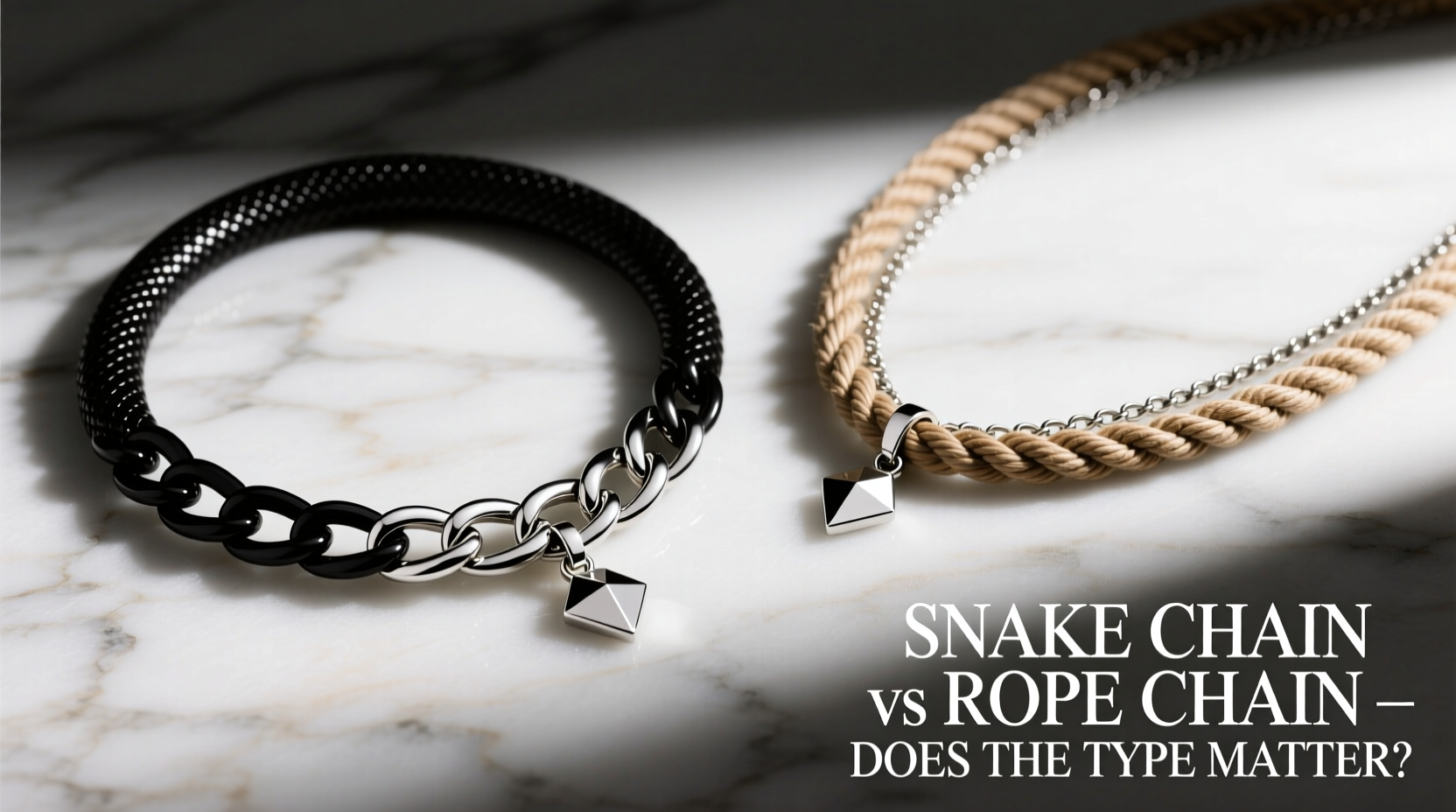
The most fundamental distinction between snake chains and rope chains lies in their structure. A snake chain is made from tightly linked metal tubes that slide against each other, creating a smooth, flexible surface that resembles a serpent’s skin—hence the name. These links are fused or soldered together in a way that restricts lateral movement, giving the chain a rigid yet fluid appearance when worn.
In contrast, a rope chain is constructed by twisting multiple interlocking oval links into a helical pattern that mimics the texture of a twisted rope. This braided design requires more intricate craftsmanship and often uses thicker wire, resulting in a heavier, more substantial feel. The rope chain’s coiled structure allows it to catch light from multiple angles, offering a bolder visual presence.
Durability and Longevity Compared
Durability is where the real divergence begins. Snake chains, while elegant, are more prone to kinking and denting over time. Because the links are small and tightly packed, any sharp bend or impact can deform the alignment, leading to permanent creases. Once kinked, snake chains are difficult to repair without professional tools.
Rope chains, though not indestructible, tend to be more resilient due to their interwoven link structure. The twisting design distributes stress across multiple points, making them less likely to snap under tension. That said, rope chains can still stretch if worn frequently or exposed to heavy pulling, especially if the links are thin or poorly soldered.
“Rope chains have a structural advantage—they’re engineered to absorb force through their twist. Snake chains look seamless, but that elegance comes at the cost of vulnerability.” — Marcus Tran, Jewelry Designer & Metalsmith
Visual Impact and Styling Flexibility
When it comes to aesthetics, the choice between snake and rope chains often boils down to the statement you want to make.
- Snake chains offer a minimalist, modern look. Their sleek surface reflects light evenly, making them ideal for delicate pendants or solo wear. They drape closely to the neck, providing a refined, almost invisible foundation for layered looks.
- Rope chains are inherently bold. Their three-dimensional twist catches light dramatically, adding volume and presence. They work well as standalone pieces, especially when paired with larger pendants like crosses, lockets, or initials.
Rope chains are commonly seen in hip-hop fashion and luxury streetwear due to their eye-catching profile. Snake chains, on the other hand, are favored in contemporary and minimalist designs—think clean lines, unisex appeal, and subtle sophistication.
Best Use Cases by Chain Type
| Chain Type | Best For | Less Ideal For |
|---|---|---|
| Snake Chain | Daily wear, layering, minimalist pendants, formal occasions | Heavy pendants, rugged environments, high-impact activities |
| Rope Chain | Bold statements, pendant showcases, casual and luxury streetwear | Fine layering, very delicate styling, lightweight chains-only looks |
Care and Maintenance Requirements
Maintenance needs vary significantly between the two styles. Snake chains require gentle handling. Avoid wearing them during physical activity, sleeping, or swimming, as moisture and friction can accelerate wear. Clean them with a soft polishing cloth and store flat to prevent kinks.
Rope chains, while sturdier, accumulate dirt within their twisted grooves. Regular cleaning with a soft-bristled brush (like an old toothbrush) and mild soapy water helps maintain their luster. Dry thoroughly before storing to prevent tarnish, especially for silver or lower-karat gold versions.
Step-by-Step: How to Choose the Right Chain for You
- Assess your lifestyle: Do you lead an active life? Rope chains handle movement better. Prefer low-maintenance elegance? Snake chains suit quieter routines.
- Consider your wardrobe: If your style leans toward tailored, understated fashion, a snake chain complements that. For edgier or statement-driven outfits, go rope.
- Think about pendants: Heavy or large pendants need the strength of a rope chain. Small, lightweight charms work beautifully on snake chains.
- Check metal quality: Both chain types are only as strong as their material. Look for solid gold, platinum, or high-quality stainless steel with secure clasps.
- Try before you buy: Drape both styles around your neck. Notice how they sit, move, and reflect light. Comfort and confidence matter more than trends.
Real-Life Example: Two Brothers, Two Chains
Take the case of James and Daniel, brothers with contrasting tastes. James, a graphic designer, prefers clean lines and quiet confidence. He wears a 16-inch 14K gold snake chain daily, often layered with a thin cross pendant. It matches his minimalist wardrobe and office environment. After two years, he’s had one minor kink repaired but values its subtlety.
Daniel, a music producer, opts for a thick 20-inch rope chain in 18K gold. It’s a centerpiece of his stage persona and streetwear looks. Despite frequent wear and occasional rough handling, the chain has held up well thanks to its robust build. “It’s not just jewelry,” he says. “It’s part of my identity.”
Their choices reflect a deeper truth: chain type isn’t just about appearance—it’s about alignment with personal expression and practicality.
FAQ: Common Questions About Snake and Rope Chains
Can a snake chain break easily?
Yes, under stress. While not fragile, snake chains lack flexibility in extreme bends. A hard pull or sharp fold can cause a link to snap or kink. Proper care minimizes risk, but they’re less forgiving than rope chains in high-activity settings.
Are rope chains more expensive than snake chains?
Generally, yes. Rope chains use more metal due to their twisted design and require more labor to produce. A comparable length and thickness in rope chain will typically cost 20–40% more than a snake chain, especially in solid gold.
Which chain is better for layering?
Snake chains excel in layering because of their smooth, flat profile. They stack neatly without catching on other chains. Rope chains can be layered too, but their texture may tangle more easily unless paired with similar-weight pieces.
Conclusion: Does the Chain Type Really Matter?
Yes—the chain type matters more than many realize. Snake and rope chains are not functionally or aesthetically interchangeable. One offers sleek minimalism; the other delivers bold presence. One drapes like liquid metal; the other commands attention with every turn.
Your choice should reflect not just taste, but lifestyle, intended use, and long-term value. A $500 snake chain may look stunning on day one, but if worn daily without care, it could degrade faster than a well-made rope chain. Conversely, a chunky rope chain might overpower a delicate outfit meant for subtlety.




 浙公网安备
33010002000092号
浙公网安备
33010002000092号 浙B2-20120091-4
Comments
No comments yet. Why don't you start the discussion?