
The holiday season often means crowded gatherings, extended family visits, back-to-back invitations, and an unrelenting expectation to be cheerful and present. For introverts, this can feel less like celebration and more like a slow drain on their mental and emotional reserves. The term “social battery” has become a popular metaphor for the finite energy we have for interacting with others—and for many introverts, that battery runs dangerously low by mid-December. The good news: it’s possible to participate in the holidays meaningfully while protecting your inner equilibrium. This guide offers grounded, actionable strategies to help you navigate the season with intention, preserve your energy, and emerge not just intact—but renewed.
Understanding the Introvert’s Social Battery
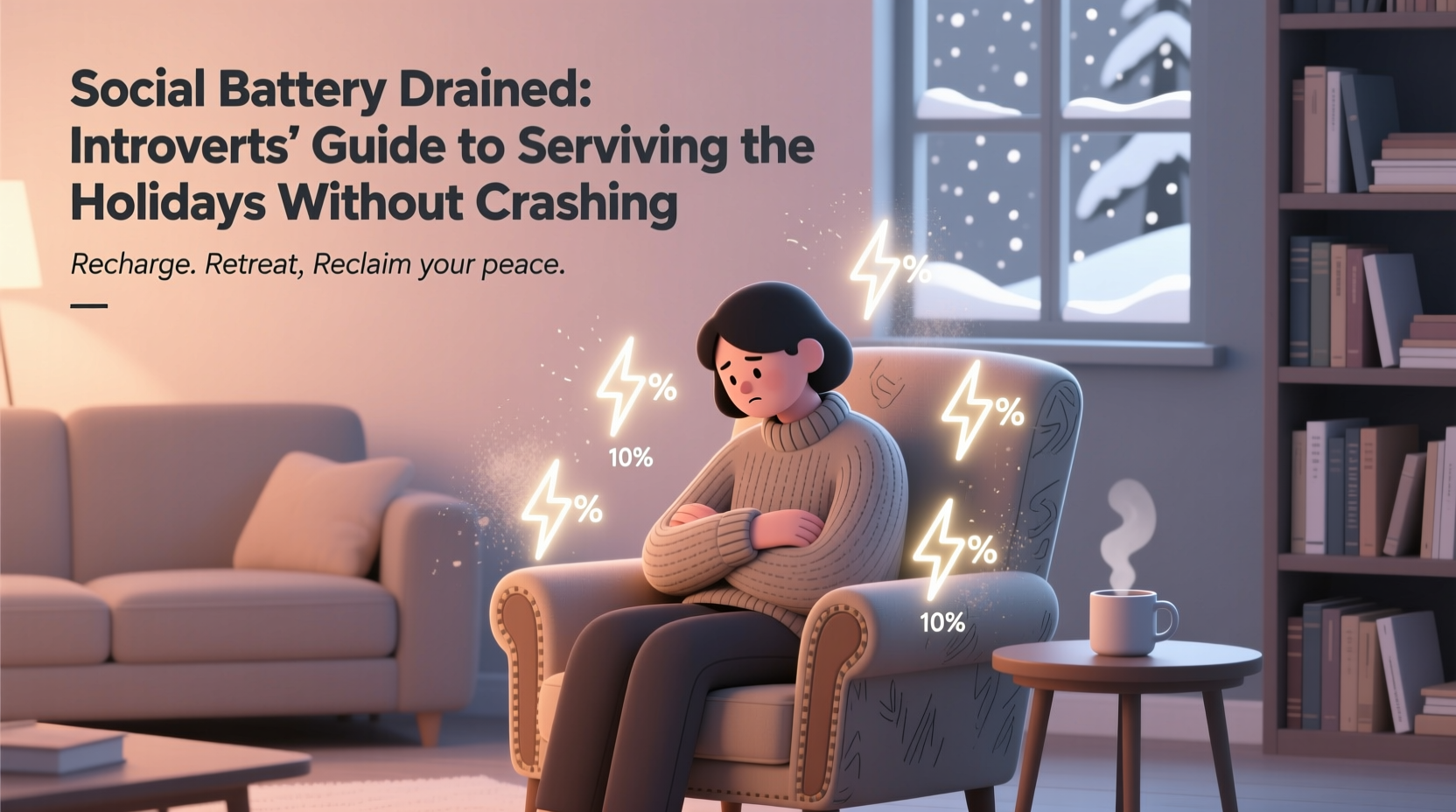
Introversion isn’t shyness or dislike of people. It’s a preference for depth over breadth in social interaction and a need for solitude to recharge. Neurologically, introverts tend to process stimuli more deeply, making environments with high sensory input—like loud parties or bustling shopping malls—especially taxing. Each conversation, handshake, and forced smile depletes a limited reserve of social energy. Once depleted, symptoms like irritability, fatigue, brain fog, and emotional withdrawal set in.
Dr. Laurie Helgoe, psychologist and author of Introvert Power, explains:
“Introverts don’t hate people—we love connection, but on our own terms. When we ignore our need for downtime, we’re not just tired; we’re disconnected from ourselves.”
Recognizing when your social battery is low is the first step toward managing it. Common signs include dreading upcoming events, feeling overwhelmed by small talk, or craving silence even in the middle of a joyful gathering. These aren’t flaws—they’re signals. Listening to them allows you to respond with care rather than crash under pressure.
Strategies to Conserve and Recharge Your Energy
Surviving the holidays isn’t about enduring until January 1st—it’s about designing a season that aligns with your nature. Below are proven methods to maintain your energy without opting out completely.
1. Schedule Micro-Recharges Between Events
You don’t need hours of solitude to recover. Even five to ten minutes of intentional quiet can reset your nervous system. Use bathroom breaks as retreats. Step outside for fresh air. Sit in your car with closed eyes before entering another party. These micro-moments signal to your brain: You’re still in control.
2. Set Boundaries with Grace
Saying “no” doesn’t require justification, but offering a gentle explanation helps soften the message. Instead of canceling outright, consider partial attendance: “I’ll come for dessert, but I need to leave by 8.” Or suggest alternative ways to connect: “Let’s do a quiet coffee next week instead—I’d love to catch up properly.”
Boundaries aren’t walls—they’re filters. They allow meaningful connection while blocking what drains you.
3. Designate a Personal Sanctuary
If you're staying with family or attending multi-day events, claim a space where you can retreat. It might be a guest room, a corner of the basement, or even a foldable privacy screen in your bedroom. Stock it with essentials: a book, headphones, a journal, or a weighted blanket. Communicate its purpose kindly: “This is where I recharge so I can be fully present when we’re together.”
4. Reframe “Alone Time” as Essential Maintenance
Solitude isn’t antisocial—it’s restorative. Just as extroverts gain energy from being around people, introverts rebuild theirs in quiet. Viewing alone time as non-negotiable self-care, like sleep or nutrition, removes guilt and reinforces its importance.
Pre-Holiday Preparation Timeline
Managing your social battery starts long before the first invitation arrives. Use this timeline to prepare strategically.
- Four Weeks Before: Review your event calendar. Identify high-energy commitments and flag ones you can skip or modify.
- Three Weeks Before: Communicate boundaries early. RSVP with arrival/departure times. Offer alternatives for those expecting full participation.
- Two Weeks Before: Plan recharging rituals. Schedule solo walks, digital detox hours, or creative time post-event.
- One Week Before: Prepare comfort items—quiet music, favorite snacks, portable reading material—for use during events.
- Daily During Holidays: Check in with yourself each morning. Rate your energy from 1–10. Adjust plans accordingly.
Do’s and Don’ts at Holiday Gatherings
Navigating social events becomes easier with clear guidelines. Refer to this table during planning or in the moment when decisions feel overwhelming.
| Do | Don’t |
|---|---|
| Arrive late or leave early to minimize exposure | Stay past your energy limit to please others |
| Bring a familiar item (book, sweater) for comfort | Force yourself into large group conversations |
| Find a quiet task (helping in kitchen, walking dogs) | Overcommit to hosting duties |
| Use “I need a minute” as a valid exit phrase | Apologize excessively for taking space |
| Connect one-on-one with someone meaningful | Engage in debates or emotionally charged topics |
A Real Example: Maya’s Balanced Holiday Season
Maya, a freelance writer and self-described “deep introvert,” used to dread December. In past years, she attended every family dinner, holiday party, and office exchange—often pushing through exhaustion. By New Year’s, she was emotionally spent, resentful, and needed weeks to recover.
Last year, she changed her approach. She reviewed her calendar two weeks in advance and declined three low-priority events. For the ones she attended, she arrived 30 minutes late and left after main course. During larger gatherings, she volunteered to walk her cousin’s dog—a quiet activity that gave her 20 minutes of solitude. At her parents’ house, she claimed the sunroom as her retreat space, complete with a cozy chair and noise-canceling headphones.
The result? She felt more present during conversations, enjoyed moments of genuine connection, and didn’t experience a post-holiday crash. “For the first time,” she said, “I actually remembered the good parts of the holidays—not just how tired I was.”
Expert Insight: The Role of Self-Compassion
Dr. Susan Cain, author of Quiet: The Power of Introverts in a World That Can’t Stop Talking, emphasizes that societal norms often undervalue introverted strengths—reflection, deep listening, thoughtful response. During high-social periods like the holidays, she advises introverts to resist internalized pressure to perform extroversion.
“The most revolutionary thing an introvert can do is to honor their own rhythm. Rest is not laziness. Silence is not disengagement. Protecting your energy is an act of wisdom.”
This mindset shift—from guilt to self-respect—is foundational. When you stop viewing your needs as inconveniences, you reclaim agency over your experience.
Practical Checklist: Surviving the Holidays as an Introvert
Use this checklist in the weeks leading up to and during the holiday season to stay grounded and energized.
- ☐ Audit all planned events—identify which are essential, optional, or expendable
- ☐ Communicate attendance windows (e.g., “I’ll be there from 6–8 PM”)
- ☐ Pack a “recharge kit”: earbuds, book, journal, herbal tea, comfortable layers
- ☐ Schedule at least 15 minutes of solitude daily, even if fragmented
- ☐ Identify safe spaces at event locations (bedrooms, porches, cars)
- ☐ Practice polite exit lines: “I’ve had a lovely time, but I need to head out”
- ☐ Plan a post-holiday decompression day—no calls, no obligations
- ☐ Reflect afterward: What worked? What would you change next year?
Frequently Asked Questions
Isn’t skipping holiday events selfish?
Choosing where to invest your energy isn’t selfish—it’s sustainable. Attending every event while emotionally depleted serves no one. Being selective allows you to show up authentically when you do participate. Quality matters more than quantity in relationships.
How do I explain my need for alone time to family?
Frame it positively: “I love being with you, and I recharge best with a little quiet time. That way, I can be more present when we’re together.” Most people respond well when they understand it’s about enhancing connection, not avoiding it.
What if I already feel behind on holiday tasks?
Release perfectionism. Introverts often feel added pressure to meet external expectations—gifts, cards, decorations. Prioritize what brings you joy. Let go of the rest. A handwritten note in January means more than a rushed gift on the 24th.
Conclusion: Reclaim Your Holiday Experience
The holidays don’t have to be a test of endurance. For introverts, they can become an opportunity to practice self-awareness, set compassionate boundaries, and engage in meaningful connection—on your own terms. You don’t need to transform into an extrovert to enjoy the season. You only need to listen to your inner signals and respond with kindness.
Your social battery isn’t a flaw to fix. It’s a compass pointing toward balance. When you protect your energy, you don’t withdraw from life—you make space for deeper presence. This holiday season, let your needs guide you. Say no when necessary. Step away without apology. Return to yourself often. In doing so, you won’t just survive the holidays—you’ll remember why they matter.




 浙公网安备
33010002000092号
浙公网安备
33010002000092号 浙B2-20120091-4
Comments
No comments yet. Why don't you start the discussion?