
In an age where curated highlight reels dominate our screens, it’s easy to fall into the habit of measuring your life against someone else’s most polished moments. The social media comparison trap isn’t just a fleeting insecurity—it’s a pervasive psychological pattern that erodes self-esteem, fuels anxiety, and distorts reality. Millions scroll daily, absorbing images of flawless vacations, perfect relationships, and career milestones, often walking away feeling like they’re falling short. But this sense of inadequacy isn’t a reflection of your worth; it’s a symptom of a system designed to keep you engaged by making you feel just a little less than.
The truth is, no one posts their late-night doubts, financial struggles, or relationship conflicts with the same enthusiasm as a sunset photo from Bali. Yet, unconsciously, we internalize these filtered snapshots as benchmarks for success. Recognizing this dynamic is the first step toward breaking the cycle. This article explores why the comparison trap is so powerful, how it affects mental health, and—most importantly—what you can do to step out of it and reclaim a more authentic, grounded sense of self.
The Psychology Behind Social Comparison
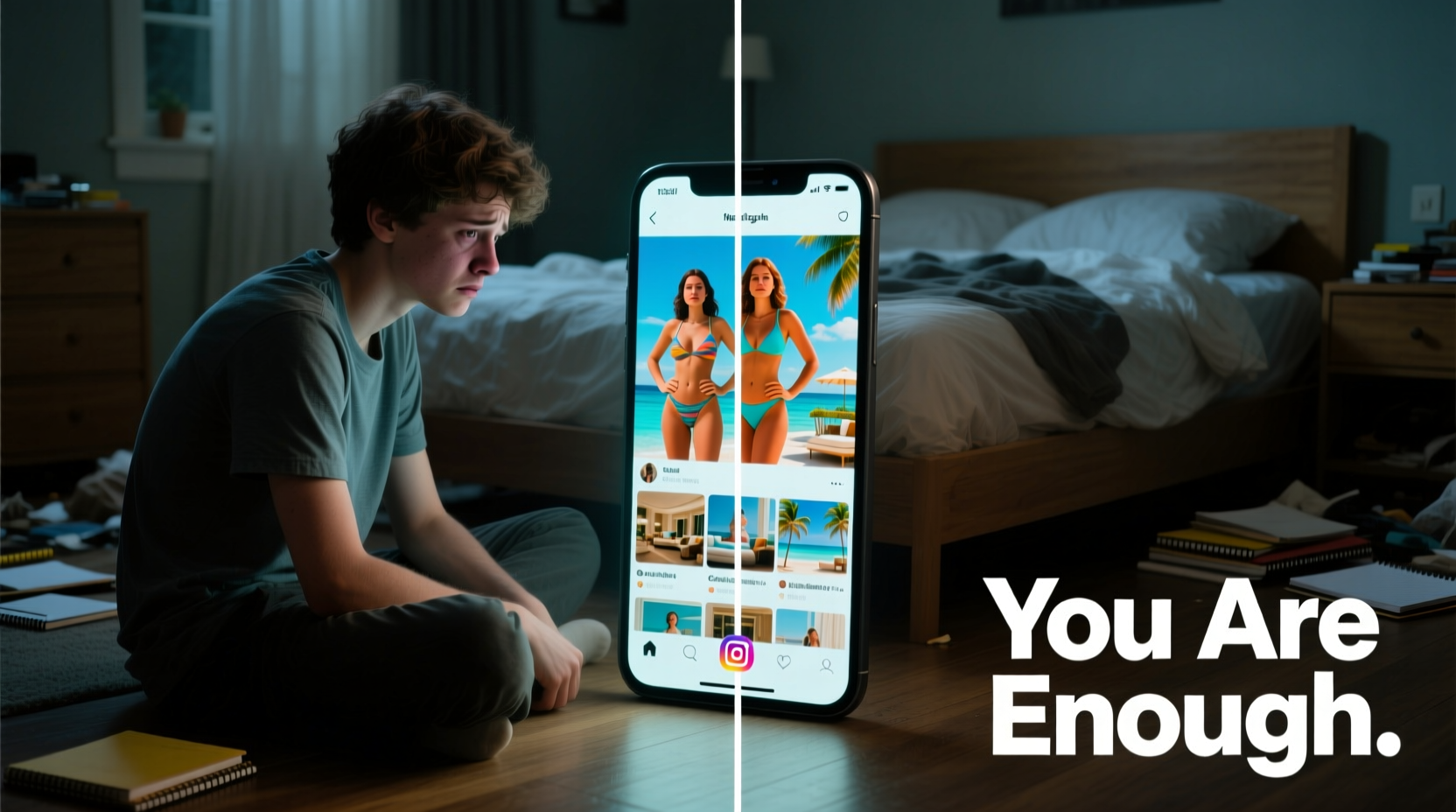
Social comparison theory, first introduced by psychologist Leon Festinger in 1954, suggests that humans have an innate drive to evaluate themselves by comparing with others. In pre-digital times, these comparisons were mostly local—measuring ourselves against peers, neighbors, or colleagues. Today, social media expands that circle to include thousands of people across the globe, many of whom are influencers, celebrities, or professionals whose entire online presence is built on aspirational content.
What makes digital comparison uniquely harmful is its asymmetry: you’re comparing your behind-the-scenes to someone else’s highlight reel. Worse, algorithms amplify content that triggers emotional reactions—often envy, desire, or FOMO (fear of missing out)—because such emotions increase engagement. Over time, repeated exposure conditions the brain to associate scrolling with feelings of insufficiency.
“We don’t realize how much distortion exists in social media until we step back and ask: Would I ever show my worst day to millions of people? Of course not. So why am I judging myself by what others choose to display?” — Dr. Rebecca Lin, Clinical Psychologist specializing in digital wellness
This constant upward comparison—measuring yourself against those who appear more successful, attractive, or fulfilled—activates the brain’s reward and threat systems. It’s not just a passive observation; it’s an emotional event that can spike cortisol levels, reduce motivation, and reinforce negative self-talk.
Recognizing the Signs You’re in the Trap
Breaking free starts with awareness. Many people engage in social comparison without realizing its toll. Here are common signs you may be caught in the cycle:
- You feel restless or dissatisfied after scrolling, even if you can’t pinpoint why.
- You catch yourself thinking, “Why can’t I be more like them?” when viewing certain profiles.
- Your mood dips after checking specific accounts or platforms.
- You delay sharing your own experiences because they don’t seem “good enough” by comparison.
- You measure your success based on likes, followers, or public validation.
- You avoid posting altogether due to fear of judgment or not measuring up.
These behaviors indicate that social media has shifted from being a tool for connection to a mirror that reflects distorted self-perceptions. The key is not to eliminate comparison entirely—that’s nearly impossible—but to interrupt its automatic, damaging influence.
Practical Strategies to Break the Cycle
Escaping the comparison trap requires intentional habits and mindset shifts. Below are seven evidence-based approaches to help you regain control.
1. Audit Your Feed Mindfully
Not all content affects you equally. Spend a week observing which accounts leave you feeling inspired versus drained. Unfollow or mute those that consistently trigger envy, anxiety, or self-doubt—even if they’re friends or family. Curate a feed that reflects values, not vanity.
2. Practice Reality Checks
When you see a post that sparks comparison, pause and ask: What isn’t being shown here? Behind that luxury vacation could be debt, stress, or relationship strain. That flawless selfie likely involved lighting, angles, and editing. Remind yourself: perfection is performance, not proof.
3. Limit Passive Scrolling
Passive consumption—endlessly swiping without purpose—is the primary gateway to comparison. Replace it with active use: message a friend, comment meaningfully, or share something genuine. When usage is intentional, it’s less likely to distort self-worth.
4. Keep a Gratitude Journal
Regularly writing down three things you’re grateful for—especially personal strengths, small wins, or meaningful moments—builds cognitive resistance to comparison. It redirects focus from what you lack to what you already have.
5. Embrace “Good Enough” Moments
Challenge the myth that experiences must be photogenic to be valuable. A quiet coffee at home, a messy workout, or a simple walk can be deeply fulfilling—even if they’re never posted. Let go of the need for external validation.
6. Schedule Digital Detox Periods
Designate phone-free times each day—during meals, the first hour after waking, or before bed. These breaks reduce dependency and create space for self-reflection. Start with 30 minutes and gradually increase.
7. Reframe Success on Your Terms
Define what a meaningful life looks like to *you*, independent of trends or popularity. Is it peace? Creativity? Connection? Write down your personal values and revisit them weekly. When your compass is internal, external noise loses power.
A Real Example: From Burnout to Balance
Meet Maya, a 29-year-old graphic designer who began experiencing chronic anxiety after launching her freelance business. She followed dozens of creatives on Instagram, studying their portfolios, client lists, and lifestyle shots. Over time, she started believing she wasn’t talented enough, charging too little, or working too slowly. Her confidence plummeted. She stopped posting her work, avoided networking, and eventually considered quitting freelancing altogether.
After a panic attack triggered by a competitor’s viral post, Maya sought therapy. Her counselor helped her recognize the distortion in her comparisons. Together, they conducted a social media audit. Maya unfollowed 40+ accounts that fueled her insecurity and replaced them with educators, mental health advocates, and artists who shared process over polish.
She also began journaling daily—not about achievements, but about effort, curiosity, and growth. Within two months, her anxiety decreased significantly. She relaunched her portfolio with honesty: including rejected drafts, learning curves, and client feedback. To her surprise, potential clients responded positively to her authenticity. Maya didn’t become “more successful” overnight—but she became more resilient, creative, and true to herself.
Her story illustrates a crucial truth: healing doesn’t come from becoming more like someone else, but from reconnecting with your own journey.
Do’s and Don’ts: Navigating Social Media with Integrity
| Do | Don’t |
|---|---|
| Follow accounts that educate, inspire, or uplift without triggering envy. | Compare your beginning to someone else’s middle or end. |
| Post authentically—even if it’s imperfect. | Seek validation through likes or comments as a measure of self-worth. |
| Use social media to connect, not just consume. | Scroll endlessly when feeling lonely or stressed. |
| Set time limits and stick to them. | Assume someone’s online persona reflects their full reality. |
| Take breaks without guilt. | Stay on platforms that consistently make you feel worse about yourself. |
Step-by-Step Guide to Rebuilding Self-Worth Offline
True confidence isn’t rebuilt in apps—it’s cultivated in real life. Follow this five-step process over 30 days to strengthen your internal foundation:
- Week 1: Awareness & Tracking
Note when and why you feel inadequate after using social media. Keep a log: time, platform, content viewed, and emotional response. - Week 2: Curation & Boundaries
Unfollow 10–15 accounts that contribute to negative feelings. Set app timers (e.g., 30 minutes per platform daily). - Week 3: Reconnection
Spend 20 minutes daily on an offline activity that brings joy: reading, walking, cooking, or creating. Reflect on how it feels to engage without documentation. - Week 4: Reflection & Reinforcement
Write a letter to your future self about the kind of life you want to build—one not shaped by comparison. Read it weekly.
Frequently Asked Questions
Is it possible to use social media without falling into comparison?
Yes—but it requires mindfulness and boundaries. Active, purposeful use (like connecting with friends or learning new skills) is far less likely to trigger comparison than passive scrolling. Treat social media like a tool, not a default state of mind.
What if I’m in a competitive field where image matters?
Even in industries like fashion, fitness, or entertainment, authenticity builds deeper loyalty than perfection. Share your process, challenges, and growth. Audiences respond to relatability. Remember: influence rooted in integrity lasts longer than influence built on illusion.
How do I stop caring about what others think?
You’ll never fully stop noticing others’ opinions—and that’s okay. The goal isn’t indifference, but resilience. Strengthen your self-concept through values-based actions, therapy, or mentorship. The more grounded you are in who you are, the less external noise will sway you.
Conclusion: Reclaim Your Narrative
The social media comparison trap thrives on silence and secrecy—the unspoken belief that everyone else has it figured out except you. But that belief is false. Every person scrolling beside you carries unseen struggles, doubts, and imperfections. The freedom you seek isn’t found in becoming more like someone else; it’s found in returning to yourself.
Start small. Mute one account today. Write down one thing you appreciate about your life. Step away from the screen and take a breath. Each choice to disengage from comparison is a vote for your worth, your peace, and your truth.




 浙公网安备
33010002000092号
浙公网安备
33010002000092号 浙B2-20120091-4
Comments
No comments yet. Why don't you start the discussion?