
When the forecast swings from sunshine to sudden downpours, wind gusts, and shifting temperatures, choosing the right outer layer can make or break your outdoor experience. The debate between softshell and hardshell jackets is more than a matter of preference—it’s about matching function to environment. While both are engineered for protection, their strengths diverge significantly under variable conditions. Understanding these differences is essential for hikers, climbers, trail runners, and commuters who face erratic weather without warning.
Unpredictable weather demands versatility. You need a jacket that balances breathability, weather resistance, mobility, and comfort—all while adapting to rapid shifts in temperature and precipitation. But which shell type delivers the best all-around performance when conditions change by the hour?
Understanding the Core Differences
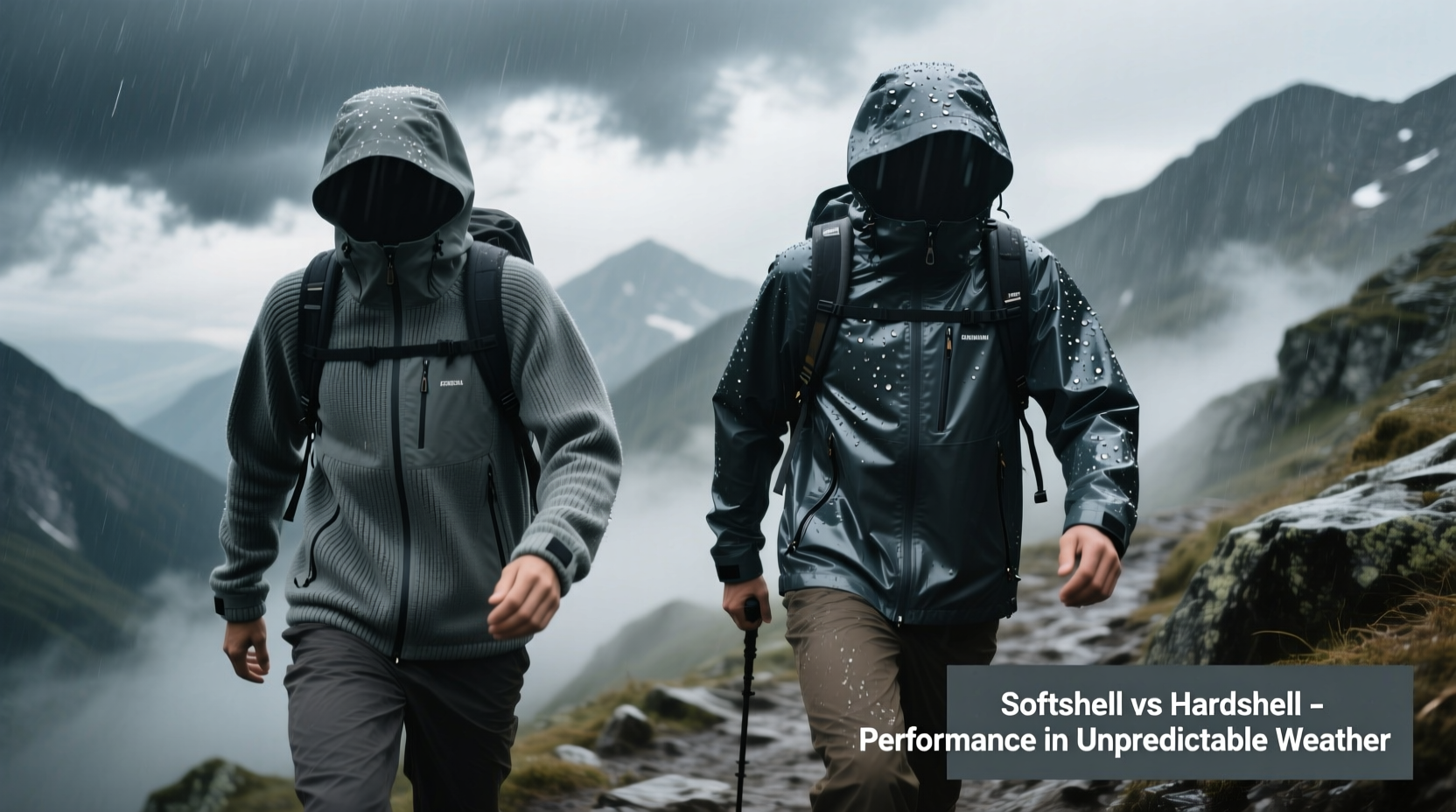
The fundamental distinction between softshell and hardshell jackets lies in their construction, intended use, and material properties.
- Hardshell jackets are built for maximum protection. Constructed with tightly woven, waterproof-breathable membranes like Gore-Tex, eVent, or proprietary laminates, they prioritize defense against rain, snow, and wind. They are typically less stretchy and more structured, often featuring adjustable hoods, pit zips, and reinforced shoulders.
- Softshell jackets, on the other hand, emphasize comfort and breathability. Made from brushed, flexible fabrics with mechanical stretch, they offer moderate wind and water resistance—usually through a durable water repellent (DWR) finish—but are not fully waterproof. Their soft interior feels comfortable next to skin, making them ideal as mid-layers or standalone shells in mild conditions.
In stable extreme weather—like sustained rain or high alpine exposure—a hardshell is the obvious choice. But when the weather is inconsistent, swinging between dry spells and brief showers, the decision becomes far more nuanced.
Performance Breakdown: Key Factors in Unpredictable Conditions
To determine which jacket performs better in unstable environments, we must evaluate them across several critical categories.
Weather Resistance
Hardshells dominate here. With waterproof ratings typically exceeding 10,000mm and seam-sealed construction, they reliably keep you dry during prolonged rain. Most also feature storm flaps, watertight zippers, and helmet-compatible hoods, ensuring full coverage.
Softshells, however, rely on DWR coatings and tightly woven face fabrics. While they shed light rain and resist wind reasonably well, they eventually saturate under heavy or sustained precipitation. Once wetted out, they lose insulating ability and become clammy.
Breathability and Moisture Management
This is where softshells shine. Their knit or woven constructions allow moisture vapor to escape efficiently, reducing internal condensation during high-output activities like hiking uphill or trail running. Hardshells, even those with advanced membranes, tend to trap more sweat unless vented via pit zips or unzipping the main zipper.
In fluctuating conditions—where you alternate between exertion and rest—breathability prevents overheating and dampness from within. A hardshell may keep rain out, but if it traps too much sweat, you’ll end up just as wet, albeit from the inside.
Mobility and Comfort
Softshells are inherently more flexible and quieter in movement. Their four-way stretch fabric moves with the body, making them ideal for dynamic activities. Many feel so comfortable they’re worn daily as urban outerwear.
Hardshells, while improving in flexibility, often feel stiffer and noisier. Rustling fabric can be distracting on quiet trails, and restricted movement may hinder technical climbing or scrambling.
Durability and Longevity
Hardshells are generally more abrasion-resistant, especially in high-wear areas like shoulders and cuffs. However, their membranes can degrade over time with improper care or excessive friction. Softshells, though tough against scrapes, are more prone to pilling and DWR degradation with frequent use.
“On mixed-condition alpine routes, I often start with a softshell and carry a hardshell in my pack. It gives me the freedom to move efficiently while ensuring I’m covered if the sky opens.” — Alex Turner, IFMGA Mountain Guide
Comparison Table: Softshell vs Hardshell in Variable Weather
| Feature | Softshell Jacket | Hardshell Jacket |
|---|---|---|
| Waterproofing | Limited (resists light rain) | High (fully waterproof) |
| Breathability | Excellent | Moderate to good (varies by membrane) |
| Wind Resistance | Good (blocks most wind) | Excellent (windproof) |
| Mobility | Superior (stretchy, quiet) | Fair to good (can be stiff) |
| Packability | Bulky (less compressible) | Compact (easily stows) |
| Best For | Active use in mild, changing weather | Heavy rain, storms, extreme exposure |
| Worst For | Sustained downpours | High-exertion activities without ventilation |
Real-World Scenario: A Hiker’s Dilemma in the Pacific Northwest
Consider a weekend backpacker tackling Washington’s Cascade Range in late spring. The morning starts clear, but clouds roll in by midday. The trail ascends into misty forests where drizzle alternates with brief sunbreaks. Temperatures hover around 45–55°F, and wind picks up on exposed ridges.
A hiker wearing only a softshell stays warm and dry during the initial climb, appreciating the jacket’s breathability and freedom of movement. When the first shower hits, the DWR beads water effectively. But after 20 minutes of steady rain, the fabric begins to wet out, losing loft and allowing chill to set in.
Meanwhile, another hiker carries a lightweight hardshell in their pack. They wear a fleece underneath during dry periods, then deploy the shell as rain intensifies. Though slightly warmer during ascent, the pit zips help regulate temperature. On descent, they stow the shell when skies clear, avoiding overheating.
In this scenario, neither jacket alone is perfect. The softshell excels in comfort and breathability but fails under prolonged moisture. The hardshell offers reliable protection but risks overheating if worn continuously.
The Hybrid Solution: Layering Strategy
The optimal approach isn’t choosing one over the other—it’s using both strategically. A growing number of outdoor enthusiasts adopt a “system” approach:
- Base layer: Moisture-wicking merino or synthetic top
- Mid-layer: Fleece or lightweight insulated jacket
- Outer layer: Softshell for active phases, hardshell stowed for emergencies
This system maximizes adaptability. During high-output segments, the softshell manages sweat and blocks wind. When rain arrives, the hardshell goes on over the entire system, sealing out the elements. Once the storm passes, it packs down small enough to fit in a hip belt pocket.
Expert Recommendations and Common Pitfalls
Seasoned backcountry travelers and gear testers consistently emphasize preparedness over comfort alone. While softshells are tempting due to their everyday wearability, they are not substitutes for true weatherproofing when conditions deteriorate.
One common mistake is assuming all \"water-resistant\" jackets are equal. Marketing terms like “weather-resistant” or “quick-dry” do not equate to waterproof. Consumers should check for:
- Seam taping
- Membrane technology (e.g., Gore-Tex, NeoShell)
- Hood design and adjustability
- Ventilation options (pit zips, back vents)
“The softshell revolution made outdoor clothing more comfortable, but it also created a false sense of security. I’ve seen too many people get soaked because they thought their ‘water-resistant’ jacket could handle a mountain storm.” — Dr. Lena Patel, Outdoor Safety Researcher, University of Colorado
Checklist: Choosing the Right Shell for Unpredictable Weather
Use this checklist to guide your decision based on your activity and environment:
- ✅ Will you face sustained rain or storms? → Prioritize a hardshell
- ✅ Is your activity high-exertion (running, skiing, climbing)? → Consider a breathable softshell with backup shell
- ✅ Do temperatures fluctuate widely? → Layer with a softshell as mid/outer and hardshell on standby
- ✅ How packable does your gear need to be? → Hardshells generally pack smaller
- ✅ Are you in an area prone to sudden weather shifts (mountains, coasts)? → Always carry a hardshell, regardless of starting conditions
FAQ: Softshell vs Hardshell in Changing Conditions
Can I rely solely on a softshell in rainy climates?
No. While softshells handle light rain and drizzle well, they are not designed for prolonged exposure. In consistently wet environments like the Pacific Northwest or Scottish Highlands, a softshell should be paired with a waterproof hardshell carried in your pack.
Are there jackets that combine softshell and hardshell features?
Yes. Some hybrid jackets, such as Polartec NeoShell or certain Outdoor Research models, blend stretch, breathability, and higher waterproof ratings. These “soft-hard hybrids” offer a middle ground but often sacrifice some durability or full weather protection compared to dedicated hardshells.
How do I maintain each type for long-term performance?
Softshells require regular DWR reapplication and gentle washing to preserve elasticity. Avoid fabric softeners. Hardshells need periodic cleaning to prevent membrane clogging; use tech wash products like Grangers Performance Wash. Never dry-clean either type.
Final Verdict: Which Performs Better?
For purely unpredictable weather—where dry spells, wind, light rain, and sudden storms intermingle—the answer isn’t absolute. If forced to choose one jacket to wear, a hardshell provides greater safety margin. But if optimizing for comfort, breathability, and activity efficiency, a softshell worn as part of a layered system outperforms a hardshell used alone.
The reality is that unpredictability favors preparedness. A softshell worn during fair moments, backed by a compact hardshell in your pack, offers the best balance of performance, comfort, and security. This dual-shell strategy respects the limitations of each while leveraging their strengths exactly when needed.
Ultimately, the best-performing jacket isn’t defined by its category, but by how intelligently it’s used. In the mountains, woods, or city streets, success comes not from having the most advanced gear—but from knowing how to use it before the weather turns.




 浙公网安备
33010002000092号
浙公网安备
33010002000092号 浙B2-20120091-4
Comments
No comments yet. Why don't you start the discussion?