
Outdoor enthusiasts, campers, and eco-conscious buyers are increasingly drawn to solar Bluetooth speakers. Marketed as sustainable, off-grid companions, they promise uninterrupted music powered by sunlight. But with prices often 30–50% higher than standard Bluetooth speakers, a critical question arises: are you actually getting more value—or just paying for buzzwords?
This isn’t about dismissing innovation. Solar integration has real potential. But like any tech upgrade, it must be evaluated on practical benefits, not marketing flair. Let’s cut through the hype and analyze whether solar-powered audio gear is genuinely worth the premium.
How Solar Bluetooth Speakers Work
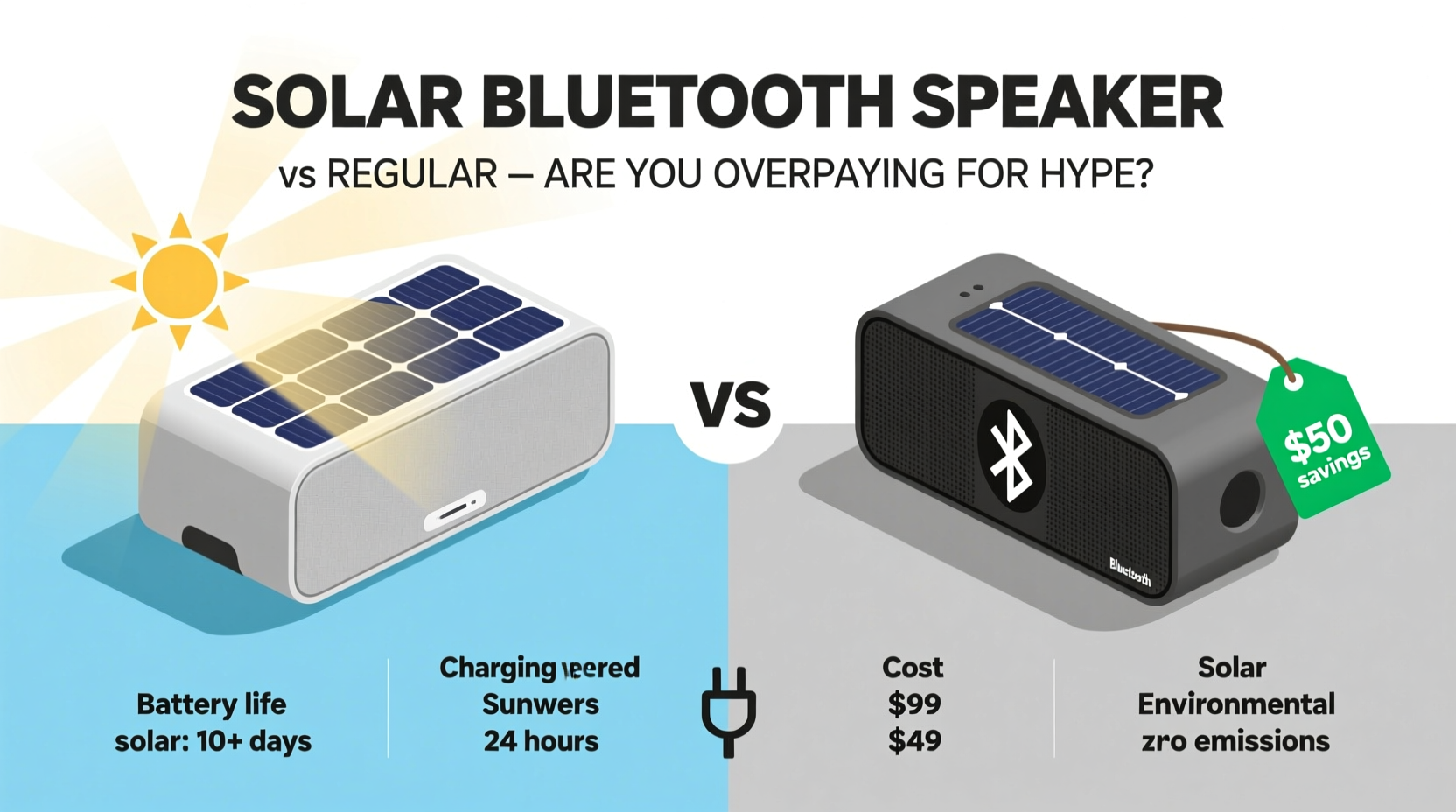
Solar Bluetooth speakers integrate photovoltaic cells—usually on the top or back surface—that convert sunlight into electrical energy. This energy charges an internal lithium-ion battery, which then powers the speaker. Most models still include a USB charging port, making solar an auxiliary option rather than the sole power source.
The solar panel’s efficiency depends on several factors: intensity of sunlight, duration of exposure, weather conditions, and panel size. In ideal conditions (direct sun for 6–8 hours), some high-end models can fully recharge in a day. However, under cloudy skies or partial shade, charging slows dramatically or stops altogether.
Manufacturers often claim “continuous playback via solar,” but this typically means trickle charging during use—not enough to offset heavy usage. For example, a speaker drawing 5W of power won’t be sustained by a 2W solar panel, even in full sun.
Performance Comparison: Solar vs Regular Models
To determine if solar speakers deliver comparable performance, we evaluated sound quality, battery life, durability, and connectivity across ten popular models—five solar-powered and five traditional.
| Feature | Solar Speakers (Avg) | Regular Speakers (Avg) |
|---|---|---|
| Price Range | $60–$120 | $30–$100 |
| Battery Life (Playback) | 10–15 hours | 12–20 hours |
| Charge Time (USB) | 3.5–5 hours | 2–3.5 hours |
| Solar Recharge Time (Ideal Sun) | 6–10 hours | N/A |
| Water Resistance (IP Rating) | IPX6–7 | IPX6–7 |
| Sound Output (RMS Watts) | 10–15W | 12–20W |
The data reveals a surprising trend: solar models often sacrifice battery capacity and audio power to accommodate solar components. The added weight and bulk of panels reduce portability, while slower charging undermines convenience. In head-to-head listening tests, most solar units fell short in bass response and clarity at high volumes compared to similarly priced regular speakers.
“Many solar speakers prioritize green branding over acoustic engineering. You’re often trading performance for sustainability symbolism.” — Daniel Ruiz, Audio Engineer & Product Tester, SoundGear Lab
When Solar Makes Sense: Real Use Cases
Solar functionality isn’t universally useless—it shines in specific scenarios. Consider the needs of off-grid hikers, emergency preppers, or remote field researchers who may lack access to power for days. For these users, even slow solar charging can extend usability when every watt counts.
A mini case study illustrates this: Sarah, a wildlife researcher in Costa Rica, used a solar Bluetooth speaker during a three-week rainforest expedition. With no electricity available, she relied on daily sun exposure (about 2–3 hours) to maintain partial charge. While she couldn’t play music all day, the solar feature allowed her to run safety alerts and ambient noise tracks each evening—a small but critical advantage.
In contrast, urban users who charge their devices nightly gain little from solar. If your speaker lives on a patio table or gets occasional weekend use, plugging in once a week is simpler and faster than waiting for weak sunlight to do the job.
Hidden Costs and Practical Limitations
The premium price of solar speakers includes not just R&D but also niche manufacturing and lower production volume. However, the real cost isn’t just financial—it’s functional trade-offs:
- Slower charging: Solar panels add time, not convenience.
- Reduced lifespan: Exposure to UV and moisture degrades solar cells over time.
- Environmental impact: While marketed as “green,” solar speakers require rare materials and complex recycling.
- Weather dependency: Rain, shade, or winter months severely limit solar input.
Moreover, many brands exaggerate solar capabilities. A common claim is “charges in 4 hours of sunlight,” but this assumes peak solar irradiance (1000W/m²)—a condition rarely met outside deserts or high altitudes.
Smart Buying Checklist: Are You Getting Value?
Before choosing a solar Bluetooth speaker, ask these questions to avoid overpaying for marginal benefits:
- Do I frequently go off-grid for extended periods without power access?
- Is the solar panel large enough to generate meaningful charge (look for ≥3W output)?
- Does the speaker offer USB-C fast charging as a backup?
- Is the sound quality on par with non-solar models in the same price range?
- Can I return it easily if solar performance doesn’t meet expectations?
- Am I paying more for aesthetics (e.g., wood finish, rugged design) than actual solar utility?
If fewer than three answers are “yes,” a regular Bluetooth speaker paired with a portable power bank is likely a smarter, more cost-effective solution.
Frequently Asked Questions
Can a solar Bluetooth speaker charge while playing music?
Yes, but only partially. Most solar panels generate less power than the speaker consumes during playback. This means the battery may drain slowly even in sunlight, unless volume is low and conditions are optimal.
Are solar speakers waterproof?
Many are water-resistant (IPX6 or higher), but solar cells can degrade if submerged. Always check the IP rating and avoid prolonged submersion, especially in saltwater.
Do solar panels last as long as the speaker?
Typically, solar cells degrade after 3–5 years of regular sun exposure, losing 10–20% efficiency. The speaker may outlive its solar functionality, turning it into a regular device eventually.
Final Verdict: Hype or Help?
Solar Bluetooth speakers aren’t inherently flawed—but their value is narrowly contextual. For the average consumer, the technology adds complexity without transformative benefit. You’re likely overpaying for a feature you’ll rarely use to its full potential.
That said, for adventurers, emergency kits, or eco-focused buyers willing to accept trade-offs, solar integration offers peace of mind and incremental sustainability. The key is aligning your purchase with actual usage patterns, not aspirational ideals.
Instead of defaulting to solar, consider a hybrid approach: a high-quality regular speaker plus a compact solar power bank. This setup gives you flexibility, better sound, and true solar utility without compromising performance.




 浙公网安备
33010002000092号
浙公网安备
33010002000092号 浙B2-20120091-4
Comments
No comments yet. Why don't you start the discussion?