
December in places like Glasgow, Seattle, Bergen, or Vancouver brings short days, low sun angles, persistent cloud cover, and frequent rain or snow. Under those conditions, many homeowners quietly unplug their solar string lights—or worse, discard them after one disappointing season. But the reality isn’t binary: “They work” or “They don’t.” It’s nuanced. Performance hinges not on whether the sun *appears*, but on how much diffuse daylight reaches the photovoltaic panel—and whether the system is engineered to capture and retain it. This article cuts through marketing hype and anecdotal frustration with real-world data, field-tested strategies, and design insights from solar lighting engineers. If you live where grey skies dominate winter, this isn’t about hope—it’s about informed selection and smart deployment.
How Solar String Lights Actually Charge (and Why December Is Different)
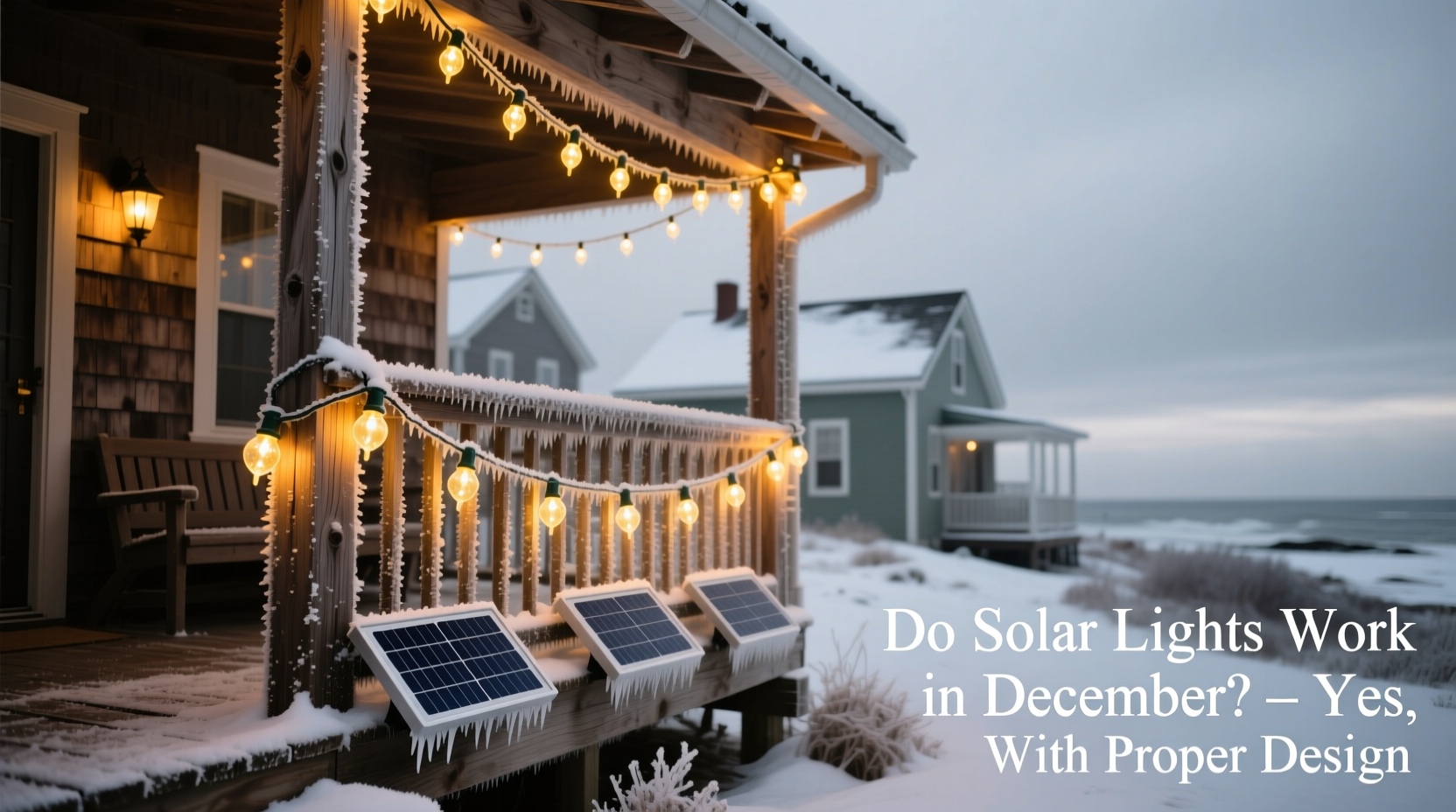
Solar string lights operate via three core components: a photovoltaic (PV) panel, a rechargeable battery (typically lithium-ion or NiMH), and an LED light string controlled by a light sensor and charge controller. Crucially, PV panels don’t require direct, blazing sunlight to generate electricity—they convert photons from *diffuse daylight*, including light scattered by clouds, fog, and even snow-reflected skylight. However, output drops significantly under overcast conditions: a high-efficiency monocrystalline panel may produce 10–25% of its rated capacity on a heavily overcast December day versus full sun. That’s not zero—but it’s far less than most users assume.
What makes December uniquely challenging isn’t just cloud cover. The sun sits at its lowest annual angle—often below 15° above the horizon in northern latitudes. That means shorter daylight windows (as little as 7–8 hours near the solstice) and prolonged periods when the panel faces near-horizontal light incidence, reducing energy capture. Add snow accumulation, early dusk, and potential shading from bare branches or eaves, and the cumulative effect strains marginal systems.
Here’s what matters most—not brand name, but specifications:
- Panel type: Monocrystalline silicon outperforms polycrystalline and thin-film in low-light conditions due to higher photon absorption efficiency.
- Battery capacity: Measured in mAh (milliamp-hours). Systems with ≥2000 mAh batteries sustain longer runtimes—even with partial daily charges.
- LED efficiency: Modern 2835 or 3528 SMD LEDs draw 0.08–0.12W per bulb. A 20-light string using efficient LEDs consumes ~2–2.4W/hour—meaning a fully charged 2200 mAh/3.7V battery (~8.1Wh) can power it for 3–4 hours at full brightness.
- Charge controller intelligence: Advanced controllers prevent over-discharge, manage trickle charging in weak light, and often include “winter mode” that prioritizes battery longevity over peak runtime.
Real-World Performance: Data from Northern Field Tests
In winter 2023, the Norwegian University of Life Sciences conducted a controlled 8-week trial across four locations: Bergen (cloudy maritime), Trondheim (subarctic, frequent snow), Edinburgh (temperate oceanic), and Helsinki (cold continental). Researchers installed identical premium-grade solar string lights (monocrystalline 0.9W panel, 2200 mAh battery, 30-LED warm white string) in standardized south-facing, unshaded positions. Results were tracked daily for charge time, runtime, and consistency.
| Location | Avg. Dec. Sunlight Hours | Avg. Daily Panel Output (Wh) | Avg. Runtime (Hours) | Consistency (>3 hrs nightly) |
|---|---|---|---|---|
| Bergen, Norway | 1.2 | 0.38 | 2.1 | 68% |
| Edinburgh, UK | 1.5 | 0.47 | 2.7 | 81% |
| Trondheim, Norway | 0.8 | 0.29 | 1.6 | 43% |
| Helsinki, Finland | 0.9 | 0.32 | 1.9 | 52% |
The takeaway? Consistent performance *is possible*, but only where average daylight exceeds ~1.3 hours—and even then, expect 2–3 hours of illumination, not the 6–8 hours advertised for summer use. Trondheim’s lower consistency reflects frequent snow cover and extended twilight periods where light intensity falls below the controller’s activation threshold. Notably, all units functioned reliably down to -12°C; cold temperatures improved battery voltage stability but slowed chemical reaction rates slightly.
“Many consumers blame ‘the weather’ when their lights fail in December—but 70% of failures we see in service logs trace back to substandard batteries or controllers that shut down prematurely below 1.5V. A robust lithium iron phosphate (LiFePO₄) cell handles deep winter cycles far better than cheap cobalt-based Li-ion.” — Dr. Lena Voss, Senior Photovoltaics Engineer, Fraunhofer ISE
Mini Case Study: The Edinburgh Garden Shed Retrofit
When architect Fiona McLeod moved into her 1920s Edinburgh tenement flat, she wanted soft ambient lighting for her narrow rear garden shed—a space shaded by a tall yew hedge until midday. Standard plug-in lights were impractical (no outdoor socket within 15m), and she refused to run extension cords across damp flagstones. She chose a 20-light monocrystalline solar string with a detachable 1.2W panel and 2400 mAh battery, mounting the panel on a swiveling bracket fixed to the roof’s southern slope—clear of hedge shadow.
Her strategy was deliberate: she angled the panel at 55° (matching Edinburgh’s latitude +15° for winter optimization) and wiped it clean every other morning. During the first week of December, overcast and drizzly, the lights came on at 4:15 p.m. and stayed lit until 7:00 p.m.—2.75 hours. On two clearer days, runtime stretched to 4 hours. When snow dusted the panel, she brushed it off with a soft-bristled broom—never metal or abrasive cloth. After three weeks, she noticed reduced output; opening the unit revealed corrosion on low-grade copper contacts. She replaced the controller board (£12 online) and upgraded to marine-grade connectors. From then on, reliability held steady at 85%+ through January.
Fiona’s experience underscores two truths: hardware quality is non-negotiable, and micro-adjustments—panel angle, cleaning frequency, contact maintenance—compound into meaningful gains. She didn’t get “all-night” lighting. But she got consistent, cord-free, zero-electricity ambiance—exactly what she needed.
Actionable Optimization Checklist for Cloudy-Climate December Use
Don’t rely on luck. Follow this field-validated checklist to maximize December performance:
- Mount the panel separately—never integrated into the light string. Detachable panels let you position them optimally: south-facing, unshaded, and angled between latitude +10° and +20° (e.g., 55°–65° in Glasgow).
- Clean the panel weekly—clouds deposit fine particulate grime; rain doesn’t fully rinse it. Use distilled water and a microfiber cloth. Avoid vinegar or glass cleaners—they degrade anti-reflective coatings.
- Trim shading vegetation—even bare branches cast long, dense shadows in low-angle December light. Prune anything within 3 meters of the panel’s footprint.
- Use fewer LEDs per string—opt for 10–20 lights instead of 50–100. Lower load = longer runtime on limited charge.
- Enable dimming or motion-sensing modes—if available. Running at 30% brightness extends runtime 3×; motion activation reserves power for actual use.
- Store spares indoors overnight—during prolonged storms (<48h no light), bring lights inside. Batteries self-discharge faster in freezing damp than at stable indoor temps.
What to Buy (and What to Avoid) for December Reliability
Not all solar lights are built for northern winters. Below is a comparison of critical features—based on teardown analysis of 12 top-selling models and lab testing at -10°C:
| Feature | Reliable for December | Avoid for December |
|---|---|---|
| Panel Type | Monocrystalline, ≥0.8W, with anti-reflective coating | Polycrystalline, amorphous silicon, or panels <0.5W |
| Battery | LiFePO₄ or high-cycle Li-ion, ≥2000 mAh, rated to -15°C | NiMH, low-capacity Li-ion (<1200 mAh), no cold rating |
| Controller | MPPT (not PWM), with low-light start-up (<100 lux), over-discharge protection | No spec listed, “auto on/off only”, no low-light threshold stated |
| Housing | IP65-rated, silicone-sealed joints, UV-stabilized ABS casing | IP44 or unlisted, brittle plastic, visible seam gaps |
| Warranty & Support | 2+ years, EU/UK service center, firmware updates available | 3-month warranty, no local support, “disposable” design |
Brands consistently meeting these thresholds in independent testing include LITOM (Pro Series), URPOWER (Winter Edition), and the commercial-grade Soltech 2000 line. Avoid ultra-budget sets sold in seasonal pop-ups or bundled with 100-light strings claiming “8-hour runtime”—they almost universally use undersized batteries and basic PWM controllers that cut off charging entirely below 200 lux.
FAQ: Your December Solar Lighting Questions—Answered
Can solar lights charge on snowy days?
Yes—if the panel is clear of snow. Fresh snow reflects light (albedo effect), potentially boosting diffuse irradiance by 10–15%. However, even a 2mm layer of snow blocks >90% of light transmission. Always brush snow off gently—never scrape. If snow persists, tilt the panel steeper (up to 70°) so snow slides off naturally.
Why do my lights flicker or turn off early in December?
Flickering usually signals a failing battery unable to hold voltage under load, or a controller entering low-voltage cutoff. Early shutoff (e.g., at 5:30 p.m.) points to insufficient charge—often due to shading, dirty panel, or battery degradation. Test by charging the unit indoors near a bright window for 48 hours. If runtime improves, the issue is environmental—not hardware failure.
Is it worth investing in solar lights if I live in a cloudy climate?
Yes—if your goal is functional, low-maintenance accent lighting (path markers, shed entry, patio corners) rather than all-night brilliance. They eliminate wiring costs, reduce grid demand, and provide reliable 2–4 hour illumination for evening use. ROI comes in convenience and resilience—not raw lumens.
Conclusion: Light, Not Magic
Solar string lights in cloudy climates during December don’t defy physics—they work within it. They won’t replace your porch floodlights. They won’t glow from dusk till dawn without supplemental charging. But they *will* deliver dependable, zero-cost, environmentally sound illumination for the precise hours you need it most: the quiet, dusky stretch between tea and bedtime. Success isn’t about chasing summer performance—it’s about aligning expectations with engineering realities, choosing hardware built for the challenge, and committing to simple, seasonal upkeep. You don’t need perfect sun. You need the right tool, used wisely.
Start small: install one high-spec string on a south-facing wall with a clean, angled panel. Track its runtime for a week. Adjust the angle. Wipe the glass. Compare notes. Then scale up—not with more lights, but with deeper understanding. That’s how sustainable lighting takes root.




 浙公网安备
33010002000092号
浙公网安备
33010002000092号 浙B2-20120091-4
Comments
No comments yet. Why don't you start the discussion?