
Swimwear is more than just fabric—it's confidence, expression, and sometimes, strategy. When standing in front of the mirror or browsing online, one decision stands out: solid versus patterned. While personal taste plays a role, the truth is that print and color distribution can significantly influence how your body appears. From optical illusions created by patterns to the way light reflects off different materials, the choice between a solid black bikini and a tropical-print one-piece isn’t just aesthetic—it’s visual engineering.
The idea that \"print adds bulk\" or \"dark colors slim you down\" has been repeated for decades, but modern fashion psychology and body-positive design reveal a more nuanced reality. The right pattern, placed strategically, can enhance curves, minimize areas you're less confident about, or draw attention exactly where you want it. Conversely, an ill-fitting solid suit might do more harm than a well-designed print. Let’s break down the real impact of swimwear prints on perception, fit, and overall appearance.
How Visual Perception Shapes Body Image in Swimwear
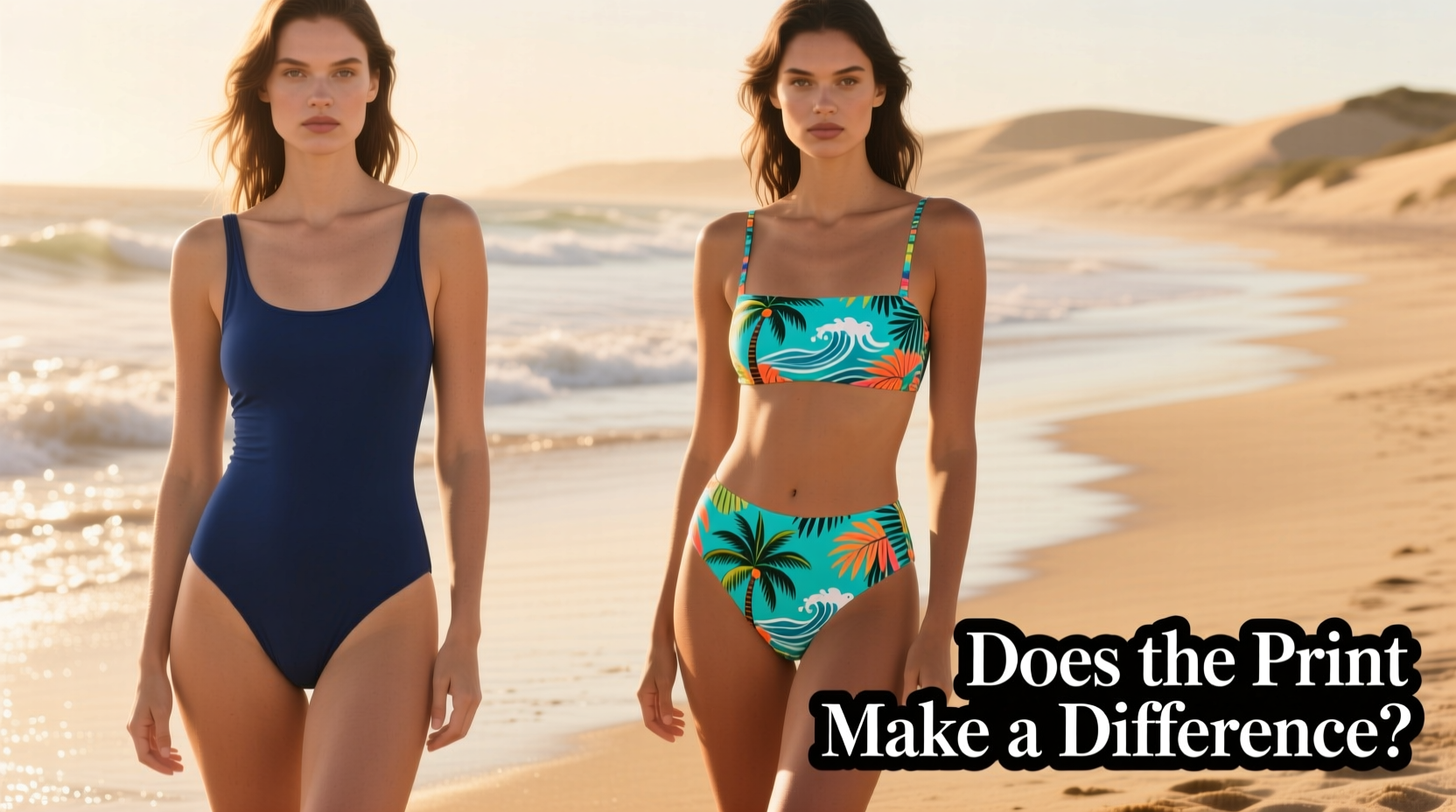
Our eyes don’t see bodies neutrally—they interpret shape, proportion, and volume based on contrast, movement, and focal points. This is why fashion relies heavily on optical tricks. A vertical stripe elongates; a bold neckline draws upward; a high-waisted cut lifts the hips. Prints interact with these principles in complex ways.
Patterns create texture and motion. When your eye lands on a repeating design—whether floral, geometric, or abstract—it follows the lines and shapes, which can either expand or contract the perceived silhouette. For example, small, tightly spaced patterns tend to recede visually, giving a flattening effect, while large, contrasting motifs can add visual weight.
Solid colors, on the other hand, offer uniformity. They eliminate distraction, creating clean lines that emphasize the natural outline of the body. Black is often praised for its slimming effect because it absorbs light rather than reflecting it, reducing highlights that define volume. However, this doesn't mean black is universally flattering—on certain skin tones or body types, it can appear harsh or flatten desirable curves.
“Prints aren’t just decorative—they’re directional. A well-placed pattern can guide the eye like a choreographer directs a dance.” — Lena Ruiz, Fashion Psychologist & Fit Consultant
Pattern Psychology: What Different Prints Communicate and How They Alter Perception
Not all prints are created equal. Their size, scale, color contrast, and placement determine how they affect your figure.
- Small all-over prints: Create a subtle texture without drawing too much attention. Ideal for balanced proportions and those who prefer understated elegance.
- Large bold prints: Command attention. If centered on the torso, they can make the midsection appear wider. But when used on the lower half (e.g., high-waisted bottoms), they can balance broader shoulders.
- Vertical stripes: One of the most effective slimming tools. They create a continuous line that elongates the body, especially in one-pieces.
- Horizontal stripes: Can widen the area they cover—great for adding volume to hips or bust, less ideal if minimizing width is the goal.
- Tropical/chaotic prints: Distract the eye with color and movement, camouflaging areas you may want to de-emphasize.
Fit Over Fashion: Why Cut Matters More Than Color or Print
No amount of clever patterning can fix a poor fit. A ruched, dark one-piece with bad support will still sag and bunch. A flattering print on a too-tight bikini top can create bulges. The foundation of good swimwear is structure: underwire, adjustable straps, secure bands, and supportive lining.
A well-cut solid suit in a neutral tone can be more slimming than a poorly structured printed one. Conversely, a thoughtfully engineered patterned suit—say, with darker side panels or contouring seams—can outperform a basic black number. Designers increasingly use “print engineering,” placing denser patterns or shading effects precisely where shaping is needed.
Consider the case of Maya, a 34-year-old teacher shopping for a vacation swimsuit. She’d always worn solid navy, believing it was the most “slimming.” But during a fitting, she tried a navy-and-white striped one-piece with vertical detailing along the sides. Despite being the same color family, the structured print gave her an inch-longer appearance and accentuated her waist. “I didn’t think a pattern could make me look leaner,” she said. “But the lines guided the eye up and down, not outward.”
Comparative Guide: Solid vs Patterned Swimsuits
| Feature | Solid Swimsuits | Patterned Swimsuits |
|---|---|---|
| Visual Effect | Clean, streamlined, emphasizes natural shape | Distracting, dynamic, can alter perceived proportions |
| Slimming Potential | High with dark tones; flat with no dimension | Depends on pattern direction and contrast |
| Versatility | Easier to mix and match; timeless | Bolder statement; trend-dependent |
| Camouflage Ability | Low—wrinkles, dimples, or fit issues show clearly | High—busy prints hide texture and minor flaws |
| Skin Tone Compatibility | Can clash if undertones aren’t considered | Multicolor prints often flatter diverse complexions |
Choosing Based on Body Type and Confidence Goals
There’s no universal “best” option—only what works for your body and intentions. Here’s how to align your choice with your goals:
- If you want to elongate your torso: Choose a one-piece with vertical stripes or a longline print that runs from chest to hip.
- If you want to balance broad shoulders: Opt for bold prints on the lower half—think high-waisted bikini bottoms with vibrant florals.
- If you want to minimize the midsection: Look for suits with ruching, dark side panels, or abstract prints that blur the waistline.
- If you have a smaller bust: Busy prints or polka dots on top can add volume and draw attention upward.
- If you prefer minimalism: A solid suit in deep jewel tones (navy, emerald, plum) offers sophistication without visual noise.
Frequently Asked Questions
Do patterned swimsuits make you look bigger?
Not necessarily. Large, high-contrast prints on the torso can add visual volume, but small, tonal patterns or vertical designs can have a neutral or even slimming effect. It depends on scale, placement, and fit.
Is black the most slimming swimwear color?
Black absorbs light and minimizes reflection, which can reduce the appearance of curves. However, for some body types, deep colors like burgundy, charcoal, or navy offer similar benefits with more warmth and depth, avoiding a flattening effect.
Can a print hide cellulite or belly rolls?
Yes—strategic patterns act like visual camouflage. Busy prints, especially those with movement (like waves or florals), disrupt smooth lines and make surface textures less noticeable than solid fabrics under bright sunlight.
Action Checklist: Choosing Your Most Flattering Swimsuit
- ✅ Assess your primary goal: elongate, balance, minimize, or highlight?
- ✅ Try on both solid and patterned options in natural lighting.
- ✅ Check for structural support—straps, lining, band tightness.
- ✅ Look in a full-length mirror from multiple angles.
- ✅ Pay attention to where your eyes are drawn—does it match your intention?
- ✅ Consider versatility: Will you wear it to the pool, beach, or resort?
- ✅ Prioritize comfort—confidence comes from feeling secure, not just looking polished.
Final Thoughts: Style With Strategy
The debate between solid and patterned swimsuits isn’t about which is better—it’s about understanding how each tool functions. Solids offer simplicity and polish; patterns provide distraction, depth, and dynamism. The most flattering swimsuit isn’t the one with the darkest color or busiest print, but the one that aligns with your body, your preferences, and your moment.
In an era where swimwear is both functional and expressive, the power lies in informed choice. Whether you reach for a sleek black tankini or a vibrant palm-print two-piece, do it with intention. Use color, cut, and print as allies—not rules to fear. Your beach presence isn’t defined by fabric alone, but by the confidence that comes from knowing you’ve chosen wisely.




 浙公网安备
33010002000092号
浙公网安备
33010002000092号 浙B2-20120091-4
Comments
No comments yet. Why don't you start the discussion?