
For introverted travelers, the decision between solo travel and group tours isn't just about destination or budget—it's deeply personal. It revolves around energy management, comfort with social interaction, and how one recharges while exploring the world. Introverts often thrive in solitude and may find large groups draining, but that doesn’t automatically make solo travel the ideal choice. Both options come with unique advantages and hidden challenges. Understanding these nuances allows introverts to make informed decisions that align with their temperament, travel goals, and emotional well-being.
The Introvert’s Travel Dilemma: Solitude vs. Structure
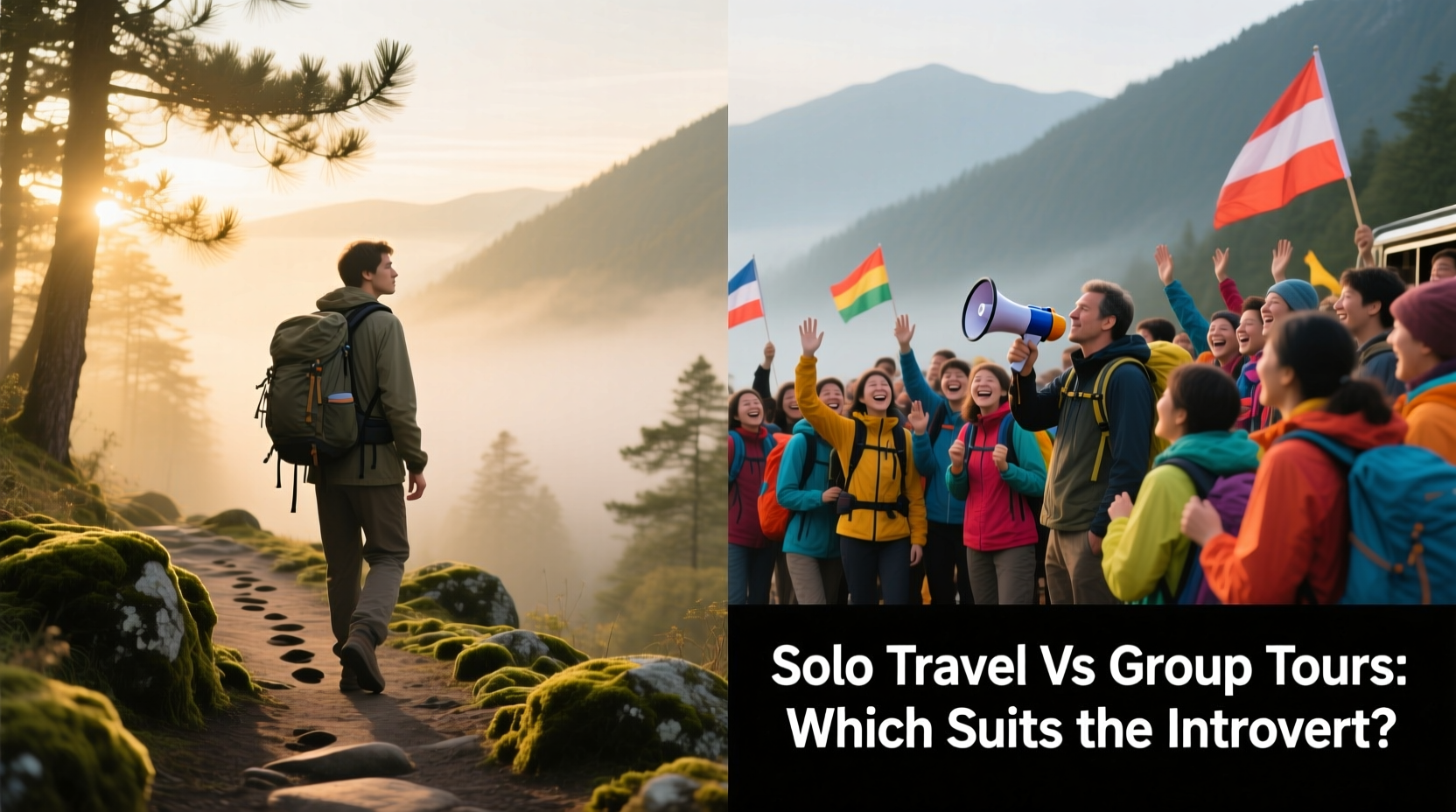
Introversion is not shyness or social anxiety—it’s a preference for low-stimulation environments where deep thinking and meaningful interactions take precedence over constant engagement. When traveling, introverts must balance their desire for exploration with the need to preserve mental energy. This creates a central tension: should they embrace the freedom of solo travel, where every decision rests on them, or opt for the structured support of a group tour, where logistics are handled but social exposure is guaranteed?
Solo travel offers unmatched autonomy. You decide when to wake up, where to eat, and whether to spend an entire day reading in a quiet café. But it also demands constant decision-making and can lead to loneliness if not managed intentionally. On the other hand, group tours provide built-in companionship and logistical ease, reducing stress—but at the cost of personal space and downtime.
Pros and Cons: Solo Travel for Introverts
Solo travel is often romanticized as the ultimate journey of self-discovery. For many introverts, it feels like a natural fit. The ability to move at your own pace, engage only when desired, and retreat into solitude can be deeply rejuvenating.
- Full Control Over Itinerary: No compromises. Want to visit a museum three times in one week? Go ahead.
- Deeper Cultural Immersion: Without the buffer of a group, introverts often form more authentic connections—with locals, books, art, or nature.
- Opportunities for Reflection: Traveling alone fosters introspection, creativity, and personal growth.
- No Social Pressure: You interact only when you feel ready, minimizing emotional fatigue.
However, solo travel isn’t without its drawbacks. Decision fatigue can set in quickly. Navigating transportation, accommodations, and safety concerns alone requires sustained mental effort. Dining alone in a foreign country, while empowering for some, can feel isolating for others. And in emergencies, there’s no immediate support system.
“Introverts often assume solo travel will be inherently easier, but without intentional planning, isolation can turn into loneliness.” — Dr. Lena Patel, Psychologist specializing in travel behavior
Group Tours: Predictability with a Social Price
Group tours offer a different kind of comfort. They remove the burden of planning and provide instant camaraderie. For introverts overwhelmed by logistics or hesitant about venturing abroad alone, this structure can be liberating.
Small-group adventure tours, cultural excursions, or even specialized “introvert-friendly” retreats have gained popularity. These often limit group size (6–12 people), include optional activities, and schedule free time—making them more appealing to quieter travelers.
Yet, traditional large-group tours can feel overwhelming. Mandatory meals, forced icebreakers, and packed schedules leave little room for retreat. Even in smaller groups, the constant presence of others can deplete an introvert’s energy reserves over time.
When Group Tours Work Best for Introverts
- Limited group size (under 12 people)
- Flexible itinerary with built-in downtime
- Shared interests (e.g., photography, hiking, literature)—common ground reduces social friction
- Experienced guides who respect personal space
Comparative Breakdown: Solo vs. Group for Introverts
| Factor | Solo Travel | Group Tours |
|---|---|---|
| Social Energy Demand | Low to moderate (on your terms) | Moderate to high (scheduled interaction) |
| Decision Burden | High (all choices are yours) | Low (logistics handled) |
| Flexibility | Maximum (change plans anytime) | Limited (must follow group schedule) |
| Safety & Support | Self-reliant (requires preparation) | Shared responsibility (guide + group) |
| Cost | Variable (can be cheaper or pricier) | Often higher (includes guide, meals, transport) |
| Potential for Loneliness | Moderate (depends on self-management) | Lower (built-in company) |
| Depth of Experience | High (personal, reflective) | Moderate (shared perspective) |
Real Example: Sarah’s Journey Through Japan
Sarah, a freelance writer and self-described introvert, planned her first trip to Japan after years of dreaming about Kyoto’s temples and Tokyo’s bookshops. Initially drawn to solo travel for its flexibility, she worried about navigating trains and dining alone. She compromised: a 7-day small-group cultural tour with a maximum of eight participants, followed by five days of independent exploration.
The group portion gave her confidence. The guide was attentive to individual needs, and evening meals were optional. During free time, Sarah visited a Zen garden alone while others attended a cooking class. After the tour ended, she felt equipped to handle solo travel—booking her own ryokan, using rail passes, and even striking up brief conversations with shopkeepers.
“The group tour was like training wheels,” she said. “It gave me structure when I needed it, but didn’t force me to be ‘on’ all the time. By the end, I actually looked forward to being on my own.”
Sarah’s experience highlights a hybrid approach that many introverts find effective: starting with a short group experience to build confidence, then transitioning to solo travel for deeper immersion.
Actionable Checklist: Choosing Your Style
Use this checklist to evaluate which travel style suits your introverted nature:
- ☐ Assess your current energy levels—do you feel socially drained or energized?
- ☐ Define your primary goal: relaxation, adventure, cultural learning, or personal growth?
- ☐ Consider destination complexity—is it easy to navigate alone?
- ☐ Research tour operators for small-group options with flexible schedules.
- ☐ Plan for downtime, regardless of travel style—schedule rest days or quiet mornings.
- ☐ Test your comfort level with past experiences: did you enjoy solo weekends or team retreats?
- ☐ Pack tools for recharging: journal, headphones, favorite book, or noise-canceling earbuds.
Step-by-Step Guide: Planning Introvert-Friendly Travel
Whether you choose solo or group travel, intentional planning ensures a sustainable, enjoyable experience. Follow this timeline:
- 6 Weeks Before: Identify your travel priorities (solitude, learning, connection) and research destinations accordingly.
- 4 Weeks Before: Compare small-group tour options or begin mapping a solo itinerary. Book accommodations with private rooms and quiet locations.
- 2 Weeks Before: Prepare communication tools—download offline maps, learn basic phrases, and share your plan with a trusted contact.
- 1 Week Before: Pack mindfully. Include items that support recharging (e.g., eye mask, journal, calming playlist).
- Daily While Traveling: Schedule at least 1–2 hours of unstructured time. Use it to reflect, rest, or explore quietly.
- After Each Day: Do a quick emotional check-in. If overwhelmed, adjust plans the next day to include more solitude.
Frequently Asked Questions
Can introverts enjoy group tours without burning out?
Yes—if the tour is designed with introvert needs in mind. Look for small groups, experienced guides who respect boundaries, and itineraries that include free time. Many modern tour companies now advertise “low-pressure” or “mindful travel” options ideal for quieter travelers.
Is solo travel lonely for introverts?
Not necessarily. Introverts often distinguish between loneliness and solitude. Solo travel can be deeply fulfilling when approached with intention. Building routines—like morning coffee in a local park or journaling at a café—creates comforting structure. Loneliness usually arises when there’s no balance between connection and solitude.
How can I recharge during a group tour?
Set gentle boundaries. Excuse yourself from optional activities, bring reading material, use headphones during transit, or wake up early to enjoy quiet time before the group gathers. Most fellow travelers respect personal space when boundaries are communicated kindly.
Final Thoughts: There’s No Universal Answer
The question of whether solo travel or group tours are better for introverts has no single answer. It depends on the person, the destination, the timing, and the specific circumstances of the trip. Some introverts flourish in complete independence, finding clarity and inspiration in solitary journeys. Others appreciate the scaffolding of a group, especially when visiting complex or unfamiliar regions.
The key is self-awareness. Understand your energy patterns. Honor your need for quiet. Don’t romanticize either option—both require trade-offs. A solo trip across Europe might sound freeing, but if you’re already feeling isolated, it could amplify emotional strain. Conversely, a group tour to Peru might offer safety and companionship, but if the schedule is relentless, it could leave you exhausted.
Many introverts find their sweet spot in a blended approach: beginning with a short guided experience to gain confidence, then branching out independently. Others prefer curated solo trips with deliberate pauses—planning stays in quiet guesthouses, scheduling museum visits for opening hours, and using technology to stay connected on their own terms.
“The best travel style for an introvert isn’t the quietest one—it’s the one that allows them to return home feeling enriched, not depleted.” — Mark Tran, Founder of Quiet Expeditions
Take the Next Step With Confidence
Your travel style should serve you, not exhaust you. Whether you're drawn to the open road alone or the shared laughter of a small group, the goal is meaningful experience without emotional burnout. Start small. Test your preferences. Reflect on what truly restores you.




 浙公网安备
33010002000092号
浙公网安备
33010002000092号 浙B2-20120091-4
Comments
No comments yet. Why don't you start the discussion?