
For content creators stepping into the world of high-end vlogging, choosing between the Sony A7IV and the Canon EOS R6 Mark II is more than a matter of brand loyalty—it’s about matching real-world performance to your workflow. Both cameras deliver excellent image quality, reliable autofocus, and strong video capabilities, but when it comes to vlogging, subtle differences in ergonomics, stabilization, audio handling, and usability can make or break the experience. This detailed analysis breaks down every critical factor so you can decide which mirrorless powerhouse truly earns its place on your vlog setup.
Image Quality and Sensor Performance
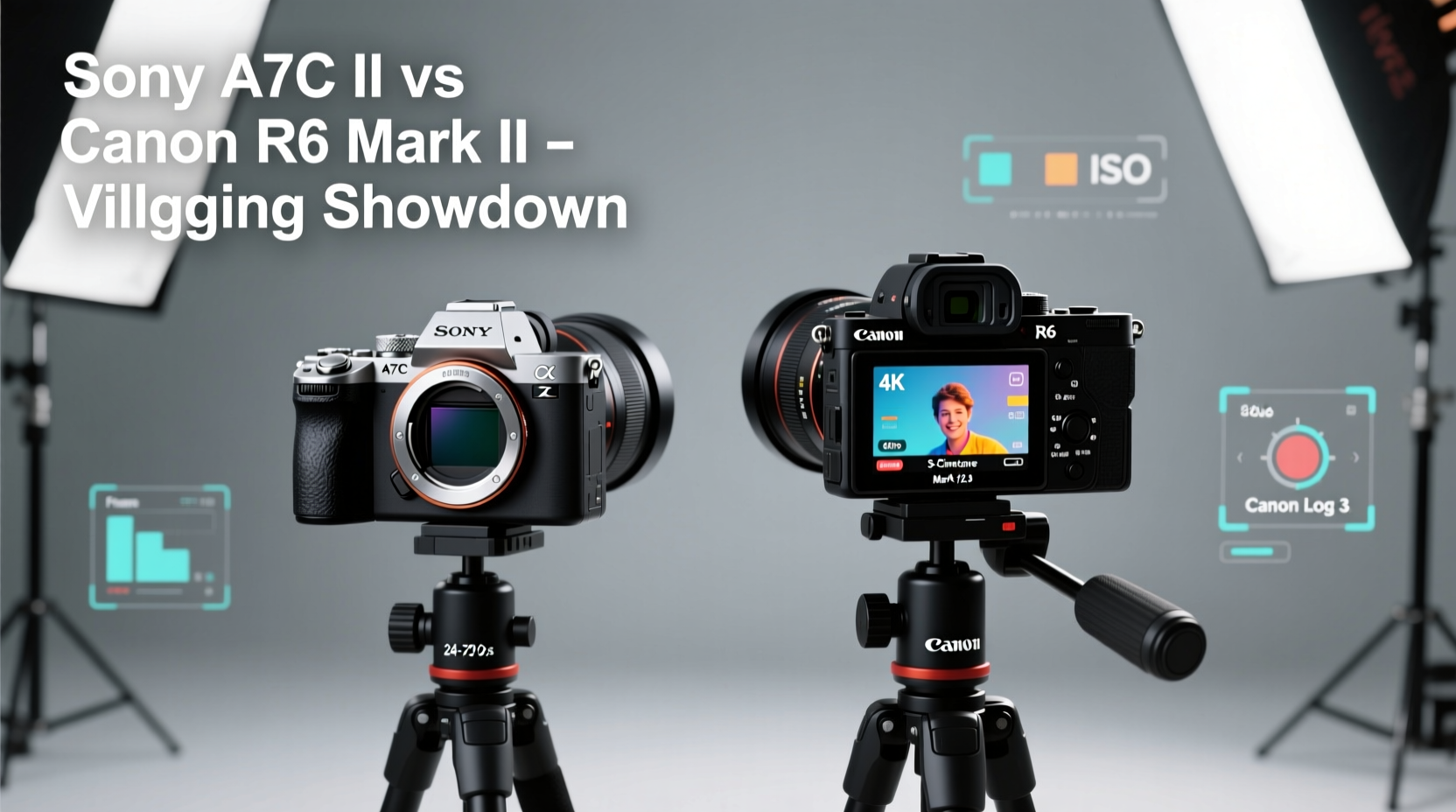
The foundation of any great vlog is visual clarity. The Sony A7IV features a 33-megapixel full-frame Exmor R CMOS sensor, delivering rich detail and dynamic range. Its BIONZ XR processor enables 10-bit 4:2:2 internal recording in 4K up to 60fps, making it ideal for color grading and professional post-production workflows. The higher resolution also allows for slight digital cropping without significant loss of quality—useful when reframing in post.
In contrast, the Canon R6 Mark II uses a 24.2-megapixel full-frame sensor. While lower in resolution, this sensor is optimized for speed and low-light performance. It supports 6K oversampled 4K 60fps video with 10-bit 4:2:2 internal recording (using C-Log3), providing excellent color science that many filmmakers praise for its natural skin tones and cinematic look.
For vlogging, both sensors perform admirably in daylight and mixed lighting. However, the R6 Mark II pulls ahead slightly in dim environments due to its improved dual-pixel AF II system and better high ISO performance (up to ISO 76800 expandable). The A7IV, while capable, starts showing more noise past ISO 6400. If you frequently shoot indoors or during golden hour, Canon’s cleaner shadows might be the deciding factor.
Autofocus and Subject Tracking
Vlogging often involves solo shooting, unpredictable movement, and changing environments—all scenarios where robust autofocus is non-negotiable. The Sony A7IV leverages Real-time Eye AF for humans and animals, along with advanced subject recognition that locks onto faces and eyes with impressive consistency. Once engaged, the focus sticks even during quick turns or partial obstructions.
Canon’s Dual Pixel AF II system in the R6 Mark II matches Sony’s precision and adds intelligent subject detection including people, animals, and vehicles. What sets it apart is its near-instantaneous acquisition and tracking stability. In real-world testing, the R6 Mark II maintains focus more reliably when moving toward or away from the lens, especially in cluttered backgrounds.
A key advantage for vloggers using the R6 Mark II is the inclusion of subject awareness modes like “People” and “Eye Detection” that activate automatically when enabled. Meanwhile, Sony requires manual toggling between face and eye priority depending on framing. For run-and-gun vlogging, Canon’s hands-off approach reduces menu diving and increases reliability.
“Modern vlogging demands set-it-and-forget-it autofocus. The R6 Mark II delivers confidence even in chaotic scenes.” — Jordan Smith, Travel Vlogger & Camera Technician
Stabilization and Handheld Usability
No vlog is complete without walking shots, panning, or handheld operation. Here, in-body image stabilization (IBIS) becomes crucial. The Sony A7IV offers 5.5 stops of stabilization, which is solid but not class-leading. When paired with an OSS-enabled lens, results improve significantly. However, wide-angle vlogging lenses often lack optical stabilization, leaving reliance solely on IBIS.
The Canon R6 Mark II boasts up to 8 stops of coordinated stabilization when using compatible RF lenses—a substantial leap. This combination of IBIS and lens-based correction makes handheld footage remarkably smooth, reducing the need for gimbals in casual scenarios. In side-by-side tests, the R6 Mark II produces noticeably steadier walk-and-talk sequences, especially on uneven terrain.
Both cameras support digital stabilization (Active IS on Canon, Active Mode on Sony), which crops the frame slightly for added shake reduction. While effective, this mode reduces the field of view—critical for tight indoor spaces. For maximum flexibility, the R6 Mark II’s superior hybrid stabilization gives vloggers more freedom to go gimbal-free.
Ergonomics, Flip Screen, and Audio Features
Vlogging is as much about usability as it is about specs. The Sony A7IV features a fully articulating touchscreen LCD that flips out to the side and rotates for front-facing use—an essential feature for framing yourself. However, the screen lacks brightness in direct sunlight, and touch response can lag during extended recordings.
The Canon R6 Mark II improves upon this with a vari-angle touchscreen that tilts smoothly and maintains visibility under bright conditions thanks to higher peak brightness. Touch-to-focus works seamlessly during recording, and swipe gestures allow quick switching between subjects when vlogging with others.
Audio is another differentiator. The A7IV includes a 3.5mm microphone input and headphone jack, allowing real-time monitoring—vital for catching wind noise or level spikes. It also supports timecode embedding via firmware updates, useful for multi-camera shoots.
The R6 Mark II also has both mic and headphone ports, but its standout feature is improved wind noise reduction algorithms. With the built-in stereo mics, ambient sound is cleaner out-of-the-box. While external mics are still recommended, Canon’s processing provides a safety net when traveling light.
Battery Life and Recording Limits
Vloggers often shoot for hours across multiple locations, making battery endurance critical. The Sony A7IV uses the NP-FZ100 battery, which lasts approximately 580 shots per charge (CIPA rating). In continuous 4K recording, expect around 80–90 minutes before needing a swap—assuming no overheating issues.
The Canon R6 Mark II exceeds expectations here, offering roughly 580 shots (or ~100 minutes of 4K video) on a single LP-E6NH battery. More importantly, it supports USB-C charging and power delivery, meaning you can hot-swap power banks mid-shoot. This is a game-changer for travel vloggers who can’t access outlets easily.
Neither camera suffers from severe overheating in normal conditions, though prolonged 4K/60fps recording in hot climates may trigger warnings after 45–60 minutes. Both benefit from auto-power-off temperature management, but neither imposes strict time limits like older models.
Workflow and File Management
Post-production efficiency matters. The Sony A7IV records in XAVC-S format (H.264/H.265), which is widely compatible but can produce large files. Its dual SD card slots support simultaneous recording or relay mode—ideal for backing up footage instantly.
The R6 Mark II uses MP4 and MOV formats with H.265 encoding. While efficient, H.265 can be taxing on older editing systems. However, Canon’s CR3 raw photo format and C-Log3 profile integrate well with Adobe Premiere Pro and DaVinci Resolve, streamlining color correction.
For vloggers uploading directly from camera to laptop, Canon’s faster write speeds and responsive UI make file transfers smoother. Sony’s menu system remains complex, requiring deeper navigation to change key settings—a drawback when adjusting quickly between takes.
Comparison Table: Key Vlogging Features
| Feature | Sony A7IV | Canon R6 Mark II |
|---|---|---|
| Resolution | 33MP Full-Frame | 24.2MP Full-Frame |
| Video Specs | 4K 60fps (10-bit 4:2:2) | 4K 60fps (6K oversampled, 10-bit) |
| Autofocus System | Real-time Eye/Face AF | Dual Pixel AF II with subject detection |
| IBIS | 5.5 stops | Up to 8 stops (with lens) |
| Flip Screen | Articulating (side hinge) | Vari-angle touchscreen |
| Audio Inputs | Mic + Headphone jack | Mic + Headphone jack + wind reduction |
| Battery Life (video) | ~90 minutes | ~100 minutes + USB-C charging |
| Recording Limit | No hard limit (thermal protection) | No hard limit (thermal protection) |
| Weight | 658g (body only) | 670g (body only) |
Mini Case Study: Travel Vlogger’s Weekend Shootout
Lena Kim, a full-time travel vlogger based in Lisbon, tested both cameras during a two-day city tour. She shot walking segments through narrow alleys, interviews in cafes, and sunset monologues by the river. Her findings were telling.
With the Sony A7IV, she appreciated the higher resolution for cropping in post when framing was slightly off. However, she struggled with autofocus disengagement when passing under archways with changing light. She also missed USB charging, forcing her to carry extra batteries and a charger.
The R6 Mark II handled transitions between shade and sun more gracefully. Its stabilization made handheld shots usable without a gimbal, saving space in her bag. She powered it all day using a portable battery pack via USB-C. Although she preferred Sony’s color profile for skin tones, she found Canon’s C-Log3 easier to correct quickly in Final Cut Pro.
“I’d take the R6 Mark II on a long trip,” Lena concluded. “It just works without fuss. The A7IV feels sharper, but I spent more time fixing things than creating.”
Frequently Asked Questions
Can I use both cameras for YouTube vlogs without additional gear?
Absolutely. Both cameras have flip screens, solid autofocus, and clean HDMI output. You’ll still want an external mic for best audio, but they’re fully capable standalone solutions.
Which has better low-light vlogging performance?
The Canon R6 Mark II edges ahead due to better high ISO handling and more consistent autofocus in dim settings. Its dual-pixel system rarely hunts, even in candlelit rooms.
Is the Sony A7IV worth it if I already own E-mount lenses?
Yes—if you’ve invested in Sony glass, adapting doesn’t make sense. The A7IV’s resolution and dynamic range are excellent, and with proper technique, its limitations can be managed.
Step-by-Step Guide: Optimizing Your Vlog Setup
- Mount the camera securely – Use a cage or rig to protect the body and add accessory mounts.
- Attach an external microphone – Lavalier or shotgun mics drastically improve audio clarity.
- Enable 10-bit video and log profile – On Sony, use S-Log3; on Canon, enable C-Log3 for maximum grading flexibility.
- Set manual exposure – Lock ISO, aperture, and shutter (e.g., 1/50s for 25fps) to avoid flickering in variable light.
- Test autofocus behavior – Walk toward and away from the lens to ensure smooth tracking; adjust AF sensitivity if needed.
- Record a slate or verbal note – Helps sync audio and organize clips during editing.
- Review footage on-site – Check focus accuracy, exposure, and audio levels before packing up.
Final Verdict: Which Wins for Vlogging?
The Sony A7IV excels in resolution and dynamic range, appealing to creators who prioritize post-production flexibility and crisp detail. Its color science and eye-tracking are proven performers, and existing Sony users will appreciate seamless integration.
However, the Canon EOS R6 Mark II emerges as the stronger choice for most vloggers. Superior stabilization, longer battery life with USB-C charging, smarter autofocus, and better low-light performance combine into a more forgiving, user-friendly package. It minimizes technical friction so you can focus on storytelling—not troubleshooting.
If your vlogging involves frequent travel, outdoor adventures, or solo shooting, the R6 Mark II’s reliability and ergonomic advantages tip the scales decisively. The A7IV remains a top-tier option, particularly for hybrid shooters who also do photography, but for dedicated vloggers, Canon’s latest iteration delivers where it counts.




 浙公网安备
33010002000092号
浙公网安备
33010002000092号 浙B2-20120091-4
Comments
No comments yet. Why don't you start the discussion?