
A sore throat that appears or worsens only at night can be both puzzling and disruptive. Unlike persistent daytime discomfort, nighttime-specific sore throats often point to environmental, behavioral, or physiological triggers tied to your evening routine. While it may not always signal a serious illness, recurring nocturnal throat pain can interfere with sleep, reduce energy levels, and affect overall well-being. Understanding the root causes—and knowing how to respond quickly—can make a significant difference in comfort and recovery.
Why Your Sore Throat Only Flares Up at Night
The human body undergoes subtle but important changes during sleep. Breathing patterns shift, hydration levels drop, and exposure to allergens or dry air increases—especially in enclosed spaces like bedrooms. When a sore throat emerges exclusively at night, it’s rarely due to an isolated infection. Instead, it's usually the result of one or more underlying factors that become more pronounced after bedtime.
Common culprits include postnasal drip from allergies or sinus issues, mouth breathing due to nasal congestion, acid reflux (often silent), and low humidity in sleeping environments. These conditions either irritate the throat directly or create a perfect storm for inflammation when lying down.
Postnasal Drip: The Silent Irritant
One of the most frequent causes of nighttime-only sore throats is postnasal drip. This occurs when excess mucus from the sinuses or nasal passages drips down the back of the throat, particularly when lying flat. Allergies to dust mites, pet dander, or mold in bedding can trigger increased mucus production in the evening. Even non-allergic rhinitis—irritation from strong scents, temperature changes, or smoke—can contribute.
The constant trickle of mucus irritates throat tissues, leading to a tickling sensation, coughing, and a raw feeling upon waking. Because gravity pulls the mucus downward when horizontal, symptoms are typically absent or minimal during upright hours.
Acid Reflux (LPR) Without Heartburn
Laryngopharyngeal reflux (LPR), sometimes called \"silent reflux,\" affects the throat and vocal cords rather than causing classic heartburn. When stomach acid rises into the esophagus and reaches the larynx during sleep, it can inflame the delicate lining of the throat. Lying down accelerates this process, especially within three hours of eating.
Unlike gastroesophageal reflux disease (GERD), LPR may not produce chest pain. Instead, people report hoarseness, frequent throat clearing, a lump-like sensation, and—most notably—a sore throat that improves by mid-morning. A 2021 study published in *The Laryngoscope* found that nearly 60% of patients with chronic nighttime throat irritation had undiagnosed LPR.
“Many patients don’t realize they’re experiencing reflux because they lack heartburn. But throat irritation at night, especially after meals, is a major red flag.” — Dr. Rebecca Nguyen, Otolaryngologist, Johns Hopkins Medicine
Dry Air and Mouth Breathing
Indoor air tends to dry out at night, particularly in heated or air-conditioned rooms. Dry air dehydrates mucous membranes in the nose and throat, making them more vulnerable to irritation. This effect is amplified if you breathe through your mouth while sleeping—often due to chronic nasal congestion, deviated septum, or sleep apnea.
Mouth breathing bypasses the nose’s natural filtration and humidification system, allowing cooler, drier air to hit the throat directly. Over time, this leads to tissue dryness, micro-tears, and inflammation. Children and adults who snore regularly are especially prone to this issue.
Immediate Relief Tips You Can Try Tonight
You don’t need to wait until morning to feel better. Several fast-acting strategies can soothe a sore throat within minutes and improve comfort throughout the night.
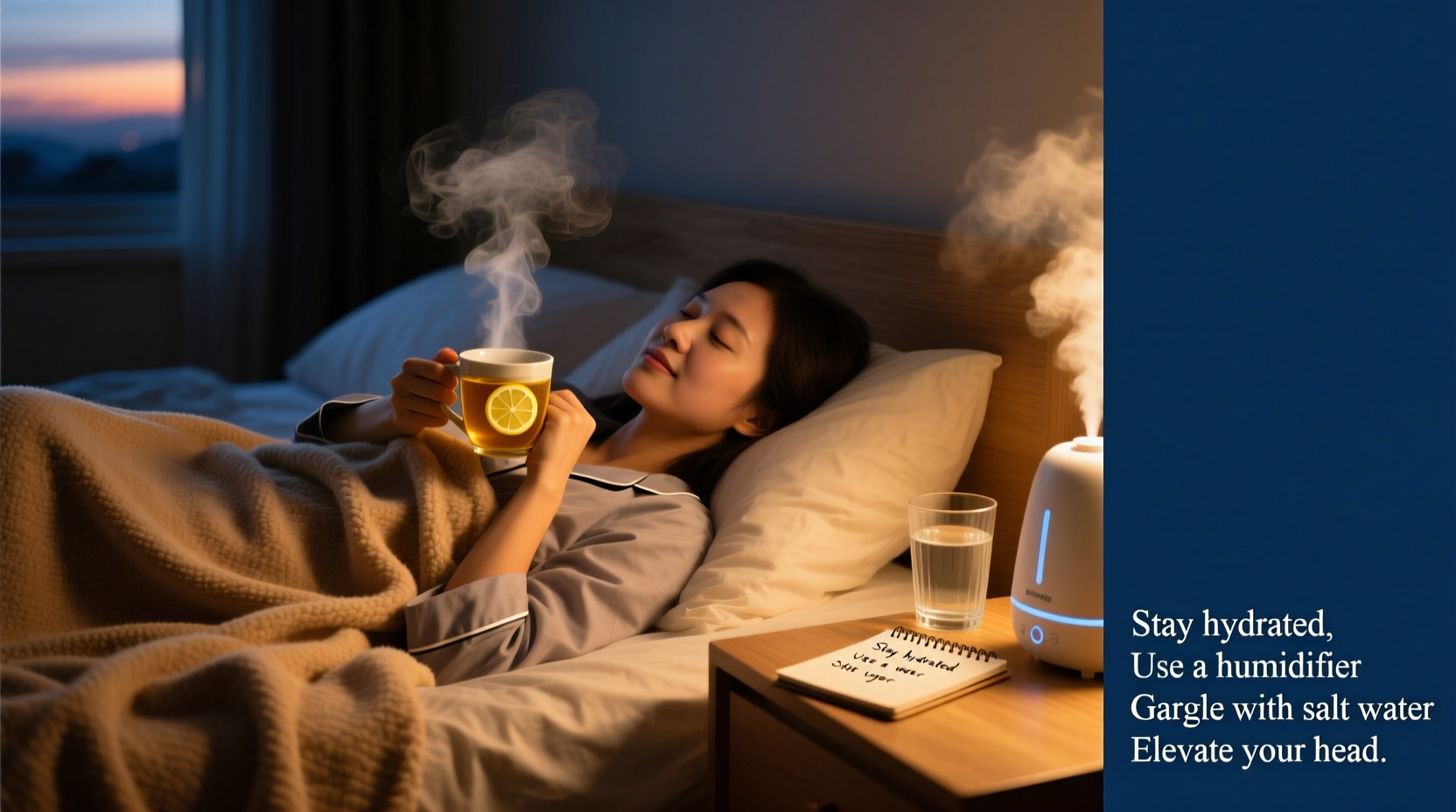
- Sip warm herbal tea with honey: Honey has natural antibacterial properties and coats the throat, reducing irritation. Chamomile, licorice root, or slippery elm teas are particularly soothing.
- Gargle with salt water: Mix 1/2 teaspoon of sea salt in a glass of warm water. Gargle for 30 seconds before bed to reduce swelling and flush irritants.
- Use a humidifier: Adding moisture to your bedroom air helps prevent throat drying. Cool-mist humidifiers are safest for continuous use.
- Elevate your head: Prop yourself up with an extra pillow or wedge. This reduces postnasal drip pooling and minimizes acid reflux episodes.
- Avoid screens and speaking late: Straining vocal cords before bed can worsen throat sensitivity. Silence is healing.
What to Avoid Before Bed
Certain habits can unknowingly aggravate your throat. Steering clear of these behaviors may bring noticeable improvement within days.
| Do | Don't |
|---|---|
| Drink water 1–2 hours before bed | Consume alcohol or caffeine late in the day |
| Eat dinner at least 3 hours before sleeping | Lie down immediately after eating |
| Run a HEPA air purifier in the bedroom | Use scented candles, diffusers, or aerosols near bedtime |
| Wash bedding weekly in hot water | Sleep with pets if allergic to dander |
| Use saline nasal spray to moisten passages | Smoke or vape, even hours before bed |
Step-by-Step Guide to Reducing Nighttime Throat Pain
If your sore throat recurs several nights a week, follow this structured approach to identify and eliminate triggers:
- Track Symptoms (Days 1–3): Note when pain starts, its intensity, associated symptoms (cough, hoarseness, nasal drip), and what you ate or did before bed.
- Optimize Sleep Environment (Day 4): Clean your bedroom, wash pillows and sheets, remove clutter that traps dust, and place a humidifier near the bed.
- Adjust Eating Schedule (Day 5 Onward): Finish meals by 7 PM. Avoid spicy, acidic, or fatty foods within four hours of bedtime.
- Try Nasal Irrigation (Nightly): Use a neti pot or saline spray to rinse allergens and mucus from nasal passages before sleep.
- Test for Reflux (Day 7): Eliminate common reflux triggers (tomatoes, chocolate, citrus, mint, coffee). If symptoms improve, consider discussing LPR testing with your doctor.
- Consult a Specialist (If No Improvement After 10 Days): See an ENT or allergist to rule out structural issues, chronic sinusitis, or sleep-disordered breathing.
Real-Life Example: Sarah’s Nighttime Relief Journey
Sarah, a 34-year-old teacher from Portland, began experiencing a sharp, scratchy throat every night for over two months. During the day, her voice was normal and she felt fine. She visited her primary care physician, who ruled out strep and viral infections. Frustrated, Sarah started tracking her habits and noticed a pattern: her worst nights followed dinners with wine and tomato-based pasta.
She also realized her bedroom heater ran all night, creating very dry air. After eliminating late meals, stopping wine consumption, and adding a cool-mist humidifier, her symptoms improved within a week. A follow-up with an ENT confirmed mild LPR. With continued lifestyle adjustments, her nighttime sore throat disappeared completely by the sixth week.
Sarah’s case illustrates how multiple factors—reflux, dry air, and diet—can combine to create a recurring symptom that seems mysterious but is highly manageable once identified.
When to Seek Medical Help
Most cases of nighttime sore throats resolve with self-care. However, certain warning signs indicate the need for professional evaluation:
- Pain lasting more than two weeks despite home treatment
- Difficulty swallowing or breathing
- Unexplained weight loss or voice changes beyond 10 days
- Blood in saliva or phlegm
- Swollen lymph nodes or fever without cold symptoms
Persistent irritation could signal conditions such as chronic sinusitis, obstructive sleep apnea, or even rare cases of throat tumors. Early diagnosis improves outcomes significantly.
Frequently Asked Questions
Can allergies really cause a sore throat only at night?
Yes. Indoor allergens like dust mites, mold, and pet dander accumulate in bedding and carpets. Exposure increases during sleep, triggering postnasal drip and throat irritation. Unlike seasonal allergies, these reactions may occur year-round and primarily at night.
Is it normal to have a sore throat every night but feel fine in the morning?
While not “normal,” it’s relatively common and often linked to reversible causes like dry air, reflux, or mouth breathing. If this pattern persists beyond 10 days, it should be evaluated to prevent long-term tissue damage or secondary infections.
Can acid reflux damage my throat over time?
Untreated LPR can lead to chronic inflammation, vocal cord nodules, and even Barrett’s esophagus in severe cases. The throat’s lining isn’t designed to withstand repeated acid exposure. Long-term management includes dietary changes, elevation during sleep, and sometimes medication.
Prevention Checklist: Stop Nighttime Sore Throats Before They Start
Stay ahead of discomfort with this nightly prevention checklist:
- ✅ Eat dinner at least 3 hours before bedtime
- ✅ Run a humidifier in the bedroom (clean it weekly)
- ✅ Wash pillowcases and sheets in hot water weekly
- ✅ Gargle with salt water or sip warm tea before bed
- ✅ Elevate your head with an extra pillow or adjustable base
- ✅ Avoid alcohol, caffeine, and smoking in the evening
- ✅ Use a saline nasal spray to keep passages moist
- ✅ Keep bedroom windows closed if pollen counts are high
- ✅ Install a HEPA air purifier to reduce airborne allergens
- ✅ Stay hydrated throughout the day (don’t rely on nighttime drinking)
Conclusion: Take Control of Your Nighttime Comfort
A sore throat that appears only at night isn’t something you have to endure. It’s a signal from your body—often pointing to modifiable habits or environmental factors. By understanding the interplay between posture, diet, air quality, and physiology, you can implement targeted changes that bring rapid relief. Most solutions are simple, low-cost, and fit easily into your routine.
Start tonight. Adjust your sleep setup, modify your evening meal, and hydrate your airways. Track your progress over the next week. If symptoms persist, seek expert guidance—but don’t ignore the power of small, consistent actions. Your throat, and your sleep, deserve better.




 浙公网安备
33010002000092号
浙公网安备
33010002000092号 浙B2-20120091-4
Comments
No comments yet. Why don't you start the discussion?