
For many, movie night means dimming the lights, popping popcorn, and diving into a favorite film or series. But how much does the audio setup matter? As home entertainment evolves, so do our options: sleek soundbars promise simplicity and solid performance, while traditional 5.1 or 7.1 surround sound systems deliver immersive theater-like experiences. The real question isn’t just about specs—it’s whether that immersive experience is necessary when you're not a hardcore audiophile or cinephile.
The answer depends on room size, viewing habits, budget, and how deeply you value audio fidelity. For casual viewers who enjoy weekend films or streaming series with family, a high-end surround system might be overkill. Yet, dismissing immersive audio entirely could mean missing out on subtle layers that elevate storytelling. Understanding the trade-offs between convenience and quality is key to making an informed decision.
Understanding the Basics: Soundbar vs Surround Sound
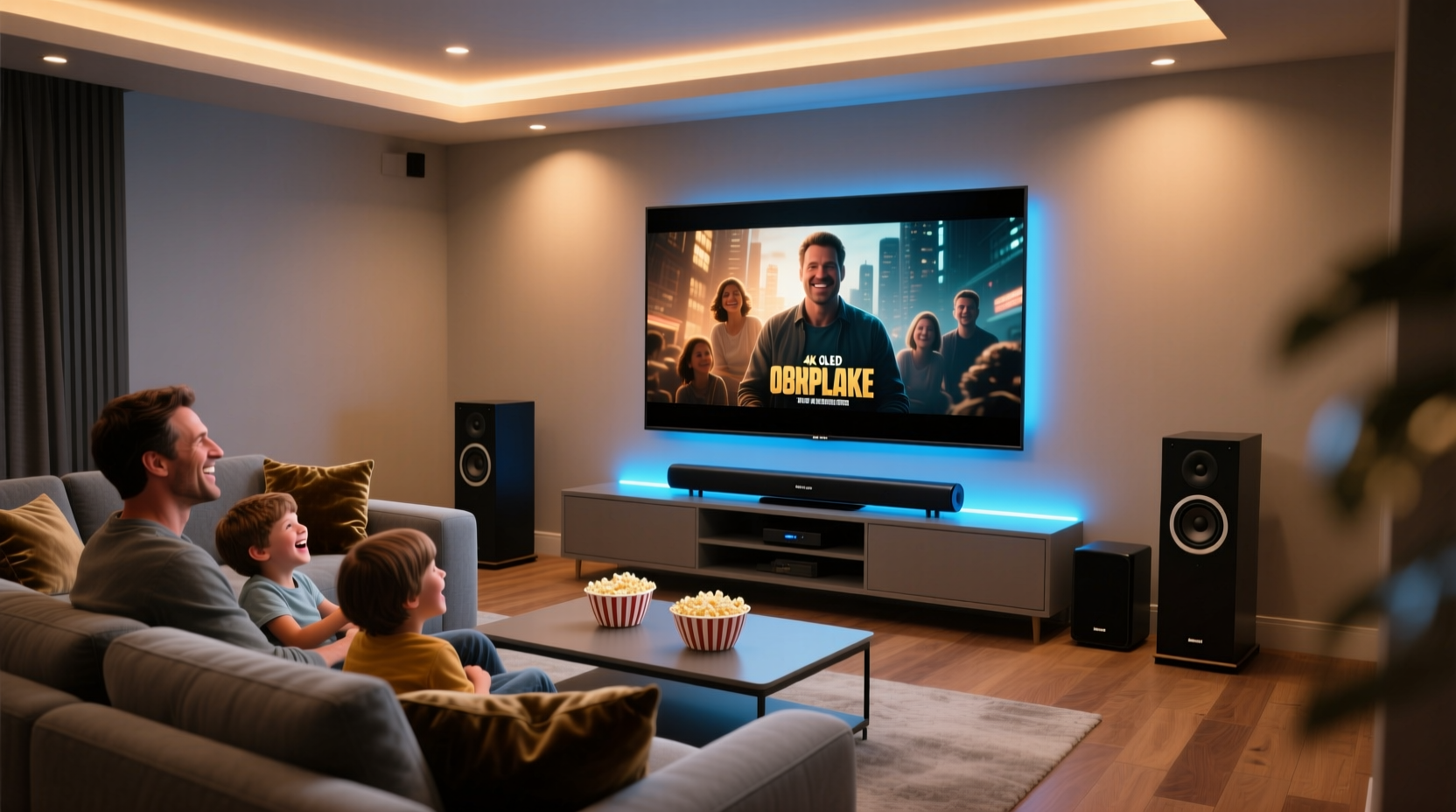
A soundbar is a single elongated speaker designed to sit below or in front of your TV. Most modern models include built-in amplification, Bluetooth or Wi-Fi connectivity, and some even feature virtual surround processing or upward-firing drivers for a more three-dimensional effect. Entry-level models start around $100, while premium units with subwoofers and rear speakers can exceed $800.
In contrast, a full surround sound system typically consists of at least five speakers (front left, center, front right, surround left, surround right) and a subwoofer—commonly referred to as a 5.1 setup. More advanced configurations add height channels (for Dolby Atmos) and extra rear speakers (7.1 or higher). These systems require a dedicated AV receiver to manage inputs, decoding, and power distribution, resulting in more components, wiring, and space requirements.
While both aim to improve upon TV speakers, their approaches differ fundamentally. A soundbar prioritizes minimalism and plug-and-play usability. Surround systems emphasize spatial accuracy and dynamic range, aiming to replicate the directional cues used in professional film mixing.
Key Differences in Performance and Experience
The most noticeable difference lies in sound staging. A true surround system places discrete sounds behind or beside you—like footsteps approaching from off-screen or helicopters circling overhead. This precision comes from having multiple physical speakers positioned around the room.
Soundbars simulate this using digital signal processing (DSP), often labeled as “virtual surround” or “DTS Virtual:X.” While impressive in controlled demos, these effects can feel artificial in larger rooms or when listeners aren’t seated directly in the sweet spot. Bass response also varies: standalone soundbars often lack deep low-end unless paired with a wireless subwoofer, whereas surround systems almost always include a dedicated subwoofer for cinematic rumble.
“Audio is half the movie-watching experience. Poor sound pulls you out of the story faster than poor picture quality.” — David Moulton, Emmy-winning audio engineer
When a Soundbar Is Enough
For the majority of households, a well-chosen soundbar delivers more than adequate performance. Consider these scenarios where a soundbar makes the most sense:
- Small to medium-sized living rooms: In spaces under 300 square feet, sound dispersion from a single bar is often sufficient.
- Limited space or aesthetic concerns: Apartments, minimalist interiors, or wall-mounted TVs benefit from clutter-free setups.
- Casual viewing habits: If you watch movies occasionally rather than daily, investing thousands may not be justified.
- Budget constraints: High-performance soundbars now offer features once exclusive to high-end receivers—like Dolby Atmos decoding and voice control—for under $500.
Modern advancements have narrowed the gap. Premium models like the Sonos Arc, Samsung HW-Q990D, or Bose Smart Ultra Soundbar use beamforming technology and ceiling reflections to create convincing overhead effects. When calibrated correctly, they can mimic the enveloping sensation of surround sound without requiring additional speakers in the back of the room.
The Case for Full Surround: Immersion You Can Feel
There are undeniable advantages to a full surround system, especially if you value cinematic realism. Unlike processed simulations, discrete speaker placement allows sound mixers’ intentions to be realized accurately. A gunshot from the left rear won’t just seem like it's coming from the side; it will originate precisely from behind and to the left.
This level of immersion enhances emotional engagement. Studies conducted by audio research firms like Harman International suggest that directional audio increases viewer attention span and emotional response during suspenseful scenes. In action sequences, layered effects—rain, wind, distant thunder, crowd murmurs—are separated spatially, preventing muddiness.
Moreover, surround systems generally offer superior dynamic range. They handle sudden shifts from whisper-quiet moments to explosive crescendos more gracefully than soundbars, which can compress or distort at high volumes due to smaller drivers and enclosures.
Real Example: The Weekend Movie Enthusiast
Take Mark, a software developer who enjoys sci-fi films every Friday night with his partner. His living room is 14x20 feet with standard drywall and carpeted flooring. Initially, he bought a mid-range soundbar for $300. It improved dialogue clarity and added some depth, but during *Dune* (2021), the sandworm attacks lacked visceral impact.
After researching, he invested in a used 5.1 system: a Denon AVR-S760H receiver, KEF Q150 satellite speakers, a matching center channel, and a Polk Audio PSW10 subwoofer. Total cost: ~$750. After calibration using the receiver’s Audyssey setup, the difference was immediate. The low-frequency vibrations during spaceship landings were palpable. Dialogue remained crisp even during battle scenes. He didn’t need perfect acoustics—just noticeable improvement tailored to his viewing pattern.
Was it essential? No. But did it enhance his enjoyment? Absolutely.
Comparison Table: Soundbar vs Surround System
| Feature | Soundbar | Surround Sound System |
|---|---|---|
| Installation Complexity | Minimal (plug-and-play) | Moderate to high (wiring, speaker placement) |
| Space Requirements | Low (one unit + optional sub) | High (multiple speakers, receiver rack) |
| True Surround Experience | Limited (virtual processing only) | Full (discrete speaker channels) |
| Cost (Entry to Premium) | $100–$1,000 | $500–$3,000+ |
| Scalability | Low (some support add-ons) | High (supports Atmos, DTS:X, zone audio) |
| Best For | Apartment dwellers, casual viewers, small rooms | Home theaters, film lovers, larger spaces |
How to Decide: A Step-by-Step Guide
Choosing the right system doesn’t have to be overwhelming. Follow this practical decision-making process:
- Assess your room layout: Measure the primary seating distance from the TV. If it exceeds 12 feet or the room is wide (>15 ft), surround sound provides better coverage.
- Evaluate your usage: Are you watching movies weekly or occasionally? Do you play games or listen to music through the system?
- Determine your budget: Set a realistic cap. Remember to include potential costs for cables, mounts, or professional installation.
- Test available options: Visit a store or check return policies. Many retailers allow 30-day trials for audio gear.
- Consider future needs: Will you upgrade to a larger screen? Add gaming consoles? Plan accordingly.
Frequently Asked Questions
Can a soundbar support Dolby Atmos?
Yes, many modern soundbars include upward-firing drivers and decode Dolby Atmos signals. However, true object-based audio with overhead effects requires either ceiling speakers or reflective surfaces for accurate bounce. While effective in ideal conditions, results vary based on ceiling height and material.
Do I need professional installation for a surround system?
Not necessarily. Entry-level 5.1 kits are designed for DIY setup. Run speaker wire along baseboards, use cord covers, and follow receiver prompts for calibration. Only consider professionals if you’re embedding wires in walls or setting up a dedicated media room.
Is wireless surround possible?
Yes. Many systems offer wireless rear speakers or use mesh networking (like Sonos) to eliminate trailing cables. Just ensure strong Wi-Fi or use proprietary RF transmitters to avoid latency issues.
Checklist: Choosing Your Ideal Audio Setup
- ☐ Measure your viewing distance and room dimensions
- ☐ Define your primary use case (movies, music, gaming)
- ☐ Set a firm budget including accessories
- ☐ Research models with good reviews for your room size
- ☐ Prioritize features: subwoofer, voice control, HDMI eARC, app support
- ☐ Check return policy before purchasing
- ☐ Test setup ease—especially cable management
- ☐ Consider scalability for future upgrades
Final Verdict: Is a Full Setup Necessary?
For casual movie nights, a full surround sound system is not strictly necessary—but it can significantly enrich the experience. A high-quality soundbar delivers excellent value, convenience, and performance for everyday use. It eliminates complexity while still offering dramatic improvements over built-in TV speakers.
However, if you regularly host movie nights, appreciate nuanced audio design, or simply want to get closer to the director’s intended atmosphere, investing in a surround system pays off. The depth, directionality, and power of multi-speaker setups transform passive viewing into active immersion.
The truth is, there’s no universal answer. Technology has made both options viable for different lifestyles. What matters most is aligning your choice with how you actually use your entertainment space—not with what marketers claim you should want.
“The best audio system is the one you’ll actually use consistently and enjoy.” — Sarah Kim, Home Theater Designer at AudioForma
Take Action Today
Don’t let indecision keep you stuck with tinny TV speakers. Whether you choose a sleek soundbar or build a full 5.1 array, upgrading your audio is one of the most impactful enhancements you can make to your home entertainment. Start by evaluating your space and habits. Then, pick a solution that fits your life—not someone else’s ideal.




 浙公网安备
33010002000092号
浙公网安备
33010002000092号 浙B2-20120091-4
Comments
No comments yet. Why don't you start the discussion?