
When it comes to filling a spacious living room, open-concept kitchen, or grand entryway with fragrance, not all candles perform equally. The debate between soy wax and paraffin wax has long centered on health, sustainability, and environmental impact—but for many buyers, the deciding factor remains one of performance: which wax type produces a stronger, more consistent scent throw in large rooms?
The answer isn’t as straightforward as marketing claims might suggest. While paraffin wax has traditionally dominated the high-scent-performance category, modern advancements in soy wax formulations and fragrance oil technology are closing the gap. Understanding the science behind scent throw—both cold and hot—and how each wax behaves under different conditions is key to making an informed choice.
Understanding Scent Throw: Cold vs. Hot
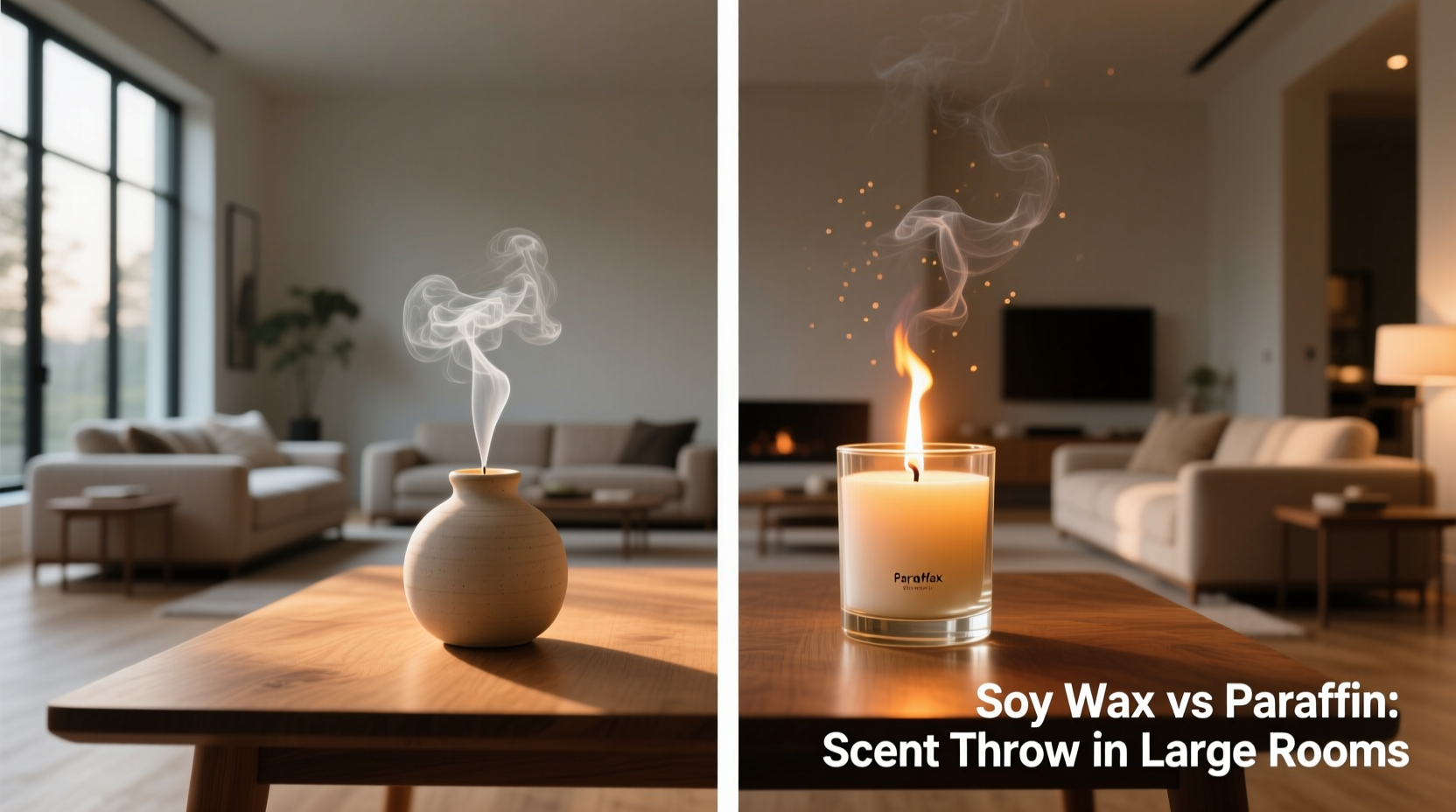
Scent throw refers to how well a candle disperses fragrance into the air. It’s typically divided into two categories:
- Cold throw: The strength of the fragrance when the candle is unlit. This depends on how well the fragrance oils bind to the wax at room temperature.
- Hot throw: The intensity and diffusion of scent once the candle is burning. This is influenced by melt pool formation, wax viscosity, wick performance, and fragrance load capacity.
In large rooms, hot throw becomes significantly more important. A strong cold throw may impress on the shelf, but it won’t warm up your 400-square-foot great room. What matters is sustained, even dispersion over time—not just an initial burst.
“Scent throw isn’t just about wax type—it’s a system. The wick, fragrance oil quality, container design, and room ventilation all play roles.” — Dr. Lena Torres, Materials Scientist & Candle Formulation Consultant
Paraffin Wax: The Traditional Powerhouse
Paraffin wax, derived from petroleum, has been the standard in commercial candlemaking for over a century. Its dominance stems from several functional advantages:
- High fragrance load capacity (up to 12% in some blends)
- Predictable melting behavior and consistent burn
- Natural compatibility with most fragrance oils
- Excellent adhesion to glass containers
Because paraffin holds more fragrance oil and releases it efficiently during combustion, it often outperforms natural waxes in terms of immediate scent projection. In large rooms, this can mean faster saturation and stronger top-note presence.
However, paraffin’s performance edge comes with trade-offs. It produces more soot and emits trace amounts of volatile organic compounds (VOCs) when burned, particularly if lower-grade wax or lead-core wicks are used. For health-conscious users or those with allergies, this is a significant consideration.
Soy Wax: The Sustainable Contender
Soy wax, made from hydrogenated soybean oil, rose in popularity due to its renewable sourcing, cleaner burn, and biodegradability. Early versions were criticized for weak scent throw, but modern soy blends—especially soy-paraffin hybrids and fully optimized 100% soy formulas—have improved dramatically.
Today’s high-performance soy candles can rival paraffin in scent projection, especially when formulated with care. Key factors include:
- Fragrance oil compatibility (some oils bind better with natural waxes)
- Proper curing time (soy wax benefits from 7–14 days of post-pour rest)
- Wick selection (larger wicks help create wider melt pools)
- Container size and shape (wider vessels promote better heat distribution)
In large rooms, soy wax tends to release fragrance more gradually. Rather than overwhelming the space with top notes, it often provides a balanced, layered aroma that evolves over time. This makes it ideal for prolonged use where subtle, consistent ambiance is preferred over aggressive scent bursts.
Real-World Example: Living Room Test Case
A homeowner in Denver tested two 16-ounce candles—one 100% soy, one paraffin—in their 500 sq ft open-plan living-dining area. Both used the same fragrance (amber vanilla), similar wick types (cotton core), and identical glass containers.
Results after three burn sessions:
- Paraffin candle: Noticeable scent within 10 minutes. Strong projection across the entire room by 25 minutes. Detectable in adjacent hallway. However, slight black residue appeared on the jar after two burns.
- Soy candle: Mild scent detectable at 15 minutes. Full room coverage achieved at 35–40 minutes. No soot observed. Fragrance lasted longer after extinguishing (lingering for over 2 hours).
The soy candle required patience but delivered a cleaner, longer-lasting experience. The paraffin candle was faster and louder initially but came with visible byproducts.
Comparative Analysis: Soy vs Paraffin in Large Spaces
| Factor | Soy Wax | Paraffin Wax |
|---|---|---|
| Fragrance Load Capacity | 6–10% (varies by blend) | 8–12% (typically higher) |
| Hot Scent Throw Speed | Slower (30–45 min for full room) | Faster (15–25 min for full room) |
| Scent Duration After Extinguishing | Longer residual aroma | Shorter linger time |
| Melt Pool Efficiency | Requires proper wicking; prone to tunneling if under-wicked | Consistent melt pool; less tunneling risk |
| Soot Production | Minimal to none (when properly wicked) | Low to moderate (depends on quality) |
| Best For Large Rooms? | Yes, with optimized formulation and patience | Yes, especially for fast, strong impact |
Maximizing Scent Throw: Practical Tips for Any Wax
No matter which wax you choose, technique plays a crucial role in performance. A poorly made candle—even paraffin—will fail in a large space. Follow these best practices to get the most out of your candle:
- Allow a full melt pool: On the first burn, let the candle burn long enough for liquid wax to reach the edges (typically 1 hour per inch of diameter). This prevents tunneling and ensures maximum fragrance release in future uses.
- Trim the wick to ¼ inch: A too-long wick causes smoking and uneven burning; too short reduces flame height and heat output, weakening scent throw.
- Place strategically: Center the candle in the room or near airflow (but not in direct drafts). Avoid corners or enclosed shelves where scent gets trapped.
- Use multiple candles: For rooms over 400 sq ft, consider clustering two medium-sized candles instead of relying on one oversized one. This creates broader diffusion.
- Ventilate before lighting: Open windows briefly to reset the air. Stale air diminishes perceived scent strength.
Step-by-Step Guide to Testing Scent Throw at Home
If you’re comparing soy and paraffin candles yourself, follow this method for accurate results:
- Choose comparable candles: Same size (e.g., 14–16 oz), similar fragrance family, same container type.
- Cure both for 10–14 days: Especially important for soy wax to ensure full fragrance integration.
- Test in the same room: Conduct tests on similar days (temperature and humidity affect scent dispersion).
- Burn for 3 hours: Time how long it takes for the scent to reach different zones (near, mid-room, far corner).
- Rate intensity: Use a scale of 1–10 at 15, 30, 60, and 120 minutes.
- Note lingering effect: Smell the room 30 and 60 minutes after extinguishing.
- Repeat 2–3 times: Average results to account for variability.
This process removes bias and gives you real data tailored to your environment.
FAQ: Common Questions About Scent Throw in Large Rooms
Does soy wax really throw less scent than paraffin?
Historically, yes—but modern high-quality soy candles with optimized fragrance loads and proper wicking can match or nearly match paraffin in hot throw. The difference today is often minimal and depends more on craftsmanship than wax type alone.
Can I boost the scent of a soy candle in a big room?
Absolutely. Use a larger vessel (12 oz or more), ensure a full melt pool, place the candle centrally, and consider pairing it with a fan on low to circulate air. You can also choose fragrances with strong top notes like citrus or eucalyptus, which project farther.
Are paraffin candles safe for large, frequently used rooms?
High-quality paraffin candles with clean-burning wicks (cotton or wood) are generally safe for occasional use. However, in poorly ventilated large rooms where candles burn for hours, cumulative soot and VOC exposure may be a concern—especially for sensitive individuals. For daily or extended use, soy or coconut-soy blends are safer long-term choices.
Checklist: Choosing the Right Candle for Large Spaces
- ✅ Select candles with at least 12 oz of wax for rooms over 300 sq ft
- ✅ Prioritize reputable brands that disclose wax type and fragrance load
- ✅ Look for wide containers to promote even melt pools
- ✅ Choose strong, complex fragrances (e.g., sandalwood, patchouli, fresh linen)
- ✅ Allow proper curing time if making or buying handmade soy candles
- ✅ Trim wicks before every burn
- ✅ Test one candle before buying multiples
Conclusion: Performance Meets Preference
So, which wax delivers stronger scent throw in large rooms? The evidence shows that paraffin still holds a slight edge in speed and initial intensity. It saturates big spaces faster and often feels “louder” to the nose. But soy wax, when well-formulated, offers competitive performance with the added benefits of cleaner burning, longer after-scent, and eco-friendly sourcing.
The choice ultimately depends on your priorities. If immediate impact and maximum fragrance punch are non-negotiable, paraffin remains a reliable option—especially in commercial or hospitality settings. But for homes where air quality, sustainability, and subtle elegance matter, modern soy candles are not just viable—they’re often preferable.
Don’t accept marketing hype at face value. Test candles in your own space, observe their behavior, and judge based on real-world results. With the right approach, both wax types can transform a large room into a warmly scented sanctuary.




 浙公网安备
33010002000092号
浙公网安备
33010002000092号 浙B2-20120091-4
Comments
No comments yet. Why don't you start the discussion?