
At first glance, a sport coat and a suit jacket might appear nearly identical—both are structured outer layers worn over shirts, often with trousers. But beneath the surface, critical differences in construction, fabric, function, and formality set them apart. Understanding these distinctions isn’t just for tailors or fashion insiders; it’s essential knowledge for anyone building a versatile, polished wardrobe. Confusing the two can lead to mismatched outfits, awkward formality levels, or missed opportunities to elevate your style.
The confusion is understandable. Over time, fashion trends have blurred traditional lines. Suit jackets are now worn casually, and sport coats sometimes come in matching sets. Yet, their origins and intended purposes remain distinct. Knowing when—and how—to wear each piece allows for greater flexibility, better coordination, and more confident dressing.
Origins and Purpose: Why They Were Made
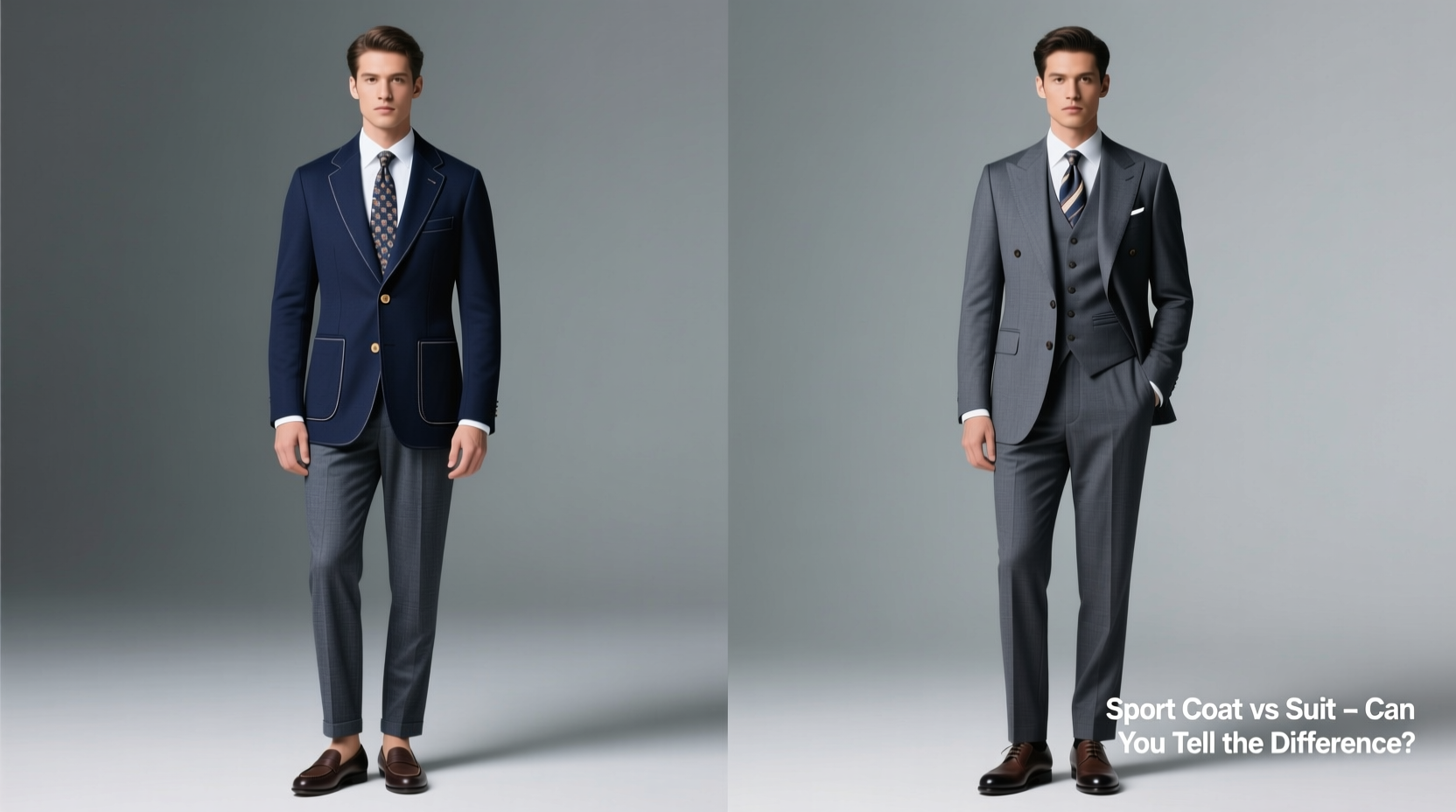
The sport coat emerged in the 19th century as practical outerwear for country pursuits like hunting, shooting, and walking. Originally called “sports jackets,” they were crafted from durable, textured fabrics such as tweed or flannel to withstand outdoor conditions. Their rugged roots meant functionality came first: patch pockets, reinforced elbows, and earth-toned patterns helped blend into natural surroundings while providing warmth and protection.
In contrast, the suit evolved from formal city wear. Originating in the early 1800s, the modern suit was designed for consistency and elegance. Matching jacket and trousers created a streamlined silhouette ideal for business, ceremonies, and social events. Suits emphasized uniformity—same fabric, same color, same finish—projecting professionalism and cohesion.
This historical divide still influences how we wear them today. A sport coat signals relaxed sophistication, while a suit conveys preparedness and polish. The choice between them often depends not just on occasion, but on intention.
Key Differences You Can See (and Feel)
Even if you’re not a tailor, several visible and tactile cues distinguish a sport coat from a suit jacket:
- Fabric pattern: Sport coats frequently feature checks, herringbone, or subtle textures. Suits tend toward solid colors or fine pinstripes.
- Matching trousers: A suit includes a jacket and pants cut from the same fabric. A sport coat is meant to be paired with non-matching pants—like chinos or wool trousers.
- Lining and structure: Suit jackets usually have full linings and more rigid canvassing for shape retention. Sport coats may have partial linings and softer construction for comfort and movement.
- Pockets: Sport coats often have flap or patch pockets, giving them a casual, utilitarian look. Suit jackets typically feature jetted or slit pockets for a sleeker profile.
- Vent style: While both may have single or double vents, sport coats more commonly feature side vents, whereas center vents dominate in modern suits.
When to Wear Each: Context Matters
Choosing between a sport coat and a suit isn’t just about aesthetics—it’s about appropriateness.
A **suit** is the default choice for high-stakes environments: job interviews, board meetings, weddings, funerals, court appearances, or formal dinners. Its uniformity projects seriousness and attention to detail. Even in business-casual offices, a well-fitted navy or gray suit remains a symbol of competence.
A **sport coat**, on the other hand, excels in semi-formal or smart-casual settings. Pair it with khakis for a client lunch, with dark jeans for a date night, or with odd trousers for a creative workplace. It adds structure without stiffness, elevating an outfit while keeping it approachable.
“Wearing a suit when everyone else is in sport coats can make you look overdressed. The reverse—wearing a loud plaid sport coat to a funeral—can be worse. Know the code.” — Marcus Bell, Menswear Consultant
Comparison Table: Sport Coat vs Suit Jacket
| Feature | Sport Coat | Suit Jacket |
|---|---|---|
| Fabric | Textured (tweed, corduroy, birdseye) | Smooth, uniform (worsted wool, gabardine) |
| Pattern | Checks, plaids, subtle prints | Solids, pinstripes, faint glen plaids |
| Trousers | Mismatched (chinos, flannels, denim) | Matching (same fabric and color) |
| Structure | Softer shoulders, lighter canvas | Firm padding, full canvas |
| Occasion | Cocktail events, casual Fridays, dinners | Interviews, weddings, corporate meetings |
| Versatility | High (mix-and-match friendly) | Lower (designed as a unit) |
Real-World Example: Two Outfits, One Man
Consider James, a marketing executive attending a two-day conference. On Day 1, he wears a charcoal gray two-piece suit with a white shirt and silk tie. He looks sharp, authoritative, and fully aligned with the event’s professional tone. Attendees perceive him as prepared and credible.
On Day 2, the agenda shifts to networking and breakout sessions. James swaps the suit for a navy sport coat, cream chinos, a light blue oxford shirt, and brown loafers. He maintains polish but appears more approachable. Colleagues initiate conversations more freely, calling his look “sharp but relaxed.”
The same man, similar level of effort—but different messages conveyed through garment choice. The suit commanded respect; the sport coat invited connection.
How to Build a Flexible Wardrobe
The smartest wardrobes don’t favor one over the other—they integrate both. Here’s how to do it right:
- Start with a navy blazer: Technically a subset of sport coats, a navy blazer in smooth cotton or wool bridges casual and formal. It can stand in for a suit jacket in a pinch and pairs with gray trousers or jeans.
- Add a gray flannel sport coat: Ideal for fall and winter, this piece works with navy pants or charcoal chinos for layered, textured looks.
- Invest in a classic two-piece suit: Navy or medium gray in worsted wool offers maximum versatility for formal needs.
- Mix textures, not patterns: Avoid pairing a plaid sport coat with striped trousers. Instead, combine a herringbone jacket with solid pants for visual interest without chaos.
- Match formality levels: Don’t wear a shiny suit jacket with faded jeans. Similarly, avoid pairing a rugged tweed coat with silk dress pants.
FAQ: Common Questions Answered
Can I wear a suit jacket without the pants?
Yes, but carefully. A suit jacket can work as a sport coat if it’s in a neutral color (navy, gray) and made from a versatile fabric. However, avoid doing this with highly formal or obviously matched suits, especially if the pants show signs of shine or wear. The mismatch will look like a poor fit, not a style choice.
Is a blazer the same as a sport coat?
Not exactly. A blazer is a type of sport coat, traditionally in solid navy or black with metal buttons (often gold). Sport coat is the broader category, including any non-matching jacket in textured or patterned fabric. All blazers are sport coats, but not all sport coats are blazers.
Can I wear a sport coat with suit trousers?
You can, as long as the colors and weights complement each other. For example, a navy sport coat over gray flannel trousers creates a tonal, modern look. Just ensure the fabrics aren’t identical—if they match too closely, it highlights that they’re not a set, which can appear sloppy.
Conclusion: Precision in Your Pocket
The difference between a sport coat and a suit isn’t trivial—it’s foundational. One represents unity and formality; the other celebrates contrast and adaptability. Recognizing this empowers you to dress with purpose, whether you're commanding a room or connecting over drinks. These garments aren’t interchangeable, but together, they form the backbone of a mature, responsive wardrobe.




 浙公网安备
33010002000092号
浙公网安备
33010002000092号 浙B2-20120091-4
Comments
No comments yet. Why don't you start the discussion?