
As winter loosens its grip and the first hints of warmer weather emerge, your wardrobe calls for a transition. Out go the heavy coats; in come the lighter layers. But with spring’s unpredictable temperament—sunshine one moment, downpour the next—the question arises: should you invest in a spring jacket or a rain jacket this season? The answer isn’t always straightforward. Each serves a distinct purpose, and choosing the right one depends on where you live, how you spend your time, and what kind of protection you actually need.
This guide breaks down the key differences between spring jackets and rain jackets, helping you decide which is more practical, versatile, and worth your investment this year.
Understanding the Purpose: Spring Jacket vs Rain Jacket
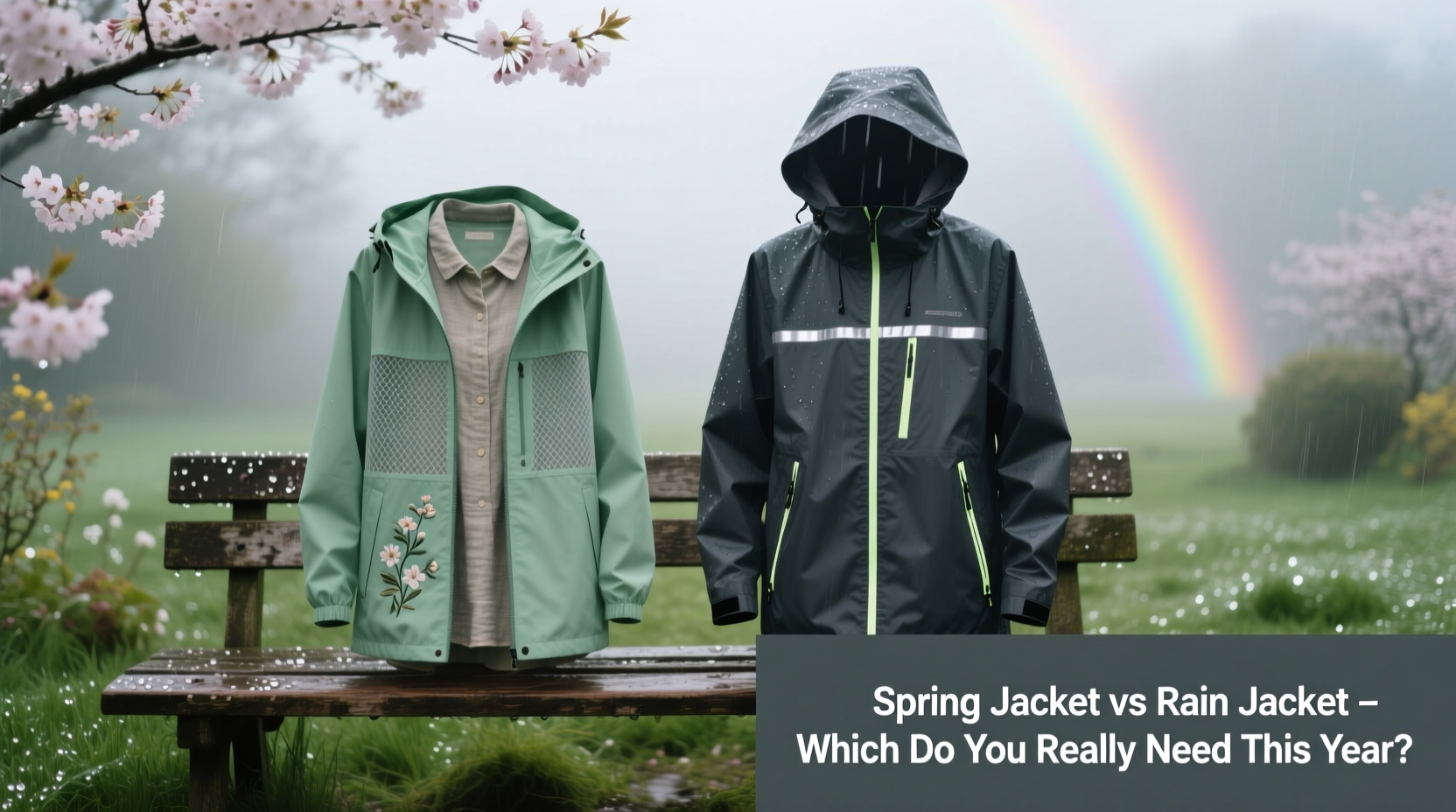
A spring jacket is designed primarily for mild temperatures and transitional weather. It's lightweight, breathable, and often made from materials like cotton, nylon, or softshell fabrics. Its main goal is insulation without overheating—ideal for cool mornings, breezy afternoons, or layered wear when temperatures hover between 50°F and 70°F (10°C–21°C).
In contrast, a rain jacket prioritizes weather resistance above all else. Constructed with waterproof membranes (like Gore-Tex or proprietary coatings), sealed seams, and water-repellent zippers, it’s built to keep you dry during sustained rainfall. While some models offer breathability, their primary function isn’t warmth—it’s protection from moisture.
The confusion arises because both are worn during similar seasons. However, mistaking a light spring jacket for a true rain shell can leave you soaked—and shivering—when skies open up.
Key Features Compared
| Feature | Spring Jacket | Rain Jacket |
|---|---|---|
| Primary Function | Light insulation & wind resistance | Waterproof protection |
| Material | Cotton, nylon, softshell, denim | Polyester with PU coating, Gore-Tex, eVent |
| Water Resistance | Limited (water-repellent finish) | High (fully waterproof construction) |
| Breathability | Generally high | Varies—premium models breathe well |
| Packability | Moderate to good | Excellent (many pack into pocket) |
| Style Range | Very broad (fashion-forward options) | Narrower (function-focused designs) |
| Durability in Wet Conditions | Poor—absorbs moisture over time | Excellent—maintains performance in rain |
When to Choose a Spring Jacket
If your region experiences mild, relatively dry springs—or if you’re mostly commuting short distances with access to shelter—a spring jacket may be sufficient. These jackets excel in comfort and versatility, offering a polished look whether you're layering over a sweater or wearing it solo on a crisp day.
Popular styles include field jackets, chore coats, denim truckers, and lightweight bombers. They often feature casual details like button fronts, patch pockets, and relaxed fits. For urban dwellers who value aesthetics and moderate functionality, a spring jacket strikes the right balance.
However, they fall short when exposed to anything beyond a brief drizzle. Without taped seams or hydrophobic treatments, most absorb water quickly, becoming heavy and clammy.
“People underestimate how fast a light rain can compromise non-waterproof outerwear. Once fabric saturates, wind chill increases dramatically.” — Dr. Lena Torres, Outdoor Gear Analyst, Mountain Climate Institute
When a Rain Jacket Is Non-Negotiable
If you live in a climate with frequent spring showers—such as the Pacific Northwest, the UK, or coastal regions—a dedicated rain jacket isn’t optional; it’s essential. Even intermittent rain can disrupt outdoor routines, damage electronics, and lead to discomfort or illness if you’re constantly damp.
Modern rain jackets have evolved far beyond bulky yellow ponchos. Today’s models are sleek, breathable, and surprisingly packable. Many fold into their own chest pocket, making them easy to carry in a backpack or tote. Brands like Arc’teryx, Patagonia, and Columbia offer technical shells that combine performance with subtle style.
Look for features such as adjustable hoods, pit zips for ventilation, and helmet-compatible designs if you bike or hike. A good rain jacket should move with you, not restrict you—even during prolonged exposure.
Real-Life Scenario: Commuting in Seattle
Take Sarah, a graphic designer living in Seattle. Her morning walk to the light rail is just ten minutes, but it’s often enough to get caught in a sudden shower. Last spring, she relied on a trendy corduroy jacket thinking it would suffice. Within weeks, the fabric began to mildew from repeated dampness. She ended up replacing it twice.
This year, she invested in a slim-profile rain jacket from a sustainable brand. It packs into her bag, resists wind and rain equally well, and even has a hidden reflective strip for safety. Despite being less “fashion” than her previous picks, she wears it nearly every day in March and April—and stays dry, comfortable, and confident.
Sarah’s experience illustrates a common mistake: prioritizing appearance over actual environmental demands. In consistently wet climates, a rain jacket isn’t an accessory—it’s a necessity.
Step-by-Step: How to Decide What You Need This Year
- Evaluate Your Local Climate: Check historical spring weather data. If your area averages more than 8 rainy days per month, lean toward a rain jacket.
- Assess Your Daily Routine: Do you walk, bike, or wait outdoors frequently? Exposure increases the need for waterproofing.
- Consider Layering Needs: In cooler springs, pair a rain jacket with a mid-layer fleece. In milder zones, a spring jacket alone may be enough.
- Test Your Current Outerwear: Has your existing jacket kept you dry during a 10-minute rainstorm? If not, it’s time for an upgrade.
- Set a Realistic Budget: Quality rain jackets start around $100, but last years with proper care. View it as a long-term investment in comfort.
Checklist: Before You Buy Either Jacket
- ✅ Confirm the jacket’s actual waterproof rating (look for 5,000mm+)
- ✅ Ensure the hood fits securely over a hat or glasses
- ✅ Check pocket placement—will they be usable when wearing a backpack?
- ✅ Try it on with layers to ensure mobility
- ✅ Verify care instructions—some waterproof fabrics require special detergents
- ✅ Look for sustainability certifications (e.g., Bluesign, PFC-free finishes)
Frequently Asked Questions
Can I use a rain jacket as a spring jacket?
Yes, especially in wet climates. Many modern rain jackets are lightweight and breathable enough for daily wear. However, they may feel too warm on sunny days unless they have ventilation zips.
Are there jackets that work for both spring and rain?
Hybrid “softshell” or “3-in-1” jackets exist, combining a water-resistant outer with a removable insulated liner. These offer flexibility but often compromise on extreme waterproofing or breathability compared to dedicated models.
How long should a quality rain jacket last?
With regular use and proper maintenance, a well-made rain jacket should last 3–5 years. Reapply DWR (durable water repellent) treatments annually to maintain performance.
Final Verdict: What Should You Get This Year?
The decision ultimately hinges on your environment and lifestyle. If you live in a dry or temperate zone with only occasional showers, a well-constructed spring jacket with water-resistant properties might be all you need. But if rain is a regular part of your spring forecast—or if you spend significant time outdoors—a dedicated rain jacket is the smarter, more durable choice.
Think of it this way: fashion fades, but staying dry doesn’t go out of style. Investing in functional gear that meets your real-world needs pays off in comfort, confidence, and fewer replacements down the line.




 浙公网安备
33010002000092号
浙公网安备
33010002000092号 浙B2-20120091-4
Comments
No comments yet. Why don't you start the discussion?