
Silk scarves have long been a symbol of elegance, versatility, and personal expression. Whether draped over shoulders, tied in hair, or looped around a handbag, their presence elevates any look. But when choosing the perfect silk scarf, one question often arises: does the shape—square versus rectangular—actually make a difference? The answer isn't just about aesthetics; it's about function, drape, knotting potential, and how each shape interacts with your body and style.
While both shapes are made from the same luxurious material, their proportions create distinct experiences in wearability and visual impact. Understanding these differences helps you select not just a beautiful accessory, but one that aligns with your lifestyle, fashion preferences, and intended use.
The Anatomy of Shape: What Defines Square and Rectangular Scarves?
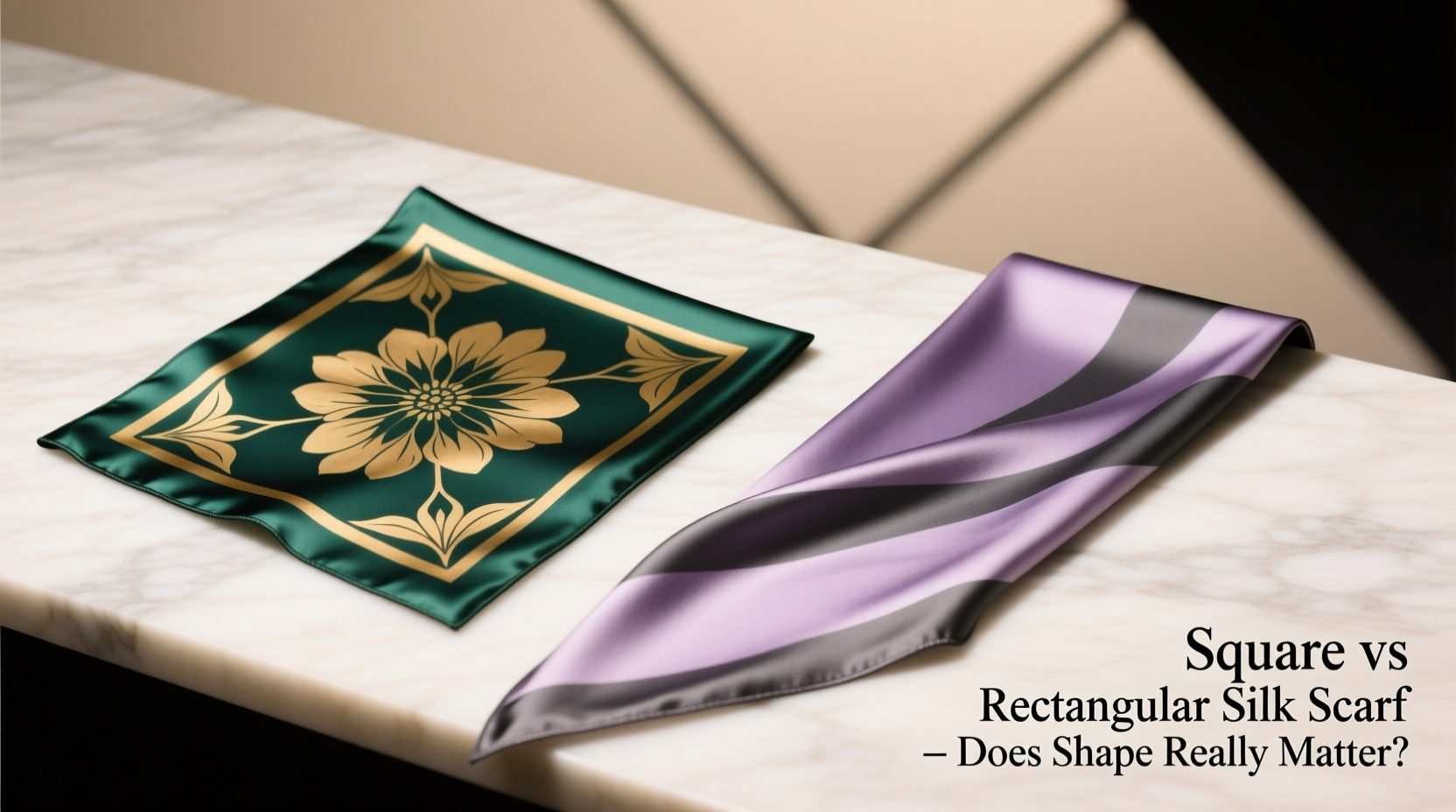
A square silk scarf typically measures between 90 cm and 140 cm on each side, forming an even quadrilateral. This balanced geometry allows for symmetrical folds, versatile draping, and intricate knotting techniques. It’s the classic choice associated with vintage glamour—think Audrey Hepburn or Grace Kelly.
In contrast, a rectangular silk scarf is longer than it is wide, often ranging from 35 cm to 50 cm in width and 170 cm to 200 cm in length. This elongated silhouette mimics the proportions of a necktie or shawl, lending itself naturally to wrapping, looping, and asymmetrical styling.
The fundamental distinction lies in proportion. A square offers balance and symmetry; a rectangle emphasizes flow and extension. These characteristics influence everything from how the scarf sits on the body to how easily it can be styled without assistance.
Styling Flexibility: Which Shape Offers More Options?
Both shapes provide impressive versatility, but they excel in different areas.
Square scarves shine in structured, detailed looks. Their even edges allow for precise folding into triangles or bands, making them ideal for:
- Pirouette knots at the nape of the neck
- Head wraps with clean lines
- Bag charms folded into fans or rosettes
- Belt-style waist accents when folded lengthwise
Because of their symmetry, square scarves lend themselves to complex tying methods popularized by fashion icons and luxury brands. They’re also preferred for printing bold, centralized motifs—logos, florals, or artistic scenes—that remain visible no matter how the scarf is worn.
Rectangular scarves, meanwhile, offer effortless elegance. Their length enables:
- Classic loop-and-tuck neckwear (like a cashmere wrap)
- Dramatic shoulder drapes
- Waist sashes for dresses or coats
- Hair ribbons pulled into low ponytails or braids
They require less precision to style and often feel more practical for everyday wear. The extended length provides warmth in cooler weather, while the narrow width avoids bulk under collars.
Functional Comparison: When Each Shape Performs Best
| Use Case | Square Scarf | Rectangular Scarf |
|---|---|---|
| Fashion Statement | Excellent – bold prints centered beautifully | Good – print may stretch or distort |
| Everyday Wear | Fair – requires more effort to tie neatly | Excellent – easy to throw on and go |
| Warmth & Coverage | Moderate – limited surface area | Superior – longer drape covers more |
| Versatility in Knots | High – supports dozens of styles | Moderate – best for simple loops and ties |
| Travel Friendliness | Good – compact when folded | Very Good – lightweight and packable |
This comparison shows that neither shape is universally superior. Instead, performance depends on context. For instance, a square scarf excels as a centerpiece in a curated outfit, while a rectangular scarf functions better as a functional layer in transitional weather.
Expert Insight: What Designers and Stylists Say
“Shape dictates movement. A square scarf holds its form—it’s architectural. A rectangular one flows like water. Choose based on whether you want structure or fluidity.” — Isabelle Moreau, Parisian Fashion Stylist & Scarf Archivist
Moreau, who has curated vintage scarf collections for European museums, emphasizes that historical trends also play a role. “The square was dominant in the mid-20th century because haute couture valued precision. Today’s preference for relaxed silhouettes has revived the rectangular form.”
Luxury brands reflect this shift. While Hermès remains famous for its 90x90 cm square silks, newer labels like Rouje and Ganni frequently release elongated rectangles designed for casual draping. Even traditional houses now offer both, acknowledging that modern consumers value ease as much as elegance.
Real-World Example: Two Women, Two Styles
Case Study 1: Clara, 38 – Corporate Consultant
Clara wears tailored blazers and silk blouses daily. She owns three square silk scarves in classic prints. Every Monday, she ties one in a neat ascot knot at her throat, using a small pin to secure it. “It feels polished,” she says. “Clients notice it. It’s part of my brand.” The square shape allows her to achieve a consistent, professional look that complements her structured wardrobe.
Case Study 2: Naomi, 29 – Freelance Photographer
Naomi prefers comfort and mobility. Her go-to is a 40x180 cm rectangular silk scarf in earthy tones. She loops it once around her neck, lets the ends fall unevenly, and adjusts it throughout the day. “I don’t have time to fuss,” she explains. “But it still feels intentional. It adds softness to my jeans-and-tee outfits.” For her, the rectangle balances style and practicality.
These examples illustrate how personal rhythm and professional environment influence shape preference—not just taste.
How to Choose Based on Your Body and Face Shape
The interaction between scarf shape and facial features is subtle but impactful.
Square scarves, when folded into a triangle and tied beneath the chin, create vertical lift. This elongates round or square faces, drawing the eye upward. The broad base also balances narrow shoulders, adding volume where needed.
Rectangular scarves, especially when loosely draped, add horizontal lines. This can soften angular jawlines and strong shoulders. However, on petite frames, an overly long rectangle might overwhelm—opting for a 150 cm length instead of 190 cm can prevent this.
Neck length matters too. Those with shorter necks should avoid tight square knots that sit high. Instead, try wearing the scarf lower, as a collar accent. Long-necked individuals can pull off dramatic square bows without concern.
Checklist: Choosing Your Ideal Silk Scarf Shape
- Assess your wardrobe: Do you lean toward structured or relaxed styles?
- Consider frequency of use: Will it be worn weekly or saved for special occasions?
- Evaluate your tying skill: Are you comfortable with intricate knots?
- Think about climate: Do you need extra coverage or just a decorative touch?
- Match to your body: Does the shape enhance your proportions?
- Decide on print priority: Do you want a central design (favor square) or all-over pattern (works on rectangle)?
Frequently Asked Questions
Can I wear a rectangular scarf like a square one?
Not exactly. While you can fold a rectangle into a narrower band, it won’t achieve the same triangular drape as a square due to its disproportionate sides. You lose symmetry and balance, limiting certain styles.
Are square scarves harder to tie?
They can be, especially for beginners. Techniques like the ballet knot or four-in-hand require practice. However, once mastered, they offer more creative control. Rectangular scarves are generally easier to style quickly.
Which shape lasts longer?
Durability depends more on silk quality and care than shape. That said, square scarves often receive more handling due to complex folds, which may lead to edge fraying over time if not stored properly.
Final Thoughts: Shape Matters—But So Does Intention
The debate between square and rectangular silk scarves isn’t about which is better, but which serves you better. The square is a canvas for artistry, tradition, and intentionality. It invites ritual—a moment to pause and tie something with care. The rectangle is kinship with motion, suited to lives in flux, offering grace without demand.
Your choice should reflect not just current trends, but your daily rhythms, aesthetic values, and how you wish to present yourself to the world. Many find that owning both shapes unlocks the full expressive range of silk as a medium.




 浙公网安备
33010002000092号
浙公网安备
33010002000092号 浙B2-20120091-4
Comments
No comments yet. Why don't you start the discussion?