
Dogs thrive on mental stimulation and physical engagement. Without it, boredom sets in—leading to excessive barking, chewing, and restlessness. Two of the most popular toys on the market are squeaky toys and puzzle toys, each promising to entertain our canine companions. But when it comes to long-term happiness and reduced noise levels, which type truly wins? The answer isn’t as simple as preference—it depends on your dog’s personality, energy level, and cognitive needs.
While squeaky toys deliver instant gratification through sound and tactile feedback, puzzle toys engage a dog’s problem-solving skills and can provide hours of quiet focus. Understanding how each toy affects behavior, mental health, and household peace is essential for making an informed choice.
The Psychology Behind Canine Play
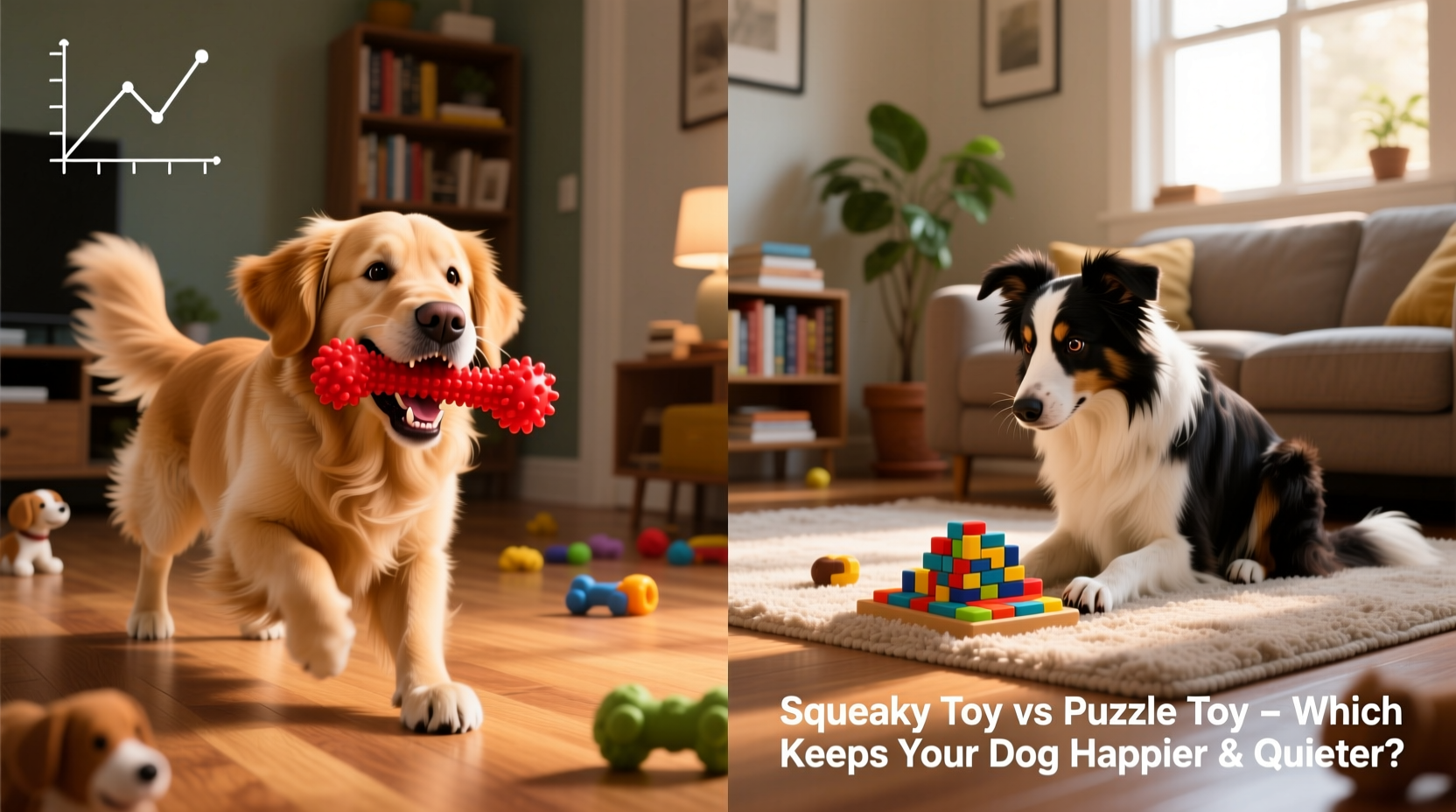
Dogs play for multiple reasons: to burn energy, practice instinctual behaviors like hunting or retrieving, and bond with their humans. Squeaky toys tap into a dog’s prey drive—the high-pitched noise mimics the sound of small animals in distress, triggering excitement and chase behavior. This can be deeply satisfying for dogs with strong hunting instincts, such as terriers or herding breeds.
Puzzle toys, on the other hand, activate a different part of the brain. They require concentration, patience, and trial-and-error learning. By hiding treats or kibble inside compartments, these toys simulate foraging—a natural behavior observed in wild canids. This form of enrichment reduces anxiety and promotes calmness, especially in intelligent or high-energy dogs.
“Mental fatigue is just as effective as physical exhaustion when it comes to calming an overactive dog.” — Dr. Karen Becker, Integrative Veterinarian
Squeaky Toys: Excitement vs Overstimulation
Squeaky toys are beloved by many dogs—and owners—for good reason. They’re durable (in some cases), portable, and trigger joyful bursts of activity. A dog may carry one around proudly, shake it vigorously, or present it as a gift during play sessions.
However, the very feature that makes squeaky toys appealing—their noise—can contribute to increased vocalization. Dogs often bark, growl, or whine while playing with them, reinforcing excited states. For some dogs, this escalates into hyperactivity or even resource guarding if not monitored.
Additionally, once the squeak breaks—or worse, is swallowed—many dogs lose interest entirely. This short lifespan means frequent replacements and potential waste, both financially and environmentally.
Puzzle Toys: Long-Term Engagement and Calm Behavior
Puzzle toys come in various forms: sliding blocks, rotating discs, layered mazes, and treat-dispensing balls. Their core benefit lies in sustained mental engagement. Unlike passive toys, puzzles require active thinking, which slows down fast eaters, reduces separation anxiety, and discourages destructive habits.
Studies show that dogs given regular access to food-based puzzles exhibit lower cortisol levels—a key stress marker—than those without cognitive challenges. Because these toys demand focus, they naturally reduce barking and pacing, especially during downtime or when left alone.
For example, a dog working on a Kong Wobbler or Outward Hound Hide-A-Squirrel puzzle may spend 20–30 minutes concentrating quietly, compared to two minutes of frantic squeaking followed by restless wandering.
Real-Life Example: Max the Border Collie
Max, a three-year-old Border Collie, was adopted after being surrendered due to \"excessive barking.\" His new owner tried everything—walks, chew toys, obedience training—but nothing reduced his constant vocalizing. After introducing a series of progressive-level puzzle toys filled with kibble and peanut butter, Max’s behavior shifted within a week. He spent mornings silently engaged, working through puzzles while his owner worked from home. Barking incidents dropped by over 70%, and Max appeared more relaxed overall.
Comparing Key Factors: Squeaky vs Puzzle Toys
| Factor | Squeaky Toy | Puzzle Toy |
|---|---|---|
| Mental Stimulation | Low to moderate | High |
| Noise Level During Use | High (squeaking + barking) | Low (quiet focus) |
| Lifespan | Short (especially if destructive) | Long (with proper selection) |
| Boredom Prevention | Temporary | Extended |
| Best For | Puppies, high-prey-drive breeds | Intelligent, anxious, or under-stimulated dogs |
| Risk of Overstimulation | High | Low |
How to Choose Based on Your Dog’s Needs
Selecting the right toy isn’t about trends—it’s about alignment with your dog’s temperament and lifestyle. Consider the following checklist before deciding:
- Is your dog highly energetic or easily excitable? → Lean toward puzzle toys to promote calm focus.
- Does your dog love chasing and “killing” toys? → A squeaky might satisfy instinctual urges.
- Do you need quiet time at home (e.g., working remotely)? → Puzzle toys are far less disruptive.
- Is your dog prone to boredom or separation anxiety? → Puzzle toys offer therapeutic engagement.
- Are you looking for long-term value? → Durable puzzle toys outlast most squeaky options.
Step-by-Step Guide to Introducing Puzzle Toys
- Start easy: Choose a beginner-level puzzle with obvious treat access.
- Use high-value rewards: Fill with chicken, cheese, or canned food to spark interest.
- Demonstrate briefly: Show your dog how moving a piece reveals food—without solving it fully.
- Supervise first attempts: Encourage gently; avoid stepping in unless frustration occurs.
- Increase difficulty gradually: Move to intermediate puzzles only after consistent success.
- Rotate toys weekly: Prevent habituation by introducing variety.
This gradual approach builds confidence and prevents discouragement, especially in older or shy dogs.
Frequently Asked Questions
Can puzzle toys replace walks or physical exercise?
No. While puzzle toys provide crucial mental exercise, they don’t substitute for physical activity. Dogs still need daily walks, playtime, and social interaction. Think of puzzles as a complement—not a replacement—for physical exertion.
My dog ignores puzzle toys. What should I do?
Try enhancing motivation with stronger-smelling treats like boiled liver or freeze-dried meat. Also, ensure the puzzle isn't too difficult. Some dogs need time to understand the concept—demonstrating or using simpler models can help spark interest.
Are squeaky toys bad for dogs?
Not inherently. They can be great for interactive play and bonding. However, they may encourage hyperactivity or possessiveness in some dogs. Supervise use, remove damaged parts, and balance them with quieter enrichment tools.
Final Recommendation: Balance and Purpose
The debate between squeaky toys and puzzle toys isn’t about declaring a single winner—it’s about matching the toy to the purpose. If your goal is immediate fun and bonding during fetch, a squeaky toy has its place. But if you're aiming for sustained happiness, reduced noise, and improved emotional well-being, puzzle toys consistently deliver superior results.
The happiest, quietest dogs aren’t necessarily the ones with the loudest toys—they’re the ones whose minds are challenged and whose instincts are fulfilled in constructive ways. By incorporating puzzle toys into daily routines and reserving squeaky toys for supervised, active play, you create a balanced enrichment strategy that supports both joy and peace at home.




 浙公网安备
33010002000092号
浙公网安备
33010002000092号 浙B2-20120091-4
Comments
No comments yet. Why don't you start the discussion?