
In today’s hybrid work environments, optimizing home or office space has become more important than ever. As standing desks gain popularity for their health benefits and productivity boosts, a key question arises: should you invest in a full standing desk or opt for a standing desk converter? While both support dynamic sitting and standing routines, they differ significantly in footprint, adaptability, and long-term value—especially when space is limited. Understanding these differences helps you make a smarter, more sustainable choice that aligns with how you actually use your workspace.
Understanding the Core Differences
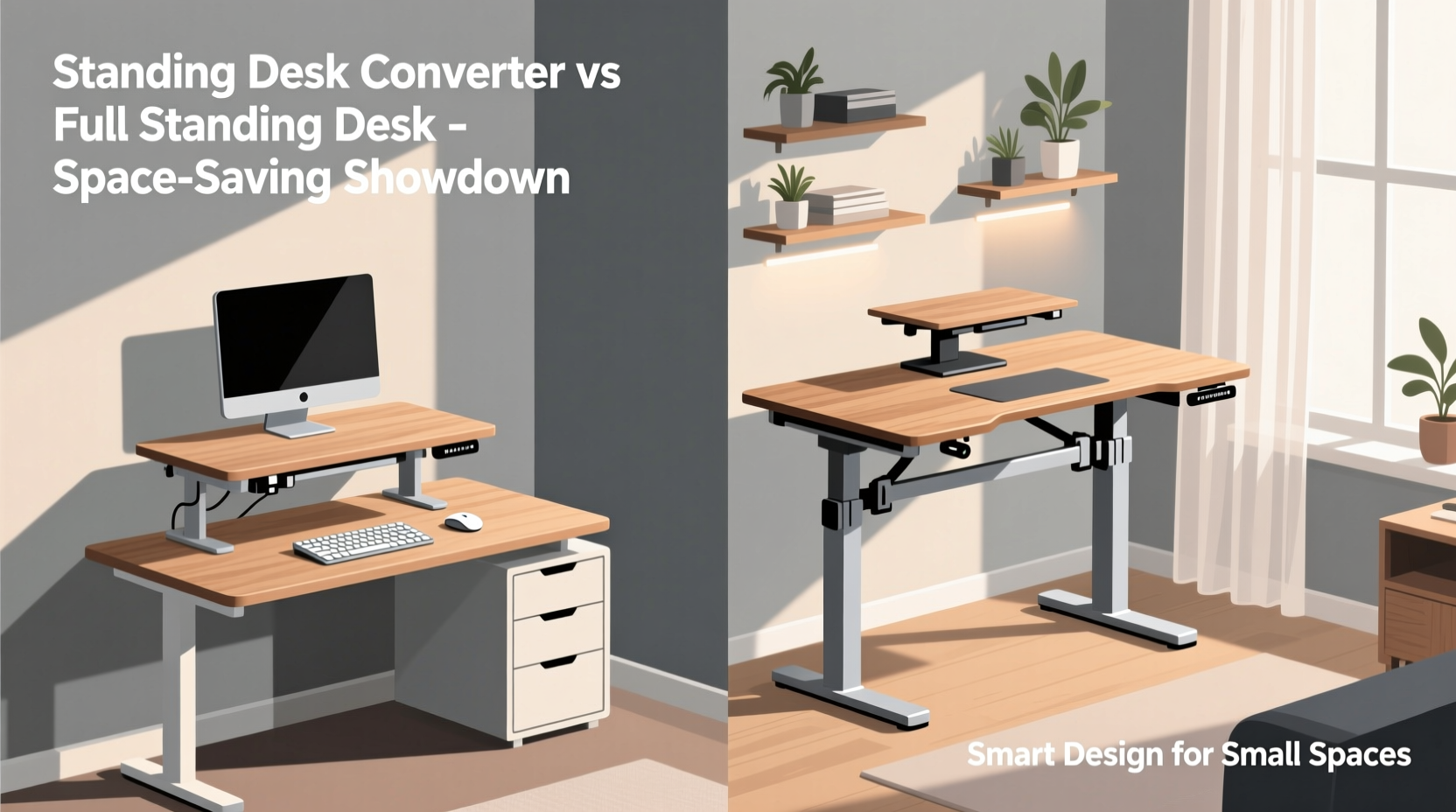
A full standing desk is an entire workstation designed to adjust in height, typically via electric motors or manual cranks. It replaces your existing desk and provides seamless transitions between sitting and standing positions. In contrast, a standing desk converter sits on top of your current desk and elevates your monitor, keyboard, and accessories to standing height while allowing you to return to seated work without rearranging anything.
The distinction may seem minor, but it has major implications for spatial efficiency, setup complexity, and workflow integration. For urban apartments, shared offices, or compact home setups, every inch counts. Choosing between these two solutions isn’t just about preference—it’s about matching form to function based on real estate, budget, and usage patterns.
Space Efficiency: The Real Estate Equation
When evaluating space savings, consider not only physical footprint but also visual clutter, storage potential, and multi-functionality. A full standing desk usually occupies the same floor area as a traditional desk—typically 48 to 60 inches wide by 24 to 30 inches deep. Unless downsized intentionally, this doesn’t save space; it replaces one large surface with another.
Standing desk converters, however, are inherently space-conscious. They integrate into existing furniture, eliminating the need for additional floor coverage. This makes them ideal for dorm rooms, studio apartments, or secondary workstations where dedicating an entire desk to one purpose isn't practical.
Moreover, many converters fold down or slide forward when not in use, freeing up valuable surface area for dining, crafting, or other activities. Some models even allow dual-layer functionality: laptop on the upper platform, notes or tablet below—maximizing vertical space without expanding horizontally.
“Compact urban living demands multipurpose furniture. Converters offer ergonomic benefits without sacrificing versatility.” — Dr. Lena Patel, Occupational Ergonomist at Urban Workspace Institute
Comparative Analysis: Converters vs Full Desks
| Feature | Standing Desk Converter | Full Standing Desk |
|---|---|---|
| Floor Space Required | None (uses existing desk) | Full desk footprint (4–6 sq ft) |
| Installation Time | Under 10 minutes | 30–60 minutes (assembly required) |
| Portability | High (can move between desks) | Low (fixed unit) |
| Cost Range | $150–$400 | $300–$1,200+ |
| Ease of Transition | Moderate (manual or pneumatic lift) | Smooth (electric motor control) |
| Cable Management | Limited (depends on model) | Built-in options common |
| Durability | Good (varies by brand) | Excellent (sturdier frames) |
| Ideal For | Small spaces, renters, shared desks | Dedicated offices, heavy users, long-term setups |
This comparison reveals that while full standing desks excel in stability and automation, converters win decisively in spatial flexibility and cost-effectiveness. If your primary goal is to minimize spatial commitment while gaining ergonomic advantages, a converter often delivers better return on investment.
Real-World Scenario: The Studio Apartment Worker
Take Maria, a freelance graphic designer living in a 450-square-foot downtown apartment. Her dining table doubles as her workstation during weekdays and hosts meals in the evenings. Buying a full standing desk would mean sacrificing either dining comfort or mobility. Instead, she chose a sit-stand converter that fits neatly over her existing table. When clients call, she raises her screen and works standing for 30-minute intervals. After work, she lowers the unit, clears her tools, and transforms the space back into a dinner table within seconds.
Had she opted for a full desk, she’d face constant reconfiguration, reduced walkway clearance, and diminished multifunctionality. The converter allowed her to maintain lifestyle balance without compromising professional needs—a perfect example of smart space utilization.
Choosing Based on Usage Patterns
Your decision should reflect not just available square footage, but how frequently and intensively you stand during work hours.
- Light-to-moderate users (stand 1–2 hours/day): A converter is sufficient and economical.
- Heavy users (stand 3+ hours/day): A full desk offers smoother transitions, better weight capacity, and improved posture alignment.
- Renters or frequent movers: Converters are portable and don’t alter lease agreements.
- Shared workspaces: Converters can be stowed or moved easily, accommodating multiple users.
Another factor is equipment load. Full desks typically support heavier monitors, dual-screen setups, and peripherals more securely. High-end converters handle up to 30 lbs, but cheaper models may wobble under uneven weight distribution. If you run multiple large displays or specialized gear, a dedicated frame with dual motors may be worth the space trade-off.
Step-by-Step: How to Decide What’s Right for You
- Measure your current workspace. Note width, depth, and knee clearance. Ensure there's enough room behind the converter for safe raising/lowering.
- Assess your daily routine. Track how many hours you spend working and estimate time spent standing versus sitting.
- Evaluate portability needs. Will this setup stay in one place, or do you need to move it between rooms or locations?
- Calculate budget vs longevity. Converters are cheaper upfront, but if you plan to work from home indefinitely, a full desk might offer better durability and resale value.
- Test ergonomics. Whether using a converter or full desk, ensure your elbows form 90° angles when typing and your monitor sits at eye level to prevent strain.
- Make your choice. Prioritize space-saving if square footage is tight; prioritize comfort and stability if you're standing for extended periods.
Common Pitfalls to Avoid
Even well-intentioned buyers make mistakes when selecting ergonomic furniture. Here are three frequent missteps:
- Ignoring desk thickness compatibility. Some clamps only fit desks up to 2.5 inches thick. Measure yours before ordering.
- Overloading the platform. Placing towers, printers, or excessive books on a converter can destabilize it and damage mechanisms.
- Forgetting cable management. Wires dangling from raised platforms create tripping hazards and look unprofessional. Use adhesive clips or retractable cord reels.
Avoiding these issues ensures your solution remains functional, safe, and aesthetically clean—critical factors in small-space design.
Checklist: Before You Buy
- ✅ Measured desk depth and thickness
- ✅ Confirmed weight capacity matches your devices
- ✅ Verified standing height aligns with your posture needs
- ✅ Checked return policy and warranty (minimum 1 year recommended)
- ✅ Ensured adequate legroom beneath the base unit
- ✅ Researched user reviews for stability and ease of use
- ✅ Considered future upgrades (e.g., adding a second monitor)
FAQ: Your Top Questions Answered
Can I use a standing desk converter on a glass desk?
Yes, but only if the manufacturer specifies compatibility with glass surfaces. Standard C-clamps can crack tempered glass. Look for models with wide padding and support feet designed for fragile materials.
Do standing desk converters wear out faster than full desks?
They can, depending on usage frequency and build quality. Pneumatic lifts typically last 5,000–10,000 adjustments. Electric converters tend to outlast manual ones. With moderate use, most last 3–5 years.
Is a converter stable enough for touch-typing?
Higher-end models with dual支柱 (posts) and counterbalance systems provide excellent stability. Avoid single-post designs if you type vigorously. Test stability by gently shaking the platform before purchase.
Final Recommendation: Smart Space Starts with Intentional Design
If saving space is your priority, standing desk converters are the smarter choice in most scenarios. They preserve the utility of existing furniture, adapt to changing needs, and avoid permanent spatial commitments. For those in compact homes, temporary setups, or shared environments, the ability to switch modes without remodeling the room is invaluable.
That said, full standing desks remain superior for dedicated professionals who stand regularly and demand seamless operation, robust construction, and advanced features like programmable height presets. They’re a long-term investment in health and performance—but only if you have the room to accommodate them.
The truth is, neither option is universally better. The smarter solution depends on your context: how much space you have, how you use it, and how your needs may evolve. By focusing on actual usage rather than trends, you can choose a system that enhances both comfort and spatial intelligence.




 浙公网安备
33010002000092号
浙公网安备
33010002000092号 浙B2-20120091-4
Comments
No comments yet. Why don't you start the discussion?