
In an era where knowledge work dominates and screen time has become a constant, the way we sit—or stand—at our desks matters more than ever. The traditional office setup, centered on prolonged sitting, is being challenged by a growing body of research linking sedentary behavior to cognitive fatigue, reduced concentration, and long-term health risks. Enter the standing desk: a seemingly simple shift in workspace design that promises improved posture, better circulation, and sharper mental clarity. But does simply alternating between sitting and standing actually enhance focus? Or is it just another ergonomic trend with overblown claims?
The answer lies not in absolutes, but in movement. While neither sitting nor standing alone is optimal for extended periods, the act of switching between the two—strategically and consistently—can influence alertness, mental stamina, and task performance. This article dives into the physiological and psychological mechanisms at play, examines real-world outcomes, and provides actionable strategies for integrating dynamic work habits into daily routines.
The Cognitive Cost of Prolonged Sitting
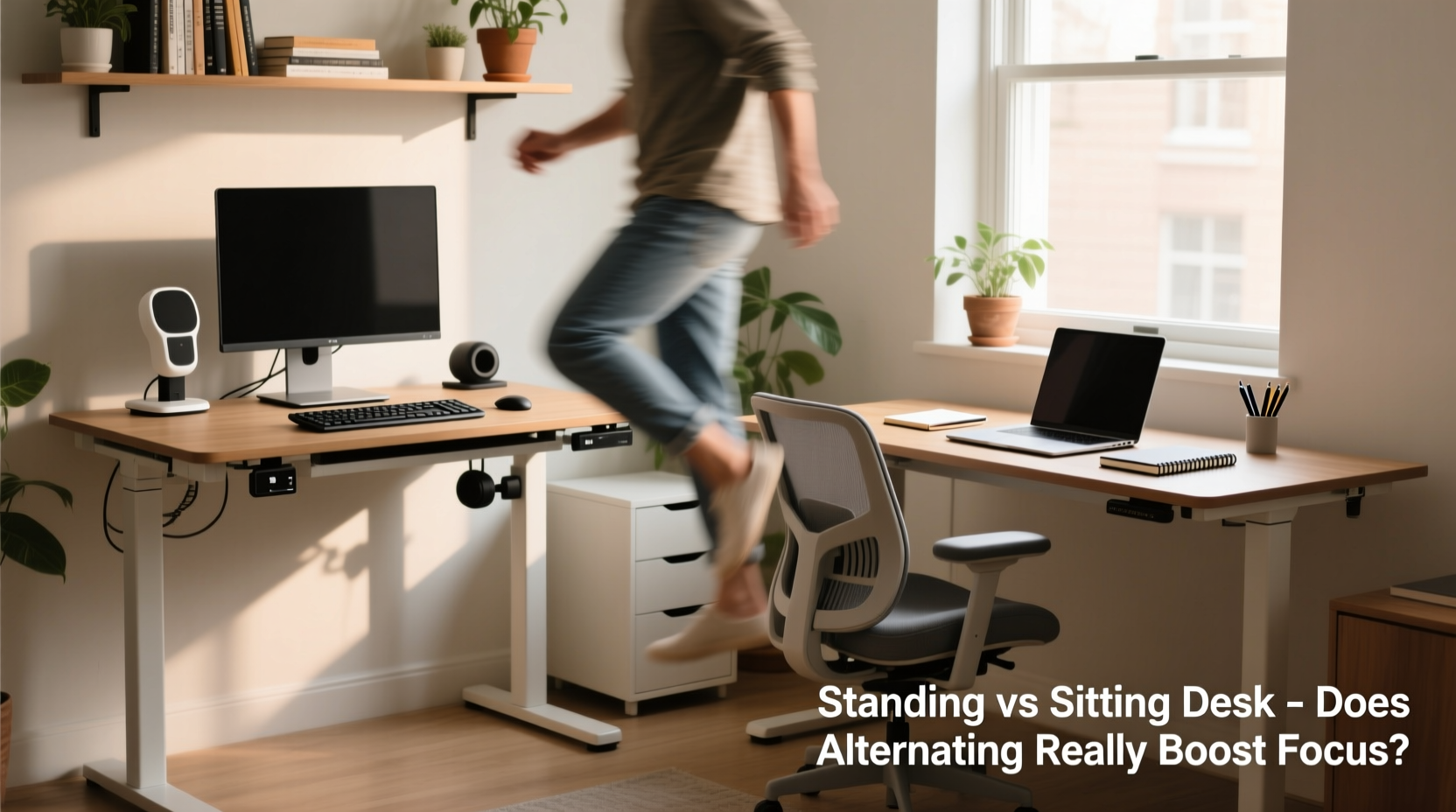
Sitting for hours without interruption affects more than just your back and hips. It impacts cerebral blood flow, glucose metabolism, and neurotransmitter regulation—all of which are critical to sustained attention and executive function. A 2015 study published in Medicine & Science in Sports & Exercise found that participants who sat continuously for three hours experienced a 35% drop in brachial artery flow-mediated dilation, a marker of vascular health directly linked to brain perfusion.
Reduced blood flow means less oxygen delivery to the prefrontal cortex—the region responsible for decision-making, working memory, and focus. Over time, this contributes to what many professionals describe as the “afternoon slump”: a midday decline in alertness and processing speed. Moreover, prolonged sitting suppresses lipoprotein lipase activity, an enzyme involved in fat metabolism, leading to increased insulin resistance—a condition associated with brain fog and impaired cognition.
“Sedentary behavior isn’t just a physical health risk—it’s a cognitive liability. The brain thrives on movement.” — Dr. Joan Vernikos, former Director of Life Sciences at NASA and author of *Sitting Kills, Moving Heals*
Standing Desks: Beyond Posture Improvement
While standing desks were initially marketed for their role in reducing lower back pain and improving posture, their cognitive benefits are increasingly recognized. Standing engages postural muscles, increases heart rate slightly (by about 5–10 beats per minute), and stimulates norepinephrine release—a neurotransmitter tied to arousal and attention.
However, standing all day isn’t the solution. Research from the University of Waterloo shows that excessive standing leads to muscle fatigue, decreased comfort, and diminished cognitive performance after 60–90 minutes. What matters most isn’t whether you sit or stand—but how often you change positions.
Alternating Between Sitting and Standing: What the Science Says
A 2020 randomized controlled trial conducted at Texas A&M University observed 78 office workers using sit-stand desks over a 12-week period. Participants were instructed to alternate every 30 minutes. The results showed a 12% improvement in self-reported concentration and a measurable 7.2% increase in task-switching accuracy compared to a control group using standard seated desks.
The key mechanism appears to be micro-activation of the sympathetic nervous system during transitions. Each time you shift from sitting to standing—or vice versa—your body experiences a mild physiological jolt. This activates the locus coeruleus, a brainstem nucleus responsible for regulating wakefulness and attention. These brief spikes in neural activity help prevent habituation, keeping the mind engaged longer than static postures allow.
Additionally, alternating promotes metabolic flexibility. One study in the British Journal of Sports Medicine found that workers who alternated every 30 minutes burned an average of 50–70 extra calories per day—not enough for weight loss, but sufficient to maintain insulin sensitivity and reduce postprandial glucose spikes, both of which support stable mental energy.
Real-World Example: The Tech Startup Experiment
A mid-sized software development firm in Portland implemented a mandatory sit-stand rotation policy across its engineering teams. Employees received height-adjustable desks and were trained in a “30-30-30” routine: 30 minutes sitting, 30 minutes standing, followed by a 30-second movement break (walking, stretching, or stair climbing).
After six months, productivity metrics—including code commit frequency, bug resolution time, and peer-reviewed task completion—improved by 14%. More telling was the reduction in self-reported mental fatigue: 68% of employees said they felt “more mentally sharp in afternoon meetings,” and absenteeism due to headaches or eye strain dropped by nearly half.
One senior developer noted: “I used to hit a wall around 2 p.m. Now I still get tired, but it’s physical—not mental. I can push through tasks because my brain feels clearer.”
Optimal Alternating Patterns for Focus Enhancement
Not all sit-stand schedules are equally effective. The timing, duration, and type of movement matter. Based on current evidence, here’s a breakdown of the most effective approaches:
| Pattern | Duration | Cognitive Benefit | Best For |
|---|---|---|---|
| 30/30 Split | 30 min sit, 30 min stand | Maintains alertness without fatigue | General office work, writing, coding |
| Pomodoro + Stand | 25 min sit, 5 min stand/walk | Boosts focus cycles and prevents burnout | Deep work sessions, creative tasks |
| Dynamic Microbreaks | Every 20 min: 1 min standing/stretching | Enhances circulation and resets attention | Long meetings, data entry, reading |
| Task-Based Switching | Sit for focused work; stand for calls/reviews | Links posture to cognitive mode | Hybrid roles, multitasking environments |
The most successful patterns incorporate intentional movement, not just passive standing. Simply standing in place without shifting weight or engaging muscles offers limited benefit. To maximize cognitive gains, pair transitions with light activity: shifting side to side, calf raises, or walking to refill water.
Step-by-Step Guide: Building a Focus-Friendly Workday
Adopting an effective sit-stand rhythm requires planning and consistency. Follow this five-step process to integrate movement into your workflow:
- Assess Your Workspace: Ensure your desk is height-adjustable and your monitor is at eye level when standing. Keyboard and mouse should allow elbows to rest at 90 degrees in both positions.
- Set Transition Reminders: Use a smartwatch, app (like Stand Up!, Time Out, or Stretchly), or hourly alarm to prompt changes. Start with 45-minute intervals and gradually shorten to 30 minutes.
- Pair Movement with Tasks: Assign postures to activities—e.g., stand during phone calls, review documents while pacing, brainstorm ideas on a whiteboard.
- Incorporate Micro-Movement: During standing phases, avoid locking your knees. Shift weight, rock gently, or use an anti-fatigue mat to keep blood flowing.
- Track and Adjust: Keep a log for one week noting energy levels, focus, and discomfort. Refine your pattern based on personal response—not generic guidelines.
Common Pitfalls and How to Avoid Them
Many people abandon sit-stand desks within weeks due to discomfort or lack of results. Most failures stem from poor implementation rather than flawed science. Here are frequent mistakes and their solutions:
- Standing too long: Beginners often overcorrect, standing for 2+ hours straight. This causes foot pain, varicose veins, and mental irritation. Solution: Limit initial standing sessions to 20–30 minutes.
- Ignoring ergonomics: A poorly positioned monitor forces neck strain when standing. Solution: Use a monitor riser or dual-position mount.
- No movement integration: Passive standing doesn’t engage circulation. Solution: Add gentle motion—swaying, stepping, or mini-squats—to each standing phase.
- Inconsistent scheduling: Random transitions disrupt workflow. Solution: Anchor changes to natural breaks (after emails, between meetings).
Checklist: Optimizing Your Sit-Stand Routine
Use this checklist weekly to ensure your setup supports both physical comfort and cognitive performance:
- ✅ Desk adjusts smoothly between sitting and standing heights
- ✅ Monitor top is at or slightly below eye level when standing
- ✅ Keyboard remains at elbow height in both positions
- ✅ Transition reminders are active and consistent
- ✅ At least one short walk or stretch occurs every 90 minutes
- ✅ Anti-fatigue mat or carpeted surface is used when standing
- ✅ Daily log tracks focus levels and discomfort (optional but recommended)
Frequently Asked Questions
How long should I stand at my desk each day?
There’s no universal rule, but research suggests aiming for 2 to 4 hours of cumulative standing throughout the workday, broken into 30- to 45-minute segments. The goal is movement diversity—not maximizing standing time.
Can alternating really improve concentration, or is it just placebo?
Studies show measurable improvements in attention and executive function, particularly in task-switching and sustained vigilance. While some benefit may stem from perceived control over one’s environment, physiological changes—such as increased cerebral blood flow and catecholamine release—support real cognitive gains.
Is a standing desk worth it if I don’t have back pain?
Yes. Even without musculoskeletal issues, prolonged sitting impairs metabolic and neurological function. A standing desk isn’t just for pain relief—it’s a tool for maintaining mental clarity, energy balance, and long-term brain health.
Conclusion: Movement Is the Real Productivity Tool
The debate between standing desks and sitting desks misses the point. The human body—and mind—is designed for variability, not stasis. Whether you’re analyzing spreadsheets, drafting reports, or preparing presentations, your cognitive performance depends not only on sleep, nutrition, and workload, but also on how much you move during the day.
Alternating between sitting and standing isn’t a magic fix, but it is a powerful lever. When done intentionally—with proper ergonomics, regular transitions, and integrated movement—it can sharpen focus, delay mental fatigue, and support overall well-being. The best desk isn’t one that makes you stand or sit—it’s one that encourages you to change.




 浙公网安备
33010002000092号
浙公网安备
33010002000092号 浙B2-20120091-4
Comments
No comments yet. Why don't you start the discussion?