
In today’s knowledge-driven economy, where long hours at a desk are the norm, maintaining consistent energy throughout the day has become a critical challenge. Many professionals report afternoon slumps, mental fog, and physical fatigue by midday—symptoms often linked to prolonged sitting. As awareness grows about the health implications of sedentary behavior, standing desks have surged in popularity as a potential solution. But does switching from a sitting desk to a standing one genuinely improve energy levels? And if so, how significant is the difference?
This article examines the physiological, psychological, and behavioral impacts of both sitting and standing desks on energy, alertness, and cognitive performance. Drawing from clinical studies, expert insights, and real-world experiences, we provide a comprehensive comparison that helps you make an informed decision for your workspace.
The Science Behind Energy and Posture
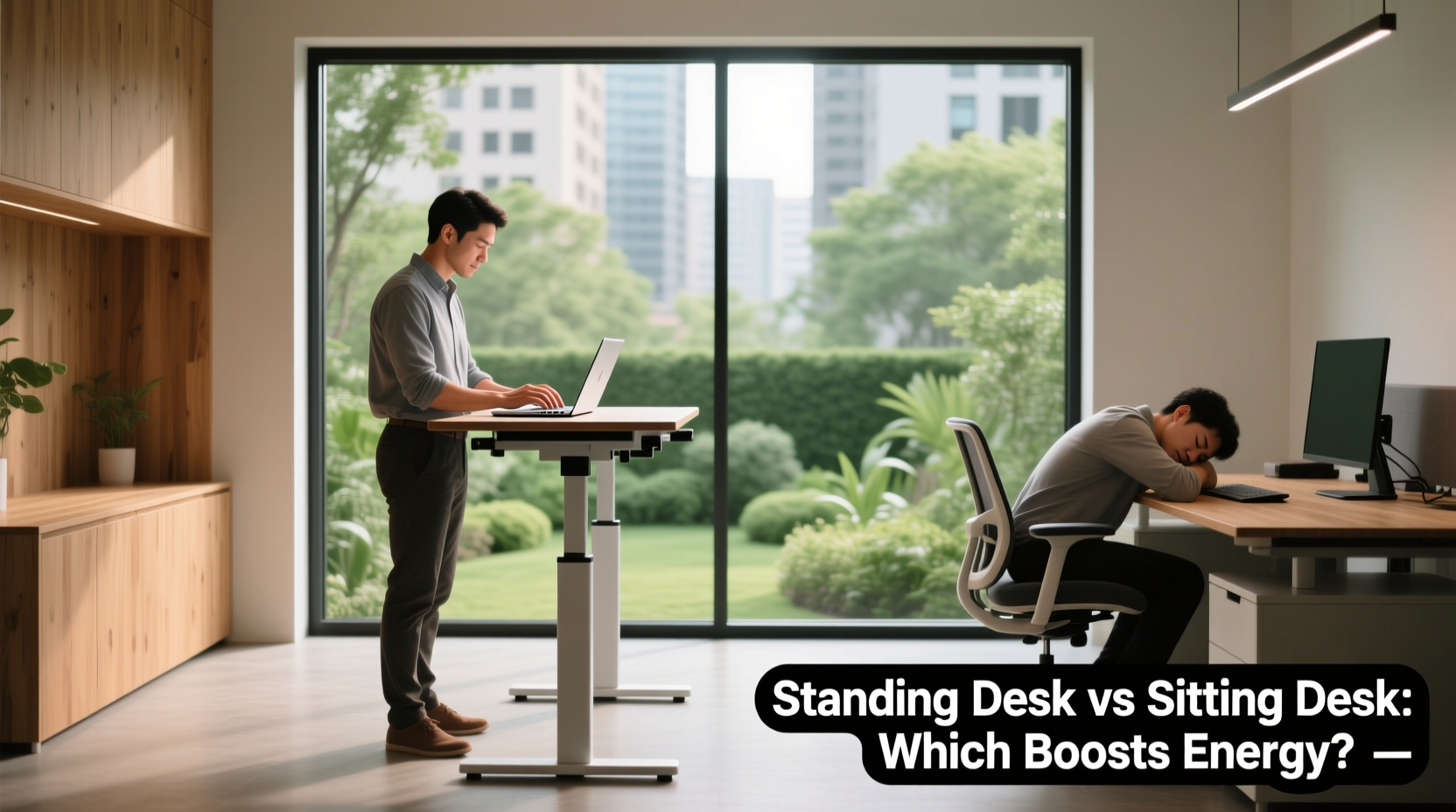
Energy levels aren’t just about sleep or caffeine intake—they’re deeply influenced by physical movement and posture. When you sit for extended periods, blood flow slows down, especially in the lower body. This reduced circulation can lead to decreased oxygen delivery to the brain, contributing to feelings of sluggishness and reduced concentration.
A 2016 study published in the Journal of Physical Activity and Health found that participants who used standing desks reported significantly higher energy levels and less fatigue compared to those who remained seated throughout the workday. The researchers attributed this to increased muscle engagement and improved cardiovascular function when standing.
From a neurological standpoint, standing activates postural muscles and stimulates the sympathetic nervous system—the part responsible for alertness and readiness. In contrast, prolonged sitting tends to shift the body toward parasympathetic dominance, associated with rest and digestion, which may explain why many people feel drowsy after hours in a chair.
“Alternating between sitting and standing creates subtle neuromuscular stimulation that keeps the brain engaged and reduces mental fatigue.” — Dr. Lena Patel, Ergonomics Researcher at Stanford University
Comparing Standing and Sitting Desks: A Direct Breakdown
To understand the impact on energy, it's essential to compare both setups across key dimensions: physical effects, cognitive performance, comfort, and long-term sustainability.
| Factor | Sitting Desk | Standing Desk |
|---|---|---|
| Blood Circulation | Slows over time; risk of pooling in legs | Improved due to active muscle engagement |
| Mental Alertness | Tends to decline after 60–90 minutes | Generally sustained longer; spikes in attention |
| Fatigue Onset | Early (often within 2–3 hours) | Delayed, but may occur after 1–2 hours of continuous standing |
| Cognitive Output | Stable initially, then dips | More consistent, especially during creative tasks |
| Long-Term Sustainability | High, but linked to chronic health risks | Best when combined with sitting (hybrid approach) |
The data suggests that while standing desks offer notable advantages in short-term energy and focus, they are not a standalone cure-all. Continuous standing without breaks can lead to lower back pain, varicose veins, and foot discomfort—factors that ultimately drain energy rather than enhance it.
Real-World Impact: A Mini Case Study
Jamal Thompson, a software developer based in Austin, spent nearly eight years working exclusively at a sitting desk. By 2 PM each day, he experienced intense mental fatigue, often resorting to sugary snacks and multiple cups of coffee to stay alert. After reading about the benefits of dynamic workstations, he invested in a height-adjustable desk.
Over six weeks, Jamal followed a structured transition plan: starting with 20 minutes of standing per hour, then increasing to 45 minutes by week five. He also incorporated light stretching and walking breaks. Within three weeks, he reported feeling more alert in the afternoons, needing less caffeine, and experiencing fewer headaches.
\"It wasn't an overnight miracle,\" Jamal noted. \"But by the end of the second month, I realized I was actually looking forward to my afternoon coding sessions instead of dreading them.\"
His experience aligns with findings from a 2020 field study conducted by Cornell University’s Human Factors Lab, which showed that employees using sit-stand desks reported a 46% reduction in self-reported fatigue and a 17% improvement in task engagement.
Optimizing Your Workspace: A Step-by-Step Guide
Simply owning a standing desk won’t automatically boost your energy. The key lies in intentional use and integration into your daily rhythm. Follow this timeline to maximize benefits:
- Week 1: Assess and Plan
Measure your current sitting habits. Track when energy dips occur. Set goals for standing duration (e.g., 3x 20-minute sessions per day). - Week 2–3: Gradual Introduction
Begin alternating every 60 minutes: 40 minutes sitting, 20 minutes standing. Use a timer or smartwatch reminder. - Week 4–5: Refine Ergonomics
Ensure your monitor is at eye level, elbows bent at 90 degrees, and wrists neutral. Add an anti-fatigue mat if standing. - Week 6: Integrate Movement
Pair standing intervals with micro-movements—shoulder rolls, calf raises, or brief walks—to further stimulate circulation. - Ongoing: Monitor and Adjust
Use weekly check-ins to assess energy levels, comfort, and productivity. Adjust ratios based on feedback.
This phased approach prevents burnout and allows your body to adapt, making the transition sustainable rather than stressful.
Common Pitfalls and How to Avoid Them
Many people abandon standing desks within months due to discomfort or unrealistic expectations. Here are frequent mistakes and their solutions:
- Pitfall 1: Standing too long too soon
Leads to leg fatigue and discouragement. Solution: Stick to incremental increases. - Pitfall 2: Poor posture while standing
Leaning on the desk or locking knees reduces benefits. Solution: Maintain a neutral spine and slight knee bend. - Pitfall 3: Ignoring footwear
Wearing unsupportive shoes exacerbates foot strain. Solution: Use cushioned insoles or supportive work shoes. - Pitfall 4: Lack of movement
Standing still is almost as static as sitting. Solution: Shift weight, stretch, or pace lightly during calls.
Expert Recommendations: What the Research Says
The consensus among ergonomics experts isn’t “standing over sitting,” but rather “movement over stillness.” Dr. Rachel Kim, a workplace wellness specialist, emphasizes variability: “The human body isn’t designed for static positions. Whether sitting or standing, staying in one posture for more than 30–45 minutes triggers physiological stagnation.”
A 2021 meta-analysis in Applied Ergonomics reviewed 23 studies on sit-stand desks and concluded that users experienced moderate improvements in vigor and reduced fatigue—but only when they alternated positions regularly. The greatest gains were seen in individuals who combined standing with light activity, such as walking during phone calls or using a treadmill desk for part of the day.
Interestingly, the psychological effect of control plays a role. Employees who had autonomy over when to stand reported higher motivation and perceived energy, regardless of actual physical changes. This suggests that empowerment and choice are integral to the energy-boosting effect of adjustable desks.
FAQ: Common Questions About Standing Desks and Energy
Does standing all day increase calorie burn significantly?
Standing burns approximately 10–20% more calories than sitting, but not enough to cause weight loss on its own. However, the metabolic boost contributes to reduced lethargy and better glucose regulation, which supports stable energy.
Can a standing desk help with afternoon crashes?
Yes. Research shows that standing for even 10–15 minutes every hour during the post-lunch window can mitigate the typical dip in alertness. Pairing this with hydration and a protein-rich snack amplifies the effect.
Are there people who shouldn’t use a standing desk?
Individuals with certain circulatory conditions, severe varicose veins, or balance issues should consult a healthcare provider before adopting prolonged standing. Pregnant workers may also need modified routines. For most, however, gradual use is safe and beneficial.
Action Plan Checklist
To harness the energy-boosting potential of a standing desk—or optimize your current sitting setup—follow this checklist:
- ✅ Assess your current energy patterns and identify low points
- ✅ Invest in an adjustable-height desk or converter if needed
- ✅ Start with 2–3 short standing intervals per day (15–20 minutes)
- ✅ Set reminders to change positions hourly
- ✅ Use an anti-fatigue mat and supportive footwear
- ✅ Incorporate gentle movements during standing time
- ✅ Evaluate progress weekly and adjust duration as needed
- ✅ Combine with other energy-supportive habits: hydration, light exposure, and balanced meals
Conclusion: Movement Is the Real Energy Booster
The debate between standing desks and sitting desks misses a deeper truth: it’s not about choosing one over the other, but about embracing movement as a core component of productivity and well-being. While standing desks offer measurable advantages in alertness and circulation, their true value emerges when used as tools for dynamic work—not replacements for sitting, but complements to it.
Energy thrives on variation. Whether you opt for a full standing desk, a convertible model, or simply commit to more frequent position changes, the goal remains the same: to keep your body engaged and your mind sharp. Small, consistent shifts in how you work can yield significant returns in vitality, focus, and long-term health.




 浙公网安备
33010002000092号
浙公网安备
33010002000092号 浙B2-20120091-4
Comments
No comments yet. Why don't you start the discussion?