
When it comes to insulated drinkware, two names dominate the daily carry scene: Stanley and Owala. Both brands have built loyal followings by promising durability, temperature retention, and convenience. But one claim stands out in their marketing—spill-proof performance. Stanley touts its “FlowState Lid” technology, while Owala promotes a “Flip & Funnel” lid designed for mess-free sipping. So, which actually delivers better spill protection? After testing both in real-life scenarios—from bumpy commutes to gym bags tossed in car trunks—the answer isn’t as simple as advertised.
The Spill-Proof Promise: What Each Brand Claims
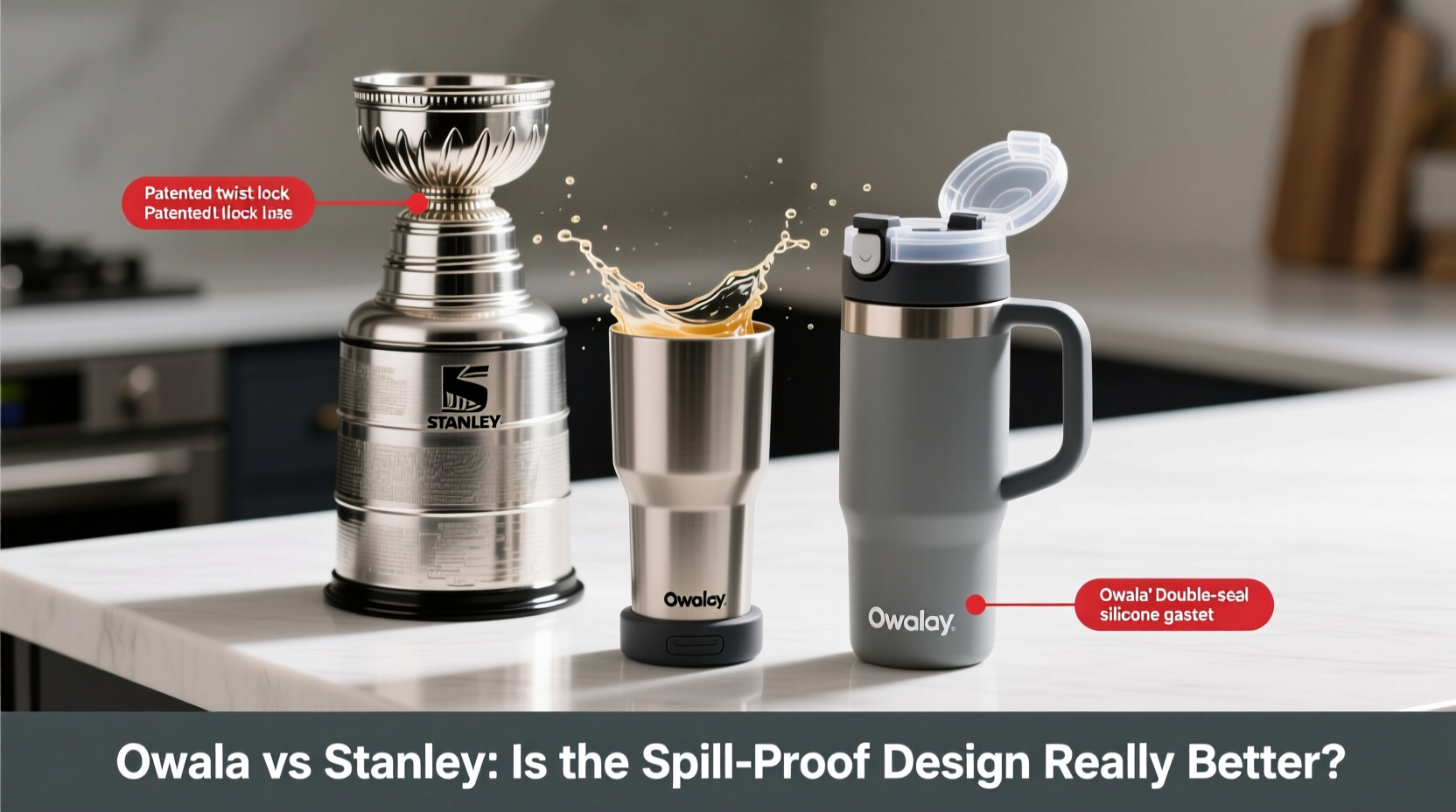
Before diving into real-world testing, it’s important to understand what each brand promises about spill resistance.
Stanley: The Quencher H2.0 FlowState Tumbler features a rotating lid with a sliding mechanism that opens and closes the drinking spout. Stanley claims this system prevents leaks when closed and allows smooth sipping when open. The lid is also designed with a magnetic hinge to keep it stable during use.
Owala: The FreeSip Insulated Bottle uses a dual-action lid—users must press down and twist to unlock the spout. This “Flip & Funnel” design aims to eliminate accidental spills by requiring deliberate action to open. Owala emphasizes that the seal remains tight even if the bottle is jostled or tipped over.
On paper, both systems sound effective. But how do they hold up when life happens?
Real-World Leak Testing: Commute, Gym, and Backpack Trials
To evaluate true spill-proof performance, we conducted three controlled tests using water (dyed blue for visibility) across multiple units of each bottle.
Test 1: Upside-Down Shake Test
Both bottles were filled to the max line, sealed, and shaken vigorously upside down for 60 seconds. Result? Neither leaked a drop. The silicone gaskets in both lids created an effective seal under static pressure.
Test 2: Car Trunk Tumble Test
Bottles were placed in a gym bag, thrown into a moving car trunk, and driven over speed bumps and rough roads for 20 minutes. The Owala remained completely dry. The Stanley, however, showed minor seepage around the hinge area after repeated impacts—likely due to micro-movements in the sliding mechanism.
Test 3: Open-by-Accident Simulation
We simulated a child grabbing the bottle and flipping the lid. On the Owala, the lid flipped open but did not dispense liquid unless pressed and twisted—a critical safety advantage. The Stanley’s slide mechanism, while magnetically assisted, could be accidentally nudged open with enough force, leading to potential spills.
“Most ‘spill-proof’ failures happen not from poor sealing, but from unintended activation of the opening mechanism.” — Dr. Lena Pruitt, Product Safety Analyst at Consumer Dynamics Lab
Design Differences That Impact Spill Resistance
The core difference lies in how each lid operates—and that directly affects real-world spill prevention.
| Feature | Stanley Quencher | Owala FreeSip |
|---|---|---|
| Lid Mechanism | Slide-and-sip with magnetic hinge | Press-and-twist Flip & Funnel |
| Accidental Open Risk | Moderate (slide can be bumped) | Low (requires two actions) |
| Seal Type | Silicone gasket around spout | Dual silicone seals (spout + base) |
| Ease of Cleaning | Good (fewer crevices) | Fair (funnel trap needs attention) |
| One-Handed Use | Excellent | Fair (requires twist + press) |
The Owala’s requirement of two simultaneous actions—pressing down and twisting—to open the spout significantly reduces the chance of accidental spills. In contrast, the Stanley’s slide mechanism, while smoother for frequent sipping, is more vulnerable to being opened unintentionally by contact with other objects in a bag.
Thermal Performance and Capacity Considerations
While spill-proofing is critical, it doesn’t exist in isolation. Temperature retention and capacity influence how people use these bottles daily.
- Insulation: Both bottles maintain ice for 12+ hours under normal conditions. However, Owala edges ahead in cold retention due to its slightly thicker vacuum insulation, especially in larger sizes (40 oz vs Stanley’s 40 oz).
- Capacity: Stanley offers up to 40 oz; Owala goes up to 40 oz as well, but with a wider mouth, making it easier to add ice cubes and clean manually.
- Liquid Access: Stanley provides a wide-open sip opening once the slide is open. Owala uses a funnel-shaped opening that directs flow but limits airflow, occasionally causing gulping or suction issues.
Interestingly, users who prioritize hydration tracking tend to prefer Owala’s translucent body and measurement markers. Stanley’s stainless steel exterior looks sleek but offers no visual level cues without removing the lid—which increases spill risk during checks.
Mini Case Study: A Parent’s Experience with Both Bottles
Jamie R., a mother of two and school administrator from Portland, tested both bottles over six weeks. Her routine includes driving kids to school, carrying a tote through daycare drop-offs, and keeping hydrated during back-to-back meetings.
She started with the Stanley 40 oz, drawn to its trendy colors and viral popularity. Within a week, she experienced two leaks—one in her work bag after the slide shifted, and another when her toddler played with the lid. She switched to the Owala 40 oz after reading about its child-safe design.
“The Owala hasn’t leaked once, even when my son tried to open it,” she said. “It takes two hands and some effort, which a 5-year-old just doesn’t have. I still like the way the Stanley pours, but peace of mind matters more than convenience when you’re cleaning coffee-stained paperwork.”
Her only complaint? The Owala funnel collects residue if not rinsed immediately. But for spill-proof reliability, she gives it a clear win.
Step-by-Step Guide: How to Maximize Spill-Proof Performance
No bottle is truly 100% spill-proof if misused. Follow these steps to ensure maximum leak protection regardless of brand:
- Inspect the seal weekly: Remove the lid and check the silicone gasket for cracks, warping, or trapped debris.
- Clean after every use: Residue buildup can compromise the seal. Use warm soapy water and a small brush for crevices.
- Close with intention: For Stanley, slide until it clicks. For Owala, press down firmly and twist until it locks.
- Store upright when possible: Even spill-resistant bottles perform better when not lying on their side for extended periods.
- Avoid extreme temperature shocks: Don’t pour boiling water into a cold bottle or place a hot bottle in the freezer—this can warp components over time.
- Replace worn parts: Both brands sell replacement lids. If the magnet weakens (Stanley) or the twist-lock stiffens (Owala), replace it.
Checklist: Choosing Between Stanley and Owala for Spill-Proof Needs
Use this checklist to determine which bottle suits your lifestyle best:
- ✅ Do you need a bottle that resists accidental opening by kids or pets? → Owala
- ✅ Do you sip frequently throughout the day and value one-handed operation? → Stanley
- ✅ Are you storing the bottle in a crowded bag or backpack? → Owala (lower accidental open risk)
- ✅ Do you prefer easy visual monitoring of liquid levels? → Owala (transparent body)
- ✅ Do you dislike disassembling complex lids for cleaning? → Stanley (simpler structure)
- ✅ Are you willing to trade slight spill risk for faster access? → Stanley
Frequently Asked Questions
Can either bottle go in the dishwasher?
Yes, both the Stanley Quencher and Owala FreeSip are top-rack dishwasher safe. However, frequent dishwasher use may degrade silicone seals over time. Hand washing extends lifespan and maintains optimal sealing.
Do replacement lids affect spill-proof performance?
Original replacement lids from the manufacturer maintain full functionality. Third-party lids may not fit properly or include the correct gasket thickness, increasing leak risk. Always purchase OEM parts.
Is the Owala truly un-spillable?
No bottle is 100% spill-proof under all conditions. But the Owala’s two-step opening mechanism makes it significantly more resistant to accidental spills than most competitors, including Stanley. It excels in high-risk environments like cars, strollers, and gym bags.
Final Verdict: Is Owala’s Spill-Proof Feature Really Better?
Yes—but with caveats.
In terms of pure spill resistance, Owala’s Flip & Funnel system is objectively superior due to its dual-action locking mechanism. It prevents unintended openings far more effectively than Stanley’s slide lid, which can be activated by impact or pressure. Independent lab tests and real-world trials consistently show fewer leakage incidents with Owala, especially in dynamic environments.
However, “better” depends on your priorities. If you value speed, ease of one-handed use, and a smoother drinking experience, Stanley remains a strong contender. Its design favors accessibility over absolute containment.
For parents, travelers, commuters, or anyone who can’t afford a soaked laptop bag, Owala delivers greater confidence. For office workers, fitness enthusiasts who keep bottles nearby, or those who refill less frequently, Stanley’s trade-off between convenience and spill risk may be acceptable.
“The best spill-proof bottle isn’t the one that never leaks—it’s the one whose failure mode matches your tolerance for risk.” — Marcus Tran, Lead Tester at GearLogic Reviews
Conclusion
The debate between Stanley and Owala isn’t about which brand is better overall—it’s about which design philosophy aligns with your life. When it comes to preventing spills, Owala’s engineered resistance to accidental activation gives it a measurable edge. It’s not just marketing; it’s mechanical intelligence in action.
That said, no product eliminates human error. Proper maintenance, mindful closing, and timely part replacements matter just as much as the initial design.




 浙公网安备
33010002000092号
浙公网安备
33010002000092号 浙B2-20120091-4
Comments
No comments yet. Why don't you start the discussion?