
When it comes to premium drinkware, few brands command as much loyalty as Stanley and Hydro Flask. Both are known for exceptional temperature retention, rugged builds, and cult-like followings among hikers, commuters, and coffee lovers alike. But one of the most visible differences between the two—the presence of a handle on many Stanley models—has sparked debate: does it actually improve the experience, or is it just a stylistic flourish?
The answer isn’t as simple as “yes” or “no.” The handle’s value depends on how, where, and why you use your tumbler. To truly understand whether the handle makes a meaningful difference, we need to go beyond aesthetics and examine functionality, ergonomics, portability, and real-world performance.
Design & Build: A Closer Look at the Handle Factor
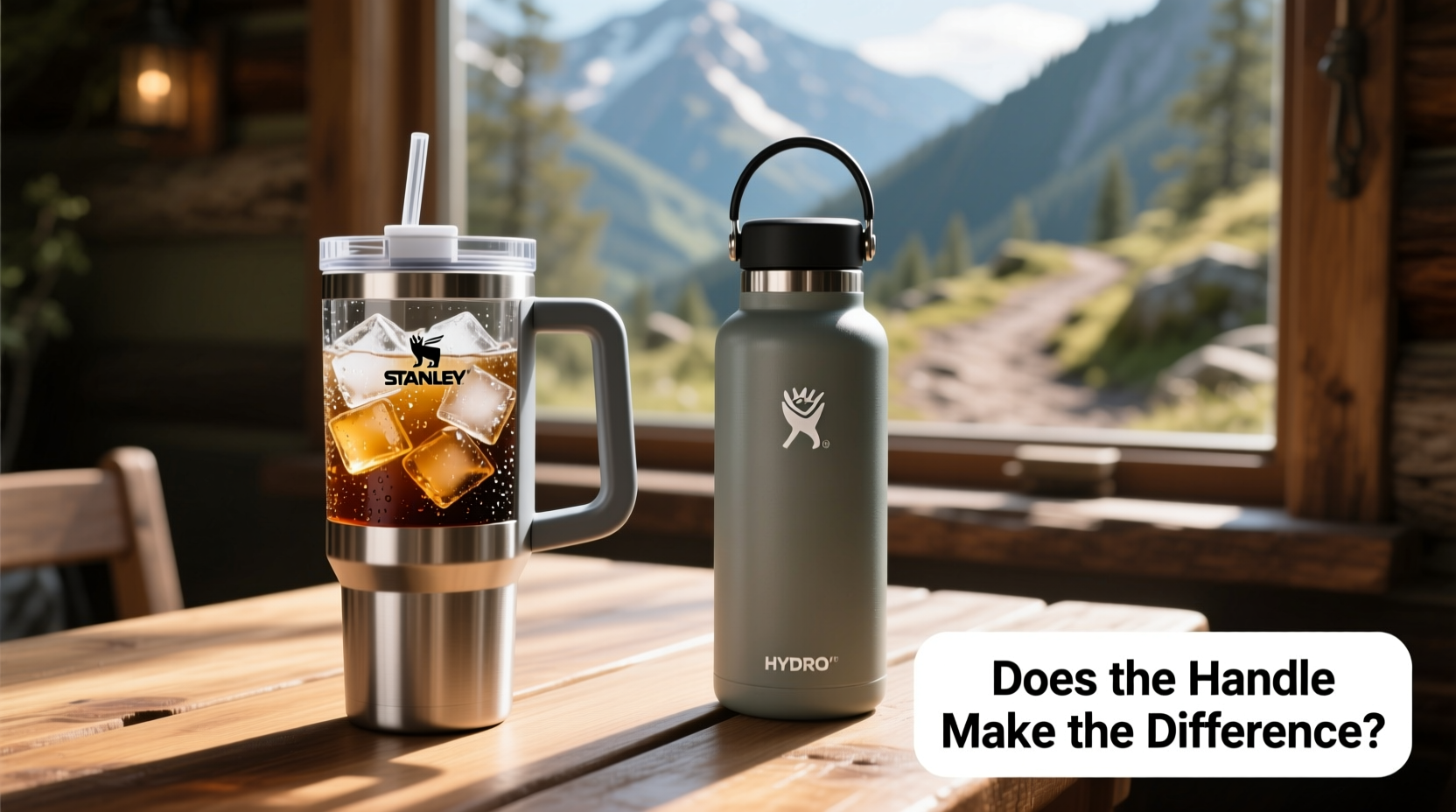
At first glance, the most obvious distinction between many Stanley tumblers (like the Quencher series) and standard Hydro Flask models is the addition of a side handle. While Hydro Flask offers some handled versions in their FlexCap line, the classic wide-mouth tumbler typically doesn’t include one. Stanley, by contrast, has made the handle a signature feature across several popular models.
The handle serves multiple purposes:
- Ergonomic grip – Easier to hold with one hand, especially when wearing gloves or during physical activity.
- Hanging capability – Can be clipped to backpacks, carabiners, or strollers.
- Stability – Reduces the chance of tipping when placed on uneven surfaces.
- Visual identity – Makes the tumbler instantly recognizable in a crowded market.
However, the handle also introduces trade-offs. It increases overall width, making some Stanley models harder to fit into cup holders. It can collect dirt or become a snag point in tight spaces. And for minimalist users, it adds bulk without necessity.
Performance Comparison: Insulation, Lid Design, and Usability
Temperature retention is where both brands shine. Independent tests show that both Stanley and Hydro Flask maintain hot drinks for up to 7 hours and cold beverages for over 24 hours under normal conditions. Neither brand holds a definitive edge here—their vacuum insulation technology is equally effective.
Where they diverge is in lid design and drinking experience.
| Feature | Stanley Tumbler (Quencher H2.0) | Hydro Flask (Wide Mouth) |
|---|---|---|
| Handle | Yes (integrated) | No (optional add-on) |
| Lid Type | Flip straw lid with slide closure | Sip lid or straw lid (sold separately) |
| Cup Holder Fit | Marginal (wider due to handle) | Generally compatible |
| Leak Resistance | Good (when closed properly) | Excellent (FlexCap seal) |
| One-Handed Use | Fair (requires thumb movement) | Excellent (smooth slide mechanisms) |
| Dishwasher Safe | Lid only (hand wash recommended for body) | Lid only (body should be hand-washed) |
Stanley’s flip straw lid, while convenient, has been reported to develop mold in crevices if not cleaned regularly. Hydro Flask’s modular lid system allows users to swap between straw, sip, and chug options, offering greater versatility. However, this flexibility comes at an added cost—replacement lids are expensive.
“The handle changes how people interact with their bottle throughout the day. It’s not just about carrying—it’s about accessibility.” — Jordan Lee, Product Designer at Outdoor Gear Lab
Real-World Scenarios: When the Handle Matters Most
To assess the practical impact of the handle, consider how different lifestyles affect usage patterns.
Case Study: Morning Commute with Kids
Alex, a parent of two toddlers, uses her Stanley Quencher daily during school drop-offs. She clips it to her stroller using a carabiner through the handle, keeping her hands free. Without the handle, she’d have to juggle the tumbler while managing bags and wrangling kids. In this case, the handle isn’t just convenient—it’s essential for multitasking.
Compare that to Mark, a software developer who commutes by train and keeps his Hydro Flask on his desk. He values sleekness and low profile. His cup fits neatly beside his keyboard, and he rarely moves it once poured. For him, the handle would be redundant—and possibly disruptive.
Outdoor Adventures: Hiking, Camping, and Work Sites
On rugged terrain, the handle becomes a functional advantage. Many construction workers and trail hikers prefer the Stanley because it can be hung from tool belts or挂在背包侧袋. During long hikes, being able to clip your drink to the outside of a pack means quicker access than digging through layers of gear.
Still, there’s a caveat: handles can catch on branches or equipment. Some climbers report that Stanley’s protruding handle gets in the way when navigating narrow ridges. In these cases, the streamlined Hydro Flask proves more adaptable.
Step-by-Step: Choosing the Right Tumbler for Your Lifestyle
Selecting between Stanley and Hydro Flask shouldn’t hinge solely on the presence of a handle—but it should factor heavily depending on your routine. Follow this decision-making process:
- Assess your primary use case: Are you mostly indoors, commuting, hiking, parenting, or working in dynamic environments?
- Test cup holder compatibility: Measure your car, bike mount, or stroller cup holder. Stanley’s handled models often exceed 4 inches in width.
- Evaluate cleaning habits: Do you clean your bottle daily? Stanley’s straw lids require more maintenance.
- Consider portability needs: Will you hang it from a bag or carry it in hand? Handles enhance hanging but limit compact storage.
- Weigh aesthetic preferences: Both brands come in vibrant colors, but Stanley’s bold designs appeal more to trend-focused users.
- Budget for accessories: Hydro Flask’s separate lids add $15–$25 to total cost; Stanley includes a multi-function lid.
This structured approach helps eliminate emotional bias and focuses on measurable benefits tied directly to your daily life.
Expert Insight: What Engineers Say About Ergonomic Design
The inclusion of a handle isn't arbitrary—it reflects deeper principles in human-centered design. According to industrial designers, grip comfort and weight distribution play critical roles in user satisfaction, especially for containers holding 30+ ounces.
“A well-placed handle reduces wrist strain and improves balance, particularly when the vessel is full. It’s not just marketing—it’s biomechanics.” — Dr. Lena Torres, Human Factors Engineer
Studies in ergonomics suggest that vertical handles aligned with the center of gravity allow for more natural lifting motion. Stanley positions its handle accordingly, whereas third-party add-ons for Hydro Flask may not achieve the same alignment.
That said, adding a handle shifts the center of mass outward, which can increase instability when placed on flat surfaces. This explains why some users report Stanley tumblers tipping more easily on desks or picnic tables.
Checklist: Is a Handle Worth It for You?
Answer these questions to determine if the Stanley-style handle adds real value to your routine:
- Do you frequently carry your tumbler while walking, biking, or hiking?
- Do you need to attach your bottle to a backpack, stroller, or work belt?
- Do you wear gloves or have limited dexterity?
- Is one-handed operation important during your day?
- Do you prioritize ease of grabbing and moving your drink over sleek storage?
- Are you willing to sacrifice cup holder compatibility for added functionality?
If you answered “yes” to three or more, the handle likely enhances your experience. Otherwise, a handle-free model like the Hydro Flask might serve you better.
Frequently Asked Questions
Can I remove the handle from a Stanley tumbler?
No, the handle is permanently welded to the body of most Stanley tumblers. It cannot be removed without damaging the vacuum seal or structural integrity.
Does the handle affect insulation performance?
No. The handle is attached externally and does not penetrate the double-wall vacuum layer. Temperature retention remains unaffected.
Are replacement lids easier to find for Hydro Flask or Stanley?
Hydro Flask has broader third-party support and more universal lid compatibility. However, Stanley’s proprietary lids are widely available directly from the manufacturer and major retailers.
Final Verdict: Function Over Form?
The handle on a Stanley tumbler isn’t just a gimmick—it solves specific problems for specific users. For parents, outdoor workers, and active individuals, it provides tangible benefits in grip, portability, and convenience. For office workers, minimalists, or those prioritizing compact design, it may feel excessive.
Meanwhile, Hydro Flask excels in modularity and clean integration with modern lifestyles. Its lack of a built-in handle keeps profiles slim and adaptable, though it sacrifices some utility in high-motion scenarios.
In the end, the choice isn’t about which brand is better overall—it’s about matching form to function. The handle *does* make a difference, but only if your lifestyle demands what it offers.




 浙公网安备
33010002000092号
浙公网安备
33010002000092号 浙B2-20120091-4
Comments
No comments yet. Why don't you start the discussion?