
Indie games thrive on creativity, innovation, and accessibility—qualities that align perfectly with portable gaming. As handheld consoles evolve, two devices stand at the forefront: the Steam Deck OLED and the Nintendo Switch OLED. Both deliver immersive experiences, but when it comes to playing indie titles—from pixel-art platformers to narrative-driven adventures—the differences matter. This isn’t just about screen size or battery life; it’s about how each device supports the unique demands of independent developers and the players who love their work.
The choice between these two systems ultimately hinges on philosophy as much as hardware. The Switch is a curated ecosystem built around polished, console-grade indie experiences. The Steam Deck is an open PC platform capable of running thousands of experimental, niche, and early-access titles. For the indie enthusiast, understanding where each excels can shape not only gameplay but discovery itself.
Hardware Showdown: Display, Performance & Portability
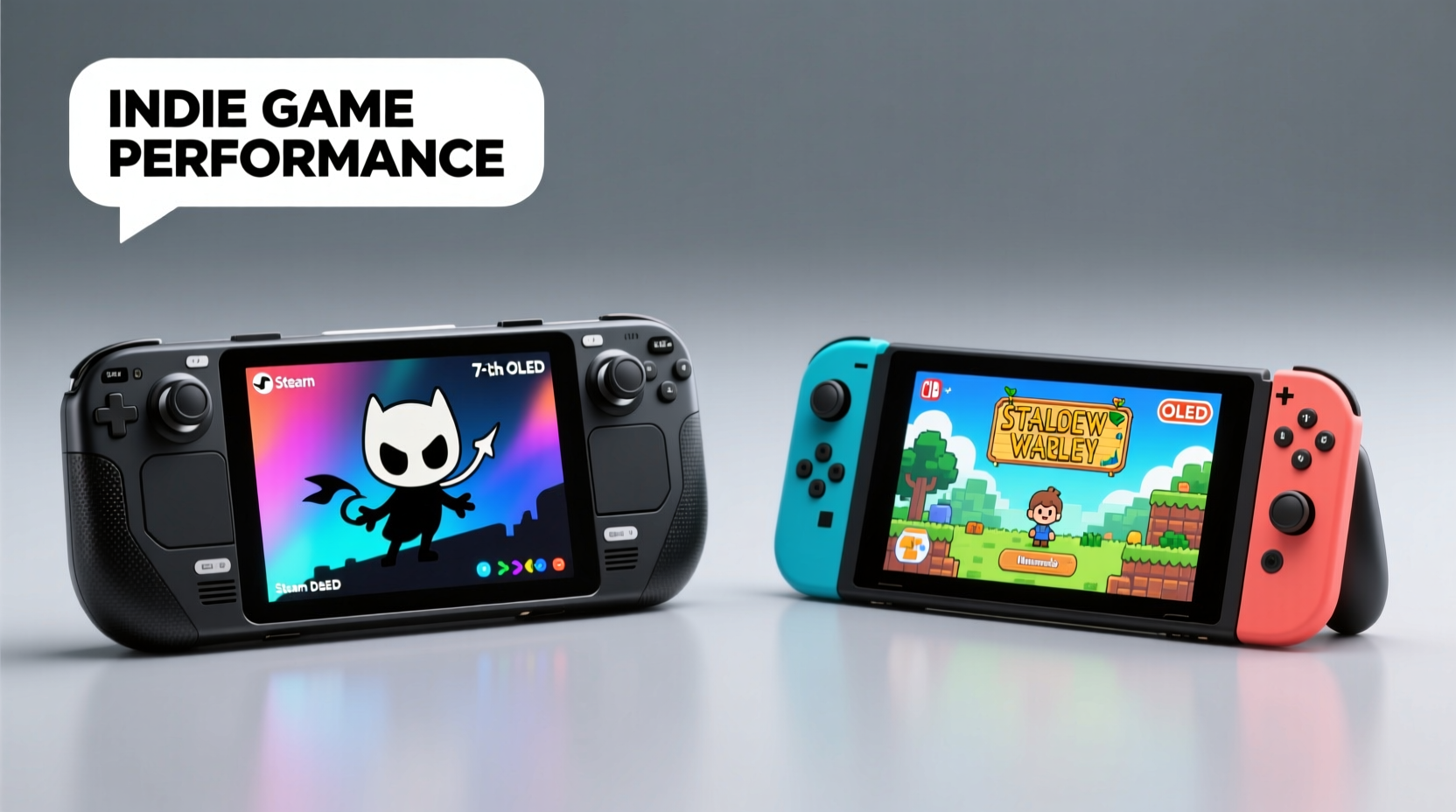
The most immediate difference lies in the physical design and technical capabilities. Both feature OLED displays, which offer deep blacks and vibrant colors—ideal for stylized indie aesthetics. However, the implementations diverge.
| Feature | Steam Deck OLED | Switch OLED |
|---|---|---|
| Screen Size | 7.4 inches | 7.0 inches |
| Resolution | 1280x800 | 1280x720 |
| Brightness (max) | 1000 nits | 700 nits |
| Storage (base) | 512GB NVMe SSD | 64GB eMMC |
| Weight | 640g | 320g (with Joy-Cons) |
| Battery Life | 3–12 hours (game-dependent) | 4.5–9 hours |
The Steam Deck OLED boasts superior brightness and contrast, making it more usable in direct sunlight. Its higher-resolution screen and larger display area enhance visual fidelity, especially in detailed pixel art or hand-painted backdrops common in indie titles like *Hades* or *Eastward*. The internal storage is also significantly faster and more spacious, reducing load times and allowing for larger libraries of downloaded games.
Yet, the Switch OLED remains notably lighter and more compact. It fits easily into a jacket pocket or small bag, giving it an edge for spontaneous gaming sessions. Its balanced weight distribution makes long play sessions comfortable, particularly when held in handheld mode. For commuters or travelers prioritizing convenience, this portability cannot be overlooked.
Gaming Ecosystem: Access, Discovery & Indie Support
When it comes to indie games, availability and discoverability are everything. The Switch has become a haven for high-profile indie hits—titles like *Celeste*, *Dead Cells*, and *Tunic* often launch simultaneously on Switch and PC due to Nintendo’s strong developer relations and curation model. These games are optimized specifically for the system, ensuring smooth performance and intuitive controls.
In contrast, the Steam Deck opens the door to the entire Steam catalog—over 50,000 games, many of them indie. This includes not only commercial releases but also experimental projects, mods, and community-created content. Platforms like Itch.io can even be accessed through the browser or sideloaded, expanding the horizon further.
However, access comes with trade-offs. While the Steam Deck runs nearly any game via Proton compatibility layers, optimization varies widely. Some indie titles run flawlessly out of the box; others require manual tweaking. The SteamOS interface helps by labeling “Verified” and “Playable” statuses, but occasional hiccups remain.
“Nintendo’s partnership program has made the Switch the go-to platform for polished indie ports. But for raw variety and creative freedom, nothing beats the open nature of Steam.” — Lena Park, Indie Developer & Founder of Pixel Forge Studios
Nintendo curates its storefront carefully, meaning fewer low-effort shovelware titles clutter search results. This gatekeeping benefits users seeking quality assurance. Meanwhile, Steam’s openness allows undiscovered gems to surface—though sifting through the noise requires patience.
Control Schemes & Gameplay Experience
Indie games vary dramatically in control complexity. Some rely heavily on keyboard-and-mouse precision (*Dead Cells*, *Vampire Survivors*), while others embrace simple button inputs (*Stardew Valley*, *A Short Hike*).
The Switch’s controls mirror traditional console design: symmetrical analog sticks, clearly labeled face buttons, and responsive touch input. Its integration with motion controls and HD Rumble adds tactile feedback in select titles—a subtle enhancement in games like *Gorogoa* or *The Artful Escape*.
The Steam Deck introduces trackpads and gyro aiming, features uncommon in dedicated handhelds. While primarily designed for FPS or strategy games, they benefit certain indie genres. Trackpads allow precise cursor movement in point-and-click adventures (*Thimbleweed Park*) or management sims (*Dwarf Fortress*). Gyro can assist in twin-stick shooters or puzzle games requiring fine adjustments.
That said, some indie ports don’t fully utilize the extra inputs. Without proper mapping, the additional buttons may go unused. Users often need to customize layouts manually via Steam Input—a powerful tool, but one that demands time and technical comfort.
- Best for simplicity: Switch OLED – intuitive layout, consistent responsiveness.
- Best for customization: Steam Deck OLED – remappable controls, support for mouse-like precision.
- Best for hybrid use: Steam Deck doubles as a mini-PC; connect a controller or keyboard for non-handheld indie titles.
Battery Life & Real-World Play Patterns
Battery longevity directly impacts how and where you engage with indie games. Many indie experiences are designed for short bursts—perfect for filling gaps during commutes or breaks. Others encourage longer immersion, such as *Disco Elysium* or *Oxenfree II*.
The Switch OLED averages 4.5 to 9 hours depending on brightness and game intensity. Most indie titles fall comfortably within the 6–8 hour range, making full-day usage feasible with moderate charging habits.
The Steam Deck OLED improved upon its predecessor with up to 12 hours in ideal conditions—typically seen in less demanding 2D indies at lower resolutions and frame rates. In practice, most users report 5–8 hours with mixed usage. High-refresh-rate games or those pushing higher settings will drain power faster.
A realistic scenario illustrates this well:
Mini Case Study: A Day with Both Devices
Sophie, a freelance designer, plays indie games during her daily train commute (45 minutes each way) and over lunch. She values both quick picks and story-rich experiences.
On the Switch OLED, she plays *Citizen Sleeper* during her morning ride—no issues, finishes the session at 60% battery. Lunchtime brings *Tunic*, another smooth experience. By evening, she still has 30% left after three hours of cumulative play.
With the Steam Deck OLED, she launches *Outer Wilds*—a more intensive indie title. After 90 minutes, the battery drops to 50%. She adjusts settings for *Inscryption* later and enjoys six additional hours across lighter games. Total usage: 7.5 hours, slightly edging out the Switch despite heavier initial load.
Verdict: The Switch offers consistency; the Steam Deck rewards optimization.
Long-Term Value & Future-Proofing Your Indie Library
Purchasing a handheld is an investment in future play. How each device ages affects your ability to enjoy upcoming indie releases.
The Steam Deck runs a full Linux-based operating system. It receives regular updates from Valve, including performance improvements and driver enhancements. Because it functions like a PC, it can adapt to new tools, emulators, and development frameworks. Users can install emulators for retro indie-inspired games, run game engines like Godot, or even develop their own titles on-device.
The Switch, meanwhile, operates on a closed system. Updates are infrequent and focused on stability rather than expansion. While homebrew exists, it’s limited and risks bricking the device. Nintendo shows no signs of opening the platform, meaning hardware limitations will eventually restrict compatibility with future, more complex indie games.
Consider this timeline:
- Year 1: Both devices handle current indie titles with ease.
- Year 3: Steam Deck gains compatibility tweaks; Switch relies on developer downgrades for newer titles.
- Year 5: Steam Deck remains viable via community patches; Switch struggles with unoptimized ports.
If you plan to keep your handheld beyond three years, the Steam Deck offers better longevity—not just through software updates, but through user empowerment.
Frequently Asked Questions
Can the Steam Deck run all Steam indie games smoothly?
Most do, especially those labeled “Verified” in the store. Titles built for PC with heavy UI elements or mouse dependency may require setup. Performance depends on settings adjustments, but the vast majority of 2D and lightweight 3D indies run well.
Is the Switch OLED worth it if I mostly play indie games?
Yes—if you value plug-and-play simplicity, portability, and exclusive indie ports like *Untitled Goose Game* or *Overcooked! 2*. Its curated library ensures reliability, and local multiplayer enhances social indie experiences.
Does the Steam Deck OLED overheat during extended indie sessions?
Rarely. Unlike AAA games, most indie titles place minimal strain on the GPU and CPU. The OLED model’s improved thermal design and fan efficiency make sustained gameplay comfortable, even in warmer environments.
Final Verdict: Which Handheld Wins for Indie Games?
There is no universal winner—only what aligns with your priorities.
The **Nintendo Switch OLED** wins for effortless, portable play. It’s the ideal device for someone who wants to pick up and play polished indie hits without tinkering. Its ergonomics, battery predictability, and seamless integration with popular titles make it perfect for casual and mid-core gamers alike.
The **Steam Deck OLED**, however, claims victory for depth, flexibility, and long-term potential. It’s the machine for explorers—the kind of player who enjoys digging into obscure RPG makers, modding cult classics, or supporting early-access experiments. Its hardware superiority and open architecture ensure it won’t feel obsolete anytime soon.
For pure indie gaming breadth and future readiness, the Steam Deck OLED takes the crown. But if your indie diet consists of well-known, beautifully optimized titles and you prioritize comfort and spontaneity, the Switch OLED remains unmatched.




 浙公网安备
33010002000092号
浙公网安备
33010002000092号 浙B2-20120091-4
Comments
No comments yet. Why don't you start the discussion?