
The handheld gaming market has evolved dramatically over the past few years, with two dominant devices shaping how players access their favorite titles on the go: Valve’s Steam Deck and Nintendo’s Switch OLED. As we step into 2025, the debate over which device offers a superior experience is more relevant than ever. With advancements in software updates, cloud gaming, indie support, and evolving player expectations, choosing between these systems isn’t just about hardware—it's about ecosystem, flexibility, and long-term value.
This comprehensive analysis compares both devices across key categories: performance, game library, portability, battery life, customization, and future readiness. Whether you're a casual gamer who enjoys Mario Kart during commutes or a PC enthusiast craving AAA titles like Elden Ring on the couch, this guide will help clarify which handheld truly dominates in 2025.
Performance and Hardware Capabilities
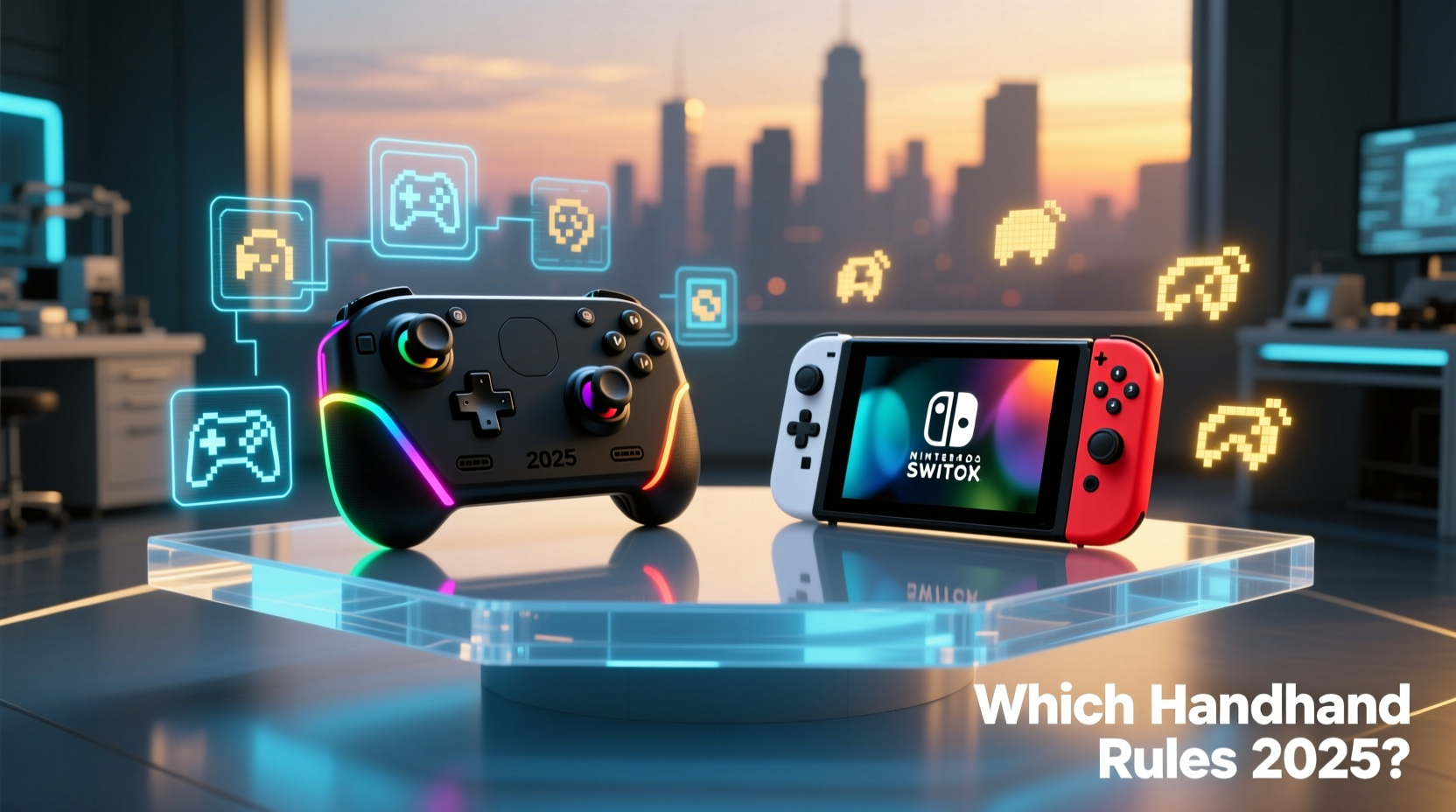
At its core, the Steam Deck runs on a full x86-64 AMD APU with Zen 2 CPU architecture and RDNA 2 graphics—essentially a compact PC built for gaming. This allows it to run native Windows games, emulators, and even productivity tools when needed. The base model features 16 GB of unified RAM and customizable storage options (64GB eMMC, 256GB NVMe SSD, or 512GB fast SSD). It supports external displays up to 4K at 120Hz via USB-C docking and can handle demanding games at medium-to-high settings depending on optimization.
In contrast, the Nintendo Switch OLED operates on NVIDIA’s custom Tegra X1+ chip—a system-on-a-chip designed specifically for mobile efficiency rather than raw power. While perfectly capable of running first-party Nintendo titles like Zelda: Tears of the Kingdom or Super Mario Bros. Wonder at 720p in handheld mode and 1080p docked, it struggles with modern third-party ports unless heavily downgraded.
In 2025, Valve continues to refine its Proton compatibility layer, allowing over 75% of top Steam games to run natively or near-natively on the Deck. Meanwhile, Nintendo focuses on polished exclusives but lacks backward compatibility beyond its own legacy titles through subscription-based Virtual Console re-releases.
Hardware Comparison Table
| Feature | Steam Deck (OLED Model) | Nintendo Switch OLED |
|---|---|---|
| Processor | AMD Zen 2 (4 cores / 8 threads) | NVIDIA Tegra X1+ |
| GPU | RDNA 2, 8 CUs @ 1.6 GHz | Custom Maxwell-based GPU |
| RAM | 16 GB LPDDR5 | 4 GB LPDDR4 |
| Storage Options | 64GB–512GB (expandable via microSD) | 64GB internal (expandable via microSD) |
| Screen Size & Type | 7.4” LCD (original), now 7.4” OLED (2024 refresh) | 7” OLED |
| Resolution (Handheld) | 1280×800 (up to 1080p upscaled) | 720p |
| Battery Life | 3–8 hours (game-dependent) | 4.5–9 hours (light games only) |
| Operating System | SteamOS 3.5 (Linux-based) | Proprietary Nintendo OS |
| Expandability | Full desktop environment, sideloading, Linux apps | Limited to official eShop and select emulators via homebrew |
Game Library and Ecosystem
The most significant differentiator between the two platforms lies in their game ecosystems. The Steam Deck gives users access to over 50,000 games available on Steam, including indies, early access titles, retro remasters, and major AAA releases such as Cyberpunk 2077, Starfield, and Alan Wake 2. Thanks to continuous improvements in Valve’s Anti-Cheat (VAC) and developer adoption of Proton, multiplayer compatibility has improved significantly by 2025.
Nintendo Switch, while limited to around 5,000 digital titles, excels in exclusive content. Franchises like The Legend of Zelda, Mario, Pikmin, Metroid, and Animal Crossing are tightly integrated into its identity. These games are often critically acclaimed and drive hardware sales regardless of technical limitations. Additionally, the Nintendo eShop remains one of the most curated and family-friendly storefronts in gaming.
“Nintendo doesn’t compete on specs—they win on experience. Their games are timeless, but the platform won’t satisfy someone wanting modern FPS or RPG depth.” — Marcus Tran, Lead Editor at GameAxis Review
However, the lack of backward compatibility with older consoles (beyond select re-releases) limits long-term library growth. On the other hand, the Steam Deck can emulate everything from PS2-era classics to GameCube and PSP titles with high accuracy using RetroArch and Dolphin emulator, making it a true all-in-one retro machine.
Portability, Design, and Real-World Use
Both devices weigh roughly the same—around 420 grams—but feel distinctly different in hand. The Steam Deck is wider and thicker due to larger analog sticks, trackpads, and additional rear buttons (L3/R3, paddles), offering a more console-like control scheme. Its matte finish resists fingerprints but attracts dust. The newer OLED version introduced in late 2024 improves contrast and viewing angles, though brightness lags slightly behind the Switch OLED outdoors.
The Switch OLED benefits from slimmer bezels and a brighter panel, ideal for outdoor use under shade. Its kickstand is sturdier than previous models and works well on tables or airplane trays. Controllers detach seamlessly for multiplayer sessions, a feature unmatched by the Steam Deck without Bluetooth setup.
For travel, the Switch wins in convenience: lighter carry case options, faster boot times (<3 seconds), and no need for pre-launch configuration. However, the Steam Deck shines when connected to external monitors or used as a portable workstation. By 2025, many professionals use it for light coding, media editing, and web browsing during downtime.
Real Example: Travel Gamer Perspective
Consider Alex, a frequent flyer who commutes weekly between San Francisco and Tokyo. He owns both devices. On short domestic flights, he uses the Switch OLED for quick playthroughs of Fire Emblem Engage or co-op rounds of Kirby and the Forgotten Land. But on overnight international trips, he brings the Steam Deck loaded with Disco Elysium – The Final Cut, Hades, and a modded version of Skyrim VR (via ALVR streaming). “It’s like having my entire gaming PC in my backpack,” he says. “I even wrote half my novel draft using FocusWriter on the Deck during layovers.”
Customization and Long-Term Value
One area where the Steam Deck clearly pulls ahead is user freedom. Unlike the Switch, which locks down firmware and restricts unauthorized software, the Steam Deck encourages tinkering. Users can install Windows 11, run alternative Linux distributions, overclock components (with caution), or integrate voice command tools like Rhasspy for accessibility.
Valve also released official BIOS updates in 2024 enabling TPM 2.0 and Secure Boot support, paving the way for broader enterprise and educational use. Third-party accessories—from cooling fans to ergonomic grips—are widely available, enhancing longevity.
In contrast, modifying a Switch typically voids warranty and risks bans from online services if detected. While homebrew communities remain active, they cater mostly to enthusiasts willing to accept instability and legal gray areas.
Checklist: Maximizing Your Handheld Investment in 2025
- ✅ Evaluate your primary gaming preferences: exclusives vs open library
- ✅ Test battery usage patterns based on game intensity
- ✅ Invest in a protective case and screen protector
- ✅ Expand storage with a high-speed microSDXC card (UHS-I U3 minimum)
- ✅ Explore cloud saves and cross-platform sync (e.g., Xbox Cloud, GeForce Now)
- ✅ Join community forums for tips (r/SteamDeck, r/NintendoSwitch)
- ✅ Consider future resale value—Switch holds better short-term; Steam Deck gains niche demand
Future-Proofing and 2025 Trends
Looking ahead, several trends influence each platform’s trajectory:
- Cloud Gaming Integration: Both devices support cloud services. The Steam Deck runs Xbox Cloud Gaming and GeForce Now smoothly via browser or native app. The Switch added native GeForce Now support in early 2025, allowing access to RTX-enhanced titles, though input lag remains noticeable over Wi-Fi.
- AI Upscaling: Valve partnered with Lumenia to introduce AI-driven frame generation and resolution boosting on supported titles, improving performance by up to 40%. Nintendo has not adopted similar tech.
- Subscription Models: Nintendo Switch Online + Expansion Pack now includes N64 and Genesis libraries with rollback netcode. Steam offers no subscription for games, but services like EA Play and Ubisoft+ integrate directly into the UI.
- Indie Developer Support: Steam’s lower barrier to entry means thousands of new indie titles launch monthly. Nintendo maintains strict curation, ensuring quality but limiting diversity.
By 2025, the Steam Deck is increasingly seen not just as a gaming device but as a modular personal computing tool. Schools in Finland and South Korea have begun piloting them for STEM education due to their programmable nature. Conversely, the Switch remains focused on entertainment and social play, reinforcing its role as a lifestyle device rather than a productivity tool.
Frequently Asked Questions
Can the Steam Deck run all Steam games?
No, not all—but an estimated 78% of the top 100 most-played Steam games work well on the Deck as of 2025. Titles marked “Verified” in the store run optimally out of the box. Others may require manual tweaks or fail due to anti-cheat restrictions (e.g., some versions of Valorant).
Is the Switch OLED worth upgrading to if I already own a regular Switch?
If you primarily play in handheld mode, yes. The improved screen, increased storage, and better speakers make a noticeable difference. However, if you mostly dock your console, the visual upgrade is minimal, and waiting for a rumored \"Switch 2\" in late 2025 might be wiser.
Which handheld lasts longer per charge?
It depends on usage. For lightweight games (Stardew Valley, Tetris 99), the Switch OLED averages 7–9 hours. The Steam Deck achieves 6–8 hours on low-demand titles. However, playing graphically intense games like Red Dead Redemption 2 reduces Steam Deck battery to 2.5–3.5 hours. The Switch cannot run such games at all.
Final Verdict: Which Handheld Dominates in 2025?
There is no universal winner—only what aligns best with your lifestyle and gaming priorities.
The **Nintendo Switch OLED** dominates in accessibility, ease of use, and exclusive content. It’s ideal for families, casual gamers, and fans of Nintendo’s iconic franchises. If you want a plug-and-play device that delivers consistent, joyful experiences with minimal setup, the Switch remains unmatched.
The **Steam Deck**, particularly the updated OLED model, dominates in versatility, power, and long-term adaptability. It appeals to tech-savvy users, emulation lovers, and those who refuse to compromise on game selection. For anyone seeking a single device that bridges handheld gaming, retro emulation, and portable computing, the Steam Deck is the clear leader in 2025.
“The future of handheld gaming isn't about who has the prettiest screen—it's about who gives players the most freedom. In that race, Valve is setting the pace.” — Lena Cho, Tech Analyst at IGN FutureTech
Take Action Today
Whichever path you choose, understand that handheld gaming has never been more powerful or accessible. Try borrowing or demoing both devices before purchasing. Explore free weekends on Steam or visit a local Best Buy to test the Switch OLED firsthand. And if you already own one, consider how adding the other could expand your gaming horizons instead of replacing it entirely.




 浙公网安备
33010002000092号
浙公网安备
33010002000092号 浙B2-20120091-4
Comments
No comments yet. Why don't you start the discussion?