
Choosing between the Steam Deck and the Nintendo Switch OLED isn’t just about preference—it’s a decision that hinges on how you play, what games you love, and where your priorities lie in terms of longevity and investment. Both devices represent the pinnacle of handheld gaming in their respective ecosystems, but they cater to vastly different audiences. The Steam Deck, developed by Valve, is a full-fledged PC in handheld form. The Switch OLED, refined from its original design, doubles as a home console and portable device with exclusive Nintendo franchises. This comparison dives deep into hardware, software, game libraries, upgradability, and ecosystem support to determine which device delivers superior long-term value.
Hardware Design and Build Quality
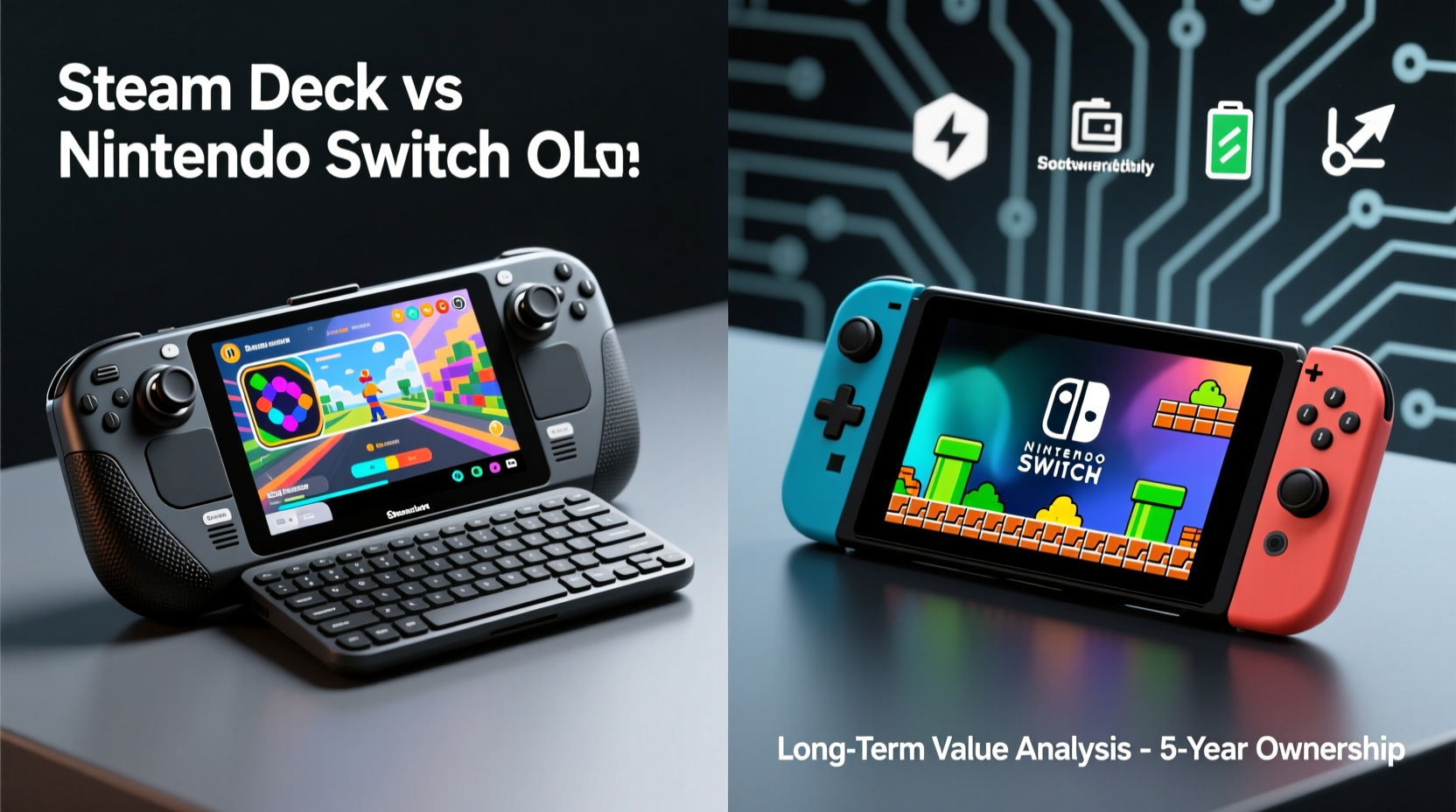
The physical experience of using each device shapes daily enjoyment and durability over time. The Nintendo Switch OLED features a sleek, minimalist design with a vibrant 7-inch OLED screen, improved speakers, and a sturdier kickstand. Its build feels consumer-friendly and polished, built for casual use and frequent portability. However, the Joy-Con analog sticks remain prone to drift—a known issue that has plagued the platform since launch and may require repairs or replacements down the line.
In contrast, the Steam Deck opts for a bulkier, utilitarian design with dual trackpads, full shoulder and trigger buttons, and an emphasis on ergonomics for extended PC-style gameplay. Its 7-inch LCD screen (60Hz, 1280x800) doesn’t match the visual pop of the OLED panel, but it’s functional and serviceable. More importantly, the Steam Deck uses replaceable thumbsticks and modular internal components. Valve designed it with repairability in mind—users can swap out batteries, SSDs, and joysticks without specialized tools.
Performance and Future-Proofing
Performance longevity depends not just on current capability but on how well a device adapts to evolving software demands. The Steam Deck runs on an AMD APU with a Zen 2 CPU and RDNA 2 GPU, giving it the raw power to handle modern PC titles at reduced settings. While it struggles with AAA games at high fidelity, its architecture aligns with standard PC gaming, meaning developers don’t need to create special versions of their games—compatibility grows naturally over time.
The Switch OLED, powered by a custom NVIDIA Tegra X1 chip, remains limited by older mobile-class hardware. Most third-party games are downgraded ports, and many newer titles skip the platform entirely due to technical constraints. As game engines evolve (e.g., Unreal Engine 5), the gap between Switch capabilities and modern standards will only widen. This makes the Switch increasingly reliant on first-party Nintendo titles for compelling content.
Valve has already released the Steam Deck OLED model (as of late 2023), offering higher brightness, faster storage, and improved battery life—indicating a clear roadmap for iterative upgrades. Meanwhile, Nintendo has given no indication of a Switch successor beyond rumors, leaving owners of the OLED model potentially stuck on aging tech for years.
“Handhelds are no longer disposable gadgets—they’re long-term companions. The ability to upgrade, repair, and adapt defines real value.” — Marcus Lin, Senior Hardware Analyst at GameTech Weekly
Game Library and Ecosystem Access
This is where the fundamental divide becomes clearest. The Nintendo Switch thrives on exclusives: The Legend of Zelda: Tears of the Kingdom, Super Mario Odyssey, Animal Crossing: New Horizons, and Metroid Prime 4 (eventually). These titles are often system-sellers and unavailable anywhere else. For fans of platformers, RPGs, and family-friendly adventures, the Switch offers unmatched content.
The Steam Deck, however, taps into the entire Steam catalog—over 50,000 playable titles—and supports Epic Games Store, GOG, and other platforms via browser or compatibility layers. With Proton (Valve’s Linux compatibility layer), even Windows-only games run surprisingly well. Players can access everything from indie darlings like Hades to demanding titles like Baldur’s Gate 3 and Starfield (with tweaks).
More than availability, the Steam Deck enables ownership. Purchased games remain accessible indefinitely, moddable, and transferable across devices. On Switch, digital purchases are locked to the account and tied to Nintendo’s servers, which could become inaccessible if services shut down—a growing concern as online infrastructure ages.
| Factor | Steam Deck | Nintendo Switch OLED |
|---|---|---|
| Exclusive Titles | Few (e.g., Half-Life: Alyx VR mods) | Strong (Zelda, Mario, Splatoon, etc.) |
| Total Playable Games | 50,000+ (via Steam & community tools) | ~5,000 (eShop + cartridges) |
| Mod Support | Full (file access, community patches) | None (without jailbreaking) |
| Digital Ownership Longevity | High (local backups, offline play) | Moderate (requires active account, server-dependent) |
| Backward Compatibility | Yes (all Steam games, including classics) | Limited (no Virtual Console anymore) |
Upgradability and Repairability
Long-term value isn’t just about how long a device lasts—it’s about how long you *want* to keep using it. Here, the Steam Deck pulls far ahead. Users can open the back panel and replace the M.2 NVMe SSD, upgrade RAM (in later models), and swap out batteries or joysticks. Community vendors offer replacement parts and repair guides, ensuring functionality even after years of wear.
The Switch OLED, while more durable than the original model, remains largely non-upgradable. Storage is fixed (64GB, expandable via microSD), and internal components are soldered. Battery degradation cannot be easily fixed without professional service. If the screen cracks or Joy-Cons fail, repair costs add up quickly, especially outside warranty.
Moreover, the Steam Deck runs SteamOS, a Linux-based system that users can modify or replace entirely. Many install Windows 11 to run unsupported applications or stream from PC. The Switch is locked down; unless jailbroken (voiding warranty and risking bans), customization is impossible.
Real Example: Two Gamers, Five Years Later
Consider two hypothetical users: Alex buys a Switch OLED at launch and enjoys Zelda, Pikmin, and Fire Emblem. By year three, Joy-Con drift sets in. Nintendo denies repair coverage. Alex buys new controllers, then faces dwindling third-party support. By year five, the device still works but feels outdated—few new games scale well, and online features lag.
Meanwhile, Jamie gets a base-model Steam Deck. After two years, the SSD fills up. Jamie swaps in a 1TB drive for $60. Thumbsticks wear out—replaced with $25 parts. When Valve releases the OLED version, Jamie keeps the old model as a backup. Over five years, Jamie plays hundreds of new releases, applies performance mods, and even uses the device for light productivity work.
Jamie’s investment compounds; Alex’s plateaus.
Cost Analysis Over Time
Initial pricing tells only part of the story. The base Steam Deck starts at $399 (LCD model), while the Switch OLED is $349. But long-term cost includes accessories, repairs, game prices, and replacement cycles.
- Steam Deck: Higher upfront game cost (PC titles rarely go below $30), but frequent sales, bundles, and used key markets reduce effective spending. No subscription needed for local play.
- Switch OLED: Lower initial game prices, but reliance on physical cartridges increases collection costs. Nintendo Switch Online ($20/year) required for cloud saves and multiplayer—mandatory for most players.
Over five years, a dedicated Switch user might spend: - $349 (console) - $100 (replacement Joy-Cons or repairs) - $100 (microSD card) - $100 (subscription) - $600–$800 (games) Total: ~$1,250+ A Steam Deck owner might spend: - $399 (console) - $60 (SSD upgrade) - $25 (joystick replacement) - $0 (no mandatory subscription) - $400–$600 (games, factoring deep discounts) Total: ~$900–$1,100 And retains resale value through repairability.
Checklist: Maximizing Long-Term Value
- ✅ Choose a device with user-replaceable parts (battery, storage, sticks)
- ✅ Prioritize access to a large, growing game library
- ✅ Consider total cost of ownership—not just console price
- ✅ Look for developer commitment to future updates and models
- ✅ Use protective cases and screen protectors from day one
- ✅ Back up save data regularly (cloud or external drive)
- ✅ Join community forums for modding, troubleshooting, and resale tips
FAQ
Can the Steam Deck run all Steam games?
No, but over 80% of the library is verified or playable via Proton compatibility. Valve maintains a rating system (Verified,Playable,Unsupported) to guide users. Performance varies based on optimization, but most indie and mid-tier games run well.
Is the Switch OLED worth it if I already own a regular Switch?
Only if you prioritize screen quality and built-in storage. The core performance and game compatibility are identical. For long-term value, upgrading to a Steam Deck offers more meaningful improvements.
Will Nintendo ever make a more powerful handheld?
Rumors suggest a successor may arrive in 2025, possibly using ARM architecture with enhanced GPU capabilities. However, until official confirmation, the OLED model remains the endpoint of this generation—with inherent limitations.
Conclusion: Which Offers Better Long-Term Value?
The answer depends on your definition of “value.” If your heart belongs to Nintendo’s universe—if you live for Legend of Zelda adventures, Super Smash Bros. tournaments, and family co-op nights—the Switch OLED delivers irreplaceable joy. Its seamless TV docking, instant resume, and polished UI create a uniquely accessible experience. But its technological ceiling is low, and its ecosystem is closed. You’re buying into a curated garden, not an open world.
The Steam Deck, meanwhile, is a gateway. It rewards tinkering, learning, and exploration. It evolves with you. Even as newer models emerge, today’s Deck remains useful—as a secondary device, a retro emulator, or a modded gaming rig. Its open nature ensures relevance far beyond the typical console lifecycle. For under $400, you get not just a handheld, but a lifelong tool for digital entertainment.
Ultimately, the Steam Deck offers superior long-term value for most gamers. It combines repairability, expansive software access, upgrade potential, and a forward-looking roadmap. The Switch OLED wins on simplicity and exclusives, but at the cost of flexibility and future growth. In a world where technology moves fast, adaptability isn’t just convenient—it’s essential.




 浙公网安备
33010002000092号
浙公网安备
33010002000092号 浙B2-20120091-4
Comments
No comments yet. Why don't you start the discussion?