
The days when handheld gaming was limited to Nintendo or PSP are long behind us. In just a few short years, the landscape has shifted dramatically—thanks largely to Valve’s Steam Deck and ASUS’s ROG Ally. These aren’t niche gadgets for tinkerers anymore; they’re powerful, well-designed devices that bring full PC gaming into the palm of your hand. But beyond the tech specs and marketing claims, one question looms large: Is handheld PC gaming finally mainstream?
This shift isn’t just about hardware. It’s about accessibility, software maturity, consumer expectations, and cultural adoption. As more players choose portability without sacrificing performance, the answer seems increasingly clear. The real story lies in how two very different approaches—one open, one optimized—are shaping this new era.
The Rise of Handheld PCs: From Concept to Culture
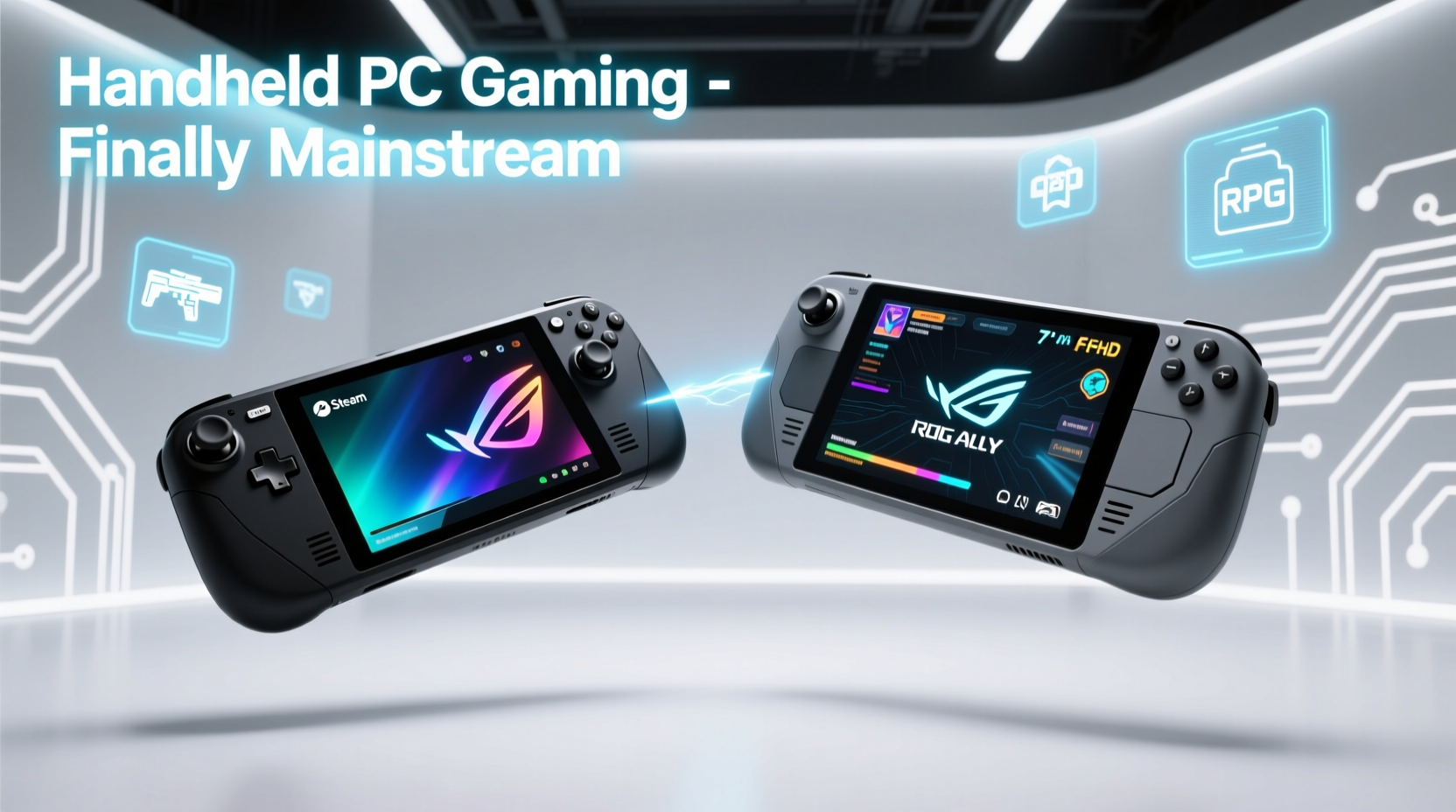
For years, handheld PC gaming existed on the fringes. Devices like the GPD Win series or OneXPlayer offered raw power but came with trade-offs: poor battery life, awkward ergonomics, and complex setup processes. They appealed to enthusiasts willing to jump through hoops for portable AAA gaming—but not to the average player.
Valve changed that equation in 2022 with the Steam Deck. By tightly integrating hardware with its vast Steam library and introducing SteamOS with Proton compatibility, Valve created an experience that “just works” for most users. Suddenly, thousands of games were playable out of the box, even if they weren’t designed for controllers or small screens.
ASUS responded in 2023 with the ROG Ally, taking a different route. Instead of a custom OS, it runs full Windows 11 and leverages Microsoft’s DirectStorage and Auto HDR. This gives it broader software flexibility—including access to Xbox Game Pass and GeForce Now—but also introduces complexity. The Ally demands more user involvement in optimization, driver updates, and storage management.
These contrasting philosophies reflect deeper industry trends: open ecosystems versus curated experiences, customization versus simplicity. Yet both devices have seen strong sales and critical acclaim, suggesting that the market isn’t choosing sides—it’s embracing the category as a whole.
Performance Face-Off: Hardware, Cooling, and Real-World Play
At their core, both devices aim to deliver console-level performance in a handheld form. Let’s break down the key differences:
| Feature | Steam Deck (OLED) | ROG Ally (Z1 Extreme) |
|---|---|---|
| Processor | Custom AMD APU (Zen 2, RDNA 2) | AMD Ryzen Z1 Extreme (Zen 4, RDNA 3) |
| GPU Cores | 16 CUs @ 1.6 GHz | 12 CUs @ 2.7 GHz |
| RAM | 16GB LPDDR5 | 16GB LPDDR5 |
| Storage Options | 512GB/1TB NVMe SSD | 512GB/1TB M.2 NVMe SSD |
| Display | 7.4\" OLED, 1280x800, 90Hz | 7\" FHD (1080p), 120Hz, IPS |
| OS | SteamOS 3.0 (Linux-based) | Windows 11 Home |
| Battery Life | 3–8 hours | 1–3 hours (gaming), up to 4+ with lighter use |
| Weight | 640g | 608g |
On paper, the ROG Ally has superior specs—especially its Zen 4 CPU and RDNA 3 GPU. In practice, however, the gap narrows due to thermal constraints and software overhead. The Steam Deck’s OLED model benefits from improved cooling and lower power consumption, allowing sustained performance in many titles. Meanwhile, the Ally can hit higher peak frame rates but often throttles under prolonged load unless actively managed via fan curves or undervolting.
One overlooked factor is display quality. The Steam Deck’s OLED panel offers deeper blacks and richer contrast, making it ideal for narrative-driven games like *Disco Elysium* or *Hades*. The ROG Ally’s 1080p screen delivers sharper visuals, beneficial for competitive shooters or strategy games, but lacks HDR and suffers from lower brightness outdoors.
Ecosystem & User Experience: Simplicity vs Flexibility
Where these devices truly diverge is in user experience. The Steam Deck operates like a console: you turn it on, launch Steam, and play. Valve’s Proton compatibility layer handles most game translations seamlessly, and automatic updates keep everything current. You don’t need to know what DirectX or Vulkan means to enjoy *Elden Ring* or *Cyberpunk 2077* at a playable framerate.
The ROG Ally, running Windows, opens more doors—but also more rabbit holes. Want to install Epic Games Store, EA App, Ubisoft Connect, or mod managers? Go ahead. Need to manually configure controller layouts or update GPU drivers? That’s on you. While Armoury Crate helps manage performance profiles, the learning curve is steeper, especially for non-technical users.
“Handhelds used to be for people who loved tinkering. Now we’re seeing them adopted by commuters, parents, and casual gamers who want flexibility without compromise.” — Jordan Lee, Senior Analyst at NPD Group
This philosophical divide affects longevity too. SteamOS receives regular Valve-supported updates focused solely on gaming stability. Windows, while more versatile, brings background processes, telemetry, and potential bloat that can degrade performance over time. Power users may appreciate the control, but mainstream consumers often prefer reliability over configurability.
Real-World Example: Two Gamers, Two Choices
Consider Sarah, a graphic designer who plays during lunch breaks. She bought a Steam Deck because she wanted something intuitive. She launches *Stardew Valley*, *Portal 2*, and *Dead Cells* without installing anything extra. When she travels, she docks it to her hotel TV using a $30 adapter and continues playing seamlessly. No troubleshooting, no frustration.
Then there’s Marcus, a tech-savvy student who streams gameplay. He chose the ROG Ally so he could run OBS, Discord, and Steam simultaneously. He uses DisplayLink to stream to his second monitor and has customized fan settings to reduce noise during recordings. Yes, he spends time tweaking settings—but the flexibility pays off for his workflow.
Both experiences are valid. What matters is that neither feels like a compromise. That’s the hallmark of a mature product category.
Is Handheld PC Gaming Mainstream Now?
Mainstream doesn’t mean “everyone owns one.” It means the technology has crossed the chasm from early adopters to early majority. Several indicators suggest we’ve reached that point:
- Sales volume: Valve reported over 3 million Steam Decks sold by mid-2024. ASUS hasn’t released official numbers, but retail demand for the ROG Ally remained high despite initial software hiccups.
- Retail presence: Both devices are available at major chains like Best Buy and Amazon, often featured in prominent displays—a far cry from the crowdfunding-only models of earlier handhelds.
- Developer support: More studios are optimizing games for handheld controls. Titles like *Baldur’s Gate 3* and *Monster Hunter Rise* now include native touchscreen and gyro aiming support.
- Cultural visibility: Tech reviewers, Twitch streamers, and even late-night comedians reference handheld gaming as a normal part of digital life.
Perhaps most telling is the ripple effect. After the success of the Steam Deck, companies like Lenovo (Legion Go), MSI (Claw), and Ayaneo entered the space. Even Microsoft reportedly explored a handheld device. When big players start chasing a trend, it’s usually already arrived.
Checklist: How to Choose Between Steam Deck and ROG Ally
Still unsure which device fits your lifestyle? Use this checklist:
- ✅ Do you value plug-and-play simplicity? → Lean toward Steam Deck
- ✅ Do you already use Windows and prefer full desktop access? → Lean toward ROG Ally
- ✅ Are you interested in cloud gaming (GeForce Now, Xbox Cloud)? → ROG Ally supports these natively
- ✅ Do you plan to dock frequently to a TV or monitor? → Both work, but Steam Deck’s seamless streaming is easier
- ✅ Do you play older or indie titles? → Steam Deck excels here thanks to Proton
- ✅ Do you care about maximum graphical fidelity in AAA games? → ROG Ally has edge, but requires tuning
- ✅ Is battery life a top priority? → Steam Deck lasts significantly longer per charge
FAQ: Common Questions About Handheld PC Gaming
Can I use my existing Steam library on both devices?
Yes, both devices can access your full Steam library. The Steam Deck does so natively. The ROG Ally requires logging into the Steam client, but functions identically once set up.
Do I need to buy games again for handheld play?
No. If you already own digital games on platforms like Steam, Epic, or Xbox, they sync across devices. Some titles may require patches for controller support, but ownership carries over.
Which is better for emulation?
The ROG Ally generally performs better for demanding emulators (e.g., PS2, GameCube) due to its stronger CPU. However, the Steam Deck OLED runs RetroArch smoothly for most retro consoles and benefits from community-made tools like ChimeraOS for dedicated emulation setups.
Looking Ahead: The Future of Mobile PC Gaming
The next phase isn’t about raw power—it’s about refinement. Expect slimmer designs, longer battery life, better haptics, and tighter integration with cloud services. Valve is rumored to be working on a successor with enhanced CPU performance. ASUS may release a Z2-powered Ally with AI acceleration and AV1 encoding.
More importantly, the software ecosystem will continue evolving. Features like automatic game rescaling, dynamic resolution switching, and AI-powered upscaling (such as FSR 3 or DLSS on compatible titles) will make high-fidelity gaming more accessible on portable hardware.
We’re also seeing shifts in game design. Developers are beginning to consider handheld-first interfaces—larger UI elements, simplified menus, touch-friendly navigation. This mirrors the transition mobile gaming underwent a decade ago, suggesting handheld PC gaming is entering its own golden age.
Conclusion: A New Era in Your Hands
The debate between Steam Deck and ROG Ally isn’t about which wins—it’s proof that handheld PC gaming has arrived. Whether you prioritize ease of use or technical freedom, there’s now a capable device that fits your needs. More importantly, millions of people are choosing to game this way every day, not as a novelty, but as a legitimate, sustainable part of their digital lives.
This isn’t a passing trend. It’s a fundamental shift in how we think about where and how we play. With robust hardware, expanding software support, and growing cultural acceptance, handheld PC gaming has officially stepped into the mainstream.




 浙公网安备
33010002000092号
浙公网安备
33010002000092号 浙B2-20120091-4
Comments
No comments yet. Why don't you start the discussion?