
Leather phone cases with a lychee texture—named for their bumpy, citrus-like surface—are prized for their durability, grip, and elegant finish. However, this textured grain is more than just aesthetic; it traps dust, oils, and grime over time. Without proper care, the leather can dry out, crack, or lose its rich color. Cleaning and protecting a lychee-pattern leather case requires a thoughtful approach that respects the material’s natural properties while maintaining its distinctive look. This guide walks you through each stage of maintenance, from routine cleaning to long-term protection, ensuring your case remains both functional and refined.
Understanding Lychee-Grain Leather
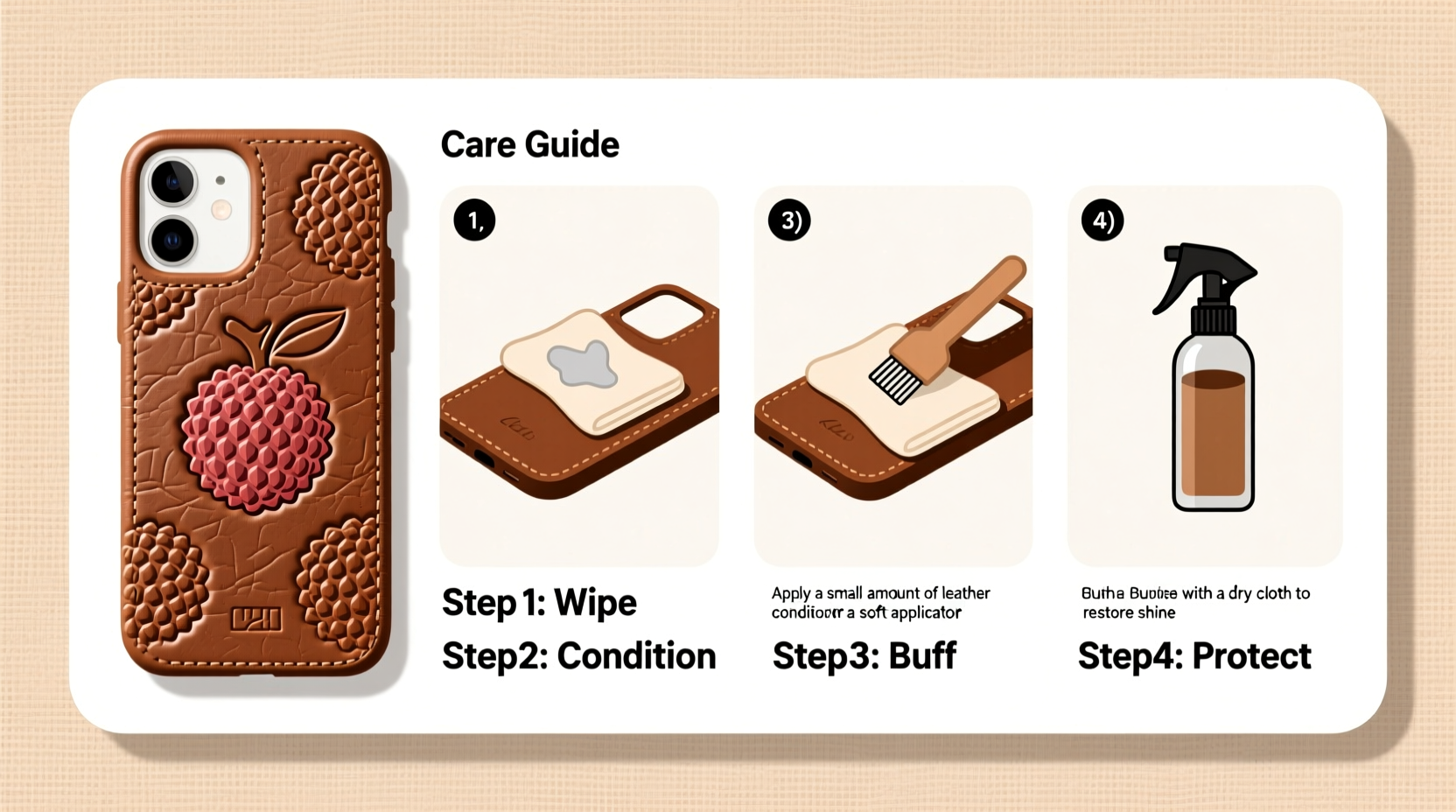
Lychee-grain leather is typically made from top-grain or corrected-grain cowhide, embossed with a pattern that mimics the skin of the lychee fruit. The texture not only enhances grip but also helps conceal minor scratches and scuffs. Most lychee cases are finished with a protective coating, often waxed or semi-aniline, which adds water resistance and depth to the color. Despite these advantages, the crevices in the texture make it prone to collecting dirt, especially from frequent hand contact and pocket storage.
The key to preserving lychee leather lies in gentle cleaning and regular conditioning. Unlike smooth leathers, textured surfaces require tools that can reach into the grain without damaging the finish. Harsh chemicals or abrasive cloths will strip the protective layer and accelerate wear.
“Textured leathers like lychee demand precision in care. A soft brush and pH-balanced cleaner preserve the grain while preventing buildup in the grooves.” — Daniel Ruiz, Artisan Leather Conservator
Step-by-Step Guide: How to Clean Your Lychee Leather Phone Case
Cleaning should be done every 4–6 weeks, depending on usage. If you carry your phone in your pocket or handle it frequently, monthly cleaning is ideal. Follow this sequence for best results:
- Remove the phone: Always take the device out before cleaning. Residual heat or moisture from the phone can interfere with cleaning agents.
- Dry brushing: Use a soft-bristled toothbrush or a specialized leather brush to gently dislodge dirt trapped in the texture. Brush in small circular motions, focusing on corners and edges where debris accumulates.
- Prepare a cleaning solution: Mix a few drops of mild, pH-neutral leather cleaner (such as Lexol or Bick 1) with distilled water. Avoid soaps with alcohol, glycerin, or silicone, as they degrade leather over time.
- Dampen a microfiber cloth: Lightly moisten a lint-free microfiber cloth with the solution. Wring it thoroughly—it should be damp, not wet. Excess moisture can seep into seams and cause warping or discoloration.
- Wipe the surface: Gently wipe the entire case using light pressure. Work in sections, following the direction of the grain. Pay extra attention to high-contact areas like the sides and back edge.
- Let it air dry: Place the case on a flat, clean surface at room temperature. Never use a hairdryer or direct sunlight to speed drying—this can lead to cracking.
- Buff lightly: Once fully dry (after 15–20 minutes), use a dry microfiber cloth to buff the surface and restore luster.
Protecting Your Case After Cleaning
Cleaning removes contaminants, but protection prevents future damage. Conditioning replenishes natural oils lost through daily handling and environmental exposure. For lychee leather, choose a lightweight conditioner that won’t clog the textured surface.
- Apply a pea-sized amount of leather conditioner (e.g., Chamberlain’s Leather Milk or Saphir Médaille d’Or) to a microfiber applicator pad.
- Gently rub in circular motions, allowing the product to absorb into the grain.
- Wait 10–15 minutes, then buff off any residue with a clean cloth.
For added defense against spills and stains, consider a spray-on leather protector. Products containing silicone or fluoropolymer create an invisible shield that repels liquids and reduces friction. Apply in a well-ventilated area, holding the can 6–8 inches from the case. One coat every 2–3 months is sufficient.
Do’s and Don’ts: Caring for Lychee Leather
| Do’s | Don’ts |
|---|---|
| Use a soft brush to clean textured grooves | Use paper towels—they can scratch the finish |
| Clean every 4–6 weeks with a pH-neutral solution | Expose the case to direct sunlight for long periods |
| Condition every 2–3 months | Apply heavy waxes or shoe polish—these clog the grain |
| Store in a breathable cotton pouch when not in use | Store in plastic bags—trapped moisture causes mold |
| Wipe hands before handling the case if oily or sweaty | Use household cleaners like Windex or bleach wipes |
Real Example: Reviving a Neglected Case
Sophie, a graphic designer from Portland, used her lychee leather case daily for nearly a year without cleaning. Over time, the once-rich cognac hue dulled, and the texture felt gritty. After reading about proper care, she followed the cleaning steps using a microfiber cloth and Lexol cleaner. She brushed gently with an old toothbrush, wiped carefully, and let it dry overnight. The next day, she applied a light coat of Bick 4 conditioner. The transformation was immediate: the color deepened, the grain looked defined, and the case felt supple again. “I didn’t realize how much buildup was hiding in the texture,” she said. “Now I clean it monthly, and it looks almost new.”
Frequently Asked Questions
Can I use baby wipes to clean my leather phone case?
No. Most baby wipes contain alcohol, fragrance, and preservatives that dry out leather and degrade its finish. While convenient, they leave behind residues that attract more dirt and may cause discoloration over time.
How often should I condition a lychee leather case?
Every 2–3 months is ideal under normal use. If you live in a dry climate or handle your phone frequently, consider conditioning monthly. Over-conditioning can soften the leather too much, reducing structural support.
Is water-resistant leather completely waterproof?
No. Water-resistant finishes provide short-term protection against spills or light rain, but prolonged exposure to moisture can still penetrate. Always dry the case immediately if it gets wet, and avoid placing it in damp environments like bathroom counters.
Checklist: Monthly Care Routine
- □ Remove phone and inspect for dirt buildup
- □ Brush surface with soft-bristle tool
- □ Clean with pH-neutral leather solution and microfiber cloth
- □ Allow to air dry completely
- □ Condition if the leather feels dry or stiff
- □ Apply protector spray every third month
- □ Store in a breathable fabric pouch
Final Thoughts
A lychee-pattern leather phone case combines function and elegance, but its longevity depends on consistent, informed care. By integrating simple cleaning habits and protective measures into your routine, you preserve not just the appearance but the integrity of the leather. Each step—from dry brushing to conditioning—contributes to a case that ages gracefully, developing a unique patina while remaining resilient. Treat it with the attention it deserves, and it will serve you well for years.




 浙公网安备
33010002000092号
浙公网安备
33010002000092号 浙B2-20120091-4
Comments
No comments yet. Why don't you start the discussion?