
Creating a Google Account is the gateway to accessing Gmail, Google Drive, YouTube, Google Calendar, and dozens of other services. Whether you're setting up your first account or replacing an old one, doing it correctly ensures your data stays private, your access remains uninterrupted, and your digital life runs smoothly. This comprehensive guide walks you through every essential step—securely and without complications.
Why You Need a Secure Google Account
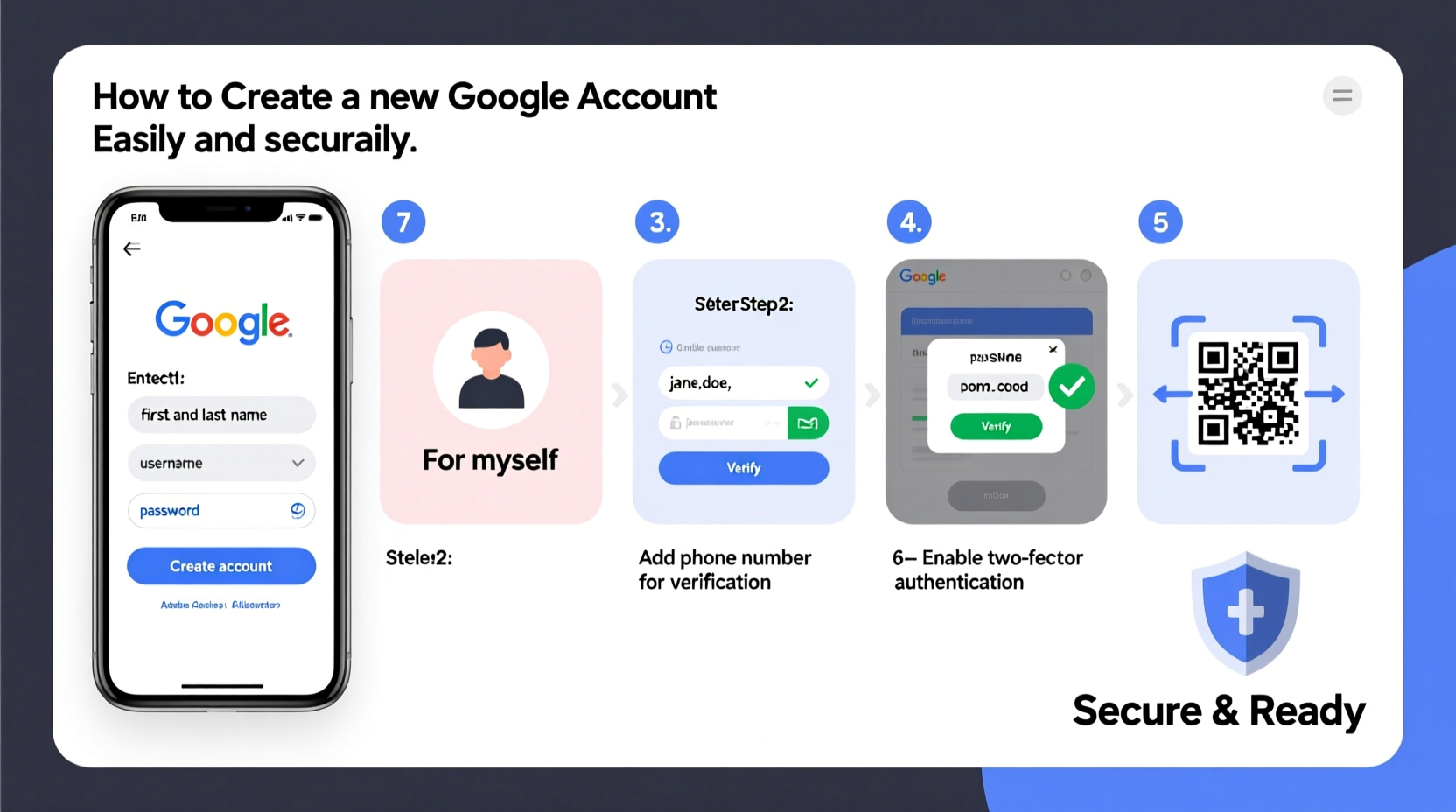
A Google Account isn't just for email. It's your identity across Android devices, Chrome browsers, cloud storage, smart home systems, and even third-party apps that use “Sign in with Google.” Because of this wide reach, security during setup is critical. A weak or poorly configured account can expose personal data, messages, photos, and location history.
According to Google’s Transparency Report, over 90% of targeted attacks begin with compromised credentials. Setting up your account with strong authentication and recovery options from day one reduces risk dramatically.
“Setting up a Google Account properly at the beginning saves users from costly recovery issues later.” — Lena Park, Cybersecurity Analyst at Digital Trust Labs
Step-by-Step Guide to Creating a New Google Account
Follow these steps carefully to ensure your Google Account is created safely and functions reliably across all platforms.
- Open the Google Account Creation Page
Go to accounts.google.com/signup using any modern browser like Chrome, Firefox, or Safari. - Enter Your Name
Provide your first and last name. This will appear in emails and shared documents. Use real information if the account is personal; initials are acceptable for secondary accounts. - Choose a Username (Gmail Address)
Type your desired email address (e.g.,jane.doe2024@gmail.com). If it’s taken, Google will suggest alternatives. Aim for something professional, memorable, and not easily guessable. - Create a Strong Password
Use at least 12 characters with a mix of uppercase letters, lowercase letters, numbers, and symbols. Avoid common words or personal info like birthdays.
Example:P@ssw0rd!Sunset#7— but better yet, use a unique phrase only you know.
Google will show a strength meter—aim for “Strong” or “Very Strong.” - Add a Recovery Email (Optional but Recommended)
If you already have another email, enter it here. This helps recover your account if you’re locked out. For maximum security, use an email provider with two-factor authentication (like Outlook or ProtonMail). - Enter Your Phone Number
Google may require a phone number for verification. This number can be used to receive SMS codes or voice calls during login or recovery. Ensure it’s a number you control long-term. - Set Birthdate and Gender
Enter accurate birthdate and optional gender info. This helps personalize services and comply with age restrictions. - Review Privacy & Terms
Read Google’s privacy policy and terms of service. While you must accept them to proceed, take a moment to understand what data Google collects and how it’s used. - Verify Your Identity
Depending on your region and activity, Google might ask you to verify via text message, call, or backup email. Complete this step promptly. - Finish Setup
Click “Next” after verification. You’ll be redirected to your new Gmail inbox or Google homepage.
Essential Security Practices After Account Creation
Your work doesn’t end once the account is made. The first 24 hours are crucial for locking down access and preventing future breaches.
Enable Two-Factor Authentication (2FA)
Navigate to myaccount.google.com/security, then select “2-Step Verification.” Link your phone or use an authenticator app like Google Authenticator or Authy. This adds a second layer of protection beyond your password.
Set Up Recovery Options
- Add a secondary email address.
- Register a trusted phone number.
- Generate and store backup codes in a secure place (e.g., password manager).
Review App Permissions
Check which apps have access to your Google Account under “Third-party apps with account access.” Remove any unfamiliar or outdated connections.
Turn On Security Checkup
Use Google’s built-in Security Checkup tool to scan for vulnerabilities, review sign-in attempts, and update settings automatically.
| Action | Where to Find It | Recommended Frequency |
|---|---|---|
| Change Password | Security → Signing in to Google → Password | Every 6–12 months or after suspicious activity |
| Run Security Checkup | myaccount.google.com/security-checkup | Monthly |
| Review Sign-In Activity | Security → Your Devices → Manage Devices | Weekly |
| Update Recovery Info | Security → Recovery | Whenever contact details change |
Common Mistakes to Avoid When Creating a Google Account
Even small oversights during setup can lead to major problems later. Here are frequent errors and how to avoid them:
- Using a weak password: Never reuse passwords from other sites. Use a unique, complex password generated by a reputable password manager.
- Skip recovery options: Without a recovery email or phone, regaining access becomes extremely difficult.
- Ignoring 2FA: Accounts without two-factor authentication are 99% more likely to be compromised, according to Google’s internal data.
- Using fake or disposable information: While tempting for privacy, this can block recovery efforts and violate Google’s policies.
- Creating accounts on public Wi-Fi: Public networks are vulnerable to snooping. Always use secure, private internet when setting up sensitive accounts.
Real-Life Scenario: Recovering Access After Device Loss
Sophia, a freelance designer, lost her phone while traveling. She had recently created a new Google Account for client work but hadn’t set up 2FA or saved recovery codes. When she tried logging into Gmail from a friend’s laptop, Google flagged the login attempt as suspicious and locked her out.
Because she had added a recovery email during setup, she was able to reset her password after answering a security question. However, the process took over 48 hours and delayed a project deadline. Afterward, she enabled 2FA, downloaded Google Authenticator, and stored her backup codes in a encrypted note.
This case shows how simple precautions during initial setup can prevent major disruptions—even when hardware is lost.
Checklist: Secure Google Account Setup in 10 Minutes
Use this checklist immediately after creating your account:
- ✅ Enable 2-Step Verification
- ✅ Add a recovery email and phone number
- ✅ Generate and save backup codes
- ✅ Run Google’s Security Checkup
- ✅ Review third-party app access
- ✅ Update profile photo and recovery info
- ✅ Bookmark your Google Account settings page
- ✅ Install Google Authenticator (optional but recommended)
Frequently Asked Questions
Can I create a Google Account without a phone number?
Yes, but it limits recovery options. Some regions or IP addresses may require phone verification due to automated abuse detection. If you don’t want to use your personal number, consider using a virtual number from a VoIP service, though Google may not accept all providers.
What should I do if my desired Gmail name is taken?
Try variations: add numbers (e.g., johnsmith2024), use dots (e.g., j.o.h.n.s.m.i.t.h), or include middle initials. Note: Gmail ignores dots in addresses, so choose based on readability rather than uniqueness.
How many Google Accounts can I create?
You can create up to four accounts from the same device or IP within a short period. Exceeding this may trigger temporary blocks. There’s no hard limit on total accounts, but each must follow Google’s policies and provide valid recovery info.
Final Steps and Long-Term Maintenance
Once your Google Account is active and secured, integrate it thoughtfully across your devices. Sync it with your smartphone, configure Chrome bookmarks, and start organizing files in Google Drive. But remember: ongoing maintenance matters. Revisit your security settings quarterly, especially after changing phones or traveling.
Treat your Google Account like a digital passport—it unlocks critical parts of your online life. A few minutes of careful setup today can prevent hours of frustration tomorrow.




 浙公网安备
33010002000092号
浙公网安备
33010002000092号 浙B2-20120091-4
Comments
No comments yet. Why don't you start the discussion?