
Changing your address on your government-issued ID is a necessary task after relocating—whether you've moved across town or to a new state. While it may seem bureaucratic and time-consuming, the process can be smooth and efficient if you know exactly what to do. Many people delay this update due to confusion about where to go, what documents are needed, or how long it takes. This guide breaks down every step clearly, so you can complete the process quickly, avoid common pitfalls, and ensure your identification remains current and valid.
Why Updating Your Address Matters
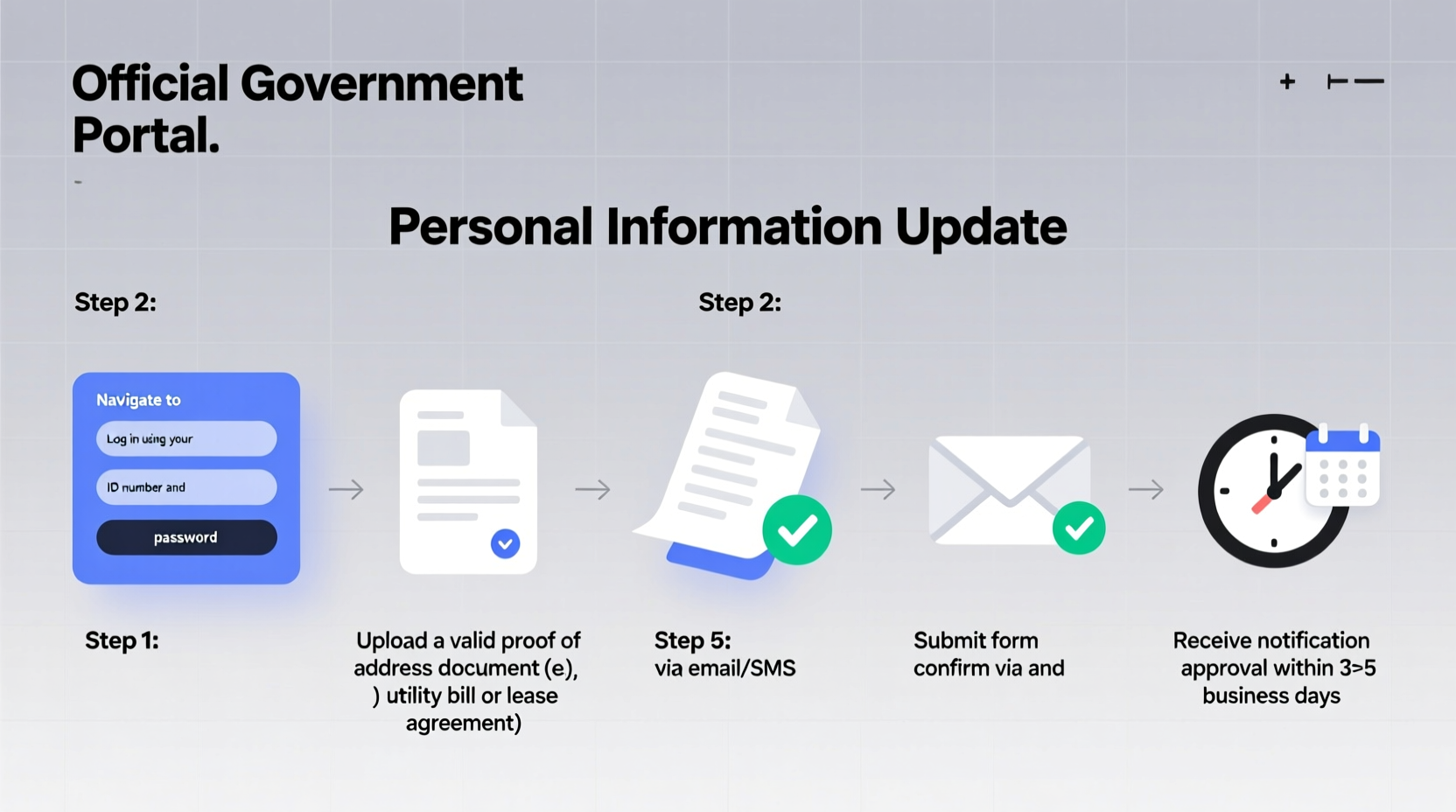
Your driver’s license or state ID isn’t just for proving identity—it’s tied to your voter registration, vehicle registration, tax records, and even financial accounts. An outdated address can lead to missed mail, fines for expired registrations, or complications when opening bank accounts or applying for loans.
Most states require you to update your address within 10 to 30 days of moving. Failing to comply could result in penalties or delayed services. The good news? In many cases, you can make the change online, saving you a trip to the DMV or licensing office.
Step-by-Step Process to Update Your ID Address
The exact steps vary slightly depending on your state, but the overall process follows a consistent pattern. Here's a universal timeline you can adapt based on your location.
- Determine your state’s rules: Visit your state’s Department of Motor Vehicles (DMV) or equivalent agency website to confirm whether online updates are allowed and what documentation is required.
- Gather required documents: Most states accept proof of residency such as a utility bill, lease agreement, or bank statement with your new address.
- Decide between online, mail, or in-person update: Choose the method that suits your schedule and eligibility.
- Submit your request: Complete the form, upload documents if needed, and pay any applicable fee.
- Receive confirmation and updated ID: Wait for email confirmation or physical delivery of your new card, typically within 7–14 business days.
Documents You’ll Likely Need
Each state has specific requirements, but most accept a combination of primary and secondary proof of residency. Below is a general list of acceptable documents.
| Type of Document | Examples | Notes |
|---|---|---|
| Primary Proof | Lease agreement, mortgage statement, deed | Must include your full name and new address |
| Utility Bills | Electric, water, gas, internet, or cable bills | Issued within the last 60 days |
| Financial Statements | Bank statements, credit card bills | Official letterhead and recent date required |
| Government Notices | Tax notices, court documents, voter registration | Must be from a recognized authority |
| Mail with Tracking | Certified letters, USPS forwarding confirmation | Use only if other options aren’t available |
Available Update Methods: Pros and Cons
You generally have three ways to update your address: online, by mail, or in person. Each has its advantages depending on urgency, accessibility, and personal preference.
- Online: Fastest and most convenient. Available in over 40 states. Ideal for routine address changes without other modifications (e.g., name or photo).
- By Mail: Useful if you're out of state or unable to visit an office. Processing times are longer—up to 21 days—and tracking is essential.
- In Person: Required if you’re changing additional details like your name, updating a lost ID, or if your state doesn’t allow online changes. Bring originals—not copies—for verification.
“Updating your ID address promptly ensures continuity in public services and prevents administrative delays.” — National Conference of State Legislatures (NCSL)
Checklist: Prepare Before You Begin
To avoid delays or rejection, use this checklist before starting your address update:
- ☐ Confirm your state allows online or mail-in address changes
- ☐ Collect at least two forms of proof of residency
- ☐ Verify your current ID is not expired (if it is, renewal may be required)
- ☐ Have a working email and payment method ready (for online submissions)
- ☐ Note your license/ID number and date of birth for verification
- ☐ Check processing times and plan accordingly (especially before travel or legal needs)
Real Example: How Sarah Updated Her ID in Three Days
Sarah moved from Austin, Texas, to Denver, Colorado, for a new job. She needed her ID updated quickly to register her car and open a local bank account. Instead of waiting in line, she visited the Colorado DMV website and discovered she could update her address online.
She uploaded a scanned copy of her lease agreement and a recent electricity bill. After paying the $10 processing fee, she received email confirmation within 24 hours. Her new ID arrived by mail five days later. By acting early and using the online system, Sarah avoided long waits and had all her documents ready for work onboarding.
Common Mistakes to Avoid
Even simple processes can go wrong if small errors occur. Here are frequent issues and how to prevent them:
- Using outdated documents: Bills older than two months are frequently rejected.
- Submitting photocopies instead of originals (in person): Offices usually require original documents for verification.
- Forgetting to update other IDs: Don’t stop at your driver’s license—update your passport, social security records, and voter registration separately.
- Moving without a forwarding service: Set up USPS mail forwarding to catch any official letters sent to your old address during the transition.
Frequently Asked Questions
Can I change my address online if my ID is expired?
In most states, no. If your ID has expired, you’ll need to renew it, which often requires an in-person visit and additional documentation. Some states allow online renewal with an expired ID if it’s within a grace period (usually 6–12 months).
Is there a fee to change my address on my ID?
Many states offer free address changes if done online or by mail. Others charge a small processing fee ($5–$15). In-person updates may incur higher fees if combined with renewal or replacement costs.
How long does it take to receive my updated ID?
Processing typically takes 7–14 business days after submission. Expedited services may be available for an extra fee, cutting delivery time to 3–5 days. Always check tracking numbers if provided.
Final Tips for a Hassle-Free Experience
The key to a smooth address update is preparation and timing. Start the process as soon as you finalize your move. Use reliable sources—your state’s official DMV site—to avoid scams from third-party services that charge unnecessary fees.
If you’re moving across state lines, remember that you usually have 30 to 90 days to obtain a new license in your new state. Some states offer reciprocity, meaning you won’t need to retake driving tests, but you will still need to meet residency requirements.
“Over 35 million Americans move each year. Those who update their IDs promptly report fewer legal and financial complications.” — U.S. Census Bureau Mobility Report
Take Action Today
Updating your address on your ID doesn’t have to be stressful. With the right information and a few minutes of focused effort, you can keep your identification current and avoid future headaches. Whether you choose to do it online, by mail, or in person, now is the time to act. Don’t wait until you’re asked for proof of address at the bank or airport—be prepared today.




 浙公网安备
33010002000092号
浙公网安备
33010002000092号 浙B2-20120091-4
Comments
No comments yet. Why don't you start the discussion?