
Deflating an air mattress doesn’t have to be a frustrating chore. With the right technique and tools—especially your Intex pump—the process can be quick, efficient, and mess-free. Many people waste time trying to roll or fold their mattress before it’s fully deflated, only to find stubborn pockets of air remain. Others attempt manual deflation, which is both exhausting and ineffective. The truth is, if you own an Intex air mattress, you already have everything you need for a seamless deflation process.
This guide walks you through a proven, step-by-step method using your Intex pump to deflate your mattress in under 10 minutes. Whether you're packing up after a guest visit, storing it seasonally, or preparing for travel, this approach ensures minimal effort and maximum efficiency.
Why Your Intex Pump Is the Best Tool for Deflation
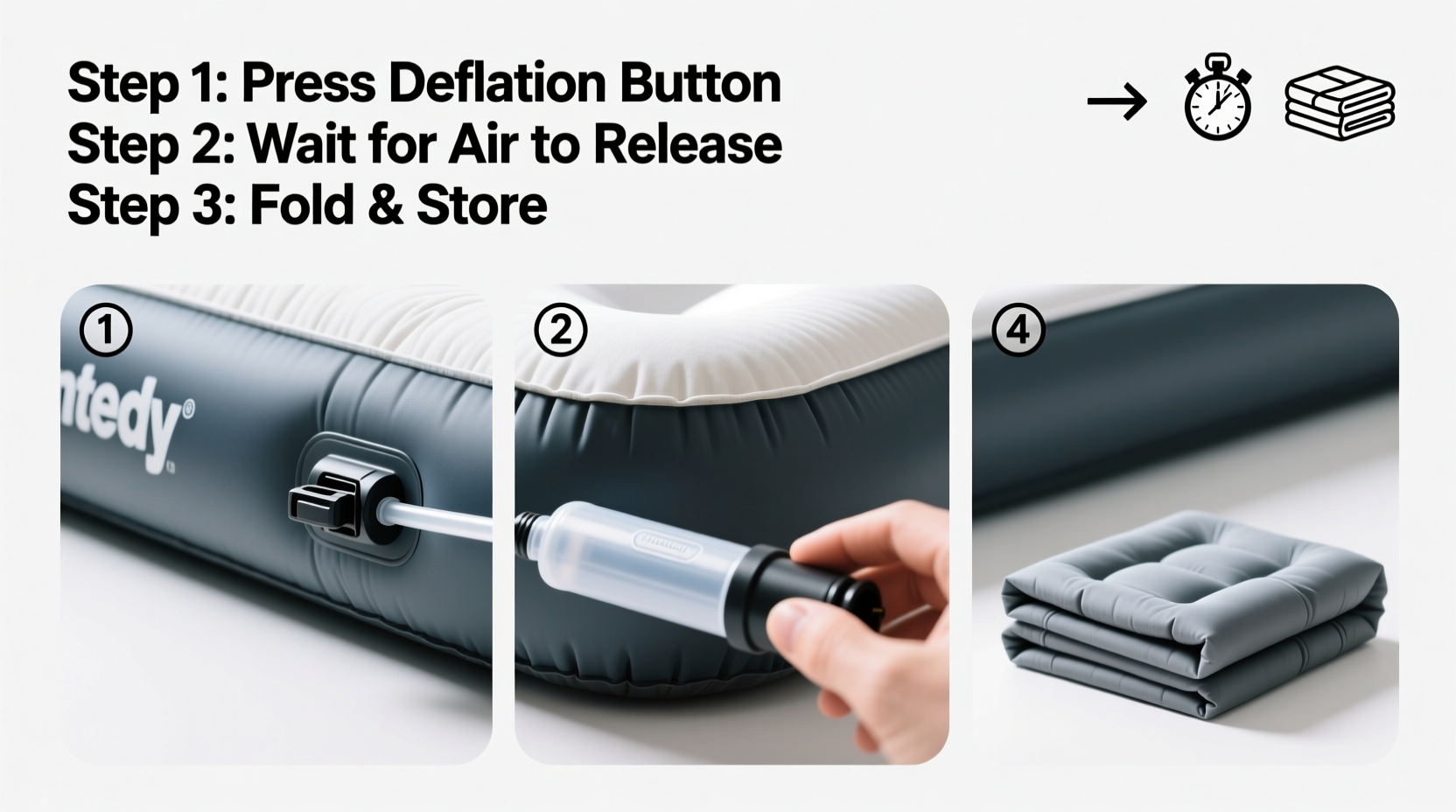
Intex pumps are designed not just for inflation but also for rapid deflation. Most models feature a dual-function valve system that reverses airflow when switched to “deflate” mode. This built-in capability makes third-party vacuums or manual rolling unnecessary—and often counterproductive.
According to product engineers at Intex, “The deflate function on our electric pumps creates negative pressure that actively pulls air out of the mattress, reducing deflation time by up to 70% compared to passive methods.”
“Using the correct pump setting is critical. Many users unknowingly leave air trapped because they skip the active suction phase.” — Carlos Mendez, Consumer Product Specialist, Home & Leisure Division
Passive deflation—relying on gravity or body weight to push air out—is slow and rarely complete. Active deflation via the pump removes nearly all air, allowing the mattress to fold compactly without bulges or resistance.
Step-by-Step: How to Deflate Your Air Mattress Using the Intex Pump
Follow this precise sequence to ensure fast, complete deflation every time. These steps apply to most Intex air mattresses paired with standard Intex electric pumps (models such as 66627E, 68633, or 68619).
- Turn off and unplug the pump – Safety first. Ensure the pump is disconnected from power before handling any connections.
- Locate the air valve on the mattress – It’s typically on the side or bottom edge, covered by a small plastic cap. Remove the cap carefully.
- Switch the pump to DEFLOAT mode – On most Intex pumps, there’s a red or black switch labeled “Inflate/Deflate.” Slide it to “Deflate.” Some newer digital models require holding a button for two seconds to activate reverse airflow.
- Attach the pump hose securely to the valve – Insert the narrow nozzle end of the hose into the valve opening. Push until you hear a soft click or feel firm resistance. A loose connection will reduce suction efficiency.
- Plug in the pump and turn it on – Once connected, restore power and switch the pump on. You’ll immediately hear the motor engage and feel the mattress begin to collapse inward.
- Apply gentle pressure to release trapped air – As the pump runs, use your hands to press down on the center and sides of the mattress. Move from the head to the foot, guiding air toward the valve. Avoid aggressive folding during this phase.
- Wait for full deflation (3–7 minutes) – Let the pump run until the mattress lies completely flat and no more air escapes. Most twin-sized models take about 4 minutes; queen or king sizes may take up to 8.
- Disconnect and seal the valve – Turn off the pump, unplug it, then gently pull the hose straight out. Immediately close the valve by rotating the inner dial clockwise until tight. Cover with the protective cap.
Common Mistakes That Slow Down Deflation
Even with the right equipment, small errors can extend deflation time or damage your mattress. Below is a comparison of recommended practices versus frequent missteps.
| Do’s | Don’ts |
|---|---|
| Use the pump’s dedicated deflate setting | Try to deflate using inflate-only settings |
| Ensure a snug hose-to-valve fit | Leave gaps between hose and valve |
| Press air toward the valve manually | Roll the mattress while still inflated |
| Wait for full collapse before folding | Stop early and force-fold a partially inflated mattress |
| Close the valve immediately after deflation | Leave the valve open during storage |
Misalignment between the pump and valve is one of the top reasons for incomplete deflation. If the nozzle isn’t fully seated, air leaks back in, creating a cycle where the pump works harder but achieves less.
Real-World Example: A Family’s Weekend Camping Trip
The Thompson family uses an Intex Dura-Beam Deluxe air mattress for weekend camping. After a rainy Saturday night, they needed to pack up quickly Sunday morning. In the past, they’d spend 15 minutes wrestling with rolled-up vinyl and leftover air, often stuffing the lumpy result into an overstuffed carry bag.
This time, they followed the proper deflate procedure: switched the pump to deflate mode, attached the hose correctly, and applied steady hand pressure. The mattress flattened in six minutes. They folded it neatly into thirds, sealed it in the bag, and were on the road by 9:15 a.m.—20 minutes earlier than usual.
“We used to dread breaking camp because of the mattress,” said Lisa Thompson. “Now it’s the easiest part.”
Pro Tips for Faster Storage and Longevity
- Clean and dry before deflating: Wipe down the surface with a damp cloth and let it air-dry for 10–15 minutes. Moisture trapped inside can lead to mold and material degradation.
- Store flat or rolled loosely: Never compress the mattress in extreme cold or direct sunlight. Use the provided carry bag only if it allows some flexibility.
- Check valve integrity monthly: Over time, valves can loosen or crack. Test by inflating and listening for hissing sounds.
- Keep the pump accessible: Store the pump near the mattress so it’s ready when needed. Tangled cords delay setup and takedown.
Frequently Asked Questions
Can I deflate the mattress without the original pump?
Yes, but it’s significantly slower. You can open the valve and lie on the mattress to force air out, or use a household vacuum with a hose adapter. However, these methods rarely remove all air and increase wear on seams.
Why does my mattress re-inflate slightly after turning off the pump?
This usually happens when the valve isn’t fully closed or the internal chamber rebounds due to material elasticity. Always rotate the valve dial tightly and press around the nozzle area post-deflation to release residual pressure.
How often should I deep clean my air mattress?
At minimum, clean it once every three months if used regularly. For guest use or seasonal setups, clean before and after each deployment. Use mild soap and water—never bleach or abrasive cleaners.
Final Checklist Before Storage
Before putting your air mattress away, run through this quick verification list:
- ✅ All air has been removed (mattress lies completely flat)
- ✅ Valve is closed and capped
- ✅ Surface is dry and free of debris
- ✅ No sharp objects nearby that could puncture the vinyl
- ✅ Stored in a cool, dry place away from rodents or extreme temperatures
Conclusion: Make Deflation Effortless and Routine
Deflating an air mattress shouldn’t be a source of stress or wasted time. By leveraging the built-in capabilities of your Intex pump and following a consistent, logical process, you transform what was once a hassle into a smooth, repeatable task. Proper deflation extends the life of your mattress, improves portability, and ensures it’s always ready for the next use.




 浙公网安备
33010002000092号
浙公网安备
33010002000092号 浙B2-20120091-4
Comments
No comments yet. Why don't you start the discussion?