
Accessing Supplemental Nutrition Assistance Program (SNAP), commonly known as food stamps, can make a meaningful difference in household food security. Yet many eligible individuals avoid applying due to confusion about the process. The truth is, with clear guidance and preparation, completing a SNAP application doesn’t have to be intimidating. This comprehensive guide walks you through every phase—from eligibility check to submission—ensuring your application is accurate, complete, and processed efficiently.
Understand Your Eligibility Before You Begin
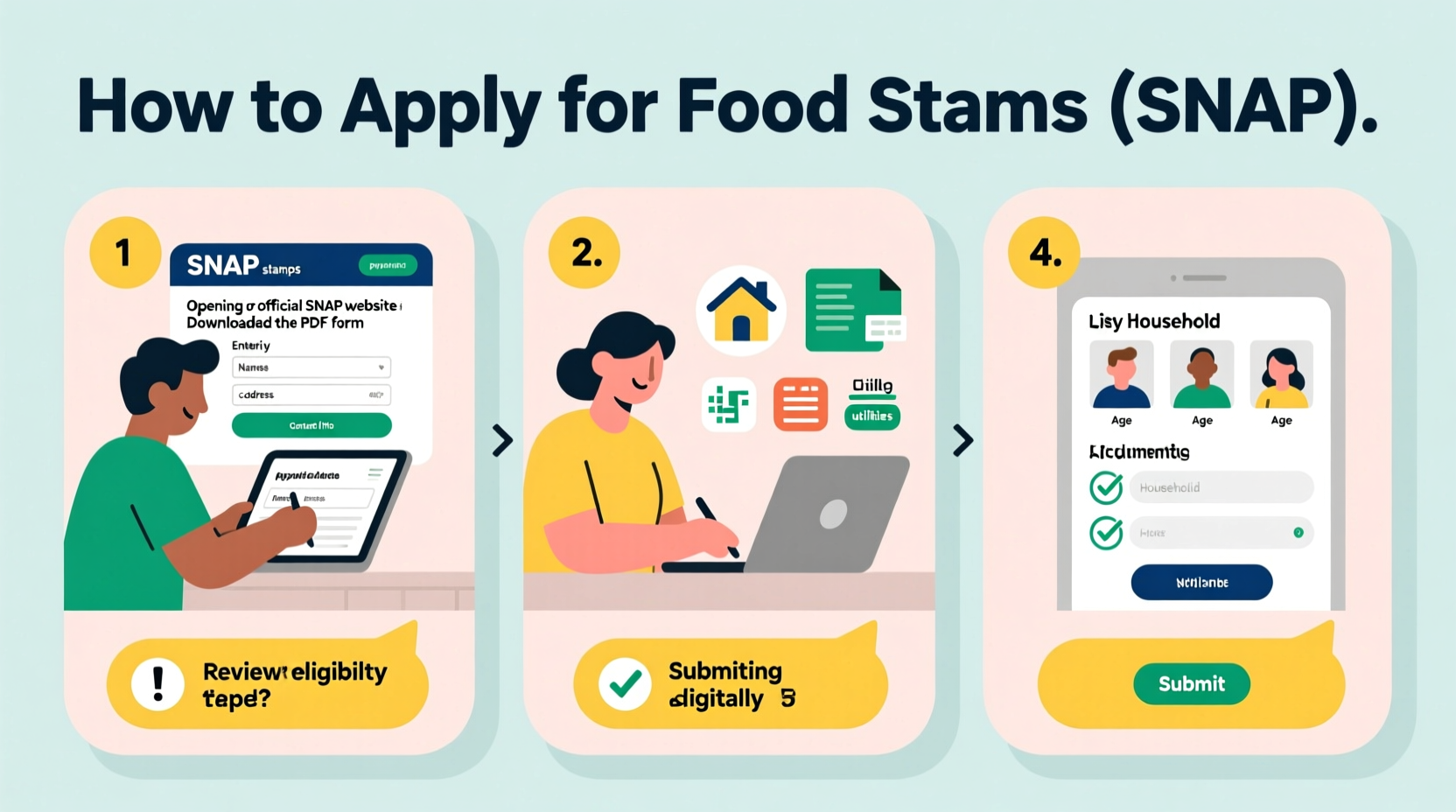
Before filling out any form, confirm whether your household qualifies for SNAP benefits. Eligibility is based on income, household size, expenses, and citizenship status. Most states use gross and net income limits tied to the Federal Poverty Level (FPL). For example, in most cases, gross monthly income must be at or below 130% of the FPL, while net income (after deductions) should be at or below 100%.
Common qualifying factors include:
- U.S. citizenship or qualified non-citizen status
- Residency in the state where you’re applying
- Income within program limits
- Employment or participation in job training (with exceptions for elderly, disabled, or caregivers)
Gather Required Documents in Advance
Having the right documentation ready prevents delays and reduces back-and-forth with caseworkers. While exact requirements vary slightly by state, most programs ask for proof of identity, income, residency, and household composition.
| Document Type | Examples | Notes |
|---|---|---|
| Proof of Identity | Driver’s license, state ID, passport | Must be government-issued |
| Proof of Income | Pay stubs, tax returns, unemployment statements | Last 30 days of earnings for employed applicants |
| Proof of Residency | Lease agreement, utility bill, mail with current address | Name and address must match application |
| Household Information | Birth certificates, Social Security cards | For all members, especially children |
| Expenses (if applicable) | Rent/mortgage statements, child care bills, medical costs for elderly/disabled | Deductions can increase benefit amount |
“Applicants who submit complete documentation the first time are 70% more likely to receive benefits within 30 days.” — Department of Human Services, California
Step-by-Step Guide to Completing the Application
The application process typically follows these stages, regardless of whether you apply online, by mail, or in person.
- Choose Your Application Method: Most states offer online portals (e.g., BenefitsCal.org in California or myBenefits.ny.gov in New York). Alternatively, download a paper form from your state’s social services website or visit a local office.
- Start with Household Information: List everyone living in your home who shares meals or income. Include names, dates of birth, Social Security numbers, and relationships.
- Report All Sources of Income: Wages, self-employment, Social Security, child support, unemployment, and pensions must be disclosed. Estimate if exact figures aren’t available, but be prepared to verify later.
- List Monthly Expenses: Rent, utilities, child care, and medical expenses (for seniors/disabled) may qualify for deductions that increase your benefit.
- Sign and Submit: Electronic applications require digital signatures. Paper forms must be signed and dated. Double-check for missing fields before sending.
Avoid Common Mistakes That Delay Approval
Many denials or processing delays stem from preventable errors. Being aware of frequent pitfalls helps ensure a smoother experience.
- Underreporting income: Even irregular earnings (like cash jobs) must be included. Misrepresentation can lead to disqualification.
- Leaving sections blank: Write “0” or “none” instead of skipping lines. Incomplete forms are often returned.
- Failing to report household changes: If someone moves in or out, update your case immediately.
- Mixing up gross vs. net income: Be clear on what the form asks for. Net income accounts for certain deductions.
“Transparency builds trust. It’s better to over-report than under-report. Caseworkers can adjust downward, but false omissions create red flags.” — Maria Thompson, SNAP Outreach Coordinator, Ohio
Real Example: How One Family Got Approved in Two Weeks
Jamila, a single mother of two in Atlanta, was hesitant to apply for food stamps after losing hours at her part-time job. She feared the process would be complicated and time-consuming. After visiting Georgia’s MyFamilyConnection portal, she used the pre-screener and found she qualified.
She gathered recent pay stubs, her lease agreement, and her children’s birth certificates. Over one evening, she filled out the online form, carefully entering each family member’s information and listing her $2,100 monthly income and $950 rent. She also reported $180 in monthly child care costs, which allowed for an expense deduction.
Within 48 hours, she received an email requesting verification of her child care payments. She uploaded a provider invoice and submitted it electronically. Ten days later, she was scheduled for a brief phone interview. By day 14, her EBT card arrived in the mail with a $428 monthly benefit.
Her key takeaway? “Organizing my documents first made everything go smoothly. I didn’t have to resubmit anything.”
What Happens After You Apply?
Once submitted, your application enters a review phase. Here’s what to expect:
- Confirmation of Receipt: You’ll receive a notice—via mail, email, or portal message—confirming your application was received.
- Request for Verification: The agency may ask for copies of documents or clarification on certain entries.
- Interview Requirement: Most states require a short interview, conducted by phone or in person, to verify details.
- Determination Notice: Within 30 days (or less in emergencies), you’ll receive a letter stating approval or denial.
- EBT Card Delivery: If approved, your card arrives by mail within a few days of the decision.
FAQ: Common Questions About Food Stamps Applications
Can I apply if I’m unemployed?
Yes. Unemployment benefits count as income, but even without them, you may still qualify depending on household size and resources. Jobless applicants must meet work registration rules unless exempt due to age, disability, or caregiving responsibilities.
Will receiving SNAP affect my credit score or immigration status?
No. SNAP is not a loan and does not appear on credit reports. Under current rules, using SNAP does not count against you in public charge determinations for most immigrants.
How long does it take to get approved?
Standard processing takes up to 30 days. Some states offer expedited benefits (within 7 days) if your household has very low income and resources (e.g., less than $150 in monthly income and $100 in liquid assets).
Final Checklist Before Submitting
- ✅ Completed all required fields
- ✅ Listed all household members sharing food or income
- ✅ Reported all income sources (including cash jobs)
- ✅ Included allowable deductions (rent, utilities, child care, medical)
- ✅ Attached or uploaded requested documents
- ✅ Signed and dated the application
- ✅ Saved a copy for personal records
Take Action Today to Secure Your Household’s Food Stability
Applying for food stamps isn’t a sign of failure—it’s a smart step toward stability. Millions of Americans use SNAP to bridge gaps during tough times, and you deserve the same support. With the right preparation and attention to detail, you can complete your application accurately and increase your chances of quick approval. Don’t let misinformation or fear stop you. Gather your documents, follow this guide, and take control of your household’s nutritional well-being starting today.




 浙公网安备
33010002000092号
浙公网安备
33010002000092号 浙B2-20120091-4
Comments
No comments yet. Why don't you start the discussion?